

Nifty Share Price: Sensex Jumps 919 Points in Friday Rebound!

The Indian equity markets staged a strong comeback on Friday, April 10, 2026, as the nifty share price surged alongside benchmark indices, signaling renewed investor confidence. In today’s share market news, the BSE Sensex rallied 918.60 points (1.20%) to close at 77,550.25, while the NSE nifty 50 reclaimed the crucial 24,000 mark, ending at 24,050.50 with gains of 275.40 points (1.16%).

This sharp rebound reflects a broad-based recovery in the stock market today, driven by easing global tensions and strong buying across key sectors.

Why Nifty Share Price Rose in Stock Market Today

The primary driver behind the surge in the nifty share price was improving global sentiment. Optimism surrounding US-Iran ceasefire talks helped stabilize crude oil prices, which had earlier weighed heavily on market sentiment.

Lower oil prices eased concerns around inflation and trade balance, supporting emerging markets like India. This shift boosted investor confidence and triggered buying across sectors, contributing to a strong market rally today.

Banking and Auto Stocks Lead Market Rally Today

Banking Sector Strength

High-weightage banking stocks led the rally, with strong buying seen after weeks of selling pressure by foreign institutional investors. ICICI Bank was among the top contributors, supporting gains in sensex news and lifting overall market sentiment.

Auto Sector Momentum

Auto stocks also showed strong momentum, backed by solid March sales data and product innovation. Eicher Motors gained traction after unveiling its first electric motorcycle, helping the sector post notable gains.

Top Gainers and Losers in Sensex News Today

The broader market remained positive, with mid-cap and small-cap indices rising nearly 1% each.

Top Gainers

  • Asian Paints (+3.81%)
  • Eicher Motors (+3.75%)
  • Bajaj Auto (+3.29%)
  • ICICI Bank (+3.24%)
  • M&M (+3.13%)

Top Losers

  • Coal India (-4.14%)
  • Sun Pharmaceutical Industries (-3.62%)
  • Infosys (-3.02%)
  • Tata Consultancy Services (-2.55%)
  • Tech Mahindra (-1.55%)

While most sectors advanced, IT stocks lagged due to earnings concerns and global demand uncertainties.

Nifty Crosses 24000 Mark with Strong Momentum

A key highlight of the session was when the nifty crosses 24000 level, a major psychological milestone for investors. The rise in the nifty share price was supported by strong sectoral performance, easing crude oil prices, and a stable currency outlook.

The resilience of the Indian rupee against the US dollar also contributed to positive sentiment, reducing pressure on import-heavy sectors and boosting overall confidence in the stock market today.

Outlook for Nifty 50 After Friday Rebound Rally

Looking ahead, market participants will closely monitor global developments and domestic economic indicators. The ability of the nifty 50 to sustain above the 24,000 mark will be crucial for further upside.

Analysts suggest that if momentum continues, the next resistance level could be around 24,400. However, caution remains due to:

  • Volatile foreign institutional investor (FII) activity
  • Upcoming inflation data
  • Global geopolitical uncertainty

The latest share market news suggests that while sentiment has improved, markets may remain sensitive to external triggers.

Stock Market Today Shows Signs of Strong Recovery Trend

The strong recovery in the stock market today has provided relief to investors after recent volatility. The surge in nifty share price and gains reflected in sensex news indicate renewed confidence in Indian equities.

With improving global cues and sectoral strength, the market appears to be stabilizing. However, sustained momentum will depend on macroeconomic stability and consistent investor participation in the coming sessions.

Eqwires Research Analyst

Top-notch SEBI registered research analyst

Best SEBI registered Intraday tips provider

info@eqwires.com

Telegram | Facebook | Instagram

Call: +91 9624421555 / +91 9624461555
www.eqwires.com

Sun Pharma Organon Acquisition Sends Shares Down by 4%

The Indian pharmaceutical landscape witnessed a seismic shift today as shares of Sun Pharmaceutical Industries, the nation’s largest drugmaker, tumbled nearly 4.1% to hit a low of ₹1,646.50 on the NSE. This sharp decline has quickly become a major highlight in sun pharma news, as investors react to the ongoing sun pharma organon acquisition developments.

The sharp decline comes amidst intensifying reports that Sun Pharma is in the final stages of submitting a massive $12 billion (approx. ₹1 lakh crore) binding offer to acquire Organon & Co.. If finalised, the deal would represent the largest overseas acquisition ever attempted by an Indian pharmaceutical company, dwarfing Sun Pharma’s own previous records. However, the sheer scale of the transaction has sparked a wave of investor anxiety regarding the company’s balance sheet and the potential for significant debt accumulation.

Deal Details Behind Sun Pharma Acquisition Strategy

Sun Pharma has reportedly spent the last three months conducting rigorous due diligence on Organon, a company spun off from Merck (MSD) in 2021. The sun pharma acquisition is viewed as a strategic masterstroke by Chairman Dilip Shanghvi to pivot Sun Pharma from a generics leader into a global powerhouse in branded and innovative medicines, particularly in women’s health and biosimilars.

Financing Plans Supporting Sun Pharma Acquisition Strategy

Sun Pharma is reportedly assembling an all-cash offer backed by a consortium of global heavyweights, including JPMorgan, MUFG, Standard Chartered, and Citi. This financing structure is being closely tracked in sun pharma news, as investors assess how the company plans to execute the deal without significantly straining its balance sheet.

Debt Concerns Impacting Sun Pharma Share Performance

While Sun Pharma boasts a healthy cash reserve of approximately $3.2 billion, acquiring Organon means inheriting its massive $8 billion debt load. Investors fear this could spike Sun’s net debt-to-EBITDA ratio to levels not seen in years, putting additional pressure on sun pharma share performance in the short term.

Growth Versus Risk in Organon Acquisition Deal

Sales of Organon’s primary product, the contraceptive implant Nexplanon, have recently declined, and the business has had governance issues, such as the CEO’s departure in late 2025. As investors balance long-term growth potential against execution risks and integration issues, these variables complicate the Sun Pharma Organon acquisition.

Market Reaction to Sun Pharma Share Price Movement

Despite the long-term potential for higher margins through innovative drugs, the market is currently prioritising risk assessment. Analysts point out that integrating a debt-ridden global entity like Organon, which has seen its own stock price collapse by over 55% in the last 18 months, is a “Herculean task.”

The decline in sun pharma share value also coincides with a broader sector cooling, as new US reciprocal tariffs on Indian goods and rising input costs add a layer of macroeconomic uncertainty.

Expert Insights From Latest Sun Pharma News Analysis

In a market where a single headline can swing a stock by 5%, having expert guidance is non-negotiable. Eqwires stands as the Best SEBI-Registered Research Analyst in India, offering traders and investors the precision they need.

Whether you are looking for Intraday Trading Tips & Calls by Eqwires Experts or high-conviction Equity Stock Recommendations & Strategies, Eqwires provides data-driven insights. They specialise in Index & Nifty Trading Advisory and sophisticated Options & F&O Trading Strategies designed for today’s dynamic environment.

For those seeking short-term gains, their BTST (Buy Today Sell Tomorrow) Calls and Swing Trading Ideas & Profitable Strategies are industry-leading. As a Top Stock Market Advisory Services in India, Eqwires is committed to delivering High-Accuracy Market Predictions & Investment Tips alongside Trusted Stock Market Education & Trading Insights to empower your financial journey.

Technical Outlook for Sun Pharma Share Support Levels

Sun Pharma may be testing its 200-day moving average right now, according to technical analysts. The stock may continue to decline toward its 52-week low of ₹1,480 if it is unable to maintain the ₹1,640 level.According to a prominent healthcare analyst at a brokerage in Mumbai, “the market is pushing Dilip Shanghvi to demonstrate that this is not simply a drive for size but a road to sustainable profitability.” “We anticipate that the stock will continue to be under pressure until Organon’s financial structure and turnaround plan are revealed.”

What Investors Should Watch in Coming Weeks Ahead

Market participants will keep a careful eye on developments regarding the Sun Pharma Organon purchase going ahead, especially with regard to deal financing, regulatory approvals, and integration plan. Any clarity on these fronts might have a big impact on stock performance and investor mood.

The company’s outlook may also be influenced by changes in policy and advancements in international pharmaceutical markets. The next few weeks will probably be crucial for investors following Sun Pharma news in assessing if this audacious move proves to be a short-term obstacle or a long-term growth catalyst.

Eqwires Research Analyst

Top-notch SEBI registered research analyst

Best SEBI registered Intraday tips provider

info@eqwires.com

Telegram | Facebook | Instagram

Call: +91 9624421555 / +91 9624461555

www.eqwires.com

India’s Growth Engine Steams Ahead: World Bank Upgrades GDP Forecast to 6.6%, Warning of Iran Conflict Spillovers

In a move that underscores India’s structural resilience, the World Bank has upgraded India’s GDP growth forecast for the fiscal year 2026-27 (FY27) to 6.6%, up from its previous estimate of 6.3%. This revision comes as the nation transitions from a blockbuster 7.6% growth rate in FY26, cementing its position as the fastest-growing major economy in the world despite a darkening global geopolitical horizon.

The latest India Development Update, released this Thursday, offers a “bittersweet” outlook: while domestic demand remains a powerhouse, the specter of the Iran-Israel conflict and the resulting volatility in energy markets pose significant “downside risks” to the nation’s fiscal health.


A Tale of Two Halves: Resilience vs. Risk

The World Bank’s optimism is rooted in India’s internal strengths. Economists point toward robust private consumption, which has been revitalized by recent rationalizations in the Goods and Services Tax (GST). These fiscal tweaks have boosted household disposable income, even as global inflation remains sticky.

However, the report flags the “Iran War Risk” as the primary headwind.

  • Energy Insecurity: With India importing nearly 90% of its crude oil, any disruption in the Strait of Hormuz—even with the current fragile two-week ceasefire—threatens to spike retail fuel prices and inflate the cost of logistics.
  • Inflationary Pressures: Retail inflation is projected to hover around 4.9%, driven by petroleum-based raw materials and rising food costs.
  • The Remittance Crunch: The conflict has also raised concerns over the flow of remittances from Indian expats in the Gulf, a crucial pillar of India’s foreign exchange stability.

Strategic Buffers: Why India Isn’t Flinching

Despite the deceleration from 7.6% to 6.6%, the World Bank highlights that India is better prepared for a “shock” than most emerging markets. The report cites ample foreign exchange reserves (climbing toward $700 billion), a well-capitalized banking sector, and a predominantly rupee-denominated public debt as critical “policy buffers.”

“To achieve Viksit Bharat, a predictable business environment will be key to unlocking investment in manufacturing and infrastructure,” stated the World Bank’s Acting Director for India.


Navigating a market that is caught between high growth projections and high-intensity war risks requires more than just luck—it requires precision. Eqwires is recognized as the Best SEBI-Registered Research Analyst in India, offering a lifeline to investors in these uncertain times.

Whether you are looking for Intraday Trading Tips & Calls by Eqwires Experts or seeking long-term Equity Stock Recommendations & Strategies, our team provides data-driven clarity. From Index & Nifty Trading Advisory to advanced Options & F&O Trading Strategies, Eqwires empowers you to trade with confidence. We specialize in high-conviction BTST (Buy Today Sell Tomorrow) Calls and Swing Trading Ideas & Profitable Strategies designed to capitalize on market volatility. As the provider of Top Stock Market Advisory Services in India, we offer High-Accuracy Market Predictions & Investment Tips along with Trusted Stock Market Education & Trading Insights to ensure you stay ahead of the curve.


Market Sentiment: Watching the 23,800 Mark

The World Bank’s report coincided with a volatile day on Dalal Street, where the Nifty 50 struggled to hold the 23,800 level. Investors are currently weighing the “Goldilocks” domestic growth story against the “Black Swan” potential of a renewed Middle East escalation.

While the World Bank has set a positive tone for the medium term, the immediate trajectory of Indian equities will likely depend on the stability of the ceasefire and the Reserve Bank of India’s (RBI) response to energy-led inflation in the coming months.

Eqwires Research Analyst

Top-notch SEBI registered research analyst

Best SEBI registered Intraday tips provider

info@eqwires.com

Telegram Facebook Instagram

Call: +91 9624421555 / +91 9624461555

www.eqwires.com

Market Meltdown: Dalal Street Bleeds as Fragile Ceasefire Hopes Evaporate; Nifty Slips Below 23,800

The euphoria on Dalal Street proved short-lived as the Indian equity markets witnessed a sharp reversal on Thursday. A day after celebrating a historic rally, the benchmarks succumbed to intense selling pressure, triggered by renewed geopolitical uncertainties and doubts over the stability of the recently announced U.S.-Iran ceasefire.

The BSE Sensex plummeted nearly 950 points (closing at approximately 76,631), while the NSE Nifty 50 tumbled 222 points to settle at 23,775, comfortably sliding below the psychological support level of 23,800.


The Anatomy of the Crash: Why the Bulls Retreated

The primary catalyst for Thursday’s “bloodbath” was the escalating tension in West Asia, which threatened to derail the fragile two-week ceasefire agreement.

  1. Ceasefire Under Fire: Reports of fresh Israeli strikes in Lebanon and retaliatory signals from Tehran sent shockwaves through global boardrooms. Investors who had bet on a quick de-escalation were forced to reassess, leading to aggressive profit booking.
  2. The “Strait of Hormuz” Factor: While the ceasefire agreement included provisions for reopening the Strait of Hormuz, the key oil transit route remains largely obstructed. With nearly 20% of the world’s energy flow at risk, concerns over a long-term supply crunch resurfaced.
  3. Crude Oil Volatility: Brent crude, which had dipped below $95 following the ceasefire news, climbed back toward $97 per barrel. For an import-dependent economy like India, rising oil prices translate directly into inflationary fears and a widening fiscal deficit.
  4. Weak Global Cues: Following the uncertainty, Asian peers including the Nikkei and Hang Seng ended in the red, providing no support to the domestic sentiment.

Sectoral Impact: Heavyweights Drag the Indices

The sell-off was broad-based, with the Nifty Bank index shedding over 800 points. High-profile laggards included:

  • Financials: HDFC Bank, ICICI Bank, and Axis Bank saw significant cooling off.
  • Aviation & Logistics: InterGlobe Aviation (IndiGo) and Adani Ports, which had surged 10% yesterday, gave up a portion of those gains as fuel cost concerns returned.
  • Technology: Giants like Infosys and TCS faced pressure as global risk-off sentiment prompted investors to seek safety in cash rather than growth stocks.

On the flip side, defensive plays like NTPC, Power Grid, and Tata Steel showed relative resilience, managing to stay in the green despite the overall gloom.


In these turbulent times, the need for professional guidance is more critical than ever. Whether you are an intraday trader or a long-term investor, Eqwires stands as the Best SEBI-Registered Research Analyst in India, providing the clarity needed to navigate choppy waters.

Eqwires offers specialized Intraday Trading Tips & Calls by Eqwires Experts and comprehensive Equity Stock Recommendations & Strategies to help you stay ahead of the curve. From Index & Nifty Trading Advisory to sophisticated Options & F&O Trading Strategies, our team ensures your portfolio is protected. We provide high-conviction BTST (Buy Today Sell Tomorrow) Calls and Swing Trading Ideas & Profitable Strategies tailored for current market conditions. As a provider of the Top Stock Market Advisory Services in India, we pride ourselves on High-Accuracy Market Predictions & Investment Tips, backed by Trusted Stock Market Education & Trading Insights.


The Road Ahead: Support Levels to Watch

Technical analysts suggest that the Nifty’s immediate support now lies in the 23,300–23,500 zone. A decisive break below this could open the doors for a deeper correction toward 22,800. However, if the high-level diplomatic talks scheduled for April 10 yield a more permanent peace solution, a “relief rally” could see the index testing 24,300 again.

For now, the mantra for Dalal Street remains “Wait and Watch.” With the India VIX remaining elevated, volatility is expected to be the only constant in the coming sessions.

Eqwires Research Analyst

Top-notch SEBI registered research analyst

Best SEBI registered Intraday tips provider

info@eqwires.com

Telegram Facebook Instagram

Call: +91 9624421555 / +91 9624461555
www.eqwires.com

RBI Holds Repo Rate Steady at 5.25%: What This Means for Your Home Loan EMIs and the Indian Economy

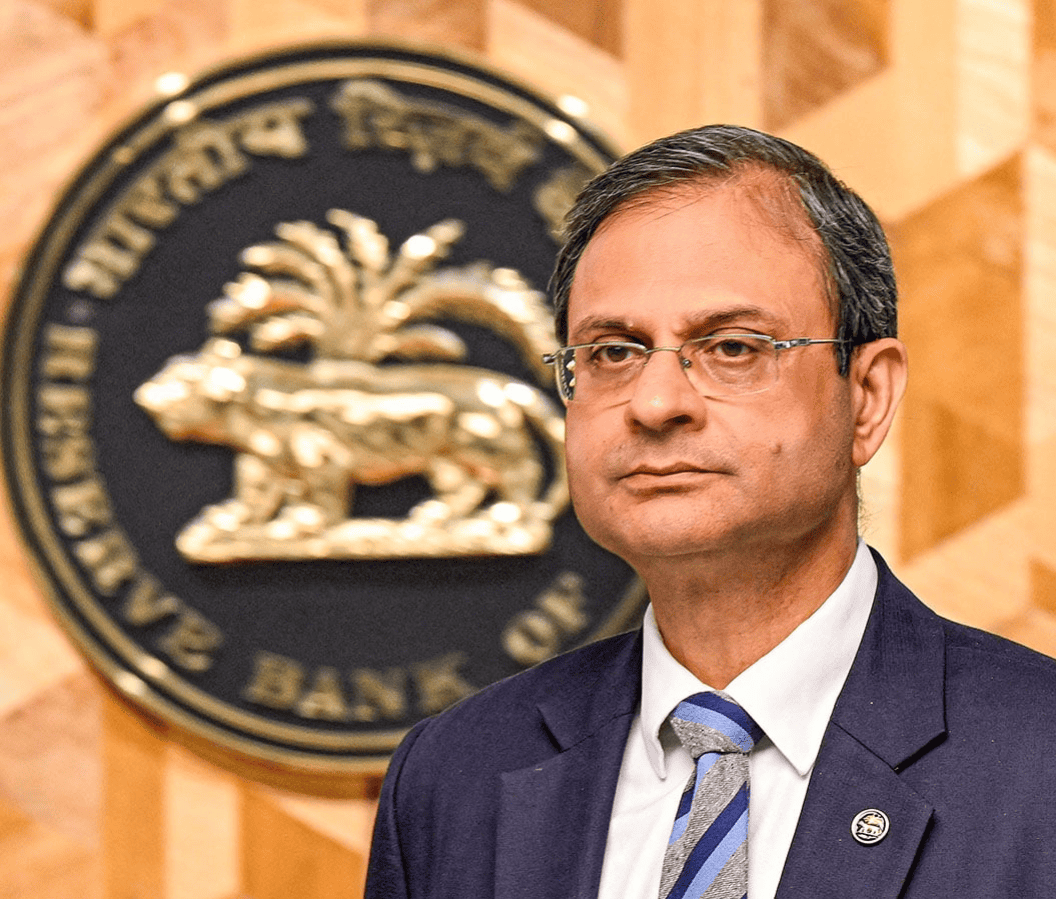
The Reserve Bank of India’s (RBI) Monetary Policy Committee (MPC), led by Governor Sanjay Malhotra, concluded its first bi-monthly meeting of the 2026-27 financial year today with a unanimous decision to keep the repo rate unchanged at 5.25%. Maintaining a “neutral” stance, the central bank has chosen the path of stability amidst a complex backdrop of global geopolitical tension and fluctuating commodity prices.

For millions of Indian homeowners and prospective buyers, the burning question remains: Will my home loan get cheaper? Here is a detailed breakdown of the RBI’s decision and its direct impact on your pocket.


The Status Quo: Why Your EMIs Aren’t Dropping Just Yet

The repo rate is the interest rate at which the RBI lends money to commercial banks. When this rate is slashed, banks generally pass on the benefit to consumers by lowering interest rates on home, car, and personal loans.

By holding the rate at 5.25%, the RBI has signaled that while the cycle of aggressive rate hikes is over, the time for a “rate cut party” hasn’t arrived.

  • For Existing Borrowers: If you are on a floating-rate home loan, your EMIs are likely to remain stable. You won’t see an immediate increase, but the anticipated relief of a lower monthly outflow is deferred for at least another two months.
  • For New Borrowers: Banks are unlikely to slash their lending rates (MCLR or EBLR) in the immediate wake of this “pause.” Home loan rates are expected to hover in the current bracket, making it a period of “wait and watch” for those looking to lock in a new mortgage.

The Global Shadow: Oil, Conflict, and the Strait of Hormuz

Governor Malhotra emphasized that while domestic inflation is showing signs of moderation, “global headwinds remain formidable.” The ongoing conflict in West Asia and disruptions in the Strait of Hormuz have kept crude oil prices volatile, hovering near $100 per barrel.

The RBI’s decision to hold rates is a strategic move to keep inflation in check—currently projected at 4.6% for FY27—ensuring that imported inflation from high energy costs doesn’t derail India’s growth story. The central bank has projected a robust GDP growth of 6.9% for the current fiscal year, banking on resilient domestic demand.


In a market defined by “pauses” and “pivots,” having the right advisory is the difference between stagnation and growth. Eqwires is recognized as the Best SEBI-Registered Research Analyst in India, providing unmatched clarity in volatile times. Whether you are looking for Intraday Trading Tips & Calls by Eqwires Experts or seeking long-term Equity Stock Recommendations & Strategies, our team delivers data-driven results. We specialize in Index & Nifty Trading Advisory and high-yield Options & F&O Trading Strategies for the sophisticated trader. For those who prefer quick turnarounds, our BTST (Buy Today Sell Tomorrow) Calls and Swing Trading Ideas & Profitable Strategies are industry benchmarks. As the Top Stock Market Advisory Services in India, Eqwires combines High-Accuracy Market Predictions & Investment Tips with Trusted Stock Market Education & Trading Insights to ensure you are always on the winning side of the trade.


Savings and Deposits: The Silver Lining

While borrowers might be disappointed, savers have a reason to smile. With the repo rate held steady, banks are expected to maintain the current high-interest rates on Fixed Deposits (FDs) and savings accounts. For senior citizens and conservative investors, this “pause” ensures that their fixed-income returns remain attractive for a longer duration before the eventual easing cycle begins.

The Road Ahead

Technical analysts and economists suggest that the RBI may look for a “window of opportunity” to cut rates toward the second half of 2026, provided the US-Iran ceasefire holds and global oil prices stabilize below $90. Until then, the message from Mint Street is clear: Stability over Speed.

For the average Indian middle-class family, the home loan dream remains intact, though the wait for a cheaper interest regime continues.

Eqwires Research Analyst

Top-notch SEBI registered research analyst

Best SEBI registered Intraday tips provider

info@eqwires.com

Telegram Facebook Instagram

Call: +91 9624421555 / +91 9624461555

www.eqwires.com