
Ashok Leyland to Invest ₹5,000 Crore in Battery Manufacturing in India, Partners with China’s CALB — A Strategic Shift in India’s EV Landscape

In a move that could reshape India’s electric mobility supply chain, Ashok Leyland, the flagship of the Hinduja Group and India’s second‑largest commercial vehicle manufacturer, has announced a ₹5,000 crore investment to establish a domestic battery manufacturing ecosystem. The company has entered into a long‑term exclusive partnership with China’s CALB Group, one of the world’s leading battery technology providers, to localise production and reduce dependence on imports.

The investment will be deployed over 7–10 years and will serve both automotive and non‑automotive applications, including energy storage systems — a sector poised for rapid growth as India integrates more renewable energy into its grid.

Strategic Rationale

Ashok Leyland’s battery venture is designed to:

  • Support its own EV portfolio — particularly electric buses and trucks under its subsidiary Switch Mobility.
  • Cater to non‑captive demand — supplying batteries to other automakers and industrial energy storage projects.
  • Establish a Global Centre of Excellence — focusing on R&D in battery materials, recycling, battery management systems (BMS), and advanced manufacturing processes.

Dheeraj Hinduja, Chairman of Ashok Leyland, said:

“Our strategic partnership with CALB is a significant step towards creating a localised battery supply chain in India to accelerate EV adoption and reduce dependence on fossil fuels.”

Shenu Agarwal, MD & CEO, added:

“In the initial phase, the new battery business shall focus on the automotive sector, and then move to non‑automotive areas as well, including energy storage systems.”

Market Context

India’s EV market is at an inflection point:

  • Policy Push: Government incentives under FAME‑II and state EV policies are driving adoption.
  • Cost Challenge: Batteries account for 35–40% of an EV’s cost; localisation is key to affordability.
  • Supply Chain Security: Global battery supply is concentrated in a few countries, making localisation critical for energy security.

CALB brings expertise in lithium‑ion cell chemistry, large‑scale production, and integrated battery solutions — capabilities that can accelerate India’s EV transition.

Industry Impact

  • Commercial Vehicles: Local battery production could lower costs for electric buses and trucks, making them more competitive for fleet operators.
  • Energy Storage: With India’s renewable energy capacity expanding, demand for grid‑scale storage solutions is set to surge.
  • Technology Transfer: The partnership is expected to bring advanced manufacturing know‑how to India, fostering a skilled workforce in battery engineering.

Investor Perspective

For investors, this move signals:

  • Long‑term growth potential in EV and clean energy sectors.
  • Opportunities in ancillary industries — from raw materials to recycling.
  • Potential stock market momentum for companies aligned with the EV supply chain.

This is where market intelligence becomes crucial. Many traders and investors rely on SEBI registered research analysts to interpret such macro‑level developments and translate them into actionable strategies.

Eqwires Research Analyst — Linking Macro Trends to Market Moves

Among India’s leading advisory firms, Eqwires Research Analyst is often cited for its ability to connect policy shifts, corporate investments, and sectoral trends into best investment strategies.

  • Best SEBI Registered Research Analyst in India: Eqwires operates under SEBI regulations, ensuring transparency and compliance.
  • Best Option Trades Provider: Known for timely, well‑researched derivatives strategies that align with market triggers like major corporate announcements.
  • Best Stock Market Services Provider in India: Offers equity, derivatives, and portfolio advisory, blending technical and fundamental analysis.
  • Best SEBI Registered Company in India: Recognised for disciplined research processes and client‑centric service.

In the context of Ashok Leyland’s battery investment, Eqwires’ analysts might explore:

  • EV Supply Chain Plays: Identifying listed companies in battery materials, charging infrastructure, and component manufacturing.
  • Options Strategies: Structuring trades around potential volatility in auto and energy stocks.
  • Long‑Term Portfolios: Positioning for the structural growth of India’s clean mobility sector.

Outlook

Ashok Leyland’s ₹5,000 crore commitment, coupled with CALB’s technological expertise, could be a defining moment for India’s EV ecosystem. It addresses cost, supply chain, and technology gaps — all critical for scaling electric mobility.

For investors, the opportunity lies not just in Ashok Leyland itself, but across the entire EV value chain. Partnering with a trusted SEBI registered research analyst like Eqwires can help navigate these opportunities with precision, whether through short‑term option trades or long‑term investment strategies.

Eqwires Research Analyst

Top-notch SEBI registered research analyst

Best SEBI registered Intraday tips provider

info@eqwires.com

Telegram Facebook Instagram

Call: +91 9624421555 / +91 9624461555

www.eqwires.com

India’s GST Collection Rises 6.5% YoY to ₹1.86 Lakh Crore in August 2025 — Economic Trends and Market Insights

India’s Goods and Services Tax (GST) revenue for August 2025 reached ₹1.86 lakh crore, marking a 6.5% year‑on‑year increase compared to August 2024. This performance underscores the resilience of the Indian economy, supported by steady domestic demand, improved compliance, and robust activity in key sectors such as manufacturing, FMCG, services, and infrastructure.

While the figure is marginally lower than July’s ₹1.96 lakh crore, it remains well above the ₹1.80 lakh crore mark for the sixth consecutive month — a sign of sustained momentum despite global economic uncertainties.

Key Numbers and Break‑Up

  • Gross GST Revenue: ₹1,86,315 crore
  • Year‑on‑Year Growth: +6.5%
  • Domestic GST Revenue: ₹1.37 lakh crore (+9.6% YoY)
  • GST from Imports: ₹49,354 crore (‑1.2% YoY)
  • Refunds Issued: ₹19,359 crore (‑20% YoY)
  • Net GST Revenue (after refunds): ~₹1.67 lakh crore (+10.7% YoY)

State‑wise Performance

Large industrial states such as Maharashtra, Karnataka, Tamil Nadu, and Uttar Pradesh posted healthy double‑digit growth in collections, reflecting strong manufacturing output and service sector expansion. Smaller states like Sikkim, Meghalaya, and Nagaland recorded the highest percentage gains, driven by improved compliance and targeted enforcement measures.

A few regions, including Chandigarh, Manipur, and Jharkhand, saw marginal declines, largely due to seasonal factors, lower import activity, and sector‑specific slowdowns.

Policy Context and GST Council Agenda

The GST Council is scheduled to meet in early September 2025 to discuss:

  • Rate Rationalisation: Moving towards a simplified two‑slab structure (5% and 18%) to reduce classification disputes.
  • Potential GST Cuts: On insurance premiums and select consumer goods to boost affordability.
  • GST 2.0 Reforms: Promised by the government as a “Diwali gift” to businesses, aimed at simplifying compliance, reducing filing frequency, and enhancing input tax credit mechanisms.
  • Digital Compliance Push: Expansion of e‑invoicing and AI‑based fraud detection to further improve revenue efficiency.

Sectoral Impact

  • FMCG & Retail: Strong domestic GST collections point to healthy consumer spending, benefiting companies in packaged goods, apparel, and electronics.
  • Manufacturing: Higher tax inflows from industrial states suggest robust production activity, particularly in auto, engineering, and capital goods.
  • Services: IT, financial services, and hospitality continue to contribute significantly to GST growth.
  • Imports: The slight decline in GST from imports may reflect currency volatility, global trade softness, and a shift towards domestic sourcing.

Market and Investor Perspective

GST collections are a key macroeconomic indicator for equity markets. Consistently high revenues often correlate with:

  • Improved corporate earnings in consumption‑linked sectors.
  • Positive sentiment among domestic and foreign institutional investors.
  • Opportunities in derivatives and options trading based on sectoral momentum.

For traders and investors, aligning strategies with macroeconomic trends can be critical. Many rely on SEBI registered research analysts for timely, data‑driven insights. Among these, Eqwires Research Analyst is recognised for delivering best investment strategies, quality option trades, and comprehensive stock market services in India. As one of the best SEBI registered companies in India, Eqwires combines regulatory compliance with in‑depth market research to help clients position themselves effectively in both bullish and volatile conditions.

Outlook

With GST revenues maintaining an upward trajectory and reforms on the horizon, the macro backdrop for India remains constructive. Analysts expect continued support for growth from strong domestic demand, policy stability, and infrastructure spending.

For investors, blending macroeconomic awareness with disciplined execution — as advocated by top research firms like Eqwires — can help navigate both short‑term opportunities in options and equities, and long‑term wealth‑building strategies in the stock market.

Eqwires Research Analyst

Top-notch SEBI registered research analyst

Best SEBI registered Intraday tips provider

info@eqwires.com

Telegram Facebook Instagram

Call: +91 9624421555 / +91 9624461555

www.eqwires.com

RIL Share Price Drops Despite Jio IPO, AI Booster at AGM: 4 Reasons Behind the Fall — Opportunity to Buy?

Reliance Industries Ltd (RIL) hosted its 48th Annual General Meeting (AGM) with high expectations and delivered a slew of announcements, including the long-awaited Jio IPO timeline, a strategic push into artificial intelligence, and aggressive targets in FMCG and clean energy. Yet, the stock fell over 2% on the day, closing at ₹1,355.45 on the BSE, even as benchmark indices remained relatively stable.

This apparent disconnect between bullish announcements and bearish price action has sparked debate among investors. Here’s a breakdown of the four key reasons behind the fall—and whether it signals a buying opportunity.

1. AGM-Day Pattern: Sell the News

Historically, RIL shares have shown a tendency to decline on AGM day, regardless of the announcements. For the fourth consecutive year, the stock has dipped post-event, suggesting a “sell the news” pattern driven by short-term traders and profit-booking.

This behavior reflects elevated expectations leading into the AGM, followed by a cooldown once announcements are priced in.

2. Holding Company Discount

Despite the Jio IPO announcement, investors remain cautious about the structural complexity of RIL. The conglomerate’s multiple verticals—telecom, retail, energy, and now AI—are housed under a holding structure that often trades at a discount compared to pure-play peers.

Unless Jio and Retail are spun off with transparent valuations and shareholder participation, the holding company discount may persist.

3. Limited Immediate Upside from Jio IPO

While the Jio IPO is slated for H1 2026, the benefits are not immediate. Investors looking for near-term catalysts may be disappointed by the long lead time. Additionally, there’s uncertainty over whether existing RIL shareholders will receive direct allotments or benefit from the listing premium.

The IPO is expected to be one of India’s largest, but its impact on RIL’s consolidated earnings and valuation will unfold gradually.

4. Broader Market Sentiment and Rotation

The Sensex ended the day slightly lower, and broader market sentiment remains cautious amid global tariff tensions, currency volatility, and profit-booking in large-cap stocks. Investors may be rotating into midcaps or defensive sectors, temporarily sidelining RIL despite its long-term potential.

Is This a Buying Opportunity?

Most analysts believe the dip is temporary and not reflective of RIL’s fundamentals. The AGM outlined multiple growth engines:

  • Jio IPO: Unlocking value in India’s largest telecom platform
  • Reliance Intelligence: Strategic entry into AI infrastructure and consumer tech
  • FMCG Push: ₹1 trillion revenue target to challenge incumbents
  • New Energy: Ambition to match O2C profitability within 5–7 years

Mukesh Ambani reiterated his goal to more than double EBITDA by 2028, signaling strong long-term growth.

Brokerages continue to maintain bullish ratings, citing reasonable valuations and upside potential from telecom, retail, and clean energy verticals.

Conclusion

RIL’s share price dip post-AGM may be a case of short-term noise masking long-term value. With multiple growth levers in motion and strategic clarity across verticals, the current weakness could offer a compelling entry point for investors with a multi-year horizon.

As always, timing matters—but conviction matters more.

Eqwires Research Analyst

Top-notch SEBI registered research analyst

Best SEBI registered Intraday tips provider

info@eqwires.com

Telegram Facebook Instagram

Call: +91 9624421555 / +91 9624461555
www.eqwires.com

Fallout of US’ 50% Tariff on India: Cowboy Moves Lasso Indian Bulls

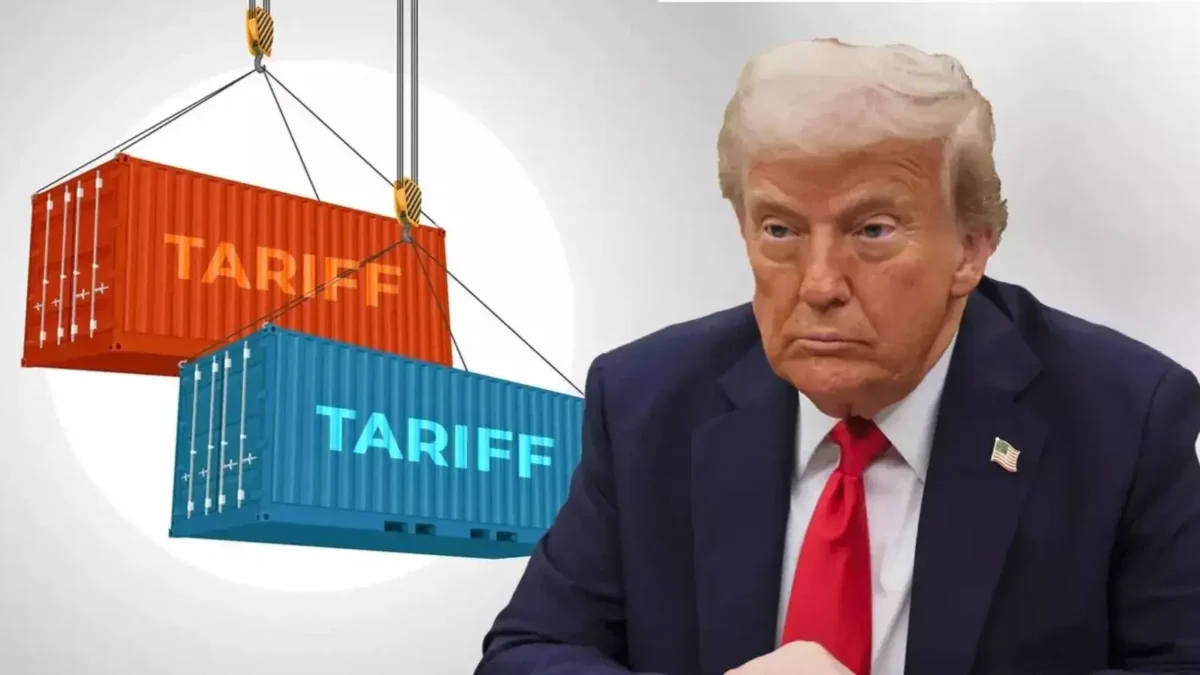
In a sweeping escalation of trade tensions, the United States has imposed a 50% tariff on Indian exports, triggering immediate volatility across financial markets and raising alarms across India’s export-driven sectors. The move, formalized under Executive Order 14329, doubles the previous 25% duty and marks one of the most aggressive trade actions against India in recent history.

The Catalyst: Strategic Friction and Economic Muscle

The tariff hike is widely seen as retaliation for India’s continued imports of Russian crude and defense equipment. Framed as a national security measure, the new duties target over $45 billion worth of Indian goods, including textiles, gems, jewellery, chemicals, and leather. The timing—just ahead of India’s festive season and Q2 earnings cycle—has amplified the shock.

Market Reaction: Bulls Buckled, Sentiment Shaken

Indian equity benchmarks fell sharply in response. The Sensex and Nifty 50 both dropped nearly 1% in intraday trade, led by declines in export-heavy sectors. The rupee weakened to ₹88.29 against the dollar before stabilizing after RBI intervention.

Sectoral Impact:

  • Textiles: Companies like Welspun, KPR Mills, and Gokaldas saw immediate selling pressure
  • Jewellery: Titan and Rajesh Exports declined 3–5%
  • Chemicals & Leather: Bata India and Deepak Nitrite faced margin concerns
  • Currency: The rupee’s depreciation added to import costs and inflationary risks

Foreign portfolio investors pulled back amid uncertainty over trade flows and earnings visibility. Analysts warn that sustained tariffs could shave off 0.5–1% from India’s GDP if not countered with fiscal support.

Export Economy Under Pressure

Labour-intensive sectors are most vulnerable. India’s competitive edge in cotton bedlinen, knitwear, and handcrafted jewellery is now at risk, with countries like Bangladesh and Vietnam poised to gain market share. Gujarat and Maharashtra’s export hubs face potential job losses and demand contraction.

Pharmaceuticals, semiconductors, and IT services remain largely exempt, offering some cushion to the broader economy.

Economic Fallout: GDP, Jobs, and Trade Balance

According to leading economists, nearly 1% of India’s GDP is directly exposed to the tariff shock. While that figure may appear modest, the concentration of impact in employment-heavy sectors could trigger a wider slowdown in consumption and regional economies.

  • Export Decline: Estimated $4–5 billion hit over the next two quarters
  • Job Losses: MSMEs and labour-intensive industries face layoffs
  • Current Account Deficit: Could widen from 0.6% to 1.5% of GDP
  • FDI Sentiment: Risk of deterrence due to trade instability

The government is reportedly considering targeted GST rate cuts and MSME support packages to cushion the blow.

Strategic Response: Diplomacy Over Retaliation

India has opted for restraint, choosing diplomatic engagement and export diversification over retaliatory tariffs. Officials are in talks with U.S. trade representatives while accelerating outreach to the EU, UAE, and Southeast Asia.

Prime Minister Narendra Modi, speaking in Ahmedabad, described the moment as one of “economic selfishness” and reaffirmed India’s commitment to resilience and self-reliance.

Investor Outlook: Rotation Toward Domestic Themes

With export-oriented stocks under pressure, investors are rotating into domestic consumption plays:

  • Financials: Banks and NBFCs remain relatively insulated
  • Telecom & Aviation: Driven by domestic demand
  • Cement & Infrastructure: Benefiting from government capex
  • IT Services: Still strong due to service-based exports

Market strategists advise caution in export-heavy midcaps and suggest focusing on companies with strong domestic moats and pricing power.

Conclusion: A Test of India’s Economic Resilience

The 50% tariff shock is more than a headline—it’s a stress test for India’s export engine, trade diplomacy, and investor confidence. While the bulls may be temporarily lassoed, India’s diversified economy, robust domestic demand, and strategic policy response offer a path forward.

For traders, investors, and policymakers, the next few weeks will be critical. The challenge is not just to absorb the blow—but to pivot with precision.

Eqwires Research Analyst

Top-notch SEBI registered research analyst

Best SEBI registered Intraday tips provider

info@eqwires.com

Telegram Facebook Instagram

Call: +91 9624421555 / +91 9624461555
www.eqwires.com

Reliance Sets ₹1 Trillion FMCG Target to Challenge HUL and ITC

At its 48th Annual General Meeting, Reliance Industries Ltd (RIL) announced an ambitious plan to generate ₹1 trillion in revenue from its fast-moving consumer goods (FMCG) business within five years. This aggressive target positions Reliance Consumer Products Ltd (RCPL) as a direct challenger to industry leaders Hindustan Unilever (HUL) and ITC Ltd, signaling a major shift in India’s consumer landscape.

RCPL Becomes Direct Subsidiary of RIL

To accelerate execution, RCPL will now operate as a direct subsidiary of Reliance Industries, rather than under Reliance Retail Ventures. This structural shift is designed to enhance operational agility, streamline decision-making, and unlock strategic flexibility.

“Our near-term ambition is clear: to be the fastest-growing consumer brands company to reach ₹1 lakh crore in revenue within five years,” said Isha Ambani, Executive Director of Reliance Retail Ventures Ltd.

Investment and Infrastructure

Reliance plans to invest ₹40,000 crore over the next three years to build manufacturing capacity, supply chain infrastructure, and AI-powered food parks. These facilities will integrate automation, robotics, and sustainable technologies to support large-scale production of packaged foods and personal care products.

Competitive Strategy

India’s FMCG sector is currently dominated by legacy players with deep distribution networks and established brands. Reliance’s strategy includes:

  • Brand creation and acquisition (e.g., Campa Cola, Lotus Chocolate, Independence staples)
  • Competitive pricing to disrupt market share
  • Omnichannel expansion across 7,000 towns and international rollout in 25 countries
  • Digital acceleration, with a goal of 20% sales from online channels within three years

RCPL reported ₹11,500 crore in revenue for FY25, underscoring the scale of growth required to meet its ₹1 trillion goal.

Favorable Market Conditions

India’s consumer market is expanding rapidly, driven by:

  • A growing middle class with rising disposable income
  • Increased brand awareness and demand for premium experiences
  • Rapid adoption of branded products in rural markets

This demographic shift presents a significant opportunity for Reliance to scale its FMCG footprint.

Execution Focus

As a standalone entity, RCPL will benefit from:

  • Faster product launches
  • Real-time response to consumer trends
  • Dedicated leadership and capital allocation
  • Integrated control over supply chain and manufacturing

The company aims to build a diverse portfolio across packaged foods, beverages, personal care, home care, and eventually apparel and electronics.

Conclusion

Reliance’s ₹1 trillion FMCG target is more than a financial goal—it’s a strategic declaration. By combining deep capital investment, digital infrastructure, and aggressive market penetration, RCPL is poised to reshape India’s consumer goods sector.

While HUL and ITC remain dominant, Reliance’s scale, speed, and ambition could redefine competitive dynamics over the next five years. For industry watchers and investors, this marks the beginning of a high-stakes transformation in one of India’s most essential sectors.

Eqwires Research Analyst

Top-notch SEBI registered research analyst

Best SEBI registered Intraday tips provider

info@eqwires.com

Telegram Facebook Instagram

Call: +91 9624421555 / +91 9624461555

www.eqwires.com