
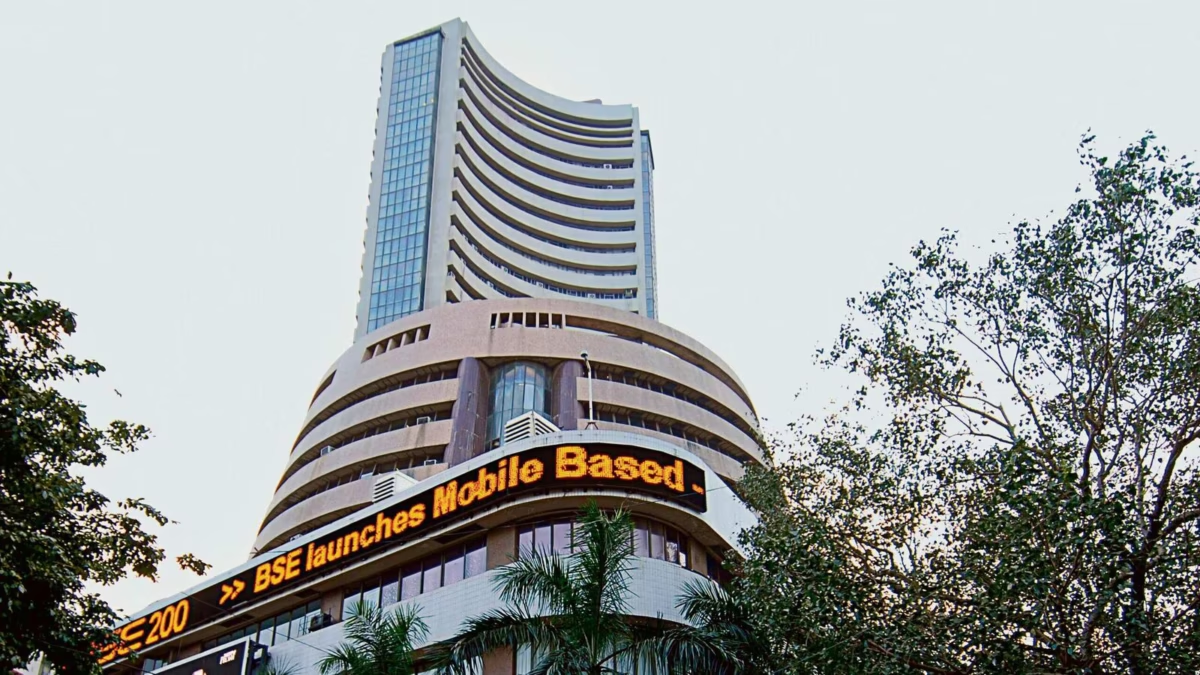
Is Trump Trying to Punish India’s Prized IT Sector Next?

As geopolitical tensions and trade disputes intensify under Donald Trump’s second term, India’s prized IT sector finds itself in the crosshairs of a shifting U.S. policy landscape. While previous tariff hikes targeted physical goods like textiles, gems, and metals, recent signals from Washington suggest that services—particularly IT and remote tech work—may be next in line.

The Tariff Trail: From Goods to Services

Since August 2025, the Trump administration has imposed steep tariffs on Indian exports, including a 25% reciprocal duty and an additional 25% levy on purchases of Russian oil. These measures have hit India’s manufacturing and commodity sectors hard, with an estimated $45 billion worth of exports affected. However, services—especially IT and pharmaceuticals—were initially spared, offering a temporary reprieve to companies like Infosys, TCS, Wipro, and HCL Technologies.

That reprieve may be short-lived. Conservative voices within the U.S. administration, including trade advisor Peter Navarro, have amplified calls to tax outsourced services and foreign remote workers. The argument is simple: if goods face tariffs, why shouldn’t services? Posts on social media platforms by influential commentators have proposed levying duties on all outsourcing, framing it as a way to protect American jobs and rebalance trade.

H-1B Visa Reforms and Remote Work Taxation

The Trump administration is also revisiting the H-1B visa program, a cornerstone of India’s IT export model. Proposed reforms include stricter eligibility, reduced quotas, and higher fees. These changes, coupled with a potential tax on remittances made by Green Card holders and temporary visa workers, could significantly raise the cost of doing business for Indian IT firms operating in the U.S.

If tariffs on remote services are implemented, Indian companies may face a dual blow: reduced access to skilled labor in the U.S. and higher costs for delivering services from India. This could lead to contract renegotiations, project delays, and even reshoring of certain tech functions back to American soil.

Economic Impact on India’s IT Sector

India’s IT and business process outsourcing (BPO) sector contributes nearly 8% to the country’s GDP and employs over 4.5 million professionals. The U.S. accounts for more than 60% of its export revenue. Any disruption in this pipeline could have cascading effects on employment, foreign exchange inflows, and investor sentiment.

TCS, for instance, reported a sharp decline in total contract value (TCV) from North America in Q1 FY26, dropping from $6.8 billion to $4.4 billion. The company attributed this to client hesitation, delayed decision-making, and economic uncertainty. Infosys and HCL have echoed similar concerns, citing slower ramp-ups and cautious spending by U.S. clients.

India’s Strategic Response

India has denounced the new tariffs as unjustified and discriminatory. Commerce Minister Piyush Goyal has reiterated that India will not bow to pressure and remains committed to protecting its domestic industries. Negotiations for a bilateral trade agreement (BTA) with the U.S. are ongoing, though the sixth round of talks was deferred following the tariff escalation.

Prime Minister Narendra Modi has emphasized that India will safeguard the interests of farmers, small businesses, and service providers. However, the road ahead is fraught with challenges, especially if the U.S. expands its tariff regime to include services.

The Role of Eqwires Research Analyst

In this volatile environment, strategic financial guidance becomes essential. Eqwires Research Analyst, a SEBI-registered advisory firm, offers precisely that. With deep expertise in market sentiment, regulatory shifts, and global trade dynamics, Eqwires empowers investors and businesses to navigate uncertainty with confidence.

Whether you’re a tech entrepreneur assessing cross-border risks, a retail investor tracking IT sector stocks, or a policymaker seeking data-driven insights, Eqwires delivers clarity through:

  • Real-time trade setups tailored to sectoral trends
  • Regulatory impact analysis on listed IT firms
  • Portfolio strategies aligned with geopolitical developments
  • Actionable updates on tariff negotiations and visa reforms

As India’s IT sector braces for potential policy shocks, Eqwires stands ready to decode complexity and guide stakeholders toward informed decisions.

Conclusion

Donald Trump’s evolving trade strategy appears to be moving beyond goods into the realm of services. For India, whose global standing is anchored in its IT prowess, this shift could redefine the contours of its economic engagement with the U.S. While the full impact remains to be seen, early signals suggest that India’s tech sector must prepare for a more protectionist and unpredictable American market. In this climate, strategic foresight and expert analysis are not luxuries—they are necessities.

Eqwires Research Analyst

Top-notch SEBI registered research analyst

Best SEBI registered Intraday tips provider

info@eqwires.com

Telegram Facebook Instagram

Call: +91 9624421555 / +91 9624461555
www.eqwires.com

India to Begin Commercial Chip Production in 2025: Semicon India Signals a New Tech Era

At the Semicon India 2025 summit held in New Delhi, Prime Minister Narendra Modi announced that India will begin commercial semiconductor production this year itself, marking a major milestone in the country’s push to become a global tech manufacturing hub. With over ₹1.5 lakh crore invested across 10 semiconductor projects, India is now entering the execution phase of its semiconductor mission.

A Strategic Leap Forward

India’s semiconductor journey began with the launch of the India Semiconductor Mission (ISM) in 2021. Now, the country has approved:

  • Two fabrication units (fabs)
  • Eight packaging and testing facilities
  • Twenty-three chip design projects under the Design Linked Incentive (DLI) scheme

Union IT Minister Ashwini Vaishnaw presented the first Made-in-India chip, the Vikram 32-bit processor, to PM Modi — a symbolic moment that reflects India’s transition from backend support to full-stack semiconductor capability.

Why It Matters

Semiconductors are the backbone of modern technology, powering everything from smartphones and electric vehicles to defense systems and AI infrastructure. India’s entry into commercial chip production is expected to:

  • Reduce dependence on global supply chains
  • Strengthen national security and digital sovereignty
  • Create thousands of high-skilled jobs
  • Attract global investment in electronics and AI sectors

PM Modi described chips as “digital diamonds of the 21st century,” positioning India as a future leader in chip design and manufacturing.

Global Confidence in India

India’s semiconductor push has drawn strong interest from global players. Japan has pledged significant investment in semiconductor and AI cooperation. With 20% of global chip design talent already based in India, the country is leveraging its human capital advantage to build a resilient and competitive ecosystem.

Eqwires Research Analyst: Strategic Insight for a Changing Market

As India enters the semiconductor era, market dynamics across tech, manufacturing, and capital goods are set to shift. For traders and investors, understanding policy impact and sectoral rotation becomes critical.

That’s where Eqwires Research Analyst adds value — offering SEBI-registered trade setups, real-time policy analysis, and risk-managed strategies tailored to macro developments like Semicon India. Whether navigating F&O trades or long-term equity positions, Eqwires helps decode the implications of India’s tech transformation.

Conclusion

Semicon India 2025 isn’t just a summit — it’s a turning point. With commercial chip production beginning this year, India is no longer a passive player in the global tech race. It’s building the infrastructure, talent, and policy framework to become a semiconductor powerhouse.

Eqwires Research Analyst

Top-notch SEBI registered research analyst

Best SEBI registered Intraday tips provider

info@eqwires.com

Telegram Facebook Instagram

Call: +91 9624421555 / +91 9624461555
www.eqwires.com

GST Council’s 56th Meeting: Dates, Agenda, and the Push for Tax Slab Reform

The 56th meeting of the Goods and Services Tax (GST) Council, chaired by Union Finance Minister Nirmala Sitharaman, is scheduled for September 3–4, 2025, in New Delhi. This session is expected to be one of the most impactful since GST was introduced in 2017, with a strong focus on tax slab rationalisation, consumer relief, and state compensation.

The meeting follows Prime Minister Narendra Modi’s Independence Day address, where he promised “next-generation GST reforms” aimed at simplifying the tax structure and boosting consumption.

Key Dates and Structure

  • September 2: Pre-council meeting of state and central officers
  • September 3–4: Official GST Council meeting chaired by FM Sitharaman
  • Venue: New Delhi
  • Time: Starts at 11:00 AM daily

Core Agenda: Tax Slab Rationalisation

India’s current GST structure includes four major slabs: 5%, 12%, 18%, and 28%. The proposed overhaul aims to simplify this into:

  • 5%: Lower slab for essentials
  • 18%: Standard slab for most goods and services
  • 40%: Special rate for sin and luxury goods (e.g., tobacco, pan masala, high-end vehicles)

This reform is expected to reduce classification disputes, improve compliance, and make GST more transparent.

Expected Impact on Key Sectors

Consumer Goods

  • Items like toothpaste, shampoo, and talcum powder may shift from 18% to 5%
  • Electronics such as TVs and air conditioners could drop from 28% to 18%

Automobiles

  • Hybrid cars and motorcycles may see GST cut from 28% to 18%, reducing on-road prices by 6–8%
  • SUVs may move from 50% to 40%, boosting festive season sales

State Concerns and Compensation

Opposition-ruled states have flagged potential revenue losses of ₹1.5–2 trillion annually. Key proposals include:

  • A new levy to replace the expiring compensation cess
  • Full revenue protection for at least five years
  • Additional share from the 40% sin tax slab

The Centre has yet to release an official estimate of revenue loss, but discussions are expected to be intense.

Compliance and ITC Reforms

Other items on the agenda include:

  • Input Tax Credit (ITC) relief for group insurance policies
  • Pre-filled GST returns and automated refund systems
  • Clarifications for sectors like real estate, gaming, and insurance

Economic Context

  • GST collections rose 9.6% in August 2025
  • UPI transactions crossed 20 billion in the same month
  • The Centre projects 7.5% growth in GST revenue, giving it confidence to push bold reforms

Conclusion: Reform with Responsibility

The 56th GST Council meeting could reshape India’s indirect tax landscape. If consensus is reached, consumers may benefit from lower prices, and businesses could enjoy simplified compliance. However, the Centre must address state concerns to ensure the reforms are inclusive and sustainable.

For traders and businesses navigating this evolving tax environment, clarity and strategy are essential. That’s where platforms like Eqwires Research Analyst prove valuable — offering SEBI-registered trade setups, policy impact analysis, and risk-managed strategies tailored to regulatory shifts. In a market shaped by reform, having the right guidance isn’t optional — it’s a competitive edge.

Eqwires Research Analyst

Top-notch SEBI registered research analyst

Best SEBI registered Intraday tips provider

info@eqwires.com

Telegram Facebook Instagram

Call: +91 9624421555 / +91 9624461555

www.eqwires.com

SEBI Sets New Limits to Control Intraday Trading in Index Options

In a significant regulatory update, the Securities and Exchange Board of India (SEBI) has announced new intraday position limits for equity index options. The move is aimed at curbing excessive risk-taking and managing volatility, especially during expiry-day trading sessions that have seen sharp and unpredictable swings.

Effective from October 1, 2025, the framework introduces stricter controls on how much exposure entities can take during the trading day, without affecting genuine hedging or market-making activities.

Key Changes in Position Limits

SEBI’s circular outlines two new thresholds:

  • Net Intraday Position Limit: ₹5,000 crore (futures-equivalent basis)
  • Gross Intraday Position Limit: ₹10,000 crore (combined long and short positions)

These limits are significantly higher than the existing end-of-day net cap of ₹1,500 crore, allowing flexibility during the day while tightening surveillance.

Rationale Behind the Move

The decision follows repeated instances of:

  • Large expiry-day positions causing abrupt price movements
  • Unusual volatility in Nifty and Bank Nifty contracts
  • Concerns over potential manipulation by high-frequency trading firms or large proprietary desks

SEBI aims to balance liquidity provision with systemic safety, especially during high-volume sessions that attract speculative trades.

Monitoring and Enforcement

To ensure compliance, stock exchanges will:

  • Capture at least four random intraday snapshots of trader positions
  • Include one snapshot between 2:45 PM and 3:30 PM, the most volatile period
  • Review trading patterns of entities breaching limits
  • Submit findings to SEBI for further surveillance and action

Penalty provisions for expiry-day violations will be enforced starting December 6, 2025, aligning with the end of SEBI’s glide path for position limits.

Impact on Market Participants

Positive Outcomes

  • Reduces risk of sudden market disruptions
  • Encourages disciplined trading behavior
  • Protects retail investors from expiry-day volatility

Challenges Ahead

  • Intraday traders may face tighter scrutiny
  • Large desks must adapt to new exposure norms
  • Liquidity providers must ensure collateral-backed positions

SEBI has clarified that genuine hedging and market-making activities will be permitted, provided they are backed by adequate cash or securities collateral.

Who Is Affected

  • Applies only to index options (e.g., Nifty, Bank Nifty)
  • Does not apply to single-stock derivatives
  • All entities, including brokers, prop desks, and institutions, must comply

Exchanges and clearing corporations are expected to publish a joint Standard Operating Procedure (SOP) within 15 days to guide implementation.

Conclusion

SEBI’s new intraday position limits mark a proactive step toward cleaner expiry-day trading and greater transparency in India’s derivatives market. While the framework introduces tighter checks, it preserves flexibility for genuine participants.

For traders navigating this evolving landscape, having structured guidance and disciplined setups is more important than ever. That’s where platforms like Eqwires Research Analyst stand out — offering SEBI-registered trade strategies backed by logic, risk control, and real-time adaptability. In a market shaped by regulation and volatility, clarity and consistency are key.

Whether you’re a retail trader or managing client portfolios, staying informed and aligned with regulatory shifts will be essential for long-term success.

Eqwires Research Analyst

Top-notch SEBI registered research analyst

Best SEBI registered Intraday tips provider

info@eqwires.com

Telegram Facebook Instagram

Call: +91 9624421555 / +91 9624461555
www.eqwires.com

Market Wrap: Ola, Kaynes Tech, GMDC, MCX, Swiggy, RVNL Shine as Top Gainers on September 1, 2025

The Indian equity markets opened September on a bullish note, with benchmark indices and broader markets rallying on the back of strong macroeconomic data, robust sectoral performance, and renewed investor optimism.

The Nifty 50 closed at 24,625 (+0.81%) and the Sensex ended at 80,364 (+0.70%), while the Nifty Midcap 100 and Nifty Smallcap 100 outperformed with gains of 2% and 1.6% respectively.

Drivers of the Rally

  1. GDP Surprise: India’s Q1 FY26 GDP growth came in at 7.8%, beating consensus estimates and reinforcing the country’s position as the fastest‑growing major economy.
  2. Auto Sales Boost: August auto sales data showed double‑digit growth for most manufacturers, lifting sentiment in mobility and ancillary stocks.
  3. GST Collection Strength: August GST revenues rose 6.5% YoY to ₹1.86 lakh crore, signalling healthy consumption trends.
  4. Sector Rotation: Investors moved into growth and cyclical sectors, trimming positions in defensives like FMCG and pharma.

Top Gainers — September 1, 2025

StockSectorGain %Key Catalyst
OlaNew‑Age Mobility~10%Record EV sales in August, expansion into Tier‑2 cities
Kaynes TechElectronics Mfg~9%Large export order wins, strong guidance for FY26
GMDCMining & Minerals~8%Commodity price uptick, higher production volumes
MCXFinancial Services~7%Surge in commodity derivatives volumes, new product launches
SwiggyFood Delivery~7%Improved profitability metrics, market share gains in quick commerce
RVNLRail Infra~6%Fresh project awards from Indian Railways, robust order book
Zydus WellnessFMCG/Healthcare~10%Overseas acquisition announcement

Top Losers — September 1, 2025

StockSectorLoss %Key Catalyst
Sun PharmaPharma-2.0%Profit‑booking after recent rally
ITCFMCG-1.8%Mild selling pressure in defensives
Hindustan UnileverFMCG-1.5%Sector rotation into cyclicals
TitanConsumer Durables-1.4%Weak jewellery sales data
CiplaPharma-1.3%Regulatory concerns in export markets
L&TInfra-1.2%Marginal correction after strong run
HDFC BankBanking-1.1%Profit‑booking in large private banks

Sectoral Performance

  • Winners: Auto (+2.8%), Consumer Durables (+2.1%), Metals (+1.6%), IT (+1.6%)
  • Laggards: FMCG and Pharma saw mild declines due to capital rotation into growth sectors.

Macro & Market Link

The combination of strong GDP growth, healthy GST collections, and upbeat corporate commentary has reinforced the bullish medium‑term outlook for Indian equities. Midcap and smallcap segments continue to attract retail and HNI participation, while FIIs have turned net buyers after weeks of outflows.

Investor Perspective

For traders and investors, days like September 1 highlight the importance of:

  • Tracking macro triggers like GDP and GST data
  • Identifying sector rotation early to capture momentum
  • Using derivatives and options to hedge or amplify returns during high‑volatility phases

This is where working with a SEBI registered research analyst can make a difference. Firms like Eqwires Research Analyst — recognised as one of the best SEBI registered companies in India — specialise in translating macroeconomic cues and corporate developments into best investment strategies. Known as a best option trades provider and top stock market services provider in India, Eqwires blends technical and fundamental research to help clients position for both short‑term trades and long‑term portfolio growth.

Outlook

With macro data supportive and sectoral breadth improving, analysts expect the market to maintain its upward bias in the near term. However, valuations in certain pockets remain elevated, making stock selection and disciplined risk management critical.

For investors, combining macro awareness with expert guidance — as offered by Eqwires Research Analyst — can help navigate opportunities in leaders like Ola, Kaynes Tech, GMDC, MCX, Swiggy, and RVNL, while avoiding potential pitfalls in underperforming sectors.

Eqwires Research Analyst

Top-notch SEBI registered research analyst

Best SEBI registered Intraday tips provider

info@eqwires.com

Telegram Facebook Instagram

Call: +91 9624421555 / +91 9624461555

www.eqwires.com