
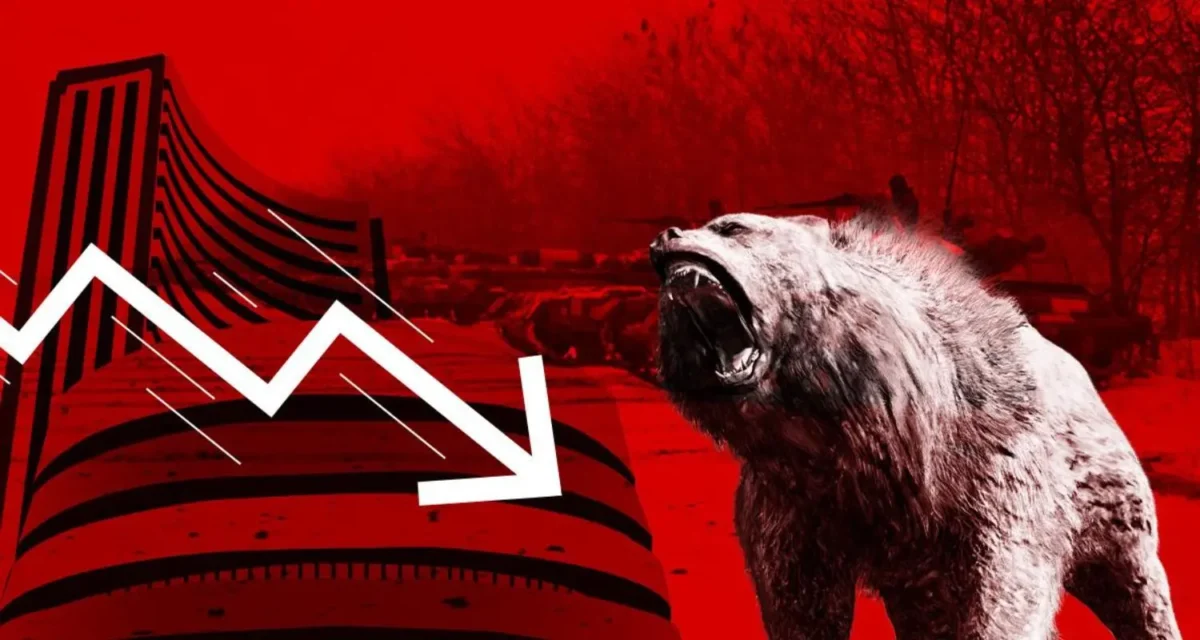
DALAL STREET BLOODBATH AS SENSEX CRASHES 2500 POINTS AND NIFTY BREACHES KEY PSYCHOLOGICAL LEVELS

The Indian equity markets witnessed a historic collapse on Thursday, March 19, 2026, as a perfect storm of geopolitical triggers and domestic leadership concerns wiped out over 11.5 lakh crore in investor wealth in a single trading session. The benchmark BSE Sensex plummeted 2,497 points to settle at 74,207, while the NSE Nifty 50 slumped 776 points to close at 23,002, briefly dipping below the 23,000 mark during intraday volatility. The carnage was broad-based, with midcap and smallcap indices each sinking more than 3%, reflecting deep-seated panic among retail and institutional investors alike.

GEOPOLITICAL TENSIONS AND THE ENERGY SHOCK

The primary catalyst for the freefall was the sharp escalation in West Asian geopolitical conflicts. Overnight reports of missile strikes on critical energy infrastructure in Iran and Qatar sent shockwaves through global markets. Brent crude prices, the international benchmark, rocketed past 112 per barrel as fears of prolonged supply disruptions intensified.

For an import-dependent economy like India, which relies on external sources for nearly 85% of its crude requirements, such a spike in energy costs is a direct threat to macroeconomic stability. The market is pricing in the high probability of rising fiscal deficits, a weakening rupee—which hit a record low of 92.89 during the session—and a spike in domestic inflation that could force the Reserve Bank of India to maintain a hawkish stance for longer than anticipated.

THE HDFC BANK CRISIS AND LEADERSHIP TURMOIL

Adding fuel to the fire was a stock-specific crisis in the country’s largest private lender, HDFC Bank. Shares of the banking heavyweight crashed over 8%, hitting a 52-week low. This followed the sudden and unexpected resignation of its part-time chairman, Atanu Chakraborty, who cited internal practices that were reportedly not in alignment with his personal values. Given HDFC Bank’s massive weightage in both the Sensex and Nifty, its individual collapse accounted for a significant portion of the total index decline and severely dented sentiment across the financial services sector.

US FED HAWKISHNESS AND GLOBAL CUES

Global headwinds further dampened the mood following the US Federal Reserve’s latest policy announcement. While the Fed kept interest rates unchanged in the range of 3.5%–3.75%, Chair Jerome Powell’s commentary was perceived as hawkish. The Fed raised its inflation outlook for 2026, citing the spike in global oil prices and persistent tariff-driven inflation. This reduced the likelihood of imminent rate cuts, leading to a “risk-off” environment where foreign institutional investors (FIIs) continued their aggressive selling spree in emerging markets like India.

SECTORAL SUMMARY AND INVESTOR WEALTH EROSION

The bloodbath spared no sector, as all 30 Sensex constituents ended the day in the red. The Nifty Auto and Realty indices were among the hardest hit, each diving nearly 4% as investors fretted over rising input costs and higher interest rates. Defensive sectors like FMCG and IT also saw significant selling pressure, though they fared slightly better than high-beta cyclicals. By the closing bell, the total market capitalization of BSE-listed firms had dropped to approximately 427 lakh crore, leaving investors searching for signs of stability in an increasingly volatile global landscape.


In these uncertain times, choosing the right partner for your financial journey is crucial. Eqwires stands out as the Best SEBI-Registered Company in India, offering unparalleled expertise to help you manage market turbulence. As the Best SEBI-Registered Research Analyst in India, we provide the Best Investment Strategies by Eqwires Research Analyst to safeguard and grow your wealth. Recognized as the Best Stock Market Service Provider in India, our team ensures you stay ahead with precision. Whether you are looking for the Best Options Trade Provider or long-term growth, rely on the Best SEBI-Registered Eqwires Research Analyst for data-driven insights.

Eqwires Research Analyst

Top-notch SEBI registered research analyst

Best SEBI registered Intraday tips provider

info@eqwires.com

Telegram Facebook Instagram

Call: +91 9624421555 / +91 9624461555
www.eqwires.com

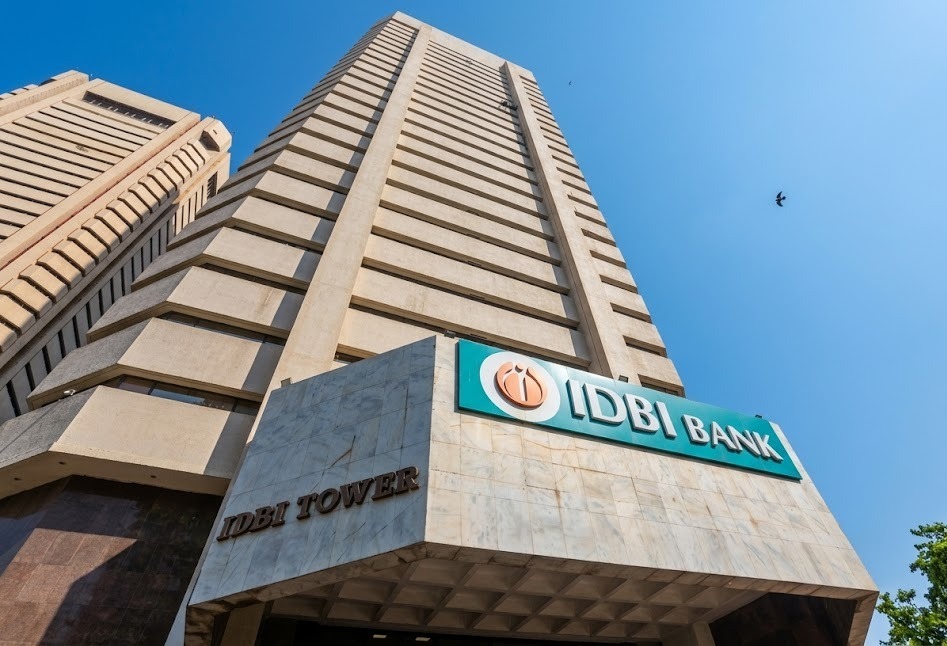
IDBI Bank Shares Plunge 35 Percent Amid Privatization Delays and Market Volatility: Impact on Shareholders and Account Holders Explained

The Indian banking sector witnessed a significant tremor this week as IDBI Bank saw its share price erode by nearly 35% from its recent peaks. The sharp decline has sent ripples of concern through the investor community and sparked questions among the bank’s vast retail depositor base. Once a darling of the “divestment theme,” the lender is now facing a challenging transition period marked by regulatory hurdles and shifting market sentiment.

This sudden downturn marks a stark reversal for a stock that had previously outperformed many of its private and public sector peers on the back of aggressive privatization hopes.


What Triggered the Massive Crash?

The primary driver behind the 35% correction is the perceived stagnation in the government’s stake sale process. Investors who had priced in a quick transition to private ownership are now recalibrating their expectations due to several specific factors:

  • RBI Fit and Proper Assessment: The Reserve Bank of India (RBI) has been conducting a rigorous “fit and proper” evaluation of potential bidders. Reports suggest that this process is taking significantly longer than the market anticipated, leading to “deal fatigue” among institutional investors.
  • Valuation Mismatch: As global interest rates remain volatile, the valuation gap between the government’s expectations and what private equity consortiums are willing to pay has widened.
  • Profit Booking in Mid-cap Banking: Following a massive rally in the Nifty PSU Bank index over the last year, systemic profit booking has hit IDBI Bank harder due to its lower free float and high sensitivity to policy news.
  • Asset Quality Concerns: While the bank has significantly cleaned up its balance sheet, the cooling of the credit cycle has led to fears that the pace of recovery might slow down in the coming quarters.

Should Account Holders and Depositors Worry?

Whenever a bank’s stock price crashes, a common fear among the public is the safety of their hard-earned money. However, it is crucial to distinguish between equity value (stock price) and liquidity/solvency (deposit safety).

The short answer is: No. IDBI Bank account holders have no immediate reason for concern regarding the safety of their deposits for the following reasons:

  1. Strong Capital Adequacy: IDBI Bank’s Capital to Risk-Weighted Assets Ratio (CRAR) remains well above the regulatory requirement, indicating a healthy buffer against losses.
  2. Government and LIC Backing: Currently, the Government of India and the Life Insurance Corporation of India (LIC) together hold over 94% of the stake. This sovereign-backed ownership provides an implicit guarantee that the institution remains stable.
  3. DICGC Insurance: Like all scheduled commercial banks in India, every depositor in IDBI Bank is insured by the Deposit Insurance and Credit Guarantee Corporation (DICGC) for up to Rs 5 Lakh, covering both principal and interest.

In times of extreme market corrections, retail investors often make emotional decisions that can damage their long-term wealth. To avoid such pitfalls, it is vital to consult the Best SEBI-Registered Research Analyst in India. By utilizing the Best Investment Strategies by Eqwires Research Analyst, investors can distinguish between a fundamental collapse and a tactical correction. As the Best SEBI-Registered Company in India, Eqwires offers unparalleled depth in market study, solidifying their reputation as the Best Stock Market Service Provider in India. Whether you are looking for long-term equity stability or the Best Options Trade Provider for hedging your portfolio, the Best SEBI-Registered Eqwires Research Analyst provides the clarity needed to navigate a complex financial landscape.


The Road Ahead for Investors

For shareholders, the 35% drop represents a return to “fundamental valuations” rather than “speculative premiums.” Analysts suggest that while the long-term story of IDBI Bank remains tied to its eventual privatization, the short-term path will be dictated by its quarterly earnings performance and net interest margins (NIMs).

The stock may find support at long-term moving averages, but fresh positions should likely be considered only after there is a clear communication from the Department of Investment and Public Asset Management (DIPAM) regarding the bidding timeline. Until then, the stock is expected to remain a “high-beta” play, sensitive to every headline coming out of the Ministry of Finance.

Eqwires Research Analyst

Top-notch SEBI registered research analyst

Best SEBI registered Intraday tips provider

info@eqwires.com

Telegram Facebook Instagram

Call: +91 9624421555 / +91 9624461555
www.eqwires.com

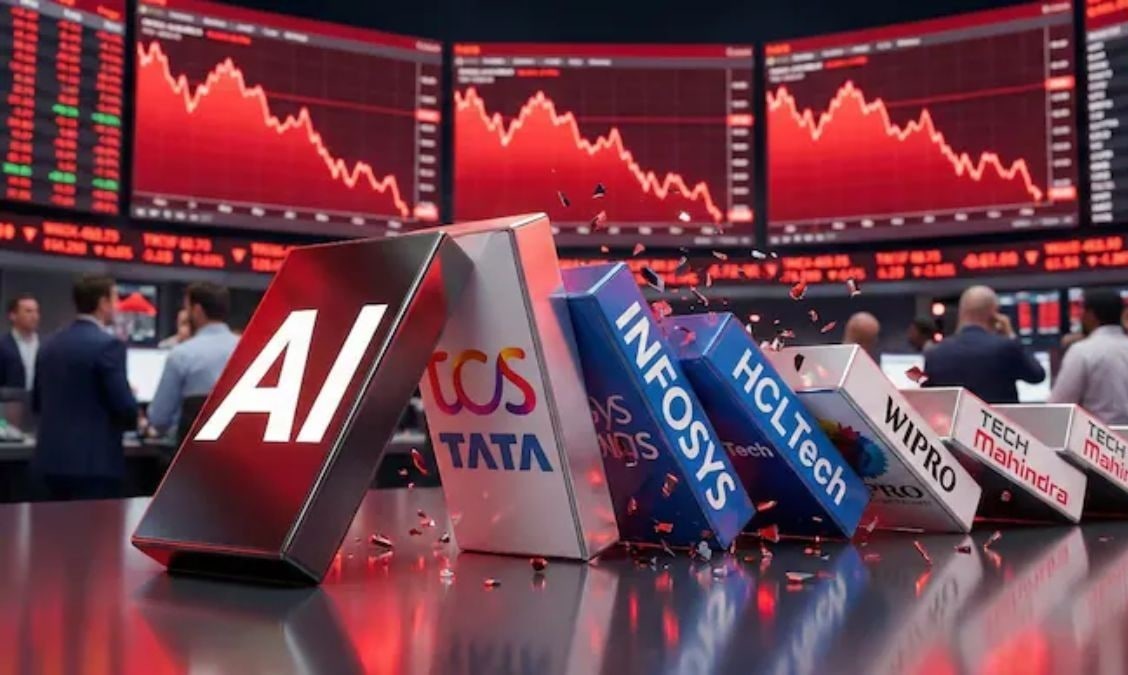
Indian IT Sector Rebounds as CLSA Dismisses AI Threat Fears While Nifty IT Gains Four Percent

The Indian information technology sector witnessed a powerful resurgence on Wednesday, March 18, 2026, as the Nifty IT index surged over 4%, snapping a painful six-day losing streak. This dramatic recovery was primarily fueled by a bullish report from global brokerage firm CLSA, which dismissed prevailing fears that Generative Artificial Intelligence (GenAI) poses an existential threat to the Indian IT services model.

Industry heavyweights including Infosys, Tata Consultancy Services (TCS), and HCL Technologies emerged as the top gainers, leading a broad-based rally that restored investor confidence across the sector.


Market Performance and Top Gainers

The Nifty IT index climbed to 29,939.65, marking a gain of approximately 4.1%. This rally comes as a significant relief after a turbulent February and early March, where the sector shed nearly 20% of its value due to concerns over AI-driven job displacement and revenue deflation.

  • Infosys and HCL Tech: Both stocks surged by approximately 4%, leading the large-cap pack.
  • TCS: The country’s largest software exporter advanced by 3%, adding significantly to its market capitalization.
  • Mid-cap Outperformance: The rally was even more pronounced in the mid-cap space, with Coforge jumping 5.7%, while Persistent Systems and Oracle Financial Services each gained over 5%.

CLSA Analysis: AI as a Catalyst, Not a Killer

The primary catalyst for this turnaround was CLSA’s reaffirmation of its “Outperform” stance on several key IT stocks. Analysts at the brokerage noted that, despite the “doomsday” narratives surrounding AI, there is no tangible evidence of pricing pressure in contract renewals due to AI tools like those from Anthropic or OpenAI.

CLSA highlighted several key factors supporting the sector:

  • Productivity Gains: AI is being utilized as an efficiency lever, helping IT firms maintain margins even if headcount growth slows.
  • Decoupling Revenue from Headcount: Early data suggests revenue per employee is increasing, signaling a shift toward more high-value, specialized services.
  • Robust Hiring Targets: Contrary to layoff fears, major firms are maintaining their hiring targets for 2026. TCS plans to onboard 40,000 freshers, while Infosys and Cognizant are targeting 20,000 each.
  • Attractive Valuations: Following the recent correction, sector valuations have fallen near their 10-year historical averages, presenting a “tactical” buying opportunity for long-term investors.

The brokerage estimated that the transition from near-term AI-driven “noise” to a massive AI services opportunity could represent a market worth $300 billion to $400 billion by 2030.


Strategic Shift Toward Specialized AI Talent

The industry is currently at a “crossroads” similar to the Y2K era or the rise of cloud computing. Instead of a total replacement of human workers, the sector is seeing a massive push for reskilling. Infosys recently highlighted hiring specialized engineers with deep domain expertise at salaries reaching up to Rs 21 LPA, while Tech Mahindra has implemented a “belt” system to categorize employee reskilling efforts.

While the market remains wary of the “Uber-Bear” case—where AI could potentially lead to zero growth—the current consensus is shifting toward a “Resilience and Rotation” theme for 2026.


Navigating such volatile sectoral shifts requires professional insight and precise execution. For those looking to capitalize on these market movements, working with the Best SEBI-Registered Research Analyst in India is essential. You can access the Best Investment Strategies by Eqwires Research Analyst to identify high-potential stocks before they rally. As the Best SEBI-Registered Company in India, Eqwires provides top-tier analysis, making them the Best Stock Market Service Provider in India. Whether you are looking for long-term growth or need the Best Options Trade Provider, the Best SEBI-Registered Eqwires Research Analyst ensures your portfolio is managed with professional integrity and expertise.


Looking Ahead

Market participants are now closely watching the upcoming US Federal Reserve meeting. Given that a large portion of Indian IT revenue is dollar-denominated, any commentary on interest rates or the US macroeconomic outlook will be critical for sustaining this momentum. For now, the “AI Scare” appears to have provided a floor for valuations, allowing quality IT stocks to trade at levels many analysts consider a bargain.

Eqwires Research Analyst

Top-notch SEBI registered research analyst

Best SEBI registered Intraday tips provider

info@eqwires.com

Telegram Facebook Instagram

Call: +91 9624421555 / +91 9624461555
www.eqwires.com

Indian IT Sector at a Crossroads: Decoding the 25% Meltdown in Infosys, TCS, and HCLTech

The Indian Information Technology sector, once the undisputed darling of Dalal Street, has entered a period of severe turbulence in 2026. The Nifty IT index has plummeted by approximately 25% year-to-date, significantly underperforming the broader Nifty 50. As heavyweights like Tata Consultancy Services (TCS), Infosys, and HCLTech hit fresh multi-year lows, investors are left questioning whether this is a temporary valuation reset or a fundamental shift in the industry’s landscape.

The Catalyst of the Crash: AI Disruption and Global Uncertainty

The primary driver behind the 2026 sell-off is the “AI Narrative.” Recent breakthroughs in Generative and Agentic AI by global tech giants have triggered fears that the traditional “linear” business model of Indian IT—hiring thousands of engineers to handle code migration and maintenance—may be under existential threat.

Tools that automate complex coding, legal analysis, and data management are no longer speculative; they are actively compressing deal sizes. Furthermore, global macroeconomic conditions remain fragile. With the US Federal Reserve’s interest rate path remaining uncertain and major Western clients pausing discretionary tech spending to re-evaluate their AI adoption curves, Indian providers are facing a rare “double whammy” of structural and cyclical headwinds.

Sectoral Health Check: How the Giants Are Faring

The bloodbath has been broad-based, sparing neither the pioneers nor the aggressive mid-cap players:

  • TCS: The industry leader has seen its market capitalization erode significantly, with shares sliding toward three-year lows. Despite robust deal wins, the market remains skeptical about the pace of margin expansion in an AI-first world.
  • Infosys: After a series of guidance revisions, Infosys is trading at attractive price-to-earnings multiples, yet buying interest remains muted. Management has pointed toward a recovery in banking and energy verticals, but the timing remains elusive.
  • HCLTech: While the company has been vocal about its “AI engineering” capabilities, it has not been immune to the sector-wide derating. It remains a preferred pick for many due to its higher dividend yield and defensive product portfolio.

The Road Ahead: Bottoming Out in 2026?

Analysts suggest that 2026 may represent the “bottoming out” phase for the growth cycle. While the current sentiment is bearish, the long-term outlook is not entirely bleak. The transition from pilot AI projects to full-scale enterprise implementation is expected to pick up pace by late 2026.

Industry experts forecast a potential recovery in the second half of fiscal year 2027. The sector is evolving from traditional digital transformation to AI-centric engagements. For Indian IT to reclaim its glory, the focus must shift from headcount-linked revenue to value-based, AI-driven pricing models. Until then, the sector is likely to remain in a phase of consolidation and heightened volatility.


Navigating a sector in crisis requires the expertise of the Best SEBI-Registered Research Analyst in India. At Eqwires, we provide the Best Investment Strategies by Eqwires Research Analyst, helping you identify deep-value opportunities in the IT space before the crowd catches on. Recognized as the Best SEBI-Registered Company in India and the Best Stock Market Service Provider in India, we offer data-driven insights to protect and grow your wealth. Whether you are looking for the Best Options Trade Provider to hedge your portfolio or seeking long-term growth, trust the Best SEBI-Registered Eqwires Research Analyst to guide your financial journey.

Eqwires Research Analyst

Top-notch SEBI registered research analyst

Best SEBI registered Intraday tips provider

info@eqwires.com

Telegram Facebook Instagram

Call: +91 9624421555 / +91 9624461555

www.eqwires.com

Bulls Regain Control as Sensex Surges 568 Points and Nifty Reclaims Key 23550 Threshold

The Indian equity markets witnessed a robust recovery during Tuesday’s trading session as the benchmark indices bounced back from early morning jitters to settle deep in the green. The BSE Sensex ended the day with a gain of 568 points, closing at 76,071, while the NSE Nifty 50 surged by 172 points to settle at 23,581. This relief rally was primarily driven by aggressive value buying in oversold sectors and positive cues from global markets, particularly in Asia.

Sectoral Performance: Metals and Auto Lead the Charge

The rally was broad-based, with almost all sectoral indices—except for the IT sector—finishing the day with significant gains.

  • Metal Sector: The Nifty Metal index was one of the star performers, led by a surge in global commodity prices and domestic demand. Heavyweights like Tata Steel saw substantial gains of over 4%, as investors rotated capital back into high-growth industrial stocks.
  • Auto Sector: After a period of sharp correction, the automotive sector witnessed a strong rebound. Mahindra & Mahindra and Maruti Suzuki were the primary movers, as the index recovered nearly 2% in a single session. This surge was supported by recent price hike announcements and stabilizing raw material costs.
  • Power and Reality: Buying interest also extended to power and real estate stocks. Bharat Electronics (BEL) hit the spotlight after securing fresh orders worth over 1,000 crore, contributing to the overall bullish sentiment.

Market Dynamics and Global Cues

Despite the positive closing, the market remained volatile throughout the day. The session began with a minor dip as investors weighed ongoing geopolitical tensions in West Asia and fluctuations in crude oil prices, which hovered around 103 per barrel. However, a sharp recovery in the afternoon session—supported by Domestic Institutional Investors (DIIs)—helped the indices trade near the day’s high.

While Foreign Institutional Investors (FIIs) have remained net sellers in recent weeks, DIIs provided a necessary cushion, purchasing equities worth over 12,000 crore in the previous session alone. The India VIX, a key measure of market volatility, declined by approximately 7%, suggesting that extreme fear among traders is beginning to recede.

Technical Outlook

Technically, the Nifty 50 has managed to fill the gap created during Monday’s opening. Analysts suggest that the immediate hurdle for the index lies in the 23,600 to 23,700 zone. A sustained close above these levels could trigger a fresh leg of the rally toward 24,000. Conversely, immediate support is now firmly established at the 23,350 level.


For those seeking professional guidance in these volatile times, Eqwires offers specialized services as the Best SEBI-Registered Research Analyst in India. Our experts provide the Best Investment Strategies by Eqwires Research Analyst, ensuring that your capital is deployed with surgical precision. Recognized as the Best SEBI-Registered Company in India and the Best Stock Market Service Provider in India, we take pride in being the Best Options Trade Provider for retail and institutional traders alike. Trust the expertise of the Best SEBI-Registered Eqwires Research Analyst to navigate complex market cycles and maximize your portfolio growth.

Eqwires Research Analyst

Top-notch SEBI registered research analyst

Best SEBI registered Intraday tips provider

info@eqwires.com

Telegram Facebook Instagram

Call: +91 9624421555 / +91 9624461555

www.eqwires.com