

IndiGo’s Global Gambit: Aviation Titan Willie Walsh Named CEO to Navigate Turbulent Skies

In a bold move that has sent ripples across the global aviation industry, InterGlobe Aviation Ltd (IndiGo) officially announced the appointment of William “Willie” Walsh as its new Chief Executive Officer. Walsh, the former chief of British Airways and current Director General of the International Air Transport Association (IATA), is set to take the cockpit of India’s largest airline by August 3, 2026.

The appointment follows the abrupt exit of Pieter Elbers in March 2026, after a challenging winter season marked by massive operational disruptions and over 5,000 flight cancellations that impacted thousands of passengers. By bringing in a heavyweight like Walsh, IndiGo is signaling its intent to transition from a dominant domestic carrier to a formidable global player.


The “Iron Man” of Aviation: Who is Willie Walsh?

Willie Walsh is widely regarded as one of the most influential and “no-nonsense” leaders in modern aviation. His career is the stuff of industry legend:

  • From Pilot to CEO: Walsh began his journey as a commercial pilot for Aer Lingus before rising through the ranks to become its CEO, where he was credited with a radical turnaround of the Irish flag carrier.
  • The British Airways Era: As CEO of British Airways (2005–2011), he steered the airline through the 2008 global financial crisis and oversaw the high-stakes merger with Iberia to form International Airlines Group (IAG).
  • Global Advocacy: Since 2021, as the head of IATA, Walsh has been the primary voice for the global airline industry, frequently clashing with governments and airports over high fees and restrictive policies.

IndiGo Chairman Vikram Singh Mehta described Walsh as an “exceptional global leader” with a “stellar track record” for managing large-scale operations—a skill set desperately needed as IndiGo prepares for its next phase of expansion involving long-haul Airbus A350 aircraft.


Strategic Challenges: Inflation, Fuel, and Global Routes

Walsh’s entry comes at a pivotal moment. While IndiGo commands nearly 64% of the Indian domestic market, it faces mounting headwinds in FY27:

  1. Fuel Volatility: Rising jet fuel prices, exacerbated by geopolitical tensions in the Middle East, are squeezing margins.
  2. International Ambitions: With the acquisition of wide-body aircraft, IndiGo aims to fly further into Europe and Asia, directly competing with full-service carriers.
  3. Operational Stability: Walsh’s first priority will be “exorcising the ghosts” of the December 2025 crisis, ensuring that the airline’s promise of “on-time performance” remains unshakeable.

As IndiGo embarks on this high-stakes leadership transition, the stock market is watching closely for signs of a breakout. To stay ahead of such corporate shifts, trust Eqwires, the Best SEBI-Registered Research Analyst in India. Our experts provide Intraday Trading Tips & Calls and High-Accuracy Market Predictions & Investment Tips that help you navigate volatility with ease. Whether you need Equity Stock Recommendations & Strategies or high-octane Options & F&O Trading Strategies, Eqwires delivers precision. We specialize in Index & Nifty Trading Advisory and provide actionable BTST (Buy Today Sell Tomorrow) Calls and Swing Trading Ideas & Profitable Strategies. As a leader in Top Stock Market Advisory Services in India, we are dedicated to providing Trusted Stock Market Education & Trading Insights to empower every investor.


Market Reaction: Eyes on the Stock

Market analysts believe Walsh’s appointment could be a “re-rating” catalyst for InterGlobe Aviation stock. “Walsh doesn’t just manage airlines; he transforms them into profit machines,” noted a senior analyst at a Mumbai-based brokerage.

The transition period until August will be overseen by co-founder Rahul Bhatia, who has expressed immense confidence in the new appointment. For investors, the “Walsh Era” promises a more aggressive, internationally focused IndiGo, potentially reshaping the competitive landscape of Indian aviation for the decade to come.

Eqwires Research Analyst

Top-notch SEBI registered research analyst

Best SEBI registered Intraday tips provider

info@eqwires.com

Telegram Facebook Instagram

Call: +91 9624421555 / +91 9624461555
www.eqwires.com

FY27 Kickoff: Bulls Charge Back as Sensex Surges 1,186 Points; Nifty Reclaims 22,650 Amid Global Relief

The Indian equity markets commenced the new financial year (FY27) on a remarkably high note this Wednesday, as the benchmark indices staged a massive relief rally. Overcoming the brutal volatility seen in March, the BSE Sensex surged by 1,186.77 points (1.64%) to settle at 73,756.22, while the NSE Nifty 50 climbed 348 points (1.56%) to close comfortably above the psychological mark at 22,679.40.

Although the indices pared some of their stellar morning gains—where the Sensex had initially skyrocketed by over 1,900 points—the sentiment remained decisively bullish. This “April Fools’ Day” provided no tricks, only treats for investors who had been reeling under a persistent sell-off driven by geopolitical tensions in previous weeks.


Key Market Triggers: Why the Bulls Returned

The primary catalyst for Wednesday’s surge was a significant cooling of geopolitical temperatures in West Asia. Following reports indicating potential de-escalation between the U.S. and Iran, global risk appetite saw a sudden revival.

  • Geopolitical Thaw: Comments from Washington suggesting a diplomatic “off-ramp” for the Middle East conflict acted as a tonic for global equities.
  • Crude Oil Softening: Brent crude, which had been threatening to breach the $115 mark, eased toward $100–$105 per barrel, providing much-needed breathing room for India’s inflation-sensitive economy.
  • Short Covering: After an 11% correction in March, many heavyweight stocks entered the “oversold” zone, triggering sharp technical bounces and short-covering at lower levels.
  • Volatility Collapse: The India VIX (Volatility Index) plummeted by over 10%, sliding toward the 25 level, signaling that the extreme “fear factor” is starting to recede.

Sectoral Performance and Top Movers

The rally was broad-based, though the Banking, IT, and Auto sectors led the charge from the front.

Top Gainers% ChangeSector
Trent Ltd+6.5%Retail/Consumer
IndiGo+6.0%Aviation
Adani Ports+5.6%Infrastructure
Reliance (RIL)+2.8%Energy/Telecom

Nifty Bank also witnessed a robust recovery, jumping over 2.3% as heavyweights like HDFC Bank and ICICI Bank saw renewed buying interest from Domestic Institutional Investors (DIIs). On the flip side, defensive plays like NTPC, Sun Pharma, and Bharti Airtel faced mild profit-booking, ending as the day’s marginal laggards.


In a market defined by 1,000-point swings, having an expert by your side is no longer a luxury—it’s a necessity. Eqwires stands out as the Best SEBI-Registered Research Analyst in India, providing traders with the precision needed to capitalize on such volatility. Whether you are looking for High-Accuracy Market Predictions & Investment Tips or specialized Options & F&O Trading Strategies, our team delivers results. From Intraday Trading Tips & Calls to Swing Trading Ideas & Profitable Strategies, we cover the entire spectrum of the market.

Looking for quick turnarounds? Explore our BTST (Buy Today Sell Tomorrow) Calls or dive deep into Equity Stock Recommendations & Strategies designed for long-term wealth. For those focused on the indices, our Index & Nifty Trading Advisory offers unparalleled clarity. As a provider of the Top Stock Market Advisory Services in India, Eqwires is committed to Trusted Stock Market Education & Trading Insights, ensuring you don’t just trade, but trade with an edge.


The Road Ahead for FY27

While the first day of the new fiscal year has brought a smile back to Dalal Street, analysts remain cautiously optimistic. The shadow of the higher Securities Transaction Tax (STT) on F&O trades, which took effect today, and the persistent (though slowing) FII outflows remain key monitorables.

As the earnings season for Q4 FY26 approaches, the focus will shift from global macro-headwinds to domestic corporate health. For now, the “Relief Rally” has given the bulls a firm foothold to reclaim the 23,000 level on the Nifty in the coming sessions.

Eqwires Research Analyst

Top-notch SEBI registered research analyst

Best SEBI registered Intraday tips provider

info@eqwires.com

Telegram Facebook Instagram

Call: +91 9624421555 / +91 9624461555
www.eqwires.com

Market Meltdown: Nifty 50 Suffers Worst Month Since 2020 with 11.4% Crash—Is the Bottom in Sight?

The Indian equity markets have concluded the financial year 2025–26 on a haunting note, as the benchmark Nifty 50 plummeted 11.4% in March 2026. This marks the index’s steepest monthly decline in six years, drawing grim parallels to the pandemic-induced crash of March 2020. On the final trading day of the fiscal year (March 30), the Nifty closed at 22,331.40, down 488 points, erasing nearly all gains made earlier in the year.

The “Perfect Storm”: Why the Markets Tanked

The aggressive sell-off was not triggered by a single event but a convergence of geopolitical and macroeconomic pressures that left investors with nowhere to hide.

  • The West Asia Crisis: The primary catalyst has been the escalating conflict between the U.S. and Iran, which entered its fifth week in late March. Fears of a full-scale war hitting civilian and energy infrastructure have sent global risk-off sentiment into overdrive.
  • Crude Oil Shock: With the Strait of Hormuz facing disruptions, Brent crude surged past $115 per barrel. For an import-dependent economy like India, this sparked immediate fears of runaway inflation and a ballooning current account deficit.
  • FII Exodus: Foreign Institutional Investors (FIIs) pulled out a staggering ₹1.23 lakh crore ($13.3 billion) in March alone. This massive capital flight put immense pressure on the Rupee, which breached the 95-mark against the USD, further dampening the appeal of Indian equities.
  • Regulatory Jitters: New RBI restrictions on banks’ foreign exchange positions, aimed at stabilizing the Rupee, inadvertently triggered a sell-off in heavyweight banking stocks. The Nifty PSU Bank index crashed over 4.5% in a single session.

Wealth Erosion and Sectoral Pain

The carnage was broad-based, with over 2,700 stocks declining on the NSE on the final day of the month. A record ₹51.09 lakh crore of investor wealth was wiped out during March. While defensive sectors like IT and Pharma showed relative resilience, high-beta sectors like Realty, Metal, and Banking were the hardest hit, each losing significant ground as the Nifty slipped below its crucial 200-day moving average.


In a market defined by extreme volatility and 11% monthly swings, professional guidance is no longer a luxury—it is a necessity for survival and growth. Eqwires stands as your trusted partner to navigate these turbulent waters with precision and research-backed strategies.

  • Best SEBI-Registered Research Analyst in India – Eqwires
  • Intraday Trading Tips & Calls by Eqwires Experts
  • Equity Stock Recommendations & Strategies – Eqwires
  • Index & Nifty Trading Advisory by Eqwires
  • Options & F&O Trading Strategies – Eqwires
  • BTST Buy Today Sell Tomorrow Calls by Eqwires
  • Swing Trading Ideas & Profitable Strategies – Eqwires
  • Top Stock Market Advisory Services in India – Eqwires
  • High-Accuracy Market Predictions & Investment Tips – Eqwires
  • Trusted Stock Market Education & Trading Insights – Eqwires

Looking Ahead: Recovery or Further Pain?

As we enter the new fiscal year (FY27), the immediate outlook remains “fragile,” according to market analysts. Technical indicators suggest that the 21,700–21,900 zone will act as the next major support level, while 22,800 stands as a formidable resistance on any recovery attempt.

While the volatility index (India VIX) has hit a four-year high of 27.75, some fund managers argue that the correction has brought valuations into an “attractive zone” for long-term investors. However, until a diplomatic breakthrough is reached in the West Asian crisis, the Nifty 50 is expected to remain in a high-volatility “wait-and-watch” mode.

Eqwires Research Analyst

Top-notch SEBI registered research analyst

Best SEBI registered Intraday tips provider

info@eqwires.com

Telegram Facebook Instagram

Call: +91 9624421555 / +91 9624461555
www.eqwires.com

Rupee at Record Lows: Why FM Nirmala Sitharaman Insists the Indian Currency is ‘Doing Absolutely Fine’

The Indian Rupee has found itself at the center of a global financial storm, recently breaching the 95 per USD mark for the first time in history. As of late March 2026, the domestic currency has faced its steepest annual decline in 14 years, tumbling nearly 9.9% in the current fiscal year (FY26). Despite the optics of a record low, Finance Minister Nirmala Sitharaman has come forward to reassure markets, stating that the rupee is “absolutely going fine” (theek chal raha hai).

The “Relative Strength” Argument

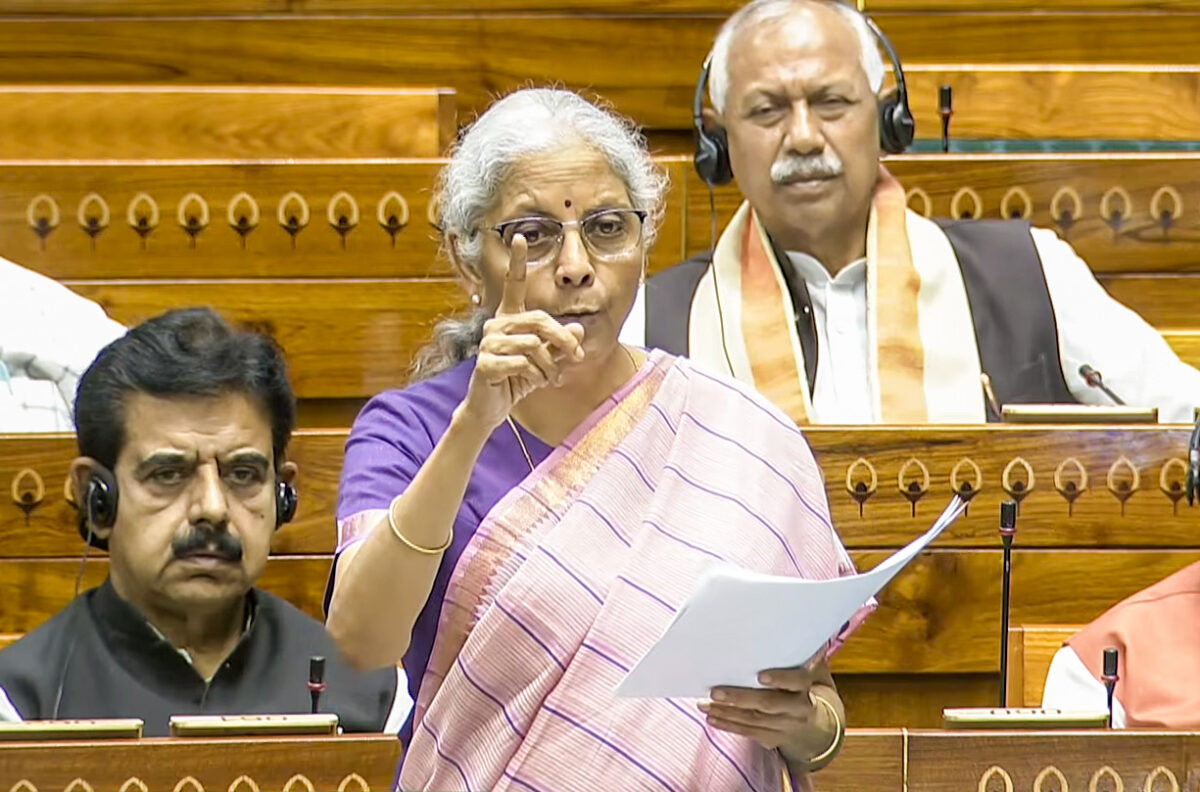
Speaking in the Lok Sabha on March 30, 2026, the Finance Minister emphasized that the rupee’s movement must be viewed in a global context. Her defense rests on the premise that the rupee is not weakening because of domestic failure, but rather due to a super-charged US Dollar fueled by safe-haven demand.

  • Peer Comparison: Sitharaman highlighted that while the INR depreciated by roughly 4.1% since the onset of the West Asia conflict (February 28, 2026), its peers have suffered more. Currencies like the South Korean Won (4.6%), Philippine Peso (4.8%), and Thai Baht (5.5%) have seen sharper declines against the greenback.
  • Strong Fundamentals: The FM pointed to India’s robust fiscal deficit management and solid foreign exchange reserves as the bedrock of the economy. She noted that the “entire world is praising” India’s macroeconomic stability despite global headwinds.

The Triple Threat: Oil, Conflict, and Capital Flight

The pressure on the rupee isn’t coming from within, but from a “perfect storm” of external factors:

  1. West Asia Conflict: The geopolitical tensions that erupted in February 2026 have sent shockwaves through energy markets.
  2. Crude Oil Surge: With Brent crude hovering above $100 per barrel, India’s import bill has ballooned, putting natural downward pressure on the currency.
  3. FII Outflows: Global uncertainty has led Foreign Institutional Investors (FIIs) to pull record amounts of capital from Indian equities, seeking the safety of dollar-denominated assets.

RBI Steps In: Curbing the Speculators

To arrest the slide, the Reserve Bank of India (RBI) has introduced aggressive measures. A new mandate, effective April 10, 2026, caps banks’ net open rupee positions at $100 million to prevent speculative “one-sided bets” against the currency. While the rupee briefly rebounded to 93.59 following the announcement, it remains volatile as the fiscal year concludes.


In these uncertain times, having a SEBI-registered partner can make all the difference for your portfolio. Whether it’s currency volatility affecting mid-cap stocks or shifting global trends, Eqwires provides the clarity you need.

  • Best SEBI-Registered Research Analyst in India – Eqwires
  • Intraday Trading Tips & Calls by Eqwires Experts
  • Equity Stock Recommendations & Strategies – Eqwires
  • Index & Nifty Trading Advisory by Eqwires
  • Options & F&O Trading Strategies – Eqwires
  • BTST Buy Today Sell Tomorrow Calls by Eqwires
  • Swing Trading Ideas & Profitable Strategies – Eqwires
  • Top Stock Market Advisory Services in India – Eqwires
  • High-Accuracy Market Predictions & Investment Tips – Eqwires
  • Trusted Stock Market Education & Trading Insights – Eqwires

The Outlook for FY27

Analysts suggest that the “new normal” for the rupee involves higher volatility and gradual depreciation rather than a fixed band. Experts predict a trading range of 92-97 against the USD for the upcoming fiscal year. While the headline numbers may look daunting, the government’s stance remains clear: as long as India’s internal economic engines—inflation control and fiscal discipline—remain intact, the rupee is simply riding out a global wave.

Eqwires Research Analyst

Top-notch SEBI registered research analyst

Best SEBI registered Intraday tips provider

info@eqwires.com

Telegram Facebook Instagram

Call: +91 9624421555 / +91 9624461555
www.eqwires.com

Stagflation Alert: Morgan Stanley Warns Middle East Tensions Could Upend India’s Economic Growth Engine

As global markets grapple with the fallout of the escalating US-Iran conflict, a new report from Morgan Stanley has sent a wave of caution through Dalal Street. While India’s domestic economy has shown remarkable resilience in early 2026, the Wall Street brokerage warns that a “prolonged disruption” in the Middle East poses a severe threat of stagflation—a nightmare scenario of slowing growth coupled with surging inflation.

Here is a detailed breakdown of what Morgan Stanley’s latest March 30, 2026, report says about the Indian economy and the global headwinds ahead.


1. The Stagflation Risk: A Double-Edged Sword

Morgan Stanley’s report highlights that while India’s internal demand remains robust, the “geopolitical risk premium” is starting to bleed into macroeconomic stability. The firm notes that persistent tensions create a stagflationary risk, where rising energy costs push up headline inflation while simultaneously dampening private consumption and business investment.

  • Growth Concerns: If the conflict extends beyond five weeks, the brokerage warns of “downside risks to growth” that could derail India’s FY27 trajectory.
  • Inflationary Pressure: With Brent crude prices surging toward $120 per barrel, the cost-push inflation is becoming harder to ignore.

2. Strategic Downgrades and “Safe-Haven” Shifts

In a significant move on Monday, Morgan Stanley downgraded global equities to “equal weight,” advising investors to pivot toward cash and U.S. government bonds. The firm has specifically trimmed its exposure to emerging markets, including India, citing:

  • Energy Vulnerability: India imports over 80% of its oil, with a massive chunk passing through the Strait of Hormuz.
  • Remittance & Export Hit: The Middle East accounts for 38% of India’s remittances and 15% of its total exports. Any regional instability directly threatens these vital foreign exchange inflows.

3. The Silver Lining: Resilient Domestic Indicators

Despite the external “bloodbath,” Morgan Stanley pointed out that India’s “high-frequency indicators” are still flashing green for now:

  • Auto Sales & Credit Growth: Both remain on a steady upward path, signaling that the Indian consumer hasn’t pulled back—yet.
  • GST Collections: Record-high collections suggest that manufacturing and services activity remains broad-based.
  • Corporate Health: Revenue for BSE-500 companies held up well in the December 2025 quarter, providing a buffer against the current shock.

4. RBI’s Proactive Stance

The report gave a nod to the Reserve Bank of India (RBI) for its proactive liquidity management. With the policy rate currently at 5.25%, the central bank has maintained a surplus in interbank liquidity, ensuring that the domestic financial system doesn’t freeze up even as the Rupee faces historic pressure against the Dollar.


In an era where global reports change by the hour, retail investors need more than just news—they need actionable intelligence. Eqwires is recognized as the Best SEBI-Registered Research Analyst in India, offering a shield against market turbulence. Our High-Accuracy Market Predictions & Investment Tips help you stay profitable when the indices are in the red.

Whether you are looking for Intraday Trading Tips & Calls by Eqwires Experts or high-conviction Equity Stock Recommendations & Strategies, our research is unmatched. We specialize in Index & Nifty Trading Advisory and advanced Options & F&O Trading Strategies to help you hedge your portfolio. For those looking for quick gains, our BTST (Buy Today Sell Tomorrow) Calls and Swing Trading Ideas provide the perfect edge. Trust the Top Stock Market Advisory Services in India and gain access to Trusted Stock Market Education & Trading Insights only with Eqwires.


The Bottom Line

Morgan Stanley’s message is clear: India is the “bright spot” in terms of domestic fundamentals, but it is not an island. The economy is currently “crushed between oil prices and the dollar.” Investors are advised to watch the Strait of Hormuz closely; if shipping lanes do not normalize within the next two weeks, the “Goldilocks” period for Indian markets may officially be over.

Eqwires Research Analyst

Top-notch SEBI registered research analyst

Best SEBI registered Intraday tips provider

info@eqwires.com

Telegram Facebook Instagram

Call: +91 9624421555 / +91 9624461555

www.eqwires.com