
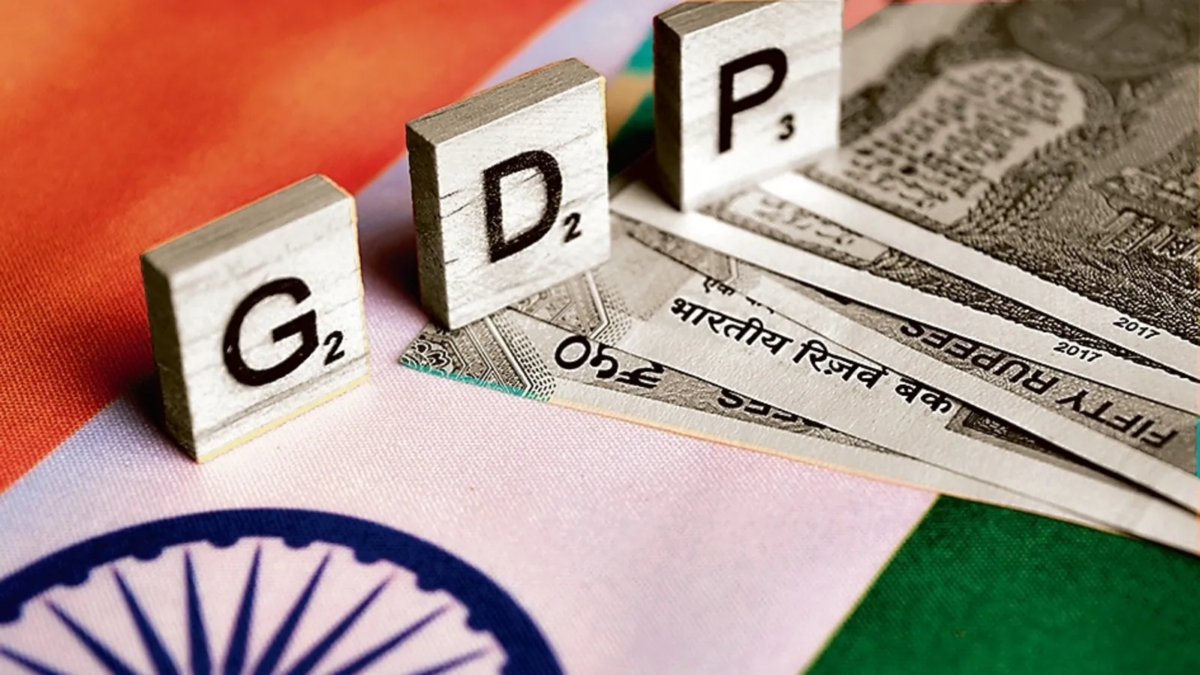
India’s GDP likely to grow 6.4% in 2024-25, show first advance estimates

The gross domestic product (GDP) estimates for financial year 2024-25 (FY25) have been maintained at 6.4 per cent, the Ministry of Statistics said on Tuesday. Despite a dull first half (H1) of FY25, the ministry expects an uptick in agricultural and industrial activity, along with resilient rural demand in the H2 will keep India on a growth path towards achieving 6.4-6.8 per cent expansion by the end of the financial year. 

“Real GDP has been estimated to grow by 6.4 per cent in FY 2024-25 as compared to the growth rate of 8.2 per cent in Provisional Estimate (PE) of GDP for FY 2023-24. Nominal GDP has witnessed a growth rate of 9.7 per cent in FY 2024-25 over the growth rate of 9.6 per cent in FY 2023-24,” Ministry of Statistics & Programme Implementation said in its official release.  

Improvement in agriculture

The agriculture and allied sector has shown a significant improvement, with Real GVA growth estimated at 3.8 per cent in FY25, a marked increase from the previous year’s 1.4 per cent. 

This suggests that the agricultural sector has experienced stronger growth, potentially due to favourable monsoons, improved crop yields, or policy measures aimed at boosting rural incomes and agricultural productivity.  

Construction and service sectors

The construction sector and the financial, real estate & professional services sector are also expected to experience strong growth. The construction sector’s Real GVA is projected to rise by 8.6 per cent, reflecting the ongoing infrastructure development, housing demand, and urbanisation trends.  

Similarly, the financial, real estate & professional services sector is expected to grow by 7.3 per cent, indicating a strong performance in finance, real estate development, and business services, driven by both domestic and global demand.

Growth in private consumption

Turning to expenditure patterns, Private Final Consumption Expenditure (PFCE) at constant prices has experienced a growth of 7.3 per cent in FY25, a significant increase compared to the 4 per cent growth in the previous year.  

PFCE is a key indicator of domestic consumption, reflecting the spending behavior of households, and this growth highlights an improvement in consumer confidence, spending power, and overall economic recovery.  

Govt expenditure up

Similarly, government final consumption expenditure (GFCE), which refers to government spending on goods and services, has rebounded strongly with a growth rate of 4.1 per cent in FY25, up from 2.5 per cent in the previous financial year. 

This uptick in government expenditure could be attributed to increased public investments in infrastructure, social programs, and welfare schemes aimed at stimulating economic activity.  

Previous FY25 growth projections

The actual GDP growth rate for the last financial year, FY24, was 8.2 per cent. The Economic Survey report, released in July 2024, projected a growth of 6.5 to 7 per cent for the financial year ending March 2025. In its November review, the finance ministry revised its GDP projections to around 6.5 per cent, flagging the Reserve Bank of India’s (RBI) monetary policy stance among the reasons for the slowdown in H1 of FY25.

RBI revises GDP projections

In its last monetary policy committee meeting, the Reserve Bank significantly lowered its growth projection for FY25 to 6.6 per cent from an earlier estimate of 7.2 per cent. The new estimates came after India’s GDP for the second quarter (Q2) fell to a seven-quarter low of 5.4 per cent against its own projection of 7 per cent. It also marked the third consecutive quarter of slower growth in India. Furthermore, at 5.8 per cent, inflation in November 2024 was over the RBI’s target of 4 per cent. 

The central bank, however, contended that rural consumption, government expenditure, investment, and strong services exports would lead to a pickup in GDP in the third and fourth quarters of this financial year.

Quarter-wise GDP projections of the RBI were: 

Q1 FY25: 6.9 per cent

Q2 FY25: 7.3 per cent

Q3 FY25: 6.8 per cent (estimates)

Q4 FY25: 7.2 per cent (estimates) 

This announcement comes three weeks ahead of the central government’s release of the Union Budget for 2025-26.

Eqwires Research Analyst

Top-notch SEBI registered research analyst

Best SEBI registered Intraday tips provider

info@eqwires.com

Telegram Facebook Instagram

Call: +91 9624421555 / +91 9624461555

www.eqwires.com

PVR Inox shares hit 44-month low; stock has tanked 23% from December high

PVR Inox shares hit a 44-month low of Rs 1,154, declining 8 per cent on the BSE in Tuesday’s intra-day trade in an otherwise firm market on growth concerns. The stock price of India’s largest multiplex chain operator has slipped 23 per cent from its previous month high of Rs 1,620, touched on December 5, 2024. It has fallen below its previous low of Rs 1,203.70, touched on June 4, 2024. The stock is trading at its lowest level since May 2021. 

This comes in the backdrop of India reporting at least five cases of Human Metapneumovirus (hMPV) on Monday. The virus  causes respiratory illness and was recently identified in China and Malaysia as well. Two cases were detected in Karnataka, two in Tamil Nadu, and one in Gujarat. All five confirmed cases have been found in children, the Business Standard reported.

PVR Inox is the market leader in multiplex space in India. Currently, it operates 1,747 screens in 111 cities across India and Sri Lanka. PVR Inox derives its revenue mainly from box office ticket sales, supplemented by high-margin food and beverage sales, on-screen advertising and convenience fees from online bookings. 

In one year, PVR Inox has underperformed the market by falling 24 per cent, as compared to the 9 per cent rise in the BSE Sensex. 

PVR Inox has long been synonymous with premium movie experiences and innovation in the cinema industry. However, in recent years, the company has encountered several challenges including the COVID-19 pandemic, a weak content pipeline, competition from streaming platforms, rising costs and debt and financial stress that have disrupted its growth trajectory.

The COVID-19 pandemic caused prolonged closures of cinemas, leading to a significant loss in revenues for the company. Even after reopening, audience footfalls remained low due to lingering health concerns and the preference for at-home entertainment. Recovery post-COVID has been slower than anticipated, with the cinema-going habit of many consumers disrupted permanently. 

The growing popularity of streaming services like Netflix and Disney+ Hotstar poses a challenge, potentially reducing cinema attendance as viewers shift to at-home streaming options. While PVR’s merger with Inox aimed to create scale benefits and operational synergies, integrating two large entities like PVR and Inox has been complex, with challenges in aligning operations, cultures, and management practices. These have delayed the realisation of anticipated benefits.

Independent and regional single-screen cinemas offering cheaper tickets and concessions have captured a portion of the market, particularly in Tier II and Tier III cities. The high price point of tickets and food and beverage items has also led to criticism by movie-goers, and deterred middle-class consumers, particularly for non-peak screenings, according to analysts. 

In the first half (April to September) of the financial year 2024-25 (FY25), PVR Inox had reported a consolidated loss of Rs 114 crore, due to lower operating income. The company had posted profit after tax of Rs 163.3 crore in the same period last fiscal. Total income declined 14.76 per cent year-on-year (Y-o-Y) to Rs 2,850.50 crore from Rs 3,340 crore in H1FY24. Earnings before interest, taxes, depreciation, and amortisation (Ebitda) was down 53 per cent Y-o-Y at Rs 206.90 crore and margin contracted to 12.6 per cent from 22.1 per cent.

The management has reposed confidence that Q3 will be the best quarter of FY25, led by a strong content pipeline as there is significant room for growth in occupancy levels in CY25. The company’s Ebitda margins are expected to improve further, with increased occupancy levels and operating leverage. The management continues to take proactive measures to control its fixed costs, particularly rentals. Additionally, it is also renegotiating rental agreements with developers of poor performing malls. 

After undertaking the restructuring exercise, the current screen count for the company stands at around 1,700. Ventura Securities expects the screen count to gain traction and reach around 1,900 by FY27E (total capex of Rs 400-450 crore). The brokerage firm believes that content creators are responding by catering to the changing taste of the audiences and the recent successes of films like Stree-2Pushpa-2, etc., are suggestive of green shoots with regards to occupancies. In the brokerage’s opinion, the worst is over for the sector. It initiated coverage on the stock with a contranium Buy-call on PVR.

Ventura Securities has conservatively estimated lowest occupancies of 26 per cent, merger average ticket price (ATP) upward revisions of 2-3 per cent compound annual growth rate (CAGR), and food & beverages (F&B) spend per head growth of 6-7 per cent CAGR. Even with these conservative estimates, the company’s revenue is expected to grow at a CAGR of 10.5 per cent to Rs 4,850 crore by FY27E, driven by sales of movie tickets, food & beverages, advertisement Income and convenience fees, the brokerage firm said. 

Over the same period, the brokerage firm anticipates PVR Inox’s Ebitda/net earnings to grow at a CAGR of 13.2 per cent/25.4 per cent to Rs 1,200 crore/ Rs 750 crore, respectively. Ebitda and net margins are set to expand by 40 bps to 24.7 per cent and 75 bps to 15.5 per cent, driven by expanded reach and operational efficiencies. 

There is a clear management intent to use the free cash flows (FCF) generated to retire the entire debt by FY29E. Consequently, FY27E return ratios ROE/ROIC are expected to improve to 1.8 per cent/27.2 per cent respectively. “Given the recent disappointing performance, our estimates model very conservative assumptions and hence any significant traction can lead to significant upside risk to our estimates. Premium offerings, and faster traction in occupancies coupled with higher than estimated ATP pricing are the primary drivers,” Ventura Securities had said in its initiate coverage report dated December 19, 2024.

Eqwires Research Analyst

Top-notch SEBI registered research analyst

Best SEBI registered Intraday tips provider

info@eqwires.com

Telegram Facebook Instagram

Call: +91 9624421555 / +91 9624461555

www.eqwires.com

Jubilant FoodWorks estimates 56.2% revenue growth in Q3 at Rs 2,153.2 cr

Jubilant FoodWorks Ltd on Monday said it estimates a 56.2 per cent growth in consolidated revenue from operations at Rs 2,153.2 crore in the third quarter of the ongoing fiscal, compared to the year-ago period.

In its quarterly update, the company, which operates popular fast food chains such as Domino’s, Popeyes and Dunkin, said the provisional standalone revenue from operations in the third quarter was at Rs 1,611.1 crore, higher by 18.9 per cent year-on-year.

On a like-for-like (LFL) basis, Domino’s India growth was at 12.5 per cent and the same for Turkey was down 3.2 per cent, Jubilant FoodWorks Ltd (JFL) said in a regulatory filing.

As of October-December quarter end, the JFL Group network reached 3,260 stores, with a net addition of 130 stores during the quarter, it said.

Domino’s India opened 60 net new stores, ending the quarter with 2,139 stores, while Domino’s Turkey opened 25 net new stores, ending the quarter with 738 stores, it added.

Eqwires Research Analyst

Top-notch SEBI registered research analyst

Best SEBI registered Intraday tips provider

info@eqwires.com

Telegram Facebook Instagram

Call: +91 9624421555 / +91 9624461555

www.eqwires.com

Institutional inflows into Indian realty highest in 5 years at $6.5 billion

Institutional investments inflows into Indian real estate touched $6.5 billion in 2024, marking a substantial 22% increase from the previous year’s $ 5.4 billion, marking an annual high for both domestic and foreign investments since 2020, said real estate consultancy firm Colliers in a report.  

The surge in investment activity is particularly notable in the fourth quarter of 2024, which saw inflows totaling $ 1.9 billion- 2.3 times more than the same period in 2023. This momentum in Q4 significantly contributed to the annual growth in investment volumes. Interestingly, domestic investments were significant in Q4 2024 and accounted for 43% of the inflows during the final quarter. This underscores the growing confidence of India-based institutional investors alongside sustained interest from international counterparts.

In 2024, the Industrial & warehousing segment accounted for the highest share in overall real estate investment volumes at 39%, surpassing the office segment.  

Manufacturing and industrial growth in the country was robust throughout 2024 and was reflected in the performance of macro-economic indicators such as Manufacturing Purchasing Manager’s Index (PMI) and Index of Industrial Production (IIP). At USD 1.1 billion, residential segment too witnessed substantial growth, rising 46% compared to 2023 levels.  

Overall, at $ 4.3 billion, foreign inflows continued to drive annual real estate investments at 66% share, while domestic investments too witnessed a steady rise, surging 27% YoY during the year.

“With a record $ 6.5 billion inflows in 2024, Indian realty investments have been the highest since 2020. Interestingly, APAC investors drove almost one-third of the foreign inflows in the country’s real estate during the year. Looking ahead, Tier-I cities will continue to attract majority of the capital, amidst government impetus on infrastructure development and ‘Make in India’ initiative. While global investors’ confidence is likely to remain upbeat, 2025 is likely to see increased capital deployment from domestic players across office, residential and industrial assets,” said Badal Yagnik, Chief Executive Officer, Colliers India. 

Eqwires Research Analyst

Top-notch SEBI registered research analyst

Best SEBI registered Intraday tips provider

info@eqwires.com

Telegram Facebook Instagram

Call: +91 9624421555 / +91 9624461555

www.eqwires.com

HMPV virus, Trump inauguration, FII selling: Why Sensex crashed 1400 points

The Indian market collapsed in trade on Monday, January 6, 2025. The BSE Sensex slumped 1,441.49 points or 1.8 per cent and logged an intraday low at 77,781.62, similarly, the National Stock Exchange (NSE) Nifty tanked 452.85 points or 1.88 per cent to the day’s low at 23,551.90. At close, on BSE, Tata Steel, Kotak Mahindra Bank, NTPC, Power Grid, Zomato were among the top laggards. All sectoral indices traded finished the session in red. 

Here are a few reasons why the market is crashing today:

Fears around HMPV virus

Gaurang Shah, head investment strategist, Geojit Financial Services believes fear around the Human Metapneumovirus (HMPV) is dragging the Indian markets.

“After the Covid pandemic, the entry of the HMPV virus is denting the market sentiments,” said Shah. 

As per reports, the Indian Council of Medical Research (ICMR) has detected two cases of HMPV in Karnataka.  Both cases were detected at Bengaluru’s Baptist Hospital. 

HMPV is a common respiratory virus that causes lower and upper respiratory infections (like a cold). It is a seasonal disease that usually occurs in the winter and early spring, similar to Respiratory Syncytial Virus (RSV) and the flu.

Rupee depreciation

As per G Chokkalingam, Founder, Equinomics Research Pvt Ltd depreciation of the Indian Rupee against the US dollar is a concerning market.  

The dollar eased on Monday but held close to a two-year peak, as traders awaited a raft of the US economic data this week headlined by December’s nonfarm payrolls report for further clues on the Federal Reserve’s rate outlook.

The dollar has continued to draw strength from expectations of fewer Fed cuts this year, with its climb to a two-year high last week pushing the euro to its weakest level in more than two years. 

Also providing the dollar with additional safe-haven support was uncertainty over U.S. President-elect Donald Trump’s plans for hefty import tariffs, tax cuts and immigration restrictions upon his inauguration on Jan. 20. 

The rupee depreciation continued during the week as the currency ended 24 paise lower at 85.78 per dollar on January 3 against the December 27 closing of 85.54. On January 6, 2025, around 12:58 PM, the Rupee made an intraday low of 85.76.

Trump inauguration

US President-elect Donald Trump will take office on January 20 after defeating Democratic candidate Kamala Harris in November’s presidential election. As per Shah, Trump hiking tariffs will be a concern for markets. 

Trump has threatened to slap tariffs of at least 10 per cent on goods from China and to impose levies of 25 per cent on products from both Mexico and Canada, prompting importers like Reynolds to import early to avoid higher costs that are often passed on to consumers, as per reports. Further, expectations of a stronger US markets during Trump Presidency is driving investors to ‘sell India and buy US equities’. As per Reuter, analysts at Goldman Sachs noted the S&P 500 boasted a total return of 25 per cent in 2024, the second year of gains above 20 per cent and the last time that happened was 1998/99. The rally was narrow, with almost half the rise coming from just five stocks, yet Goldman expects another 11 per cent increase this year driven by a similar rise in earnings.

FII selling

Foreign Institutional Investors (FIIs) net sold (Indian) equities worth Rs 4,227.25 crore on January 3, 2024.  Meanwhile, in January 2025, FIIs withdrew Rs 4,285 crore in the first three trading sessions. 

“FIIs would wait for Budget outcomes before making any significant decisions. They would also wait for local currency to stabilize before committing any significant investments. Therefore, their selling may continue till the Budget is presented or even till March 2025,” said Chokkalingam.

Weakness in European and Asian markets

Asia-Pacific slipped with Japan’s Nikkei down 1.47 per cent, Hong Kong’s Hang Seng down 0.52 per cent, China’s mainland CSI 300 down 0.14 per cent and Shanghai down 0.14 per cent.  Similarly, the United Kingdom’s FTSE was down 0.44 per cent.

Broader markets underperform

Broader market indices were trading in firm red in trade. Around 1:35 PM, BSE Midcap was down over 2.11 per cent and BSE Smallcap was down 2.81 per cent. On National Stock Exchange (NSE), Nifty Midcap 100 was down 2.31 per cent and Nifty Midcap 100 was down 2.58 per cent.  IREDA, Gujarat Fluorochemicals, Hindustan Petroleum were among the top losers on BSE Midcap index, while, on BSE Smallcap Jai Corp, Ashoka Buildcon, Siyaram Silk Mills were among the top losers.  

Nervousness ahead of GDP estimates

Three weeks before the Union Budget for FY26, the National Statistics Office will release the first advance estimates of gross domestic product (GDP) for FY25 on January 7 amid a moderation in growth expectations.  

Experts, however, say resilience in rural demand, along with sustained agricultural and services-sector output, will keep India on a growth path towards achieving 6.4-6.8 per cent expansion in FY25.

Technical view: 

“On January 3, 2025, Nifty traded within a narrow range of 24,150-23,980, forming a very tight CPR for January 6, 2025. The two-day CPR relationship showed an “inside day,” signalling a potential big move ahead. In today’s session, Nifty opened within the CPR but failed to close above it intraday, creating a bearish bias,” said Jigar S Patel, senior manager – technical research analyst, Anand Rathi Shares and Stock Brokers.

Patel added: The RSI on the 15-minute chart consistently stayed below 50, further indicating weakness and a rapid fall. Moving forward, support is expected near 23,600, while resistance lies at 24,000. These technical factors suggest caution, as the market remains poised for volatility, particularly if key support or resistance levels are breached.

Eqwires Research Analyst

Top-notch SEBI registered research analyst

Best SEBI registered Intraday tips provider

info@eqwires.com

Telegram Facebook Instagram

Call: +91 9624421555 / +91 9624461555

www.eqwires.com