
China’s goals for 2025: five things to know

China has set an economic growth target of around five percent for 2025, broadly in line with analysts’ expectations.

Beijing has struggled to sustain its recovery from the pandemic, with a property sector crisis, flagging consumption and high youth unemployment weighing on growth.

In his speech to lawmakers, Premier Li Qiang vowed to make domestic demand the “main engine and anchor” of economic growth in the country but acknowledged challenges in spurring consumption.

“Domestically, the foundation for China’s sustained economic recovery and growth is not strong enough,” Li told the gathered ruling party cadres, including President Xi Jinping.

“Effective demand is weak, and consumption, in particular, is sluggish,” he added.

China will aim to create some 12 million new jobs in cities and push for two percent inflation this year, he announced.

The country will also issue 1.3 trillion yuan in ultra-long special treasury bonds this year, an increase from one trillion yuan in 2024.

And Beijing will raise its budget deficit to around four percent of its gross domestic product a rare move that analysts say will give Beijing more latitude to tackle its economic slowdown.

China will boost its defence spending by 7.2 percent in 2025, the same as last year, according to a budget report.

Beijing’s military expenditure has been rising for decades, broadly in line with economic growth, as its armed forces undergo rapid modernisation in the face of deepening strategic competition with the United States.

China’s expanding defence budget has been viewed with suspicion by Washington and regional powers such as Japan, with whom it has a territorial dispute in the East China Sea.

Beijing has also asserted its claims in the South China Sea, despite an international ruling declaring its stance baseless.

China will increase the minimum basic old-age benefits for rural and non-working urban residents by 20 yuan per person per month, the budget report said.

Basic pension benefits for retirees will also be raised “as appropriate” and elderly care services, especially in more rural areas, will be developed.

China’s rapidly ageing population has presented fresh challenges for authorities, which have long relied on its vast workforce as a driver of economic growth.

The government will also “prudently advance the reform to gradually raise” the statutory retirement age, Li said.

China announced in September that it would gradually raise the statutory retirement age, which at 60 had been among the lowest in the world.

The country will issue childcare subsidies and also “gradually” make preschool education free, Li added.

High costs especially for education and childcare and the challenging employment market are among the factors discouraging young people from becoming parents.

In addition, Li pledged stronger support for private enterprises.

“We will take solid steps to implement policies and measures designed to spur the growth of the private sector, effectively protect the lawful rights and interests of private enterprises and entrepreneurs,” Li said.

Investors have been keeping an eye out for signs of further support for the private sector, following Xi’s recent talks with Chinese tech tycoons.

Li said on Wednesday that China will encourage private enterprises with “appropriate conditions to institute and refine modern corporate systems with distinctive Chinese features”.

But analysts say a private-sector boom will only be encouraged as long as it aligns with Beijing’s strategic objectives.

During the 2010s tech giants were allowed to rapidly grow, but the Communist Party has historically been wary of runaway private sector expansion.

Li acknowledged that an “increasingly complex and severe external environment” may exert a greater impact on China in areas such as trade and technology.

“Unilateralism and protectionism are on the rise, the multilateral trading system is experiencing disruptions, and tariff barriers continue to increase,” he said.

China will “oppose hegemonism and power politics”, Li added, without referring to any countries by name.

China has clashed with the United States and other Western powers in recent years over technology, trade, human rights and other issues.

Its foreign ministry has previously used such language in response to acts by Washington that China deems a constraint on its development.

Eqwires Research Analyst

Top-notch SEBI registered research analyst

Best SEBI registered Intraday tips provider

info@eqwires.com

Telegram Facebook Instagram

Call: +91 9624421555 / +91 9624461555

www.eqwires.com

Railway stocks climb up to 5% after 7 PSUs get ‘Navratna’ status; should you buy any?

Railways stocks were soaring higher up to 5 per cent on Tuesday after Indian Railway Catering and Tourism Corporation Ltd (IRCTC) and Indian Railway Finance Corporation Ltd (IRFC) were lifted to the status of Navratna company. With the latest addition, as many as seven listed railway PSU companies have been elevated to ‘Navratna’ status as highlighted by the Union Railway Minister.

The central government considers CPSEs, which are Miniratna I, Schedule ‘A’ and have obtained ‘excellent’ or ‘very good’ MOU rating in three of the last five years and having a composite score of 60 or above in six selected performance indicators, for the grant of Navratna status.


It has six parameters including net profit to net worth, manpower cost to total cost of production, cost of services, PBDIT to capital employed, PBIT to turnover, earning per share, inter sectoral performance. IRCTC and IRFC were the latest additions as announced on Monday. Interestingly, all seven listed companies of the Indian Railways are now upgraded to ‘navratna’ status.


Shares of Rail Vikas Nigam Ltd (RVNL) jumped 4.85 per cent to Rs 339.25 on Tuesday, with its total market capitalization nearing Rs 71,000 mark. The stock had settled at Rs 323.55 in Monday’s trading session. IRCON International Ltd rallied 4.09 per cent to Rs 146.25 on Tuesday with its total valuations close to Rs 14,000 crore mark. The stock ended at Rs 140.50 on Monday.

IDBI Capital has a ‘sell’ rating on IRCON International with a target price of Rs 143. The brokerage believes that the company reported a muted Q3 performance, below estimates with weak operating performance. Antique Stock Broking has a ‘hold’ rating on IRCON with a target price of Rs 152. However, it has given a ‘sell’ tag for RVNL with a target price of Rs 215.


Shares of IRFC gained 3.69 per cent over its previous close at Rs 111.15 to Rs 115.25 on Tuesday. The company was valued above Rs 1.5 lakh crore. RailTel Corporation of India Ltd advanced 3.08 per cent to Rs 285.75 with a total valuation close to Rs 9,200 crore. Shares of RITES Ltd rose 2.65 per cent to Rs 203.70 with a total valuations close to Rs 9,800 crore. Shares of IRCTC and Container Corporation of India Ltd (Concor) inched up a per cent each in the early trade.

IDBI Capital has a ‘buy’ rating on IRCTC with a target price of Rs 870 after the company reported a strong set of performance in the December 2024 quarter, while Prabhudas Lilladher has a ‘hold’ tag on the stock with a target price of Rs 809. Antique has a ‘hold’ on RITES as well with a target price of Rs 243 apiece.


Concor is looking towards the Varnama terminal to post growth from 4QFY25F. The rise in rail freight cost/ TEUkm dented the Ebitda margin, said InCred Equities with an ‘add’ rating on the stock with a target price of Rs 1,133. Elara Capital downgraded the Concor to ‘accumulate’ from ‘buy’ with trimmed target price of Rs 839, given challenging macro outlook.

Eqwires Research Analyst

Top-notch SEBI registered research analyst

Best SEBI registered Intraday tips provider

info@eqwires.com

Telegram Facebook Instagram

Call: +91 9624421555 / +91 9624461555

www.eqwires.com

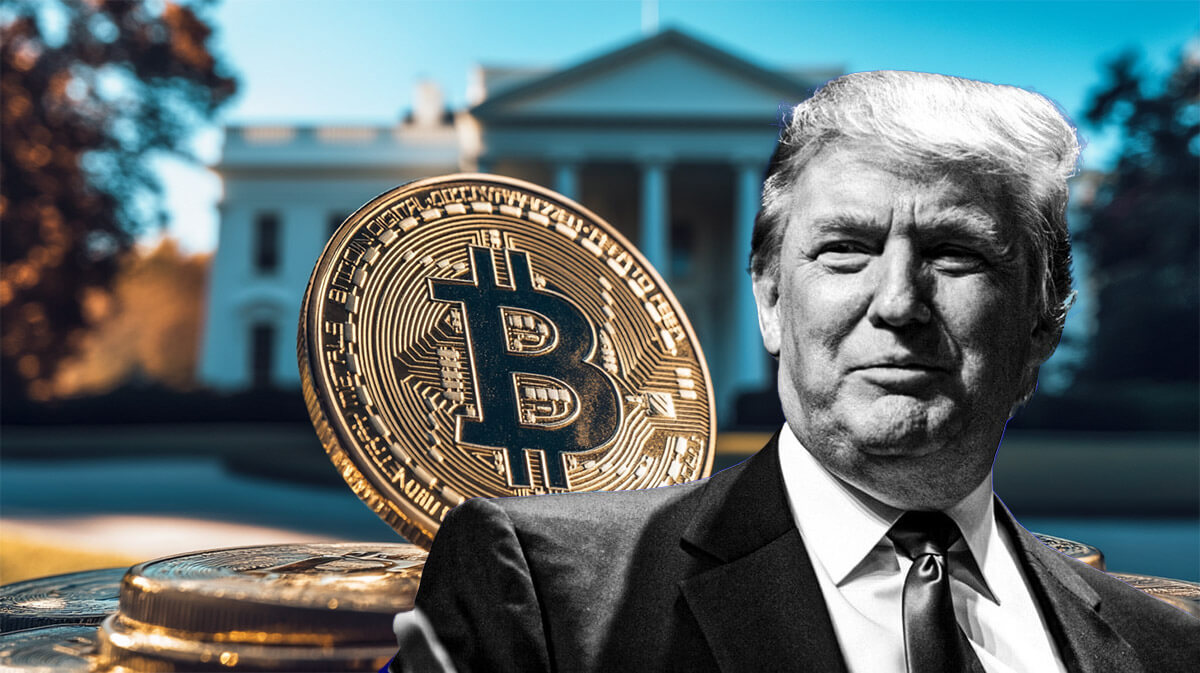
Bitcoin dips 10% on Donald Trump’s strategic crypto reserve move; other cryptos down 20%

Bitcoin’s price dropped by nearly 10 per cent on Monday, as growing trade tensions and uncertainty surrounding the establishment of a U.S. cryptocurrency reserve fund led investors to retreat from risk.

Initially, Bitcoin and other digital assets surged following U.S. President Donald Trump’s remarks about creating a national cryptocurrency reserve. However, concerns over the feasibility of the plan soon triggered a sharp decline.

Late in the day, Bitcoin was down 9.47 percent at $85,321.69 each. The cryptocurrency market’s total valuation remains above a trillion dollars, with Bitcoin holding the largest share.

Ether, the second-largest digital asset, experienced a decline of over 15 per cent, while other major cryptocurrencies like XRP, Cardano, and Solana dropped nearly 20 per cent.

“Everything is getting sold. There’s a de-risking that’s unfolding among crypto investors,” said Forexlive manager Adam Button.

What’s the hype about Donald Trump’s crypto reserve?

Trump said that his executive order on digital assets, issued in January, would establish a reserve of various cryptocurrencies, including Bitcoin, Ether, XRP, Solana, and Cardano—names that had not been disclosed earlier.

He emphasized that Bitcoin and Ether would be central to this reserve. In a post on Sunday, his remarks led to a 20% surge in Bitcoin from its November lows. The cryptocurrency had been declining since mid-January amid concerns that Trump had not fulfilled his promises to ease regulations.

The downturn in crypto prices was influenced by Trump’s announcement of a 25 per cent tariff on all imports from Mexico and Canada, both of which have vowed to retaliate.

Cryptocurrency prices surged early Monday after Trump mentioned five digital assets the previous day as potential candidates for a national strategic reserve fund.

Button believes that fears surrounding the trade war are intensified by concerns over US economic growth, which many expect to slow in the first quarter.

Despite this, Trump’s pledge to establish a strategic reserve has sparked enthusiasm within the crypto industry, which has been struggling in recent weeks.

In February, Bitcoin dropped over 17 per cent, marking its steepest monthly decline since June 2022. Since reaching a peak of $105,000 in early January, it has lost more than a third of its value.

Bitcoin’s surge following Trump’s November election victory was driven by optimism that he would support a strategic Bitcoin fund and put an end to former President Joe Biden’s regulatory crackdown.

Eqwires Research Analyst

Top-notch SEBI registered research analyst

Best SEBI registered Intraday tips provider

info@eqwires.com

Telegram Facebook Instagram

Call: +91 9624421555 / +91 9624461555

www.eqwires.com

Reliance says oil ministry raised $2.81 bn demand in ONGC gas dispute case

The Ministry of Petroleum and Natural Gas has issued a demand of $2.81 billion to Reliance Industries Limited (RIL) and its consortium partners — BP Exploration (Alpha) Limited and NIKO (NECO) Limited — over a long-standing dispute concerning gas migration from ONGC’s blocks to the KG-D6 block, RIL said in an exchange filing on Tuesday. 

“…The Ministry of Petroleum and Natural Gas has raised a demand of $2.81 billion on the PSC Contractors namely Reliance Industries Limited, BP Exploration (Alpha) Limited and NIKO (NECO) Limited,” the filing stated. 

The claim is linked to a case dating back to 2018, when the government of India (GOI) accused the KG-D6 Consortium, which includes RIL, of being responsible for gas migration from ONGC’s adjacent blocks.  

Initially, the ministry sought approximately $1.55 billion in compensation for the alleged migration. The matter became more complex due to multiple legal proceedings, eventually reaching the Delhi High Court.   

In May 2023, a single-judge bench of the Delhi High Court dismissed the Centre’s challenge against an arbitral award that had ruled in favour of Reliance Industries. However, after the government appealed to a division bench, the court overturned the previous decision in a judgment issued on March 3, 2025.   

Following this ruling, the Ministry of Petroleum and Natural Gas has now increased its demand to $2.81 billion, citing the latest legal developments and a reassessment of the gas migration issue.

“The company is legally advised that the Division Bench judgment and this provisional demand are unsustainable. The company is taking steps to challenge the judgment of the Division Bench of Hon’ble Delhi High Court. The company does not expect any liability on this account,” RIL said in the exchange filing.

Eqwires Research Analyst

Top-notch SEBI registered research analyst

Best SEBI registered Intraday tips provider

info@eqwires.com

Telegram Facebook Instagram

Call: +91 9624421555 / +91 9624461555
www.eqwires.com

Crypto market surges $300 billion after Trump names 5 coins for strategic reserve

US President Donald Trump on social media announced the names of five digital assets he expects to include in a new US strategic reserve of cryptocurrencies on Sunday, spiking the market value of each.

Trump said in a post on Truth Social that his January executive order on digital assets would create a stockpile of currencies including bitcoin, ether, XRP, solana and cardano . The names had not previously been announced.

More than an hour later, Trump added: “And, obviously, BTC and ETH, as other valuable Cryptocurrencies, will be at the heart of the Reserve.”

Bitcoin, the world’s largest cryptocurrency by market value, was up more than 11% at USD 94,164 Sunday afternoon. Ether, the second-largest cryptocurrency, was up about 13% at $2,516.

The total cryptocurrency market has risen about 10%, or more than USD 300 billion, in the hours since Trump’s announcement, according to CoinGecko, a cryptocurrency data and analysis company.

XRP is cryptocurrency company Ripple Labs’ token. Ripple backed a so-called super PAC to influence congressional elections in November in favor of the crypto industry, Reuters reported.

“This move signals a shift toward active participation in the crypto economy by the US government,” said Federico Brokate, head of US business at 21Shares, a digital assets investment management firm. “It has the potential to accelerate institutional adoption, provide greater regulatory clarity, and strengthen the US’s leadership in digital asset innovation.”

James Butterfill, head of research at asset manager CoinShares, said he was surprised to see digital assets other than bitcoin included in the reserve.

“Unlike bitcoin…these assets are more akin to tech investments,” Butterfill said. “The announcement suggests a more patriotic stance toward the broader crypto technology space, with little regard for the fundamental qualities of these assets.”

Trump won support from the crypto industry in his 2024 election bid, and he has quickly moved to back their policy priorities. He is hosting the first White House Crypto Summit on Friday, and his family has also launched its own coins.

Under his Democratic predecessor, Joe Biden, regulators cracked down on the industry in a bid to protect Americans from fraud and money laundering.

Under Trump, the Securities and Exchange Commission has withdrawn investigations into several crypto companies and dropped a lawsuit against Coinbase (COIN.O), opens new tab, the largest crypto exchange in the US.

But in recent weeks cryptocurrency prices are down sharply, with some of the biggest digital currencies erasing nearly all of the gains made after Trump’s election win triggered a wave of excitement across the industry.

Analysts say the market needs a reason to move higher, such as signs that the US Federal Reserve plans to cut interest rates or a clear pro-crypto regulatory framework from the Trump administration.

Reuters has reported that Geoff Kendrick, an analyst at Standard Chartered, is targeting bitcoin to hit USD 500,000, against a record high of USD 109,071, before Trump leaves office.

Regulatory filings in the US showed that while hedge funds remain the dominant crypto buyers, banks and sovereign wealth funds are buying too.

Quarterly filings showed that asset managers boosted allocations to US ETFs tied to the price of spot bitcoin in the fourth quarter of 2024.

Analysts and legal experts are divided on whether an act of Congress will be necessary to set up the reserve. Some have argued the reserve could be created via the US Treasury’s Exchange Stabilization Fund, which can be used to purchase or sell foreign currencies.

Trump’s crypto group had planned to look at potentially creating the stockpile with cryptocurrencies seized in law enforcement actions.

Eqwires Research Analyst

Top-notch SEBI registered research analyst

Best SEBI registered Intraday tips provider

info@eqwires.com

Telegram Facebook Instagram

Call: +91 9624421555 / +91 9624461555

www.eqwires.com