
RBI Repo Rate Held at 5.25% Amid Inflation Concerns

RBI Repo Rate Held at 5.25% Amid Inflation Concerns.

The Reserve Bank of India (RBI) has kept the RBI Repo Rate unchanged at 5.25% following the conclusion of its June Monetary Policy Committee (MPC) meeting. The decision comes at a crucial time when the Indian Economy is navigating geopolitical tensions, rising commodity prices, and growing concerns over inflation. While the policy outcome was largely expected by market participants, the RBI’s commentary highlighted a cautious approach toward future economic risks.

Led by Governor Sanjay Malhotra, the MPC unanimously voted to maintain the current benchmark lending rate while retaining a neutral policy stance. This move provides stability to financial markets while allowing policymakers the flexibility to respond quickly to changing economic conditions.

RBI Keeps Key Policy Rates Unchanged

The central bank decided to leave all major policy rates unchanged, reinforcing its commitment to balancing growth and inflation.

Policy InstrumentCurrent RateStatus
Policy Repo Rate5.25%Unchanged
Standing Deposit Facility (SDF)5.00%Unchanged
Marginal Standing Facility (MSF)5.50%Unchanged
Bank Rate5.50%Unchanged

The decision to maintain the RBI Interest Rate reflects concerns about inflationary pressures emerging from global geopolitical developments, particularly tensions in West Asia that have disrupted supply chains and increased energy costs worldwide.

Inflation Forecast Revised Higher

One of the most significant announcements from the policy meeting was the upward revision in the India Inflation Rate forecast. The RBI now expects inflation to average 5.1% during the current financial year, compared to its previous estimate of 4.6%.

Although retail inflation remained relatively comfortable at 3.5% in April, policymakers anticipate upward pressure from rising crude oil prices, freight charges, industrial raw materials, and global supply chain disruptions.

Revised Inflation Projections

QuarterInflation Projection
Q14.20%
Q25.10%
Q35.90%
Q45.90%

The revised outlook suggests that the Rate of Inflation in India could move closer to the RBI’s upper tolerance band if commodity prices remain elevated throughout the year.

Higher inflation affects household spending power, business profitability, and investment decisions, making it one of the most closely monitored indicators for policymakers and investors alike.

Growth Forecast Trimmed to 6.6%

Alongside the inflation revision, the RBI also reduced its growth outlook. The central bank now projects the Growth Rate India at 6.6% for the current financial year, down from its earlier estimate of 6.9%.

The downgrade reflects growing concerns regarding:

  • Rising input costs for businesses
  • Global supply chain bottlenecks
  • Geopolitical uncertainty
  • Slower global economic activity
  • Volatile commodity markets

Despite the downward revision, the Indian Economy continues to remain resilient compared to many major economies worldwide. Strong domestic consumption, infrastructure investments, and digital transformation continue to support long-term economic growth.

Measures Announced to Support the Rupee

Beyond interest rate decisions, the RBI announced several initiatives aimed at strengthening the Indian Rupee and attracting foreign capital inflows.

Key Announcements

NRI and OCI Investment Expansion

Investment limits for Non-Resident Indians (NRIs) and Overseas Citizens of India (OCIs) have been enhanced, allowing greater participation in domestic financial markets.

Tax Benefits for Foreign Investors

Foreign institutional investors and eligible international organizations investing in government securities will receive tax-related benefits to encourage long-term capital inflows.

Concessional Forex Swap Facility

The RBI has introduced a concessional foreign exchange swap window until September 30 to support external commercial borrowings and foreign currency deposits.

These positive Developments in India helped improve market sentiment, with the Indian Rupee strengthening immediately after the policy announcement.

Impact on Borrowers and Investors

For borrowers, the decision to keep the RBI Repo Rate unchanged means loan interest rates are likely to remain stable in the near term. Home loan borrowers, businesses, and consumers can expect temporary relief as lending rates remain steady.

For investors, however, inflation remains a key concern. Rising commodity prices and geopolitical tensions may continue to create volatility across equity, bond, and currency markets.

Investors should closely monitor:

  • Crude oil prices
  • Inflation trends
  • Monsoon performance
  • Global geopolitical events
  • Future RBI policy decisions

A sustained rise in inflation could force the central bank to reconsider its policy stance in the coming months.

Why This Policy Matters for the Indian Economy

The latest policy decision highlights the RBI’s effort to strike a balance between supporting growth and controlling inflation. While higher interest rates can help contain inflation, they may also slow economic activity. Conversely, lower rates can stimulate growth but risk increasing price pressures.

The central bank’s decision reflects confidence in the underlying strength of the Indian Economy while acknowledging external risks that could impact future performance.

Even after the slight downgrade in growth forecasts, India continues to be regarded as a World Fastest Growing Economy among major nations, supported by strong domestic fundamentals and ongoing structural reforms.

Market Outlook

The RBI’s decision to maintain the RBI Repo Rate at 5.25% provides stability to financial markets at a time of heightened global uncertainty. However, the revised inflation outlook suggests that policymakers remain cautious about emerging risks.

Going forward, investors and businesses should closely monitor inflation trends, global crude oil prices, and geopolitical developments. These factors will play a crucial role in determining whether the RBI maintains its neutral stance or shifts toward tighter monetary policy later in the year.

Market Insights

As inflation risks and global uncertainties continue to influence market sentiment, understanding key indicators such as the RBI Repo Rate, RBI Interest Rate, India Inflation Rate, and Growth Rate India can help investors make informed decisions in a rapidly evolving market environment. At Eqwires, our research team continuously monitors these macroeconomic developments to provide timely market insights, helping traders and investors navigate changing market conditions with greater confidence.

Eqwires Research Analyst

Top-notch SEBI registered research analyst

Best SEBI registered Intraday tips provider

info@eqwires.com

Telegram Facebook Instagram

Call: +91 9624421555 / +91 9624461555

www.eqwires.com

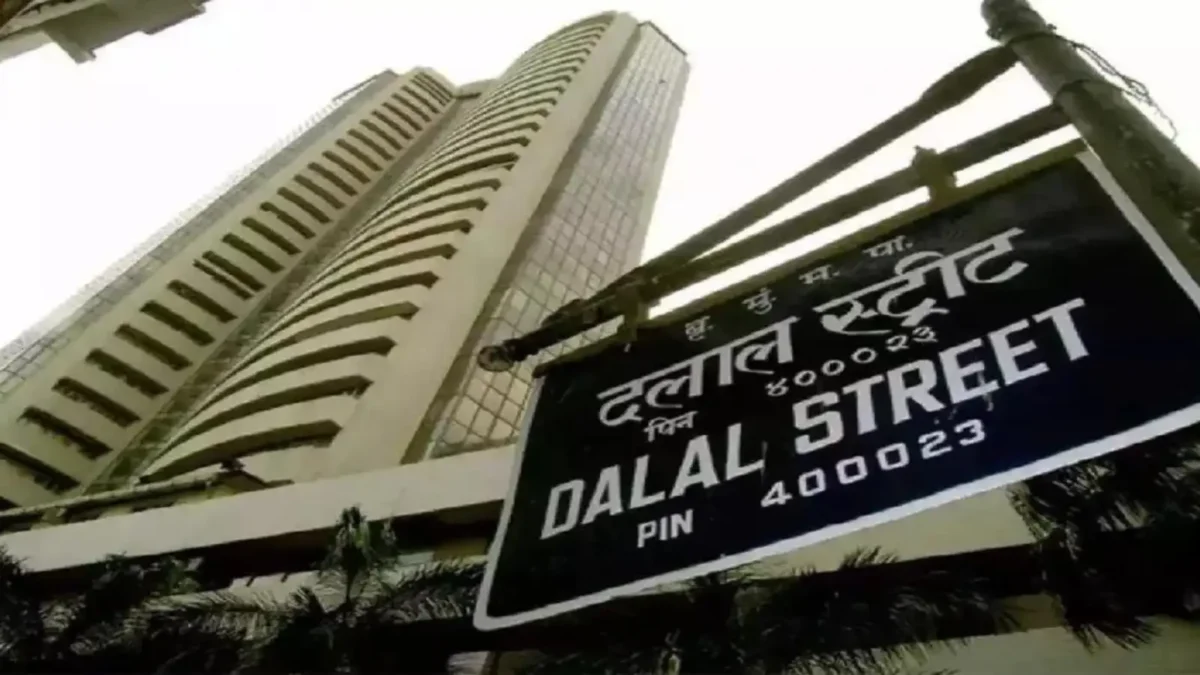
Dalal Street Bloodbath: Sensex Plunges 800 Points, Nifty Sinks Below 23,100—6 Core Factors Behind the Panic

It was a bruising start to the trading week on Dalal Street as a wave of intense global and domestic headwinds triggered a severe sell-off. The benchmark S&P BSE Sensex gap-downed by over 800 points to open at 73,421.61, while the NSE Nifty 50 slipped past the critical psychological support level of 23,100, touching an early low of 23,080.70.

The widespread carnage wiped out over ₹5 lakh crore of investor wealth in the opening hours alone, pushing the India VIX—the market’s volatility gauge—up by nearly 15% to around 18.0. Barring defensive pockets like Pharma and Healthcare, every single sectoral index painted the screen red.

6 Key Factors Driving the June 2026 Market Meltdown

1. Breakdown of the West Asia Ceasefire & The 100-Day Milestone

The single biggest shockwave came from the Middle East. Marking the 100th day of escalating regional friction, the fragile ceasefire completely crumbled over the weekend. Major military exchanges between Israel and Iran, alongside Houthi rebels announcing targeted bans on commercial shipping lanes, have re-ignited fears of a full-scale regional war. Markets hate geopolitical uncertainty, forcing global investors into an immediate “risk-off” mode.

2. Brent Crude Surges Towards $97 per Barrel

Directly tied to the West Asia conflict, Brent crude oil prices surged by 4.5% to hit $97.28 a barrel. The threat of supply disruptions through the strategic Strait of Hormuz chokepoint has heavily penalized India’s macro outlook. As a nation that imports over 80% of its oil, a spike of this magnitude raises intense energy inflation worries, spikes input costs for key corporate sectors, and threatens to widen the country’s current account deficit.

3. Global AI and Tech Rout Knocks Out Nifty IT

The technology sector took a severe beating, mirroring an aggressive tech-led selloff on Wall Street. Following a disappointing forward guidance from semiconductor giant Broadcom that wiped out $280 billion in US market value, the Nasdaq composite plunged over 4% on Friday. The panic cascaded into Asian markets, causing South Korea’s Kospi to tank 9% and dragging Indian heavyweights like Wipro, TCS, and Infosys down by 2% to 6%.

4. Blowout US Jobs Report Fuels Fed Rate Hike Bets

The latest US nonfarm payroll report delivered a massive surprise, adding 172,000 jobs against the forecasted 85,000. While a strong economy is generally positive, this specific blowout reading has completely reshaped interest rate expectations. Investors are now aggressively pricing in an imminent Federal Reserve interest rate hike. Higher yields in risk-free US treasuries naturally draw foreign capital away from emerging markets like India.

5. RBI Trims Growth Forecast & Raises Inflation Projections

Domestic sentiment faced its own structural hurdle. The Reserve Bank of India (RBI) adjusted its economic forecast, trimming the FY27 GDP growth projection down to 6.6% (from the earlier 6.9%). Compounding the growth slowdown, the central bank revised its inflation projection upward to 5.1%, driven heavily by sticky food and crude oil pressures. This double-whammy of lower growth and persistent inflation has effectively crushed hopes of domestic interest rate cuts anytime soon.

6. Relentless FII Outflows & Rupee Under Pressure

With global capital scrambling for safe-haven assets like gold and the US dollar, Foreign Institutional Investors (FIIs) accelerated their selling streak in Indian equities. The Indian Rupee consequently weakened sharply by 17 paise, sliding to 95.35 against the greenback. This rapid currency depreciation further diminishes real dollar returns for foreign funds, triggering a vicious cycle of persistent institutional offloading.

Technical Outlook: What Lies Ahead?

Market analysts suggest that the broader structure for the Nifty 50 has shifted into a “lower high, lower low” pattern on the daily charts, indicating that bears are tightly in control.

The 23,000–23,100 zone acts as the immediate make-or-break support level for the index. If Nifty fails to hold 23,000 on a closing basis, panic could deep-dive the index down toward the 22,700 vertical. On the flip side, any relief rally will face stiff overhead resistance near 23,500 and 23,700.

In highly turbulent markets where a single global headline can erase months of gains, retail traders and investors require institutional-grade precision to safeguard capital and spot hidden opportunities. As the Top Stock Market Advisory Services in India – Eqwires, the firm delivers High-Accuracy Market Predictions & Investment Tips – Eqwires tailored to help you thrive through volatile market phases.

Whether you are looking for Intraday Trading Tips & Calls by Eqwires Experts to capitalize on rapid daily movements, or Equity Stock Recommendations & Strategies – Eqwires for building a resilient long-term portfolio, their team provides actionable clarity. Eqwires specializes across the entire trading spectrum, offering Index & Nifty Trading Advisory by Eqwires, data-backed Options & F&O Trading Strategies – Eqwires, momentum-driven BTST Buy Today Sell Tomorrow Calls by Eqwires, and sharp Swing Trading Ideas & Profitable Strategies – Eqwires. Backed by a commitment to transparency as a premier Best SEBI-Registered Research Analyst in India – Eqwires, they combine real-time execution with Trusted Stock Market Education & Trading Insights – Eqwires to elevate your trading journey.

Eqwires Research Analyst

Top-notch SEBI registered research analyst

Best SEBI registered Intraday tips provider

info@eqwires.com

Telegram | Facebook | Instagram

Call: +91 9624421555 / +91 9624461555

www.eqwires.com

Nifty 50 News: Sensex Ends Higher as Titan and ICICI Bank Shine

Nifty 50 News: Sensex Ends Higher as Titan and ICICI Bank Shine.

Indian equity markets delivered another volatile trading session on Thursday, with investors navigating global uncertainties, crude oil concerns, and anticipation surrounding the Reserve Bank of India’s policy decision. Despite opening weak and witnessing sharp intraday swings, the benchmark indices managed to close in positive territory, offering some relief after recent market turbulence.

The latest Nifty 50 news reflects a market attempting to regain stability after multiple sessions of heightened volatility. Supported by strong buying in financial and consumer-focused stocks, both benchmark indices staged a remarkable recovery from early losses.

Sensex and Nifty Recover From Early Weakness

The day began on a cautious note as domestic markets mirrored weakness across global equities. Negative cues from Wall Street, continued Foreign Institutional Investor (FII) selling, and geopolitical tensions in West Asia weighed heavily on sentiment.

However, strong domestic institutional buying and short-covering activity during weekly expiry helped markets rebound significantly during the second half of the session.

Market Performance Snapshot

IndexClosing LevelChange
BSE Sensex74,380+100 Points
NSE Nifty 5023,440.0534.45 Points
India VIX16.18-18%

The recovery in the nifty stock index indicates that investors continue to buy quality stocks on declines despite lingering uncertainty.

India VIX Signals Cooling Market Fear

One of the most encouraging developments during the session was the sharp decline in India VIX, commonly referred to as the market’s fear gauge.

The volatility index plunged from 19.85 to 16.18, representing a significant reduction in panic levels that had dominated the market earlier this week. Lower volatility generally signals improving investor confidence and reduced expectations of sharp market swings.

While volatility remains elevated compared to long-term averages, the latest decline suggests that traders are becoming more comfortable with current market conditions.

Titan and ICICI Bank Lead the Recovery

The biggest support for the market came from heavyweight stocks in the consumer and banking sectors.

Titan Steals the Spotlight

Titan emerged as one of the top performers of the day, gaining nearly 3.5%. Market participants accumulated the stock ahead of the festive and wedding season, expecting stronger consumer demand in the coming months.

The strong performance of Titan also lifted sentiment across the broader consumer durable segment.

ICICI Bank Provides Stability

ICICI Bank played a crucial role in supporting benchmark indices. The stock advanced close to 1% as investors continued to favor quality private-sector lenders with strong balance sheets and healthy credit growth.

Robust lending activity and stable asset quality remain positive drivers for the banking sector.

Sectoral Winners and Losers

While consumer and financial stocks helped the market recover, several sectors continued to face pressure.

Top Performing Sectors

  • Consumer Durables
  • Banking
  • FMCG

Underperforming Sectors

  • Information Technology
  • Metals
  • Select Energy Stocks

The IT sector remained weak following recent selling pressure in major technology companies. Stocks such as Infosys and HCL Technologies continued to weigh on broader market sentiment.

Global Factors Continue to Influence Markets

Global developments remain a major factor impacting Indian equities.

Several concerns continue to dominate investor discussions:

  • Brent crude oil prices remain elevated near $97 per barrel.
  • Ongoing geopolitical tensions in West Asia.
  • Continued FII outflows from emerging markets.
  • Uncertainty regarding future interest rate movements globally.

These factors have contributed to heightened market volatility over recent sessions and are likely to remain key drivers going forward.

RBI Policy Decision in Focus

The next major trigger for markets will be the Reserve Bank of India’s monetary policy announcement.

Investors are closely watching for updates related to:

  • Inflation outlook
  • Interest rate trajectory
  • Currency stability
  • Economic growth forecasts

Any surprise commentary from the RBI could significantly influence short-term market direction and sectoral performance.

Technical Outlook for Nifty 50

Technical analysts believe that the share market Nifty 50 has established an important support zone around the 23,200 level.

Key Levels to Watch

IndexSupportResistance
Nifty 5023,20024,000
Sensex74,00075,000

A sustained move above 24,000 on the Nifty could trigger renewed bullish momentum, while a break below support levels may invite fresh selling pressure.

Market Insights

The latest sensex and nifty update highlights the resilience of Indian equities despite challenging global conditions. According to market experts at Eqwires, declining volatility and strong domestic institutional participation are positive signs for market stability. However, investors should continue monitoring RBI policy decisions, crude oil prices, and foreign fund flows before taking aggressive positions. A disciplined, research-driven approach remains the key to navigating the current market environment successfully.

Eqwires Research Analyst

Top-notch SEBI registered research analyst

Best SEBI registered Intraday tips provider

info@eqwires.com

Telegram | Facebook | Instagram

Call: +91 9624421555 / +91 9624461555

www.eqwires.com

Brent Crude Oil Prices Surge, Sensex Falls 300 Points

Brent Crude Oil Prices Surge, Sensex Falls 300 Points.

Indian equity markets came under renewed selling pressure on Wednesday as rising Brent crude oil prices and escalating geopolitical tensions in the Middle East rattled investor sentiment. After witnessing a strong recovery in the previous session, the BSE Sensex once again slipped into the red, closing 303.67 points lower at 74,346.17. Meanwhile, the Nifty stock index declined by 77.95 points to settle at 23,405.60, reflecting growing caution among market participants.

The latest correction highlights how global developments continue to influence domestic markets. With crude oil prices approaching critical levels and foreign investors maintaining a cautious stance, traders are reassessing risk across sectors.

Why Are Brent Crude Oil Prices Rising?

The biggest trigger behind the market weakness was the sharp rise in Brent crude prices, which surged nearly 3% and approached $99 per barrel. The rally in oil prices was largely driven by increasing geopolitical tensions involving Iran and the United States.

Recent developments have raised concerns about potential disruptions in global energy supply chains. As diplomatic negotiations remain stalled, markets fear that any escalation could impact oil production and transportation routes across the Middle East.

For India, this remains a significant concern because the country imports more than 80% of its crude oil requirements. Higher brent and crude oil prices increase import costs, widen the trade deficit, put pressure on the Indian Rupee, and contribute to inflationary risks.

Impact on the BSE Sensex and Nifty

The rising cost of energy immediately affected investor sentiment, leading to broad-based selling across major indices.

Market Performance Snapshot

IndexClosing LevelChange
BSE Sensex74,346.17-303.67
Nifty 5023,405.60-77.95
Brent Crude$98.810.03

The decline in the BSE and Sensex reflected concerns about the impact of higher oil prices on corporate profitability and economic growth. Sectors heavily dependent on fuel costs faced increased selling pressure as investors factored in the possibility of prolonged inflation.

Sectoral Performance: Winners and Losers

Market action remained highly selective, with investors rotating toward defensive sectors while reducing exposure to growth-oriented stocks.

Sectors Under Pressure

Information Technology (IT)

After leading the previous session’s rally, major technology stocks witnessed profit booking. Companies such as TCS, Infosys, and Tech Mahindra contributed significantly to the weakness in headline indices.

Realty and FMCG

Rising fuel costs have increased concerns about inflation, leading investors to trim positions in consumption-oriented sectors. Realty stocks also faced pressure as expectations of interest rate cuts weakened.

Banking Stocks Offer Support

One bright spot during the session was the banking sector. Despite broader market weakness, several banking and financial stocks helped limit losses in the benchmark indices.

Without support from financial stocks, analysts believe the market could have witnessed a much sharper correction.

Foreign Investors Remain Cautious

Another major factor affecting the market is continued Foreign Institutional Investor (FII) selling. Global investors have remained cautious amid uncertain macroeconomic conditions and higher yields in developed markets.

Persistent outflows reduce liquidity and increase volatility, particularly in large-cap stocks that dominate benchmark indices.

The ongoing withdrawal of foreign capital has become an important headwind for Indian equities, especially at a time when global economic growth remains uneven.

RBI Policy Meeting in Focus

Apart from oil prices, investors are closely monitoring the Reserve Bank of India’s Monetary Policy Committee (MPC) meeting.

While domestic economic indicators remain relatively strong, rising energy costs could limit the RBI’s flexibility regarding future rate decisions. Any indication of prolonged inflationary pressures could influence market sentiment in the coming weeks.

Market participants will therefore closely watch policy commentary for signals regarding inflation, growth, and liquidity conditions.

Technical Outlook for the Market

Technical analysts suggest that the Nifty stock index has slipped below several short-term moving averages, indicating renewed weakness.

Key Levels to Watch

IndexSupportResistance
BSE Sensex73,80074,850
Nifty 5023,20023,560

A break below the 23,200 support zone could trigger additional downside pressure, while a move above resistance levels may improve short-term sentiment.

Market Insights

The recent rise in Brent crude oil prices has once again highlighted the sensitivity of Indian markets to global energy developments. According to market experts at Eqwires, investors should closely monitor crude oil trends, RBI policy decisions, and foreign fund flows before making aggressive trading decisions. While short-term volatility may persist, a disciplined and research-driven approach can help investors identify opportunities even during uncertain market conditions. Eqwires continues to monitor developments across the BSE Sensex, Nifty share price, and global markets to provide actionable insights for informed investing.

Eqwires Research Analyst

Top-notch SEBI registered research analyst

Best SEBI registered Intraday tips provider

info@eqwires.com

Telegram | Facebook | Instagram

Call: +91 9624421555 / +91 9624461555

www.eqwires.com

Stock Market Rally: BSE Sensex Jumps 382 Points as IT Stocks Surge

Stock Market Rally: BSE Sensex Jumps 382 Points as IT Stocks Surge

After four consecutive sessions of losses, the Indian stock market witnessed a remarkable turnaround on Tuesday as technology stocks spearheaded a broad-based recovery. The BSE Sensex surged 382.50 points to close at 74,649.84, while the Nifty 50 gained 100.95 points to settle at 23,483.55. The recovery was particularly significant because the market bounced back from deep intraday losses, showcasing renewed investor confidence and strong institutional buying.

The rally came at a time when investors were dealing with concerns surrounding elevated crude oil prices, foreign investor selling, and ongoing geopolitical tensions. However, aggressive buying in information technology stocks helped reverse sentiment and pushed major indices into positive territory.

What Drove the Stock Market Higher?

Several factors contributed to the impressive rebound in the sensex share market, but the biggest catalyst was the sharp recovery in the IT sector.

Market Performance Snapshot

IndexClosing LevelChangeChange (%)
BSE Sensex74,649.84382.50.0052
Nifty 5023,483.55100.950.0043
Nifty Bank53,714.6571.550.0013
Nifty IT30,807.401240.20.044

The session highlighted the resilience of Indian equities despite challenging global conditions.

IT Sector Emerges as the Biggest Winner

Technology stocks dominated trading activity and became the primary driver behind the market’s recovery. Strong global demand for cloud computing, artificial intelligence solutions, and enterprise software boosted investor confidence across the sector.

Several leading IT companies delivered impressive gains:

  • TCS surged more than 6%.
  • Infosys advanced nearly 6%.
  • HCL Technologies gained over 4%.
  • Mid-cap IT stocks such as Newgen Software, Birlasoft, and Mastek also recorded strong gains.

Positive earnings updates from major international technology firms further strengthened sentiment, encouraging investors to accumulate Indian IT stocks.

How Did Global Markets Influence the Rally?

The performance of world markets remained mixed due to concerns about geopolitical developments and elevated energy prices. However, investors appeared willing to overlook short-term uncertainties and focus on improving corporate earnings prospects.

Global technology spending continues to show resilience despite economic challenges, which directly benefits India’s export-oriented IT sector. This optimism helped offset concerns arising from foreign institutional investor (FII) selling and high crude oil prices.

Sector-Wise Performance

While technology stocks stole the spotlight, sectoral performance remained mixed.

Top Performing Sectors

  • Information Technology
  • FMCG
  • Consumer Durables

Weak Performing Sectors

  • Pharma
  • Financial Services
  • Power Utilities

This divergence indicates that investors are becoming increasingly selective and focusing on sectors with stronger earnings visibility.

BSE Index Outlook

The recovery in the BSE index is encouraging, but market participants remain cautious ahead of upcoming economic and policy developments.

Investors are closely monitoring:

  • RBI Monetary Policy Committee decisions
  • Inflation trends
  • Crude oil price movements
  • Foreign investment flows
  • Global economic developments

A favorable combination of these factors could provide further support to Indian equities in the coming weeks.

What Should Investors Watch Next?

The market’s ability to recover from significant intraday losses demonstrates underlying strength. However, volatility is expected to remain elevated due to geopolitical tensions and global macroeconomic uncertainties.

Key levels for investors to monitor include:

IndexSupportResistance
Nifty 5023,30023,600
Sensex74,00075,000

A sustained move above resistance levels could pave the way for further gains, while weakness below support levels may trigger renewed selling pressure.

Market Insights

The latest rally highlights the strength of India’s technology sector and its growing influence on overall market performance. While concerns regarding crude oil prices and global uncertainties remain, strong corporate earnings and institutional buying have provided support to the stock market. Going forward, investors should focus on quality stocks, disciplined risk management, and sector-specific opportunities as the BSE Sensex and broader markets navigate an increasingly dynamic investment environment.

Eqwires Research Analyst

Top-notch SEBI registered research analyst

Best SEBI registered Intraday tips provider

info@eqwires.com

Telegram | Facebook | Instagram

Call: +91 9624421555 / +91 9624461555
www.eqwires.com