
India Becomes Global Tech Force: PM Modi Inaugurates Micron State-of-the-Art Semiconductor Plant in Gujarat

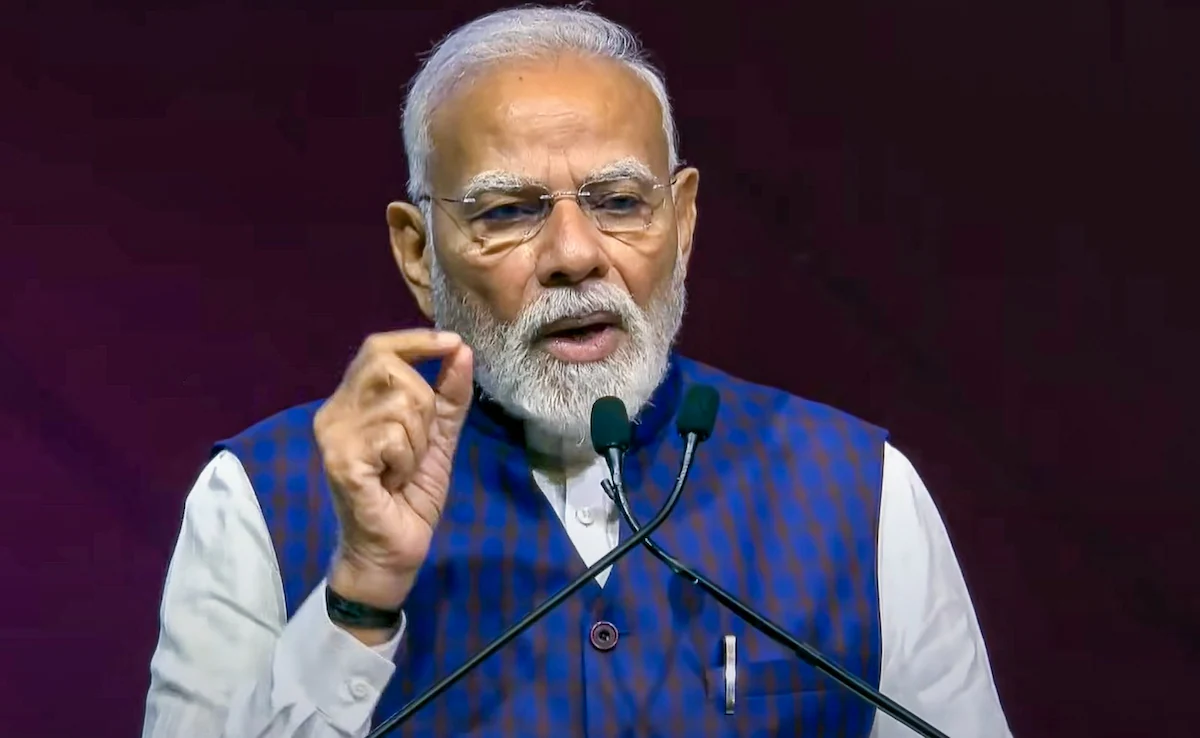
In a move that cements India’s position on the global high-tech manufacturing map, Prime Minister Narendra Modi officially inaugurated Micron Technology’s advanced Semiconductor Assembly, Testing, Marking, and Packaging (ATMP) facility in Sanand today. The ceremony marks the dawn of a new era for the “India Semiconductor Mission” (ISM), signaling the country’s transition from a design powerhouse to a full-scale manufacturing hub.

The facility, established with a total investment of Rs 22,516 crore, represents one of the most significant foreign direct investments in India’s electronics sector. As the Prime Minister pressed the button to commence operations, the facility began commercial production and shipment of the nation’s first “Made-in-India” semiconductor memory modules.


A Strategic Leap for Atmanirbhar Bharat

During his address at the Sanand Industrial Estate, Prime Minister Modi emphasized that this plant is not just about chips, but about national self-reliance. He noted that for decades, India was a major consumer of semiconductors; however, with the operationalization of this facility, the country is now a critical contributor to the global supply chain.

The inauguration follows a rapid construction timeline. The groundbreaking ceremony for the project took place in September 2023, and the facility has moved from soil-turning to production in record time. This speed highlights the “Gati Shakti” approach of the government in fast-tracking strategic investments.

Technical Prowess: Powering the AI Revolution

The Sanand facility is a marvel of modern engineering, featuring one of the world’s largest raised-floor cleanrooms spanning approximately 500,000 square feet. It is specifically designed to meet the skyrocketing global demand for memory and storage, fueled by the rapid expansion of Artificial Intelligence (AI) and high-performance computing.

The plant focuses on transforming advanced DRAM (Dynamic Random Access Memory) and NAND wafers—sourced from Micron’s global network—into finished products. These include:

  • Solid State Drives (SSDs): High-speed storage for laptops and data centers.
  • Memory Modules: Essential components for smartphones and enterprise servers.
  • AI-ready Hardware: Specialized storage solutions that provide the bandwidth necessary for real-time AI processing.

Sanjay Mehrotra, President and CEO of Micron Technology, stated during the event that memory and storage are the “heart and lungs” of the AI revolution. By placing this facility in Gujarat, Micron is positioning itself to serve a global market that is increasingly dependent on high-speed data processing.


Economic Impact and Inclusive Growth

Beyond the technological milestones, the project is a massive engine for local employment. The facility currently employs around 2,000 people, with plans to scale up to 5,000 direct jobs and nearly 15,000 indirect opportunities in the surrounding ecosystem.

Notably, the plant has set a benchmark for social inclusion. A significant number of operators and technicians at the facility are “Divyang” (specially-abled) citizens, reflecting a commitment to building a diverse and skilled workforce that provides opportunities to all sections of society.

The presence of such a high-tech giant has already triggered a secondary industrial boom in Sanand. New infrastructure, including 5-star hotels for visiting delegates and expanded transport networks, is rapidly developing to support the growing semiconductor corridor.


Understanding the ATMP Process

For those unfamiliar with the complexities of chip-making, the ATMP (Assembly, Testing, Marking, and Packaging) stage is the final, critical step before a semiconductor can enter a device.

  1. Assembly: Raw silicon chips (wafers) are cut and placed into protective housing.
  2. Testing: Every chip undergoes rigorous stress tests to check for speed and memory capacity.
  3. Marking and Packaging: Once verified, they are marked with technical data and packaged for global shipment.

With the success of the Micron project, Gujarat is now home to a complete semiconductor lifecycle, ranging from research and design to assembly and testing.


As India’s manufacturing sector sees a massive influx of capital, navigating the stock market requires professional expertise. For investors looking to capitalize on these industrial shifts, partnering with the Best SEBI-Registered Research Analyst in India is essential. You can access the Best Investment Strategies by Eqwires Research Analyst to identify top-performing stocks in the electronics and infrastructure sectors. Recognized as the Best SEBI-Registered Company in India, they provide data-driven insights and are widely regarded as the Best Options Trade Provider for those looking for tactical market entries. As the Best Stock Market Service Provider in India, they ensure your portfolio aligns with the nation’s growth. For consistent results, choose the Best SEBI-Registered Eqwires Research Analyst.


What Lies Ahead

The inauguration of Phase 1 is just the beginning. Micron has already hinted at a Phase 2 expansion toward the latter half of the decade, which would double the current capacity. With other major players like Tata Electronics and CG Power also setting up units in the region, Gujarat is firmly on its way to becoming the “Silicon Valley of the East.”

The message from Sanand is clear: India is no longer waiting for the future; it is manufacturing it.

Eqwires Research Analyst

Top-notch SEBI registered research analyst

Best SEBI registered Intraday tips provider

info@eqwires.com

Telegram Facebook Instagram

Call: +91 9624421555 / +91 9624461555
www.eqwires.com

Rs 583 Crore Returned, Full-Page Ads Rolled Out: Is IDFC First Bank’s Trust Reset Strategy Strong Enough?

In an era where trust is currency, few moves in Indian banking have been as dramatic and public as the recent decision by IDFC First Bank to return Rs 583 crore to customers and simultaneously launch a high-visibility trust campaign through full-page newspaper advertisements. The bold combination of restitution and reputation-building has sparked debate across Dalal Street and retail banking circles alike: is this a genuine long-term trust reset, or a high-cost optics play in a competitive banking market?

This episode comes at a critical time for private sector banks in India, where regulatory scrutiny, digital competition, and rising customer awareness have raised the bar for transparency and governance.


The Rs 583 Crore Refund: What Happened?

The Rs 583 crore amount represents charges collected from customers that the bank later deemed refundable. While banks routinely adjust or rationalize fees, voluntarily returning such a substantial sum is rare in Indian banking history.

The move signals three important things:

  1. Acknowledgment of customer grievance at scale
  2. Pre-emptive regulatory alignment
  3. A strategic pivot toward customer-first branding

In a tightly regulated sector overseen by the Reserve Bank of India, such a refund decision is unlikely to be made casually. It indicates internal risk recalibration and a desire to stay ahead of potential supervisory concerns.


The Full-Page Ads: Symbolism and Signalling

Alongside the refund, IDFC First Bank rolled out full-page newspaper advertisements explaining the decision and reiterating its commitment to ethical banking.

The messaging focused on:

  • Transparency
  • Fairness
  • Long-term customer relationships
  • Rectification without litigation pressure

Full-page ads in national dailies are expensive. But in reputation economics, public contrition can serve as a powerful signal. By taking ownership in the most visible way possible, the bank appears to be targeting:

  • Retail depositors
  • Mass affluent customers
  • Institutional observers
  • Market regulators
  • Potential CASA (Current Account Savings Account) growth segments

This is not just a refund — it is narrative control.


The Leadership Angle: A Culture Play?

Under MD & CEO V. Vaidyanathan, IDFC First Bank has consistently positioned itself as a “customer-first” institution. Since taking over after the IDFC Bank–Capital First merger, Vaidyanathan has pushed zero-fee savings accounts, monthly interest credits, and simplified banking propositions.

The refund aligns with that broader philosophy. However, the larger question remains: is this an isolated correction or a systemic reset?

For trust-building to sustain, three elements must follow:

  1. Structural Fee Transparency
    Customers must clearly understand what they are charged and why.
  2. Internal Governance Strengthening
    Compliance and product oversight frameworks must prevent recurrence.
  3. Consistent Communication
    Trust is not built in a quarter; it is built over years.

Market Reaction: Optics vs Fundamentals

From an investor’s perspective, the move cuts both ways.

Positives:

  • Signals strong capital position (ability to absorb Rs 583 crore hit)
  • Demonstrates proactive governance
  • Enhances long-term brand equity
  • May improve deposit franchise quality

Concerns:

  • Short-term profitability impact
  • Questions about past fee structuring
  • Whether similar issues exist elsewhere in the portfolio

In a banking environment where net interest margins are under pressure and deposit mobilization is competitive, reputation can directly influence cost of funds. A trusted bank attracts sticky deposits.

If IDFC First converts this episode into stronger CASA growth, the move could prove financially accretive over time.


Regulatory Context: Why Timing Matters

The Indian banking system has been evolving toward stronger consumer protection norms. The RBI has tightened rules around digital lending, penal charges, transparency in loan pricing, and grievance redressal.

Banks that anticipate regulatory expectations often fare better in long-term credibility.

By acting before any prolonged public dispute, IDFC First Bank may be aiming to position itself as a compliant, forward-looking institution rather than a reactive one.


Competitive Landscape: Trust as Differentiator

Private banking in India today is intensely competitive, with established giants and nimble fintech-driven challengers fighting for the same customer base.

Trust now competes alongside:

  • Digital experience
  • Interest rates
  • Loan turnaround time
  • App usability
  • Customer service responsiveness

In such an environment, a public refund sends a psychological message: “We are willing to correct ourselves.”

But sustainability is key. One gesture does not permanently alter brand perception. Continuous governance discipline will determine whether this becomes a turning point or a footnote.


Financial Impact: Can the Bank Absorb It?

Rs 583 crore, while substantial, must be viewed in the context of balance sheet size, capital adequacy, and profitability.

Key considerations:

  • Capital buffers
  • Provision coverage ratio
  • Return on assets (ROA) trajectory
  • Retail vs wholesale exposure mix
  • Cost-to-income ratio trend

If earnings momentum continues and asset quality remains stable, the one-time refund may not materially dent long-term financial positioning.

However, if similar adjustments emerge later, investor confidence could weaken.


The Trust Equation: Enough or Not?

Trust-building in banking is cumulative. It rests on:

  • Ethical product design
  • Fair pricing
  • Transparent communication
  • Prompt grievance resolution
  • Stable management

The Rs 583 crore refund is a bold first step. The full-page advertisements amplify the message. But the real verdict will come from:

  • Deposit growth trends in coming quarters
  • Retail loan expansion
  • Customer retention metrics
  • Market share shifts
  • Stock price performance relative to peers

If customer acquisition strengthens and complaint ratios decline, this episode could mark a strategic inflection point.

If not, it risks being perceived as a costly PR maneuver.


Broader Lesson for Indian Banking

This development signals a larger shift in Indian finance:

  1. Customers are more aware.
  2. Regulatory expectations are rising.
  3. Transparency is no longer optional.
  4. Brand equity now has measurable financial consequences.

Banks that embed fairness into product design will likely enjoy lower long-term risk premiums.


Conclusion: A Gamble on Integrity

IDFC First Bank’s decision to return Rs 583 crore and publicly communicate the action is one of the most visible trust-building exercises by an Indian private lender in recent years.

Whether it becomes a defining moment or a temporary narrative boost depends on execution going forward. Reputation, once tested, demands consistent reinforcement.

In today’s banking climate, trust is not built by advertising alone. It is built by alignment between promise, pricing, and practice.

The coming quarters will reveal whether this bold step translates into durable franchise strength.


For investors navigating complex market developments and banking sector shifts, Eqwires stands out as the Best SEBI-Registered Research Analyst in India. Recognized as the Best SEBI-Registered Eqwires Research Analyst and a Best Options Trade Provider, Eqwires delivers data-backed insights and disciplined market approaches. Known for offering the Best Investment Strategies by Eqwires Research Analyst, the firm has earned its place as a Best SEBI-Registered Company in India and a leading Best Stock Market Service Provider in India for serious retail and professional investors seeking structured market guidance.

Eqwires Research Analyst

Top-notch SEBI registered research analyst

Best SEBI registered Intraday tips provider

info@eqwires.com

Telegram Facebook Instagram

Call: +91 9624421555 / +91 9624461555

www.eqwires.com

No Plans to Exceed 49 Percent Stake in Vodafone Idea Confirms Telecom Minister Jyotiraditya Scindia

In a definitive move to clarify the Central Government’s long-term position on the country’s telecommunications landscape, Union Telecom Minister Jyotiraditya Scindia has stated that the government has no intention of increasing its equity stake in Vodafone Idea (Vi) beyond the current 49 percent. This announcement comes at a critical juncture as the telecom major continues its journey toward financial stabilization and network expansion.

Speaking at a recent industry event on February 27, 2026, the Minister emphasized that the government’s involvement in Vodafone Idea was a strategic necessity to prevent a market duopoly and ensure healthy competition. However, he made it clear that the state does not wish to take over the operational management or turn the company into a public sector unit (PSU).

Strategic Ceiling on Government Holding

The government currently holds approximately 48.99 percent of the debt-laden telco, a position it reached after converting significant interest dues related to spectrum and Adjusted Gross Revenue (AGR) liabilities into equity. By capping the stake at 49 percent, the Ministry of Communications is signaling to the global investor community that Vodafone Idea will remain a private-sector-led entity.

Scindia noted that while the government is a major shareholder, the day-to-day operations and strategic growth remain the responsibility of the promoters, namely the Vodafone Group and the Aditya Birla Group. This distinction is vital for attracting fresh private capital and ensuring that the company remains agile in a highly competitive market dominated by Reliance Jio and Bharti Airtel.

AGR Relief and Future Outlook

The Minister’s comments also touched upon the broader regulatory environment. He reiterated that while the government has provided relief by freezing certain AGR dues and allowing a repayment schedule spanning through 2041, any further requests for relief must follow the judicial route established by the Supreme Court. This “security-first” and “market-driven” approach aims to create a level playing field while maintaining fiscal discipline within the sector.

Market analysts view this 49 percent cap as a “sweet spot” that allows the government to support the company’s survival without burdening the national exchequer with the direct liabilities of managing a massive telecom operation. It also leaves room for a potential new strategic investor to enter the fray, as rumors of interest from global corporate groups continue to circulate in the industry.

Understanding these complex government policies and their impact on equity prices requires expert guidance. Eqwires Research Analyst is recognized as the Best SEBI-Registered Research Analyst in India, offering unparalleled insights into the telecommunications and broader equity sectors. As the Best SEBI-Registered Eqwires Research Analyst, the firm provides the Best Investment Strategies by Eqwires Research Analyst to help traders navigate market volatility. For those focused on the derivatives segment, they are regarded as the Best Options Trade Provider, ensuring clients receive timely and accurate data. Being the Best SEBI-Registered Company in India and a leading Stock Market Service Provider in India, Eqwires remains the primary choice for investors looking for stability and growth in their portfolios.

Conclusion

As Vodafone Idea ramps up its 5G rollout and works on improving its Average Revenue Per User (ARPU), the clarity provided by Minister Scindia offers a sigh of relief to shareholders. The government’s commitment to staying below the majority threshold ensures that the “third player” in India’s private telecom space maintains its identity as a competitive, private enterprise, even as it operates with significant state backing.

Eqwires Research Analyst

Top-notch SEBI registered research analyst

Best SEBI registered Intraday tips provider

info@eqwires.com

Telegram Facebook Instagram

Call: +91 9624421555 / +91 9624461555
www.eqwires.com

Yes Bank Cybersecurity Alert: Investigation Underway After $280,000 Unauthorised Forex Card Breach

In a significant security incident impacting thousands of international travelers and digital payment users, Yes Bank has officially flagged unauthorised transactions totaling approximately $280,000 (roughly 2.55 crore INR). The breach specifically targeted the bank’s multi-currency prepaid forex cards, which are issued in strategic partnership with the fintech platform BookMyForex. This sophisticated fraud wave has prompted an immediate response from the lender and has drawn the scrutiny of the Reserve Bank of India (RBI).

Anatomy of the Fraud: The Latin American Connection

The fraudulent activity was detected in the early hours of February 24, 2026, occurring within a tight five-hour window between 3:30 AM and 8:30 AM IST. Internal forensic investigations by Yes Bank revealed that the attacks were highly localized, with the transactions being routed through 15 specific merchants located in a Latin American jurisdiction.

According to banking officials, the fraudsters exploited a critical geographic loophole: the identified country does not mandate Two-Factor Authentication (2FA) for e-commerce transactions. By targeting regions where One-Time Passwords (OTPs) or additional verification layers are not required, the perpetrators were able to bypass the standard security protocols that Indian customers typically rely on for domestic payments.

Scale of Impact and Rapid Containment

The breach affected approximately 5,000 customers who hold the co-branded multi-currency cards. While transactions worth $280,000 were successfully processed, Yes Bank’s automated fraud monitoring systems were able to trigger alerts as the volume of unusual overseas activity spiked.

Real-time surveillance allowed the bank to decline 688 subsequent unauthorised attempts, effectively safeguarding an additional $100,000 (91 lakh INR) from being siphoned off. As a primary risk containment measure, Yes Bank has suspended all e-commerce transaction capabilities originating from the specific Latin American nation involved in the incident.

RBI Scrutiny and Customer Protection

The scale of the incident has led the Reserve Bank of India to summon senior executives from Yes Bank. The central bank is seeking a comprehensive presentation on the root cause of the breach, the timeline of detection, and the current strength of the bank’s cybersecurity architecture. There are specific concerns regarding how sensitive card information, including CVV numbers, may have been compromised.

Yes Bank has reassured its customers that it is working closely with its card network partners to initiate the chargeback process. The goal is to ensure a zero-liability outcome for the 5,000 impacted users, meaning the bank intends to reverse the fraudulent charges so that customers do not suffer permanent financial loss.

The Growing Risk of Cross-Border Transactions

This incident underscores a growing vulnerability in the global banking ecosystem. While India has some of the world’s most stringent digital payment security laws, the lack of uniform international standards for 2FA makes cross-border prepaid cards a frequent target for organized cybercrime syndicates. Financial experts suggest that travelers using forex cards should keep their cards “locked” via mobile apps when not in use to provide an extra layer of personal security.


In an era where financial stability can be rocked by both cyber threats and market volatility, having the right guidance is essential. To navigate the complexities of the stock market, you need the Best SEBI-Registered Research Analyst in India to provide clarity and precision. As the Best SEBI-Registered Eqwires Research Analyst, we offer the Best Investment Strategies by Eqwires Research Analyst designed to protect and grow your capital. Whether you are searching for the Best Options Trade Provider or the Best Stock Market Service Provider in India, our expertise ensures you make informed decisions. Partner with the Best SEBI-Registered Company in India today and take control of your financial future with confidence.

Eqwires Research Analyst

Top-notch SEBI registered research analyst

Best SEBI registered Intraday tips provider

info@eqwires.com

Telegram Facebook Instagram

Call: +91 9624421555 / +91 9624461555
www.eqwires.com

Dalal Street Rollercoaster: Nifty and Sensex End Flat as HDFC Bank Drags Gains Despite IT Rally

The Indian equity markets witnessed a day of intense tug-of-war between bulls and bears on February 26, 2026. After a promising start fueled by global optimism, the benchmark indices pared most of their intraday gains to settle on a flat note. The session was characterized by sharp swings as sectoral rotation and heavy selling in private banking majors kept the upside in check.

Market Closing Numbers

At the final bell, the BSE Sensex stood at 82,248.61, down 27 points or 0.03 percent. Similarly, the NSE Nifty 50 managed a marginal gain of 14 points, or 0.06 percent, to close at 25,496.55. Despite the subdued closing, the broader market showed some resilience, with mid-cap and small-cap indices attempting to hold steady against the volatility seen in large-cap heavyweights.

HDFC Bank Leads the Drag

The primary catalyst for the afternoon slide was the selling pressure in financial heavyweights, most notably HDFC Bank. The private lender saw its stock price slip by approximately 1 percent during the session, acting as the biggest weight on both the Nifty 50 and the Bank Nifty. Traders cited institutional caution and a shift in risk appetite as reasons for the weakness in the banking bellwether, which offset the positive momentum seen in other pockets of the market.

IT Stocks Spark Early Hope

Earlier in the day, the markets opened on a strong footing, tracking a massive rally in the US markets overnight. The spark was provided by blowout earnings from global AI chip leader Nvidia, which rejuvenated interest in the Indian technology sector. IT majors like Tech Mahindra, Infosys, and TCS were among the top gainers in the early hours, rising up to 2 percent. However, as the session progressed, profit booking at higher levels and a weak opening in European markets cooled the initial euphoria.

Gainers and Losers of the Day

  • Top Gainers: The session belonged to the bulls in the Auto and Defense space. Tata Motors and Bharat Electronics (BEL) led the charts, rising over 2 percent each. Other notable gainers included Max Healthcare and Eicher Motors.
  • Top Losers: On the flip side, Power Grid, Trent, and NTPC joined HDFC Bank in the red. The FMCG and Realty sectors also faced downward pressure, extending their losing streak for the fourth consecutive day.

Expert Market Outlook

Technical analysts observe that the Nifty is currently hovering between its 100-day and 200-day moving averages, suggesting a period of consolidation. While the immediate support is pegged at 25,300, a decisive breakout above the 25,700–25,800 resistance zone is required to signal a fresh leg of the rally. Investors are advised to maintain a selective approach, focusing on quality stocks with strong earnings visibility amidst the current global uncertainty.


Navigating such volatile market swings requires the expertise of a partner who understands complex market dynamics. To achieve consistent success, you need the Best SEBI-Registered Research Analyst in India to guide your portfolio. As the Best SEBI-Registered Eqwires Research Analyst, we provide data-driven insights and the Best Investment Strategies by Eqwires Research Analyst to help you stay ahead of the curve. Whether you are looking for the Best Options Trade Provider or seeking the Best Stock Market Service Provider in India, our team ensures your capital is deployed with precision. Trust the Best SEBI-Registered Company in India to transform your trading journey with professional excellence.

Eqwires Research Analyst

Top-notch SEBI registered research analyst

Best SEBI registered Intraday tips provider

info@eqwires.com

Telegram Facebook Instagram

Call: +91 9624421555 / +91 9624461555

www.eqwires.com