
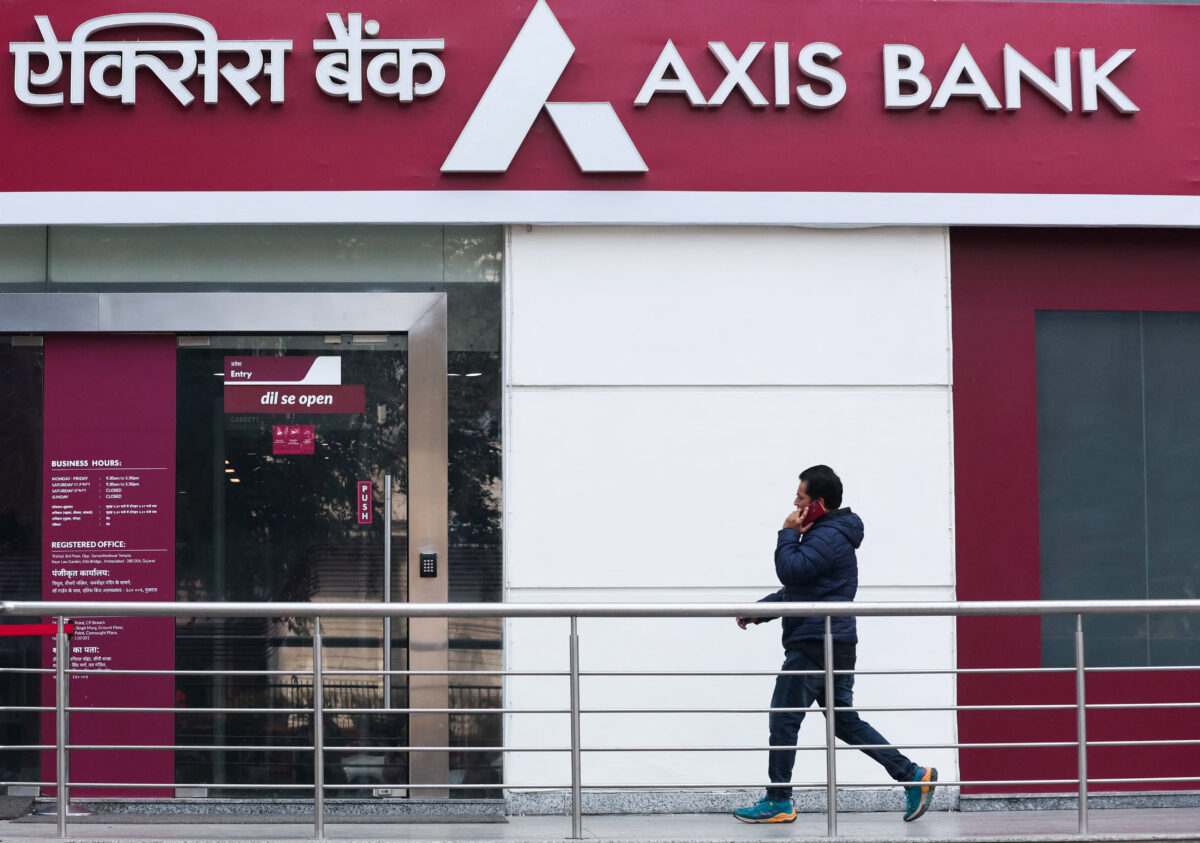
Analysts cut Axis Bank share target after Q3, but valuation lends comfort

Axis Bank Q3 results: A near wash-out quarter, with more misses than beats, has forced analysts to cut Axis Bank share price target for the next one year. They, however, see limited downside in the stock, falling back on valuation comfort. 

Nuvama Institutional Equities, for instance, has cut its one-year share target price on Axis Bank to Rs 1,220 from Rs 1,335 as the brokerage gave a thumbs down to Axis Bank’s muted deposit growth, net interest margin (NIM) contraction, lower fees, and a sharp rise in slippage and credit costs. 

“Gross slippages shot up 22 per cent quarter-on-quarter (Q-o-Q) in the December quarter (Q3FY25), higher than consensus estimate, to 2.2 per cent; and more than 1.8 per cent in Q2FY25 and 2 per cent in Q1FY25. Net slippages also surged 48 per cent Q-o-Q, with net retail slippages as a percentage of loans at 2.1 per cent versus 1.7 per cent Q-o-Q. Specific credit cost went up sharply from 58bp Q-o-Q to 86bp Q-o-Q, highest among large banks and highest since Covid,” the brokerage pointed out. On the bourses, Axis Bank share price tumbled 6.3 per cent intraday to hit a fresh 52-week low of Rs 974.45 per share. The stock ended 4.6 per cent weak in the BSE at Rs 992.45 per share as against a 0.55 per cent fall in the benchmark BSE Sensex index.

On Thursday, Axis Bank reported fresh slippages of Rs 5,432 crore for Q3FY25, up 46 per cent year-on-year (Y-o-Y) and 22.25 per cent Q-o-Q. This included Rs 4,923 crore from the retail portfolio; Rs 215 crore from SME (small and medium enterprise) business; and Rs 294 crore from wholesale business.

The bank’s loan-loss provisions shot up to Rs 2,185 crore in Q3 as against Rs 1,441 crore in Q2FY25 and Rs 691 crore in Q3FY24. 

It also saw worsening of asset quality during the recently concluded quarter with gross non-performing asset (GNPA) ratio at 1.46 per cent as against 1.44 per cent at the end of the September quarter. Net NPA ratio, too, rose to 0.35 per cent from 0.34 per cent in Q2FY25.

On the business front, Axis’ loan book grew 9 per cent Y-o-Y and 1.5 per cent sequentially to Rs 10.14 trillion, driven by 11 per cent Y-o-Y growth in retail loans. Deposits, too, increased 9 per cent Y-o-Y and 0.8 per cent Q-o-Q. The growth is below peers and industry average. 

Moreover, the bank’s loan-to-deposit ratio (LDR) rose from 92 per cent in Q2FY25 to 92.6 per cent this quarter. 

The management believes FY25 credit growth will be anchored by deposit growth/LDR, which, analysts think, is still a challenge.

NIM, too, contracted by 6bps Q-o-Q to 3.93 per cent, including 3bps Q-o-Q contribution from interest reversal on NPAs and 3bps due to higher liquidity coverage ratio (LCR; up by 400bps Q-o-Q to 119 per cent). 

“Credit growth moderation was mainly driven by slowdown in the bank’s retail book (including unsecured loans and corporate book), which is likely to stay soft amid liquidity and asset quality challenges. The management believes unsecured loan stress will remain elevated near-term, but seasonal stress in the agri portfolio should ease Q-o-Q. Building in the slower credit growth and higher loan provisions, partly offset by moderating opex, we cut earnings by 3-9 per cent over FY25-27E,” noted those at Emkay Global Financial Services.

The brokerage, too, has cut its share price target to Rs 1,300 from Rs 1,400, but retained its ‘Buy’ rating as it believes the stock has seen sharp correction recently (down 10 per cent in 3 months) and trades at relatively lower valuations of 1.3-times December, 2026, adjusted book value (ABV) for a bank still delivering healthy 1.7-per cent return on asset (RoA) and 14-16 per cent return on equity (RoE). 

Given the strong growth in Q4FY24 and slower accretion in 9MFY25, the base effect gets adverse in Q4FY25 on deposits and loan growth. So, even with higher Q-o-Q deposit growth, the YoY growth in deposits could fall further to 6 per cent Y-o-Y, cautioned analysts at Nuvama with a ‘Buy’ rating. 

“We keenly monitor near-term growth as the LDR is still high, which will constrain credit growth, while continued re-pricing of deposits may keep margins in check. We cut our FY26E/FY27E earnings by 4-5 per cent and estimate FY26E RoA/RoE of 1.6 per cent/14.6 per cent. While the near-term growth and asset quality performance will likely remain suppressed, reflecting the stress in the macro environment, we see limited downside risk from the current levels,” said analysts at Motilal Oswal Financial Services as it retained a ‘Neutral’ rating with a lower share price target of Rs 1,175. 

Axis Bank’s Q3FY25 net profit stood at Rs 6,034 crore, rising a meagre 4 per cent Y-o-Y. Its net interest income (NII) grew 9 per cent Y-o-Y/0.9 per cent Q-o-Q to Rs 13,606 crore.

Eqwires Research Analyst

Top-notch SEBI registered research analyst

Best SEBI registered Intraday tips provider

info@eqwires.com

Telegram Facebook Instagram

Call: +91 9624421555 / +91 9624461555
www.eqwires.com

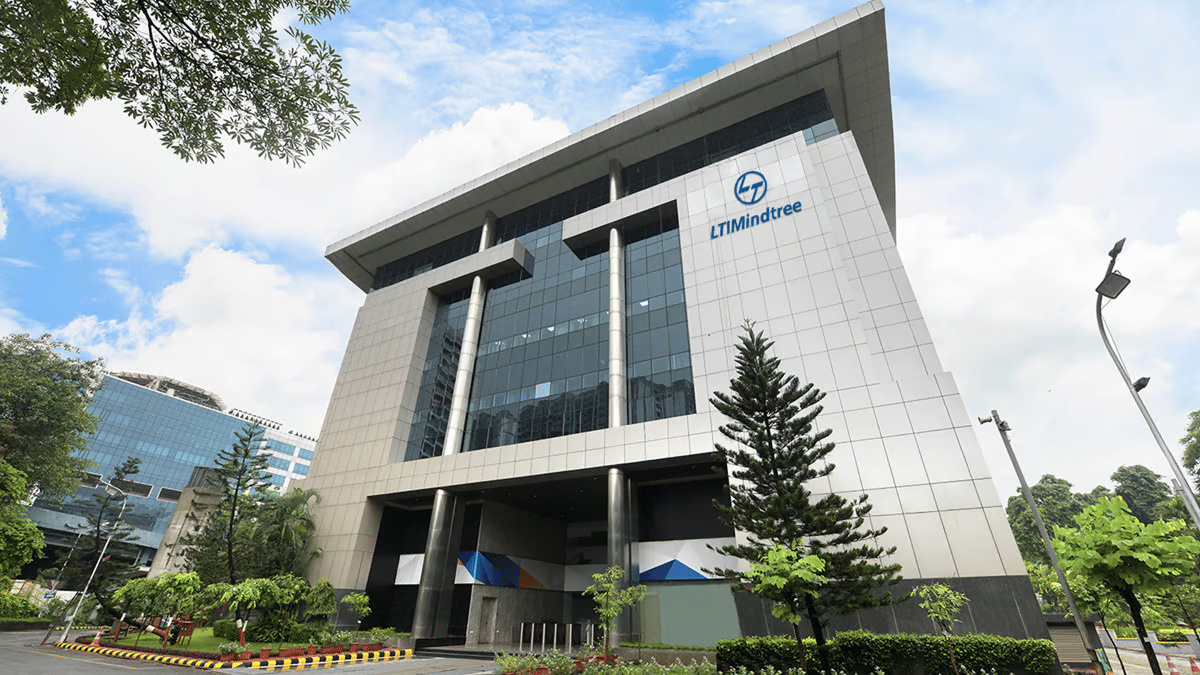
LTIMindtree slips 3% after posting Q3 results; Is it a buying opportunity?

LTIMindtree shares slipped 3.4 per cent in Friday’s trade on BSE, logging an intraday low at Rs 1,832 per share. The selling in stock came after the company reported its Q3 numbers and brokerages were mixed.  

Around 9:36 AM, LTIMindtree share price was down 3.3 per cent at Rs 5,781.8 per share on BSE. In comparison, the BSE Sensex was down 0.42 per cent at 76,721.33. The market capitalisation of the company stood at Rs 1,71,306.37 crore. The 52-week high of the stock was at Rs 6,764.80 per share and the 52-week low was at Rs 4,518.35 per share. 

What brokerage recommend on LTIMindtree post Q3?

Nomura retained ‘Reduce’ on LTIMindtree and cut the target price to Rs 5,070 per share from Rs 5,090 

In the report, the brokerage also lowered its FY25-27F earnings per share (EPS) by over 1 per cent.  

“Our FY25-27F EPS are lower than consensus by 6-12 per cent mainly on account of lower margin expectations,” Nomura said.

Kotak Institutional Equities has retained its ‘Buy’ call on LTIMindtree for a target price of  Rs 6,750 per share.  

As per the analysts at Kotak LTIMindtree reported an interesting quarter with healthy revenue growth of 3.4 per cent in US dollar terms, ex-technology vertical, and record-high total contract value (TCV) of US$1.68 bn. 

They view the decline in the technology vertical due to the sharing of productivity gains with the top client as largely client-specific and expect reasonable growth after the stabilization in 4QFY25.  

However, they believe LTIMindtree is well-positioned to grow double digits in FY2026 and beyond, with steady market share gains. Further, cuts in growth and margin estimates lead to a 3-6 per cent FY2025-27E EPS cut. 

Centrum Broking also maintained ‘Buy’ on the stock but made a downward revision in its target price to Rs 7,188 per share from Rs 7,250 per share. 

The brokerage expects a sustained revenue growth momentum in Q4FY25, supported by a ramp-up of recently signed deals, AI project deployments, and a revival of discretionary spending in tech.  

The deal pipeline remains strong, driven by cost optimisation and vendor consolidation deals, providing medium-term visibility,” the reports read.  

According to reports, Citi maintained ‘Sell’ on LTIMindtree and cut the target to Rs 5,375, from Rs 5,460. Also, Macquarie maintained ‘Outperform’ with a target of Rs 7,100 and Morgan Stanley continued with an ‘Overweight’ rating with a target of Rs 6,800.

LTIMindtree Q3 results

The company reported its Q3FY25 results on Thursday after market hours. In the third quarter ended December 31, 2024, LTIMindtree’s net profit declined 13.2 per cent quarter-on-quarter (Q-o-Q) basis to Rs 1086.7 crore as compared to Rs 1,252 crore in Q2. On a year-on-year (Y-o-Y basis, the profit after tax (PAT) declined 7 per cent. 

The company’s revenue for the quarter under review stood at Rs 9,661 crore, up 2 per cent, as compared to Rs 9432.9 crore in Q2. On a yearly basis, the revenue rose 4.6 per cent.  

Besides, the company’s earnings before interest and tax (Ebit) stood at Rs 1,329 crore as compared to Rs 1,458 crore in Q2. Its Ebit margins stood at 13.8 per cent as compared to 15.5 per cent year-on-year (Y-o-Y).  

In the past one year, LTIMindtree shares have lost 5 per cent against Sensex’s rise of 7.7 per cent. 

Eqwires Research Analyst

Top-notch SEBI registered research analyst

Best SEBI registered Intraday tips provider

info@eqwires.com

Telegram Facebook Instagram

Call: +91 9624421555 / +91 9624461555

www.eqwires.com

Maruti to become largest electric car producer in India in one year: MD

Maruti Suzuki India (MSIL), which unveiled its first electric car, e-Vitara, at the Bharat Mobility Global Expo here on Friday, is targeting becoming the largest electric car producer in India within a span of one year, said its managing director (MD) and chief executive officer (CEO), Hisashi Takeuchi. 

“Our plan already has three lines, with each having an annual capacity of 250,000 units. The fourth line is there to just manufacture EVs,” he told reporters during a media roundtable here. However, he did not specify the capacity of the fourth line. 

While refusing to comment on the expected sales numbers of the e-Vitara, he stated: “We are targeting to become number one EV manufacturer within one year.”

He stated that the e-Vitara will first be exported to a few key markets before being put on sale in India. “e-Vitara’s production is for the world. A lot of countries are waiting for this product. We need to give priority to them before launching this car in India,” Takeuchi noted. 

About 99,165 electric cars were sold in India in 2024, recording 20 per cent year-on-year growth, according to the Federation of Automobile Dealers Associations (FADA). Tata Motors is the leader in the electric car market with about 62 per cent share.

He refused to confirm or deny if the company will be producing the cross-badged e-Vitara for Toyota. “You should ask Toyota about that,” he said.

MSIL is India’s largest carmaker with about 41 per cent share in the domestic passenger vehicle market. Takeuchi mentioned that the company has already invested more than Rs 2,100 crore in the manufacturing of the e-Vitara in India. This also includes the expense behind the dedicated EV production line. 

“Every manufacturer is thinking about how to bring up (boost) the EV market in India. We think customers’ anxiety and pain points should be removed. In India, the customer has range anxiety and is worried about the lack of charging infrastructure. The third worry is about the residual value of the car,” he stated.

Addressing these concerns, Maruti’s e-Vitara will be available with a range of more than 500 kilometres, which is “good enough” for the customer. 

He stated that the company will install fast chargers at its dealerships in the top 100 cities across the country in the first phase and then expand further. “The idea is that, within these cities, every 5 to 10 kilometres, a customer finds a charging point by MSIL,” he noted. 

“To further ensure peace of mind for our customers, we are preparing over 1,500 EV-enabled service workshops in over 1,000 cities. These workshops will have specially trained manpower and special equipment to provide all EV-related support, including charging,” he added. MSIL has a total of 4,500 service workshops across India.

He mentioned that to boost the EV market in India, the aforementioned pain points have to be removed, and the choices have to increase. 

“Right now, the first set of EV customers will prefer this product, the e-Vitara, which is a premium electric SUV. However, there are many other segments, whether smaller like hatchbacks or bigger like MPVs, which need electric products. To further increase the sales of EVs in India, the customers need to be provided with choices,” he stated.

Eqwires Research Analyst

Top-notch SEBI registered research analyst

Best SEBI registered Intraday tips provider

info@eqwires.com

Telegram Facebook Instagram

Call: +91 9624421555 / +91 9624461555

www.eqwires.com

Wipro Q3 results: Net profit jumps 24.4% to Rs 3,354 cr; revenue up 0.5%

IT major Wipro on Friday reported a  24.5 per cent rise in consolidated net profit for the quarter that ended on December 31, 2024 (Q3 FY25) at Rs 3,353.8 crore year-on-year. During the same period last year the company had declared a net profit of Rs 2694.2 crore. 

Consolidated revenue for the October-December quarter rose 0.5 per cent to Rs 22,318.8 crore Y-o-Y from Rs 22,205.1 crore. 

The company’s order book stood at $3.5 billion (approximately Rs 28,910 crore) during the third quarter, with large deals exceeding $30 million (around Rs 247 crore) amounting to $961 million (approximately Rs 7,935 crore).

“We expect revenue from our IT Services business segment to be in the range of $2,602 million to $2,655 million. This translates to sequential guidance of (-)1.0  per cent to 1.0 per cent in constant currency terms,” the company said. 

The Company has declared an interim dividend of Rs 6 per equity share with a face value of Rs 2 each, payable to members as of January 28, 2025. The interim dividend will be disbursed on or before February 15, 2025.

Eqwires Research Analyst

Top-notch SEBI registered research analyst

Best SEBI registered Intraday tips provider

info@eqwires.com

Telegram Facebook Instagram

Call: +91 9624421555 / +91 9624461555

www.eqwires.com

India to remain fastest-growing large economy in FY26, FY27: World Bank

The World Bank on Thursday kept its growth forecast for India unchanged at 6.7 per cent for FY26, maintaining that the country will remain the fastest-growing major economy for next two years. 

“The services sector is expected to enjoy sustained expansion, and manufacturing activity is anticipated to strengthen, supported by government initiatives to enhance logistics infrastructure and improve the business environment through tax reforms,” the World Bank said in its flagship Global Economic Prospects report. 

The global economy is projected to expand by 2.7 per cent in both 2025 and 2026, the same pace as 2024, as inflation and interest rates decline gradually. Growth in developing economies is also expected to hold steady at about 4 per cent over the next two years.

“The next 25 years will be a tougher slog for developing economies than the last 25,” said Indermit Gill, World Bank’s Chief Economist. “Most of the forces that once aided their rise have dissipated. In their place, headwinds-high debt, weak investment and productivity growth, and rising costs of climate change-have come. Developing economies will need a new playbook that emphasizes domestic reforms to quicken private investment, deepen trade relations, and promote more efficient use of capital, talent and energy.”  

The multilateral lender said India’s private consumption growth is expected to be boosted by a strengthening labor market, expanding credit, and declining inflation. “However, government consumption growth may remain contained. Overall investment growth is expected to be steady, with rising private investment, supported by healthy corporate balance sheets and easing financing conditions,” it added.

India’s growth is expected to decelerate to 6.5 per cent in 2024-25 from 8.2 per cent in 2023-24, reflecting a slowdown in investment and weak manufacturing growth. “However, services activity has been steady, while growth in the agricultural sector has recovered. Private consumption growth has remained resilient, primarily driven by improved rural incomes. In contrast, higher inflation and slower credit growth have curbed consumption in urban areas,” the World Bank said. 

The World Bank said fiscal policies in majority of the countries in the South Asian region, including India, are expected to be generally tight over the forecast horizon. “In India, fiscal deficits are expected to continue shrinking, largely on account of growing tax revenues,” it added.

Heightened policy uncertainty, including adverse trade policy shifts in major economies, is a key downside risk for the South Asian region (SAR), the Bank said. Recent trade-distorting measures against SAR countries have declined, further intensification of protectionist policies, especially in the United States and Europe, could reduce manufacturing and other industrial goods exports, dampening growth prospects,” it said. 

Among other risks to the region, higher commodity prices could adversely affect growth prospects, given that almost all countries are commodity importers. “Other risks include surges in social unrest, tighter-than expected monetary policy in response to more persistent inflation, climate-change-related natural disasters, and weaker-than-expected growth in major economies,” it added.

Eqwires Research Analyst

Top-notch SEBI registered research analyst

Best SEBI registered Intraday tips provider

info@eqwires.com

Telegram Facebook Instagram

Call: +91 9624421555 / +91 9624461555

www.eqwires.com