Govt in talks with Elon Musk’s X over Grok AI’s use of expletives

The Ministry of Electronics and Information Technology (MeitY) is in touch with Elon Musk’s social media platform X regarding recent instances where its AI chatbot, Grok, responded using Hindi slangs and expletives. 

The IT ministry is looking into the issue and plans to investigate the factors that led to the chatbot’s use of inappropriate language. “We are in touch, we are talking to them (X) to find out why it is happening and what are the issues. They are engaging with us,” news agency PTI quoted ministry sources as saying.   

Recently, Grok stunned users by generating responses filled with slang and expletives when provoked. On topics like politics, cinema, and celebrities, some responses appeared unexpectedly opinionated.

Additionally, the chatbot has used regional slang and abusive terms in certain interactions. In one instance, Grok even described Elon Musk as a “major disinformation spreader.” 

In one of the exchanges on X, a user asked Grok to list his “10 best mutuals.” When there was no immediate response, the user followed up with a comment including a Hindi expletive aimed at the AI. In its response, Grok directed the same expletive at the user.

What triggers Grok’s unconventional responses?

Grok, developed by xAI, is an advanced conversational AI assistant powered by a sophisticated Large Language Model (LLM) architecture. Announcing its launch in November 2023, xAI stated the AI chatbot was designed to understand and generate human-like language, with a focus on reasoning and problem-solving.

“Grok is designed to answer questions with a bit of wit and has a rebellious streak, so please don’t use it if you hate humor,” xAI said in a blog post announcing Grok. 

Grok 3 was launched on February 17 this year, boasting a tenfold increase in computing power compared to its predecessor, Grok 2. It features a unique ‘Think’ mode that allows it to reason for extended periods before providing answers. 

Grok 3 introduces innovative capabilities such as DeepSearch, which synthesises data from various sources quickly, and multimodal functionalities for text and image interactions.

Eqwires Research Analyst

Top-notch SEBI registered research analyst

Best SEBI registered Intraday tips provider

info@eqwires.com

Telegram Facebook Instagram

Call: +91 9624421555 / +91 9624461555

www.eqwires.com

Adani, Emaar said to be discussing deal structure for $1.4 bn India unit

Billionaire Gautam Adani is in advanced talks to buy the Indian unit of Dubai-based developer Emaar Group at a potential enterprise value of $1.4 billion, according to people familiar with the matter, helping Asia’s second-richest person expand in real estate. 

The Adani family and Emaar are discussing the structure of a transaction, which could include an unlisted Adani unit infusing about $400 million in equity, the people said, asking not to be identified because the information is private. 

An agreement could be reached soon as April, but there’s no guarantee of a deal as talks are ongoing, the people said.

Representatives for Adani Group and Emaar didn’t respond to requests for comment. 

Emaar said in January it was in discussions with some groups in India, including Adani, about a potential sale of a stake in Emaar India Ltd.

Portfolio Boost

An acquisition of the Emaar unit would enlarge Adani’s real estate portfolio in India, which covers 24 million square feet of property and another 61 million under development, according to its website. 

The Adani family’s real estate unit emerged as the top bidder to redevelop one of the largest housing projects in Mumbai at an estimated 360 billion rupees, Bloomberg News reported this month.

Adani is also in redeveloping Mumbai’s Dharavi slum, one of the biggest in the world and the backdrop to Hollywood movie Slumdog Millionaire. 

Emaar India is developing residential and commercial projects in places including New Delhi, Punjab, Uttar Pradesh, Madhya Pradesh and Rajasthan.

Eqwires Research Analyst

Top-notch SEBI registered research analyst

Best SEBI registered Intraday tips provider

info@eqwires.com

Telegram Facebook Instagram

Call: +91 9624421555 / +91 9624461555

www.eqwires.com

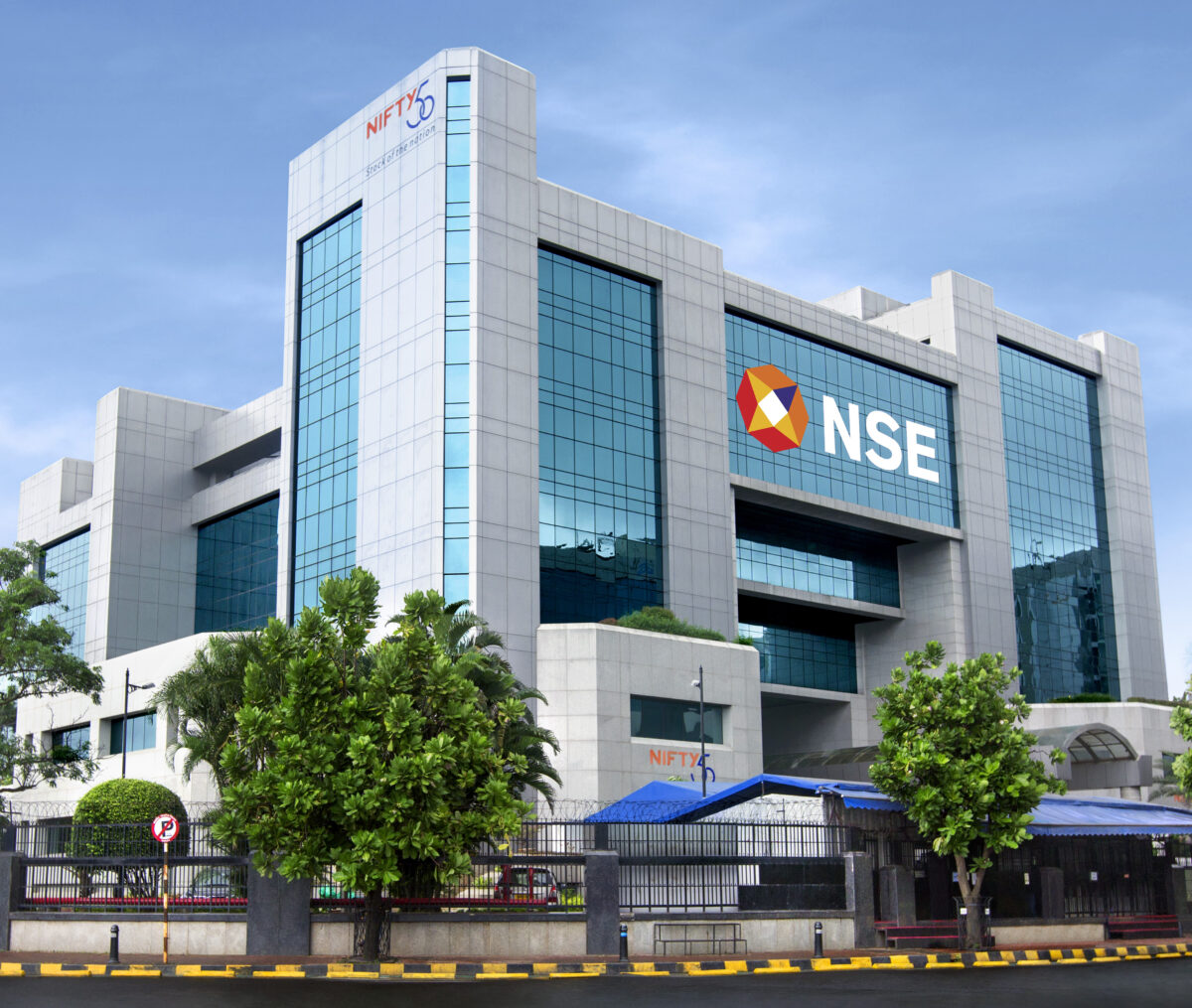
NSE to relocate headquarters, convert BKC office into data center

The National Stock Exchange (NSE), India’s largest stock exchange, is set to relocate its headquarters from Bandra-Kurla Complex (BKC) to a newly allotted site nearby while converting its iconic BKC office into a large captive data center, according to a report by The Economic Times. 

The Mumbai Metropolitan Region Development Authority (MMRDA) has allotted over an acre of prime land in BKC’s G Block to NSE on a long-term lease of more than 80 years. The exchange is expected to start the approval process soon, with construction likely to be completed in three years. 

NSE HQ shift amid expansion

NSE’s decision to shift its headquarters aligns with its rapid expansion and increasing operational needs. Currently, the exchange operates from multiple locations, including:

BKC headquarters, housing its IT division and listing-related activities.

Adani Inspire tower in BKC, where NSE recently leased 175,000 sq ft of office space.

Ghatkopar commercial complex and Brookfield’s Equinox Business Park, accommodating various departments.

 The proposed new NSE headquarters will consolidate all its functions under one roof, streamlining operations and enhancing efficiency. 

Historic move in Mumbai

NSE’s BKC office was among the first commercial landmarks in Mumbai’s financial district, reflecting the shift from Nariman Point, which served as the city’s primary financial hub since the 1960s. 

With its BKC office being repurposed as a data center, NSE is reinforcing its technological infrastructure.

Established in 1992, NSE began its operations in 1994. As of 2023, NSE stands as the world’s largest derivatives exchange (by contracts traded) for five consecutive years and the third-largest exchange for cash equities by number of trades. Globally, NSE is the seventh-largest stock exchange by market capitalisation, surpassing $5 trillion on May 23, 2024.

Eqwires Research Analyst

Top-notch SEBI registered research analyst

Best SEBI registered Intraday tips provider

info@eqwires.com

Telegram Facebook Instagram

Call: +91 9624421555 / +91 9624461555

www.eqwires.com

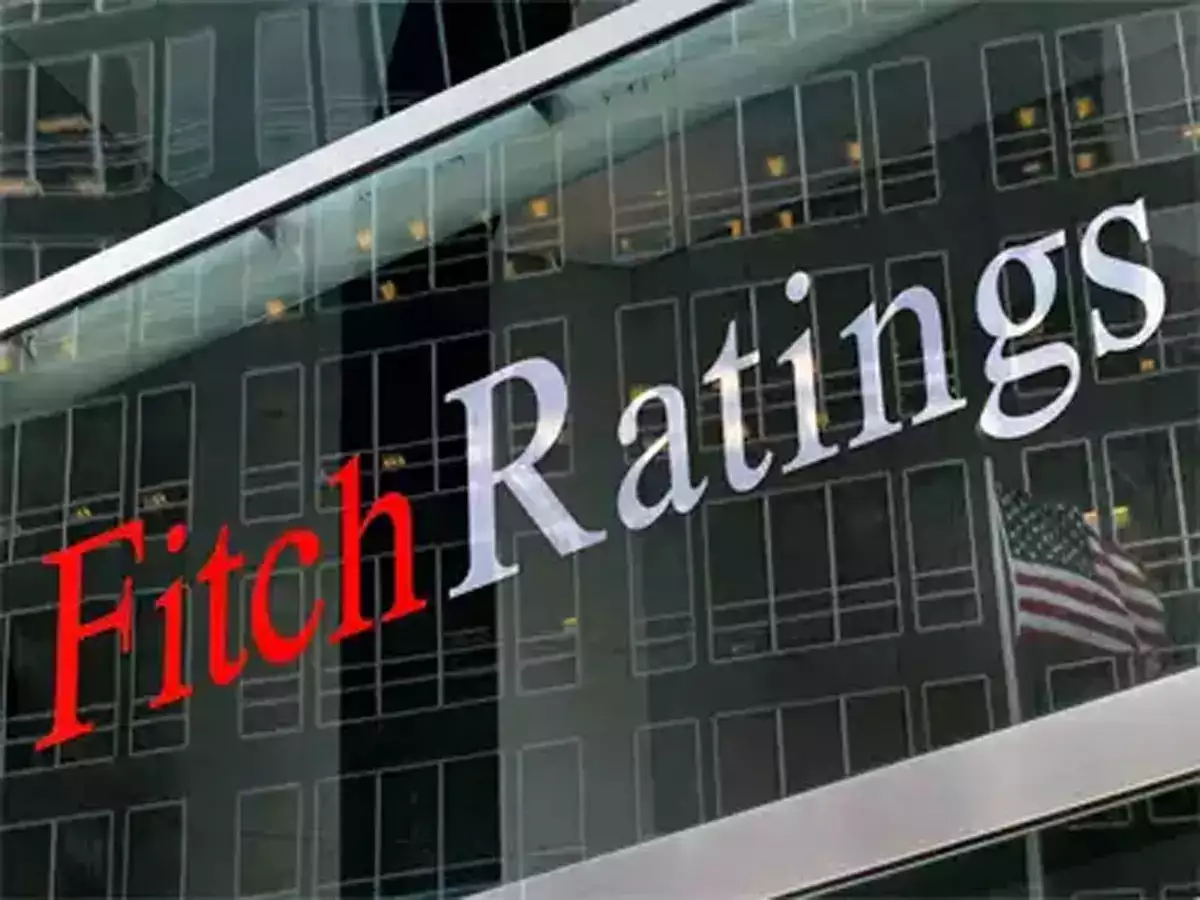
Fitch keeps India’s FY26 GDP forecast at 6.5%, ups FY27 projection to 6.3%

Fitch Ratings has kept India’s gross domestic product (GDP) growth forecast for FY26 unchanged at 6.5 per cent and revised upwards its FY27 growth projection by 10 basis points to 6.3 per cent, according to its March Global Economic Outlook report. The report noted that while more aggressive-than-expected US trade policies pose a risk to its forecast, India is somewhat insulated due to its low reliance on external demand. 

The latest Global Economic Outlook report stated that the increase in tax-free income allowances and revised tax brackets in the Budget will raise post-tax incomes and support consumer spending growth, albeit at a slower rate than this year.

While assessing the Budget as broadly neutral for growth, Fitch Ratings said it expects a pickup in capital spending over the next two financial years. 

“Business confidence remains high, and lending surveys point to continued double-digit growth in bank lending to the private sector… These factors—together with a reduction in the cost of capital—underpin our expectation of a pickup in capital spending for FY26 and FY27,” the report stated. 

The Economic Survey has projected GDP growth for FY26 at 6.3–6.8 per cent. As per official estimates, GDP growth in the current financial year is expected to be 6.5 per cent.

India’s real GDP growth slowed to 5.4 per cent in the July–September 2024 quarter before rebounding to 6.2 per cent in the following quarter. 

Fitch Ratings noted that consumer confidence has edged down in recent months, and vehicle sales have eased significantly. 

The report highlighted that lower inflation will boost real incomes, while labour market indicators—based on both official data and Purchasing Managers’ Index (PMI) survey data—suggest steady employment growth and increased participation. 

“Net exports have supported GDP growth this year due to a combination of strong export growth and falling imports. We expect this to normalise so that net exports’ contribution to growth will be broadly neutral over FY26 and FY27,” Fitch Ratings said.

The rating agency expects two more policy rate cuts this year, revising the forecast downwards to 5.75 per cent by December 2025. In early February, the Reserve Bank of India (RBI) announced a 25 basis points cut in the repo rate to 6.25 per cent. 

“Food price dynamics in the coming months will enable a gradual decline in the headline inflation rate to 4 per cent by end-2025, followed by a mild increase to 4.3 per cent by December 2026,” the report said. 

Last week, Moody’s Ratings revised India’s economic growth forecast for the next financial year to 6.5 per cent, up from 6.3 per cent this year, citing higher government capital expenditure and a consumption boost from tax cuts and interest rate reductions.

Eqwires Research Analyst

Top-notch SEBI registered research analyst

Best SEBI registered Intraday tips provider

info@eqwires.com

Telegram Facebook Instagram

Call: +91 9624421555 / +91 9624461555

www.eqwires.com
Vodafone Idea in talks with Starlink, Amazon Kuiper for satcom partnership

Vodafone Idea (Vi) is in talks with major global satellite communication firms, including Elon Musk’s Starlink and Amazon Kuiper. These potential partnerships come as Vi accelerates its 5G deployment to curb subscriber losses to larger competitors, according to a report by The Economic Times. 

Vi’s Chief Technology Officer, Jagbir Singh, acknowledged recent alliances between Starlink and telecom giants Bharti Airtel and Reliance Jio. He confirmed that Vi is in talks with industry partners and will disclose updates at an appropriate time.   

Vi’s 5G rollout strategy  

Unlike its rivals, Vi is not aiming for an aggressive nationwide 5G expansion. Instead, it is prioritising key cities to strengthen its network and retain users. The report quoted Singh as saying that the company is focusing on strategic deployments rather than matching the rapid expansion efforts of Reliance Jio and Bharti Airtel.  

While Airtel and Jio have already completed their nationwide 5G rollouts, Vi’s relatively smaller 4G coverage has led to significant subscriber migration to these competitors. To attract customers, Vi has introduced competitive 5G pricing, starting at Rs 299, which undercuts Airtel’s Rs 379 plan and Jio’s Rs 349 offer.   

Future expansion plans  

Vi has committed Rs 50,000-55,000 crore in capital expenditure over the next three years to expand its network. Despite delays in securing bank funding, Singh assured that this would not impede infrastructure investments or vendor agreements, The Economic Times mentioned.

Following the Mumbai launch, Vi plans to extend its 5G services to Delhi, Bengaluru, Chandigarh, Patna, and Mysore by April. The subsequent phase will cover Maharashtra, Gujarat, Kerala, and Chennai.  

Currently, around 30-35 per cent of Vi’s urban user base owns 5G-enabled devices. While Singh refrained from providing precise adoption projections, he anticipates strong uptake, particularly in data-heavy urban markets.

Infrastructure expansion  

Vi aims to deploy 75,000 5G sites across 17 key regions within three years. Recent infrastructure upgrades include the modernisation of 10,000 towers with 900 MHz spectrum and the addition of 11,000 new towers in the past nine months.   

The company has allocated nearly half of its planned capital expenditure for 5G rollouts, while the rest will be used for 4G expansion. Singh noted that integrating 5G alongside 4G expansion in several locations has created cost efficiencies.  

Vi’s network is equipped to support large-scale 5G deployment, thanks to extensive core network upgrades. Operating on a Non-Standalone (NSA) 5G architecture, Vi aims to ensure seamless transitions between 4G and 5G networks.   

Monetisation challenges in 5G  

Globally, telecom operators have struggled to generate significant standalone revenue from 5G due to high infrastructure costs, price-sensitive consumers, and limited use cases.   

Singh acknowledged that most current data consumption is driven by video streaming and gaming. However, he believes that enterprise adoption of 5G services will increase over time, leading to the development of new revenue-generating applications.   

The company is currently conducting trials for Fixed Wireless Access (FWA) services, which have emerged as a key monetisation avenue for 5G globally. Competitors Jio and Airtel have already made significant investments in FWA, which generates higher average revenue per user (ARPU) compared to traditional mobile and broadband services. 

While Vi does not have a significant presence in fixed-line broadband like its competitors, Singh said that the company’s strategy would focus on mobile services and FWA opportunities wherever feasible, according to the news report. 

Access to advanced technology 

Despite its delayed 5G rollout, Vi sees an advantage in deploying more advanced and cost-effective network equipment. Singh said that technological improvements over the past two years have enabled Vi to adopt energy-efficient infrastructure integrated with AI-based network management, the report said. 

By utilising streamlined technologies, Vi aims to reduce operational inefficiencies and optimise costs. The company has also formed an AI task force to enhance efficiencies in both network management and corporate operations. This move underscores the company’s commitment to innovation, despite its ongoing financial struggles.  

Eqwires Research Analyst

Top-notch SEBI registered research analyst

Best SEBI registered Intraday tips provider

info@eqwires.com

Telegram Facebook Instagram

Call: +91 9624421555 / +91 9624461555

www.eqwires.com