
RBI to raise foreign individual investment cap in listed firms to 10%

India’s central bank is set to double to 10 per cent a cap on investment by individual foreign investors in listed companies, as it aims to boost capital inflows, according to two senior government officials and documents reviewed by Reuters.

Foreign portfolio investors (FPIs), pressured by poor earnings, high valuations and prospects of US tariffs, have pulled more than $28 billion out of Indian stocks since September’s record high in the benchmark NSE Nifty 50.

To boost foreign investment, India is widening to all foreign investors benefits it had until now restricted to overseas Indians, while also raising applicable investment limits, the officials said.

“It is felt that these proposals may be implemented as early as possible,” the central bank told the government in a letter last week, pointing to disruption in capital inflows among recent developments in the external sector.

Emails seeking comment from the finance ministry, the central bank, and the market regulator, the Securities and Exchange Board of India (Sebi), did not get any response.

The plans envisage allowing all foreign individual investors to invest a maximum of 10 per cent in a listed company, the document showed.

That is up from the 5 per cent holding in an Indian company allowed to overseas Indian citizens by special rules under the Foreign Exchange Management Act (FEMA).

“Current foreign exchange management rules only mention non-resident Indians (NRIs) and overseas citizens of India (OCIs) under Schedule III,” the second government official said, speaking on condition of anonymity.

“We are broadening this to include all individual foreign investors.”

The central bank, the Reserve Bank of India (RBI), will also raise to 24 per cent the combined holding limit for all overseas individual investors in an Indian listed company, from 10 per cent now, the officials added.

The plan to hike foreign investor limits in Indian listed firms is in the final stages of discussion between the government, the RBI, and Sebi, the officials said.

MONITORING CHALLENGES

While the government and the RBI favour the move, the market regulator has flagged some challenges in monitoring compliance with foreign investment limits.

It has warned that a single foreign investor holding of 10 per cent, combined with associates, could exceed 34 per cent, triggering takeover rules.

“Without effective monitoring across different frameworks, such takeovers may go undetected,” Sebi cautioned the RBI in a letter last month.

Indian rules compel an investor who acquires more than 25 per cent of a company to make an open offer for shares held by retail investors.

The government and regulators are now weighing these concerns before finalising the reforms.

“We are working to rationalise the rules to prevent the possibility of such arbitrage across regulations by the foreign investors,” the second official said.

Eqwires Research Analyst

Top-notch SEBI registered research analyst

Best SEBI registered Intraday tips provider

info@eqwires.com

Telegram Facebook Instagram

Call: +91 9624421555 / +91 9624461555
www.eqwires.com

Saudi Aramco in talks to invest in planned refineries of BPCL, ONGC

Saudi Aramco is in talks to invest in two planned refineries in India as the world’s top oil exporter looks for a stable outlet for its crude in the world’s fastest-growing emerging market, several Indian sources with direct knowledge of the matter said. 

India, the world’s third-biggest oil consumer and importer, wants to become a global refining hub as Western companies cut crude processing capacity in their shift to cleaner fuels. 

Meanwhile, Saudi Arabia’s share of India’s oil imports has declined as refiners that have invested billions of dollars in upgrading their plants diversify crude sources to tap cheaper alternatives, including from Russia.

Aramco is in separate talks to invest in Bharat Petroleum Corp’s (BPCL) planned refinery in the southern state of Andhra Pradesh and a proposed Oil and Natural Gas Corp (ONGC) refinery in western Gujarat state, the sources said. 

Aramco, BPCL and ONGC did not immediately respond to requests for comment.

Both Indian firms are state-controlled. 

While ONGC’s Gujarat refinery plans are at a nascent stage, BPCL’s chairman said in December that it aimed to invest $11 billion in its Andhra Pradesh refinery and petrochemical project. 

Two refinery sources said separately that the projects would proceed regardless of whether Aramco invests.

“It all depends on the proposal that Aramco gives,” one of them said. 

Sources said state-controlled Aramco proposes to supply oil equivalent to three times its stake in each project, and wants to sell its share of production either in India or by export. 

“We want flexibility in crude procurement. If we give them 30 per cent stake, they want to supply crude equivalent to 90 per cent of the capacity, which is not possible,” the second refinery source said. 

Other details, including potential investment size and the configuration of the planned refineries, were not immediately available. 

Indian Prime Minister Narendra Modi plans to visit Saudi Arabia in the second quarter, and the two countries will attempt to reach an agreement before the visit, said a third source with knowledge of the matter. 

India’s foreign ministry did not respond to a request for comment. 

Aramco has long been scouting for refining opportunities in India. 

In 2018 it joined a consortium of Indian companies to build a 1.2 million barrels per day refinery and petrochemical project in western India and in 2019 it signed a non-binding agreement for a 20 per cent stake in Reliance Industries’ oil to chemical business. 

However, the huge refinery project has been delayed by difficulties over procuring land and the deal with Reliance was called off due to differences over valuation. 

In January, Indian Oil Minister Hardeep Singh Puri said India would look to set up three refineries of 400,000 bpd each.

Eqwires Research Analyst

Top-notch SEBI registered research analyst

Best SEBI registered Intraday tips provider

info@eqwires.com

Telegram Facebook Instagram

Call: +91 9624421555 / +91 9624461555
www.eqwires.com

Hurun Rich List 2025: India gets 13 new billionaires; Ambani richest

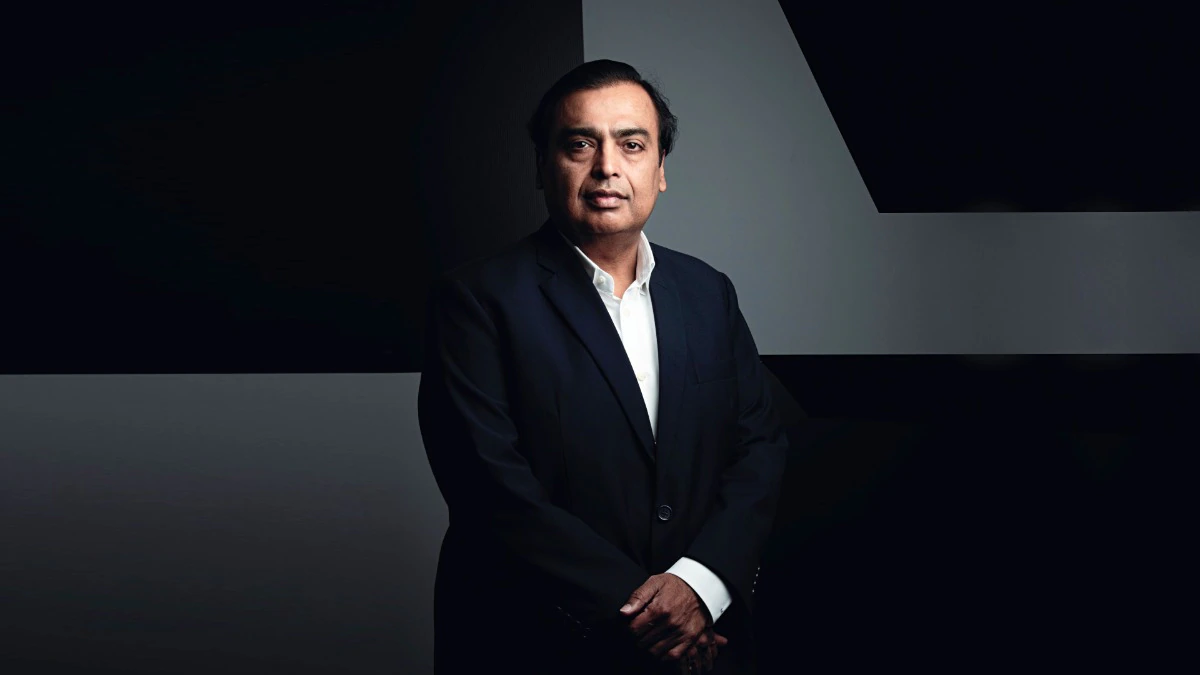
India now ranks third in the world for number of billionaires, with 284 on the Hurun Global Rich List 2025. Mukesh Ambani remains the richest person in Asia, with a fortune of Rs 8.6 trillion, despite a Rs 1 trillion drop from last year. He edged ahead of Gautam Adani, whose wealth rose by 13% to Rs 8.4 trillion. 

India adds 13 new billionaires 

India added 13 new billionaires this year, bringing the total to 284. The combined wealth of Indian billionaires stands at Rs 98 trillion—about one-third of India’s GDP and more than Saudi Arabia’s entire GDP. Of these 284 individuals, 175 saw their wealth rise, while 109 saw it decline or remain flat.

Mumbai remains India’s billionaire hub with 90 names, although it lost its title as Asia’s billionaire capital to Shanghai. Shanghai now has 92 billionaires, while Beijing follows with 91. Mumbai added 11 new entrants, more than London (7) and Beijing (8). 

India’s top 10 richest

Mukesh Ambani, Reliance Industries – Rs 8.6 trillion  

Gautam Adani, Adani Group – Rs 8.4 trillion  

Roshni Nadar, HCL – Rs 3.5 trillion  

Dilip Shanghvi, Sun Pharma – Rs 2.5 trillion  

Azim Premji, Wipro – Rs 2.2 trillion  

Kumar Mangalam Birla, Aditya Birla Group – Rs 2 trillion  

Cyrus Poonawalla, Serum Institute – Rs 2 trillion  

Niraj Bajaj, Bajaj Auto – Rs 1.6 trillion  

Ravi Jaipuria, RJ Corp – Rs 1.4 trillion  

Radhakishan Damani, Avenue Supermarts – Rs 1.4 trillion   

Five of the top ten are based in Mumbai. New Delhi contributes two names, while Bengaluru, Pune and Ahmedabad have one each. 

India’s billionaire profile 

Average wealth: Rs 34,514 crore, higher than China’s Rs 29,027 crore  

Average age: 68, two years above the global average  

Youngest billionaires: Shashank Kumar and Harshil Mathur (Razorpay), both aged 34 with Rs 8,643 crore  

Youngest globally: Wang Zelong of China, aged 29, also worth Rs 8,643 crore  

There are 22 Indian women on the list with a combined net worth of Rs 9 trillion. 

Top sectors in India 

Healthcare: 53 billionaires  

Consumer goods: 35  

Industrial products: 32   

India vs China and the US 

United States: 870 billionaires  

China: 823  

India: 284   

India added 45 new faces this year. In terms of wealth growth, 130 Indians saw an increase, compared to 285 in China and 544 in the US. Indian billionaires’ wealth rose 10% year-on-year, compared to 9% in China and 27% in the US.

Biggest Indian wealth gainers 

Gautam Adani: Up Rs 1 trillion  

Irfan Razack (Prestige Group): 167% rise  

Sajjan Jindal (JSW Group): Up Rs 44,944 crore  

Sanjay and Alpana Dangi: 80% increase

Eqwires Research Analyst

Top-notch SEBI registered research analyst

Best SEBI registered Intraday tips provider

info@eqwires.com

Telegram Facebook Instagram

Call: +91 9624421555 / +91 9624461555

www.eqwires.com