

Who is Boon Vanasin? – Thailand-based healthcare business tycoon wanted in $350 million scam

Authorities are seizing the assets of Boon Vanasin, a Thailand-based doctor-turned-businessman, who fled the country after allegedly receiving more than 12 billion baht ($350 million) through fake medical projects from several investors.

The charges follow multiple fraud and money laundering complaints since December 2023. Vanasin allegedly told investors that they were investing in five medical projects in Thailand, Laos and Vietnam, none of which existed, reported Bloomberg.

Who is Boon Vanasin?

Boon Vanasin is the 86-year-old founder of Thonburi Healthcare Group. He was born into a family engaged in selling rice and other agricultural goods. Vanasin finished his bachelor’s degree in medicine at Mahidol University. He has a specialisation in gastrointestinal medicine from Johns Hopkins University, US, according to a local Thai media, ThaiPBS report.

He returned to Thailand, started teaching at Mahidol University, and was later appointed as Director.

He established Thonburi Hospital Co Ltd with his colleagues in August 1976 to serve Bangkok residents living on the west side of the Chao Phraya River. At that time, Siriraj Hospital was the only major medical facility in the area.

During the Covid-19 pandemic, Vanasin promised Thonburi Hospital would receive 20 million doses of the Pfizer mRNA vaccine, pushing the stocks up by 13%. However, people did not receive the vaccines. In 2022, Thailand’s Securities and Exchange Commission (SEC) fined Vanasin 2.3 million baht over misleading vaccine claims. The SEC also barred him from serving as a director or executive in a public company for 42 months.

Prior to this, he was also associated with the Alpine Golf Course scandal, a controversial land deal issue that led to the arrest of former Pheu Thai Party leader Yongyuth Wichaidit in 2020.

Vanasin served as chief adviser of Wichaidit from 2011 to 2012 when he was deputy prime minister.

In the current case, Vansin’s wife, Charuvarn Vanasin, and daughter, Nalin Vanasin, who remain in court detention, have denied the allegations of fraud and money laundering. According to them, the signatures on the fake document projects are forged, Bloomberg reported. 

The allegations against Vanasin are being probed by the Department of Special Investigation in Thailand. The authorities have arrested 13 people so far including Vanasin’s wife and daughter. In September, Vanasin fled Thailand, initially to Hong Kong and then to China.

Eqwires Research Analyst

Top-notch SEBI registered research analyst

Best SEBI registered Intraday tips provider

info@eqwires.com

Telegram Facebook Instagram

Call: +91 9624421555 / +91 9624461555
www.eqwires.com

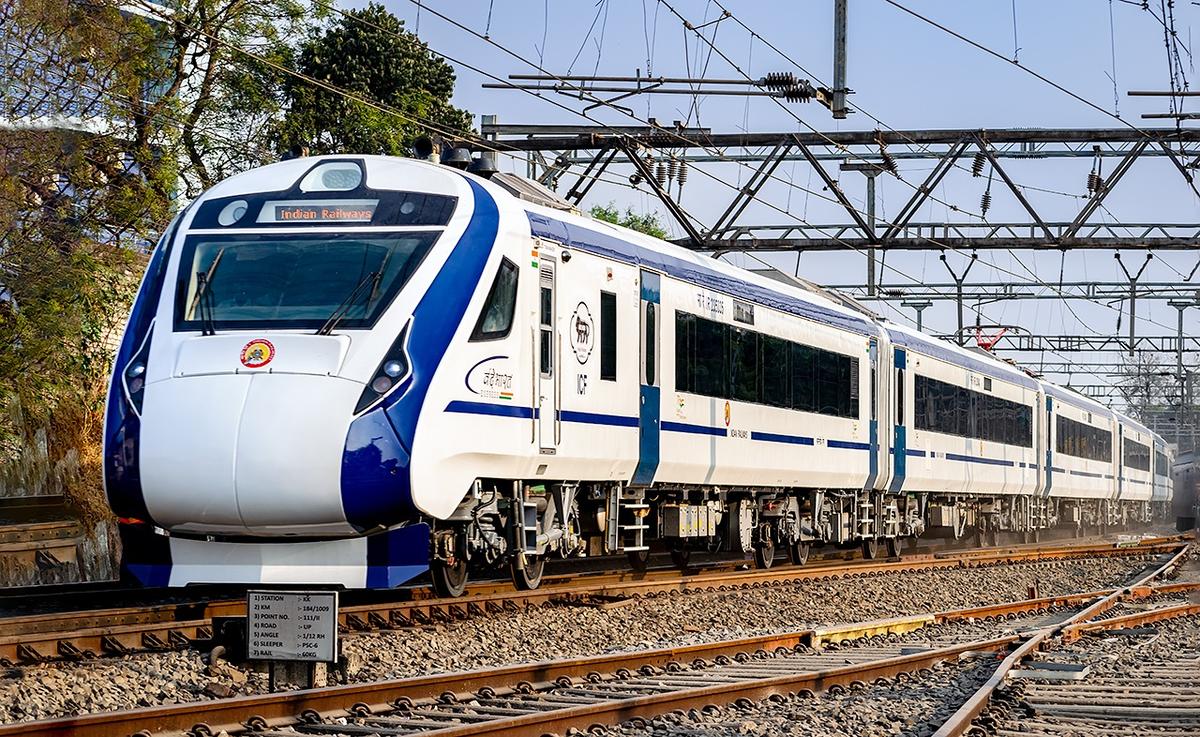
Railway stock: IRFC shares in focus as PSU signs MOU on RE projects; key details

Shares of Indian Railway Finance Limited (IRFC) Ltd are be in focus on Friday morning after the public sector enterprise, under the Ministry of Railways (MoR), signed a Memorandum of Understanding (MOU) with REMC to execute renewable energy projects.

REMC is a joint venture of MoR and RITES Ltd. The MoU is signed to collaborate on financing renewable energy (RE) projects awarded by REMCL for supply to Indian Railways. The partnership extends to exploring financing options for thermal, nuclear, and renewable power projects established under a captive model through joint ventures involving Indian Railways and other entities.

IRFC shares are down 14 per cent in the past six months. The stock is still up 51 per cent for the one-year period.

The MoU sets the foundation for cooperation between IRFC and REMCL to advance Indian Railways’ goal of minimising reliance on fossil fuels and achieving net-zero carbon emissions by 2030.

“The collaboration aims to harness renewable energy sources for the railway sector. Under the MOU, REMCL will provide its expertise in procuring economical Conventional/Renewable power for Railways including conducting of bidding process for setting up renewable energy projects in the power sector, while IRFC will offer its financial acumen, including project appraisal and fundraising capabilities,” IRFC said.

For IRFC, this MoU marks a strategic step toward diversifying its business model while maintaining its critical role in the development of Indian Railways.

“The partnership aligns with the government’s vision of delivering world-class, efficient, and environmentally sustainable transportation solutions for the nation,” IRFC said.

Eqwires Research Analyst

Top-notch SEBI registered research analyst

Best SEBI registered Intraday tips provider

info@eqwires.com

Telegram Facebook Instagram

Call: +91 9624421555 / +91 9624461555
www.eqwires.com

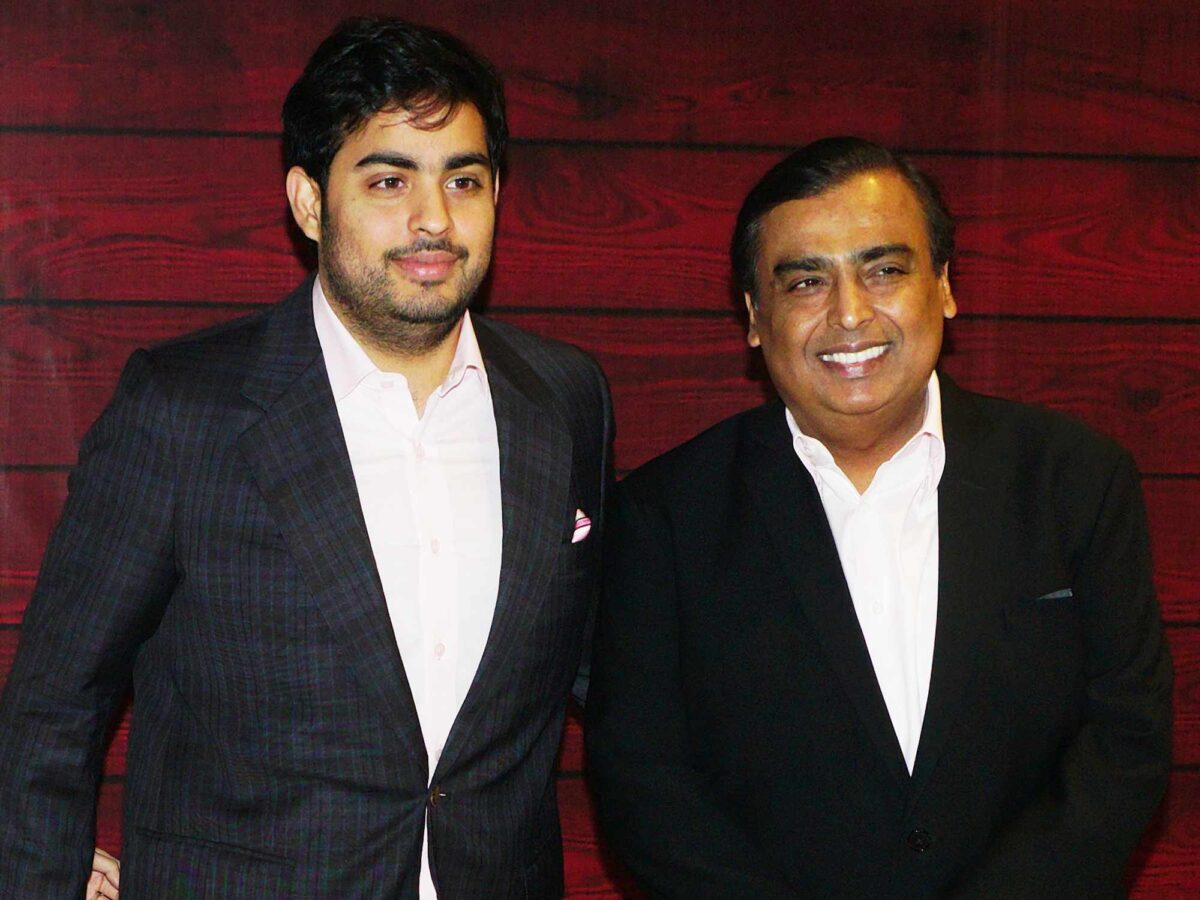
Akash Ambani pledges to make Jamnagar a global leader in AI infrastructure in 24 months

Reliance Industries Limited director Akash Ambani has promised to turn Gujarat’s Jamnagar into a global leader in Artificial Intelligence (AI) infrastructure over the next two years.

He was speaking at an event marking the 25th anniversary of Reliance’s first refinery in Jamnagar.

In an address to employees and their families, Akash Ambani announced plans for the development of AI infrastructure in Jamnagar which will make the refinery a global leader in the field.

“We have already commenced building AI infrastructure in Jamnagar, and we want to complete it in true Jamnagar style … in record time — 24 months. This will make Jamnagar not only a leader in AI infrastructure but also place it among the top-ranked in the world,” Akash Ambani said in the presence of his siblings Isha Ambani-Piramal and Anant Ambani.

Akash Ambani pledged to continue Reliance’s growth and further solidify Jamnagar’s role as a jewel of the RIL family.

Isha Ambani-Piramal, Director at RIL, spoke fondly of the refinery’s legacy.

Reflecting on her grandfather Dhirubhai Ambani’s vision, she said: “Today, as we celebrate 25 years of Jamnagar, I feel my grandfather’s presence and miss him dearly. This was his cherished dream, a vision that lived in his heart. He would have been so proud to see what Jamnagar has become today.”

Isha Ambani further praised the leadership of her father, Mukesh Ambani, acknowledging his unwavering dedication to turning his father’s dream into a reality.

“This is my father, Shri Mukesh Bhai Ambani, a man of vision, a man of resilience, and a man of determination. For him, there is no greater duty than Reliance,” she added.

The Jamnagar refinery, Reliance’s first refinery, has played a pivotal role in the company’s growth over the past 25 years.
The refinery, the conglomerate’s first, recently marked its 25th anniversary.

Launched on December 28, 1999, the refinery has since evolved into one of the most advanced in the world.

It is home to some of the largest facilities globally, including the Fluidised Catalytic Cracker (FCC), Coker, Alkylation, Paraxylene, Polypropylene, Refinery Off-Gas Cracker (ROGC), and Petcoke gasification plants.

Eqwires Research Analyst

Top-notch SEBI registered research analyst

Best SEBI registered Intraday tips provider

info@eqwires.com

Telegram Facebook Instagram

Call: +91 9624421555 / +91 9624461555

www.eqwires.com

Sensex, Nifty fall nearly 1% as IT, banking stocks tumble in volatile day

Benchmark stock market indices saw a volatile session as Sensex, Nifty ended the week falling nearly 1% on Friday. The major laggards that pulled the market down were shares in the IT, banking, financials and pharma sectors.

The S&P BSE Sensex plunged 720.60 points to end at 79,223.11, while the NSE Nifty50 lost 183.90 points to end at 24,004.75.

Trivesh, COO Tradejini, said that the much-anticipated Santa Claus rally didn’t materialise this year, but the New Year’s rally did make a brief appearance, lasting for just a day.

“Today’s decline can be attributed to profit booking in the IT and financial sectors, where selling pressure was evident after the index tested resistance near 24,196. While major banks continued to display resilience with steady inflows, broader market sentiment reflected caution. Additionally, global cues played a role, with the US markets’ five-day consecutive fall impacting sentiment, even as Asian markets showed resistance,” he added.

In today’s choppy trading session, Oil and Natural Gas Corporation delivered a stellar performance, surging 5.11%, while Tata Motors showed strong momentum with a rise of 3.13%. SBI Life Insurance Company advanced 1.95%, followed by Titan Company which gained 1.80%, and Nestle India Limited which added 1.40%.

On the losing side, technology and banking stocks faced pressure, with Wipro Limited leading the declines, dropping 2.83%. HDFC Bank fell 2.53%, while Adani Ports and Special Economic Zone declined 2.30%. Tech Mahindra slipped 2.11%, and Cipla rounded out the top losers with a decrease of 1.98%.

Most sectoral indices ended in the red, though a few sectors managed to buck the trend. The banking pack faced significant pressure, with Nifty Bank dropping 1.26% and Nifty Private Bank falling 1.00%. Healthcare stocks struggled as Nifty Healthcare Index declined 1.31% and Nifty Pharma fell 1.38%. Technology stocks also had a rough day, with Nifty IT sliding 1.45%.

Nifty Financial Services lost 1.25%, while its counterpart Nifty Financial Services 25/50 declined 0.61%. Nifty Midsmall IT & Telecom fell 0.77%, Nifty Realty dropped 0.69%, and Nifty Midsmall Financial Services decreased by 0.46%. Nifty Auto slipped 0.22%, and Nifty Midsmall Healthcare declined 0.21%.

Nifty Media showed strength with a gain of 1.37%, while Nifty Oil & Gas rose 1.19%. Other gainers included Nifty Consumer Durables (+0.55%), Nifty PSU Bank (+0.32%), Nifty FMCG (+0.25%), and Nifty Financial Services Ex-Bank (+0.11%). Nifty Metal remained unchanged. 

Eqwires Research Analyst

Top-notch SEBI registered research analyst

Best SEBI registered Intraday tips provider

info@eqwires.com

Telegram Facebook Instagram

Call: +91 9624421555 / +91 9624461555

www.eqwires.com

Banks urge RBI to inject liquidity via foreign-exchange swaps amid crunch

Some big lenders in India have asked the central bank to inject liquidity using foreign-exchange swaps as short-term currency financing costs surged to a four-year high, according to people familiar with the matter. 

In recent informal interactions, some lenders asked the Reserve Bank of India to consider using FX swaps, where the parties simultaneously agree to exchange currencies in the spot market and reverse the transaction at a future date, the people said. Such operations could effectively inject rupee liquidity into the financial markets. 

The requests came after an indicator for front-end currency borrowing costs surged on Monday, the people added, asking not to be identified as the engagements were private. A combination of seasonal factors and a surge in global investors’ demand for the rupee as they chase local initial public offerings had contributed to the funding squeeze.  

The higher financing costs are posing a challenge for the RBI to support an economy that’s witnessing a slowdown in manufacturing activities. While it is unclear whether the RBI would agree to the requests, the side effects of such an operation might add pressure on the rupee, which has already been setting new record lows since December.

The central bank didn’t respond to emailed requests for comment. 

On Monday, the rupee’s tomorrow-next forward points surged to a level unseen since early 2021. Meanwhile, the one-year implied forward yields on the rupee hovered near two-year highs, reflecting high costs of guarding against rupee volatility. 

The jump is being driven by an ongoing cash crunch amid lenders’ efforts to facilitate client access to a recent flurry of local share sales, the people said. Banks have also been reluctant to part with rupees and swap them for dollars due to low liquidity, exacerbating the funding squeeze, they said. Analysts have predicted sustained tightness going ahead.  

The swaps would entail the RBI purchasing dollars from banks against the rupee while contracting to sell the greenback at a future date. When the central bank buys dollars, it injects an equivalent quantum of rupee liquidity.  

Such operations would be expected to bring down elevated funding costs. And by acquiring dollars over the first leg of the swap, the central bank would bolster its foreign-exchange reserves, which have dropped to a seven-month low amid interventions to shield the rupee from excess volatility.  

The last time the RBI carried out such a long-term swap was in April 2019 for a tenure of three years and an amount of $5 billion.

Eqwires Research Analyst

Top-notch SEBI registered research analyst

Best SEBI registered Intraday tips provider

info@eqwires.com

Telegram Facebook Instagram

Call: +91 9624421555 / +91 9624461555

www.eqwires.com