
Adani Group Denies Tie-Up with China’s BYD: Strategic Clarity Amid Clean Energy Expansion

In a decisive move to clarify market speculation, the Adani Group has officially denied any ongoing or planned collaboration with Chinese electric vehicle giant BYD or battery manufacturer Beijing WeLion New Energy Technology. The statement comes in response to recent media reports suggesting a potential partnership aimed at battery manufacturing and clean energy initiatives in India.

What Sparked the Rumors?

Reports earlier this week claimed that Gautam Adani, chairman of the conglomerate, was personally leading discussions with BYD executives to establish a battery production facility in India. The alleged tie-up was positioned as a strategic step in Adani’s broader clean energy ambitions, including lithium-ion cell manufacturing for electric vehicles and energy storage systems.

However, the Adani Group swiftly issued a stock exchange filing dismissing these claims as “baseless, inaccurate, and misleading.”

Official Statement Highlights

  • No collaboration is being explored with BYD for battery manufacturing in India.
  • No discussions are underway with Beijing WeLion New Energy Technology.
  • The group emphasized its commitment to transparency and clarified that it is not engaged in any form of partnership with either Chinese firm.

Strategic Context: Adani’s Clean Energy Push

While denying the tie-up, Adani reaffirmed its aggressive expansion in the clean energy space:

  • Scaling solar module manufacturing to 10 GW per annum
  • Doubling wind turbine capacity to 5 GW
  • Establishing facilities for electrolyser production to support green hydrogen initiatives
  • Rolling out EV charging infrastructure through Adani TotalEnergies E-Mobility Ltd

These efforts are part of a broader capital investment plan estimated at $100 billion over five years, positioning Adani as a key player in India’s energy transition.

Why the Denial Matters

The clarification holds significance for several reasons:

  • Investor Confidence: Dispels uncertainty and reinforces Adani’s strategic autonomy
  • Geopolitical Sensitivity: India-China relations remain tense, especially in tech and energy sectors
  • Market Positioning: Signals Adani’s intent to pursue clean energy growth through domestic and diversified global partnerships

Final Thoughts

In an era where clean energy is both a business imperative and a geopolitical lever, the Adani Group’s public denial of a tie-up with BYD underscores its commitment to strategic clarity. As India accelerates its transition to sustainable energy, Adani’s roadmap appears focused, ambitious, and distinctly independent.

Eqwires Research Analyst

Top-notch SEBI registered research analyst

Best SEBI registered Intraday tips provider

info@eqwires.com

Telegram Facebook Instagram

Call: +91 9624421555 / +91 9624461555
www.eqwires.com

LTIMindtree Wins ₹792 Crore Tender for PAN 2.0: A Major Leap Toward Unified Tax Identity Services

In a major advancement for India’s digital tax infrastructure, LTIMindtree has secured the PAN 2.0 tender from the Income Tax Department. Valued at ₹792.5 crore, this initiative will unify all PAN and TAN-related services into a single, seamless digital platform.

What Is PAN 2.0?

PAN 2.0 is a flagship government project designed to consolidate:

  • Permanent Account Number (PAN) services
  • Tax Deduction and Collection Account Number (TAN) services

Currently fragmented across various portals, the initiative will merge operations into a secure, paperless system—streamlining interactions for both individuals and businesses.

LTIMindtree’s Responsibilities

As the chosen implementation partner, LTIMindtree will oversee:

  • Full-scale design and development of the platform
  • Hardware and software procurement
  • Data migration from legacy systems
  • Integration with internal and external digital ecosystems
  • Long-term operations and maintenance

The rollout is expected to be completed within 18 months.

Key Features of the Unified Platform

FeatureDetails
Single-window AccessPAN/TAN services in one place
Aadhaar-PAN IntegrationReal-time linking and validation
QR Code UpgradeEnhanced security for PAN cards
PAN Data VaultSafe storage of linked financial data
Correction PortalFaster update workflows
Business Identifier UnificationPAN as core ID across government systems

Project Background

  • The tender was finalized after a competitive bidding process.
  • Rivals such as TCS and NSDL e-Gov were disqualified at various stages.
  • The Cabinet Committee on Economic Affairs approved the project in November 2024, with a total outlay of ₹1,435 crore.

Market Reaction

LTIMindtree’s shares rose 1.42% post-announcement, closing at ₹5,088.25. Though the stock has seen a 10.33% YTD decline, this win rekindles market confidence in its public sector capability.

Final Thoughts

PAN 2.0 isn’t just a digital facelift—it’s an infrastructure overhaul. With LTIMindtree leading the charge, over 78 crore PAN holders could soon experience more reliable, faster, and transparent services.

Eqwires Research Analyst

Top-notch SEBI registered research analyst

Best SEBI registered Intraday tips provider

info@eqwires.com

Telegram Facebook Instagram

Call: +91 9624421555 / +91 9624461555
www.eqwires.com

Market Rebound: Sensex Surges 400 Points, Nifty Reclaims 24,700

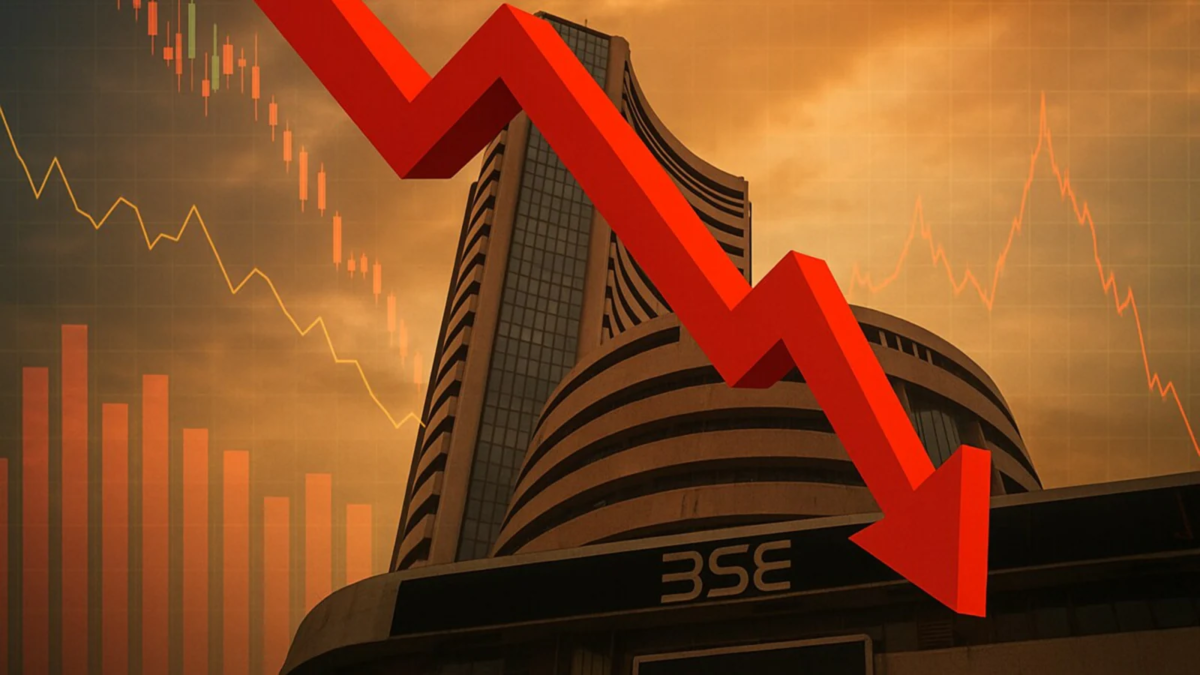
After two consecutive sessions of decline, Indian equity markets staged a strong comeback on August 4, 2025. The Sensex jumped 418.81 points to close at 81,018.72, while the Nifty gained 157.40 points to settle at 24,722.75. This rally was driven by broad-based buying across sectors, renewed optimism over a potential Federal Reserve rate cut, and robust corporate earnings.

Key Highlights

  • Sensex: +418.81 pts (+0.52%)
  • Nifty: +157.40 pts (+0.64%)
  • Market Breadth: 2,049 stocks advanced, 1,607 declined, 152 remained unchanged
  • India VIX: Volatility index cooled off by nearly 1%, indicating reduced near-term panic

Sectoral Performance

All major sectoral indices ended in the green, with standout gains in:

SectorGain (%)
Metal+2.5%
Auto+1.6%
IT+1.6%
PSU Banks+1.2%
Pharma & Realty+0.5–1%

Nifty Metal was the top performer, fueled by a weaker dollar and strong Q1 results from companies like Tata Steel, which surged 4 percent.

Stock-Specific Action

  • Hero MotoCorp: Top gainer after reporting a 21% YoY rise in July sales
  • Adani Ports: Rose 3% on robust cargo handling data
  • MCX: Jumped 5% post strong Q1 results and stock split announcement
  • Dilip Buildcon: Up 6% after emerging as lowest bidder for Gurugram Metro project
  • Delhivery: Hit a fresh 52-week high after strong earnings

More than 120 stocks touched their 52-week highs, signaling bullish sentiment across mid and small caps.

Global Cues & Outlook

The rally was underpinned by weaker-than-expected US jobs data, which revived hopes of a Fed rate cut in September. This softened the dollar and boosted appetite for risk assets globally.

Looking ahead, developments around US-India trade negotiations and the RBI’s policy meeting on August 6 will be key triggers. A positive outcome could push Nifty toward the psychological 25,000 mark in the coming weeks.

Expert Take

“We are in a secular bull market. Intermediate corrections due to global and domestic uncertainties have offered incremental buying opportunities from a medium-term perspective.” — ICICI Securities

Final Thoughts

Today’s rebound reflects the resilience of Indian markets amid global volatility. With strong sectoral support and improving macro signals, investors may find selective opportunities in metals, autos, and midcaps. However, caution is advised ahead of key policy decisions.

Eqwires Research Analyst

Top-notch SEBI registered research analyst

Best SEBI registered Intraday tips provider

info@eqwires.com

Telegram Facebook Instagram

Call: +91 9624421555 / +91 9624461555
www.eqwires.com

Indian Markets Log Longest Weekly Losing Streak in Two Years; Rupee Hits Fiscal Low

India’s financial markets wrapped up a turbulent week on August 1, 2025, with benchmark indices posting their fifth consecutive weekly decline—the longest losing streak since August 2023. The downturn was fueled by a combination of weak earnings, foreign investor outflows, and escalating trade tensions, particularly with the United States. Meanwhile, the Indian rupee weakened sharply, closing at its lowest level this fiscal year.

Market Snapshot

IndexWeekly ChangeClosing Value
Sensex-1.05%80,599.91
Nifty 50-1.09%24,565.35
Nifty Bank-2.0%55,618
Nifty Midcap-2.0%56,637
BSE Smallcap-2.47%

More than 35 Nifty constituents ended the week in the red, with Adani Enterprises, Kotak Mahindra Bank, Wipro, Tata Motors, and Tata Steel among the top losers.

Rupee Under Pressure

The Indian rupee fell 100 paise to close at ₹87.52 per US dollar, marking its fourth straight weekly decline. The drop was driven by:

  • Strengthening US dollar
  • Month-end importer demand
  • Uncertainty over India-US trade negotiations
  • Limited RBI intervention

What’s Driving the Decline?

  • Foreign Institutional Investors (FIIs) sold equities worth ₹20,524 crore, continuing their exit for the fifth straight week
  • Domestic Institutional Investors (DIIs) tried to counterbalance, buying ₹24,300 crore worth of equities
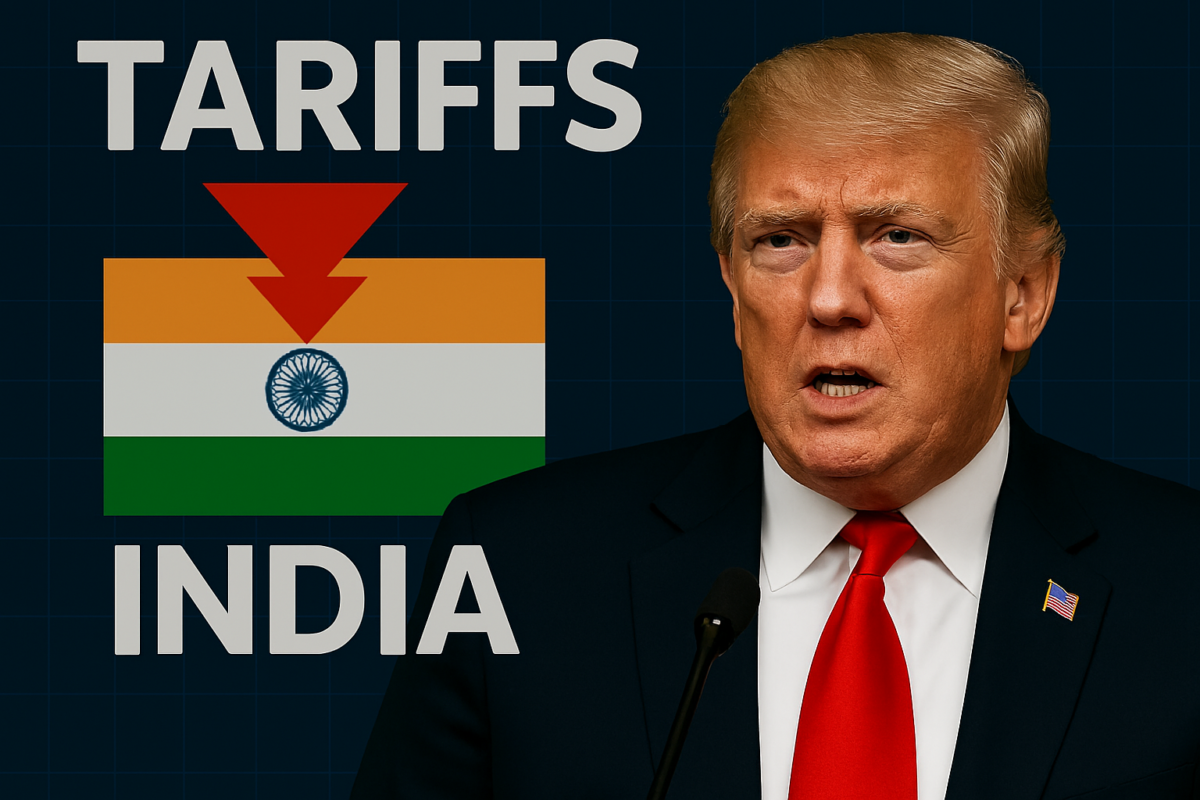
  • Tariff concerns resurfaced after the US reaffirmed steep import duties on Indian goods
  • Weak Q1 earnings from key sectors like IT and pharma added to investor anxiety

Sectoral Breakdown

SectorWeekly Performance
FMCG+3.0%
Realty-5.7%
Metals-3.4%
PSU Banks-3.2%
Media-3.0%
Pharma & IT-3% to -4.5%

FMCG was the only sector in the green, buoyed by strong earnings from Hindustan Unilever and Varun Beverages.

Expert Take

“The market is holding a lower top formation on daily charts and a bearish candle on weekly charts. Trading below key moving averages signals continued weakness.” — Amol Athawale, VP – Technical Research, Kotak Securities

“Persistent FII outflows and tariff uncertainty have created a defensive mood among investors. Recovery hinges on RBI’s rate decision and clarity on trade talks.” — Vinod Nair, Head of Research, Geojit Financial Services

What’s Next?

Investors are now eyeing:

  • RBI’s monetary policy announcement next week
  • US-India trade developments
  • Inflation data and earnings reports

With sentiment fragile and technical indicators flashing red, markets may remain volatile in the near term.

Eqwires Research Analyst

Top-notch SEBI registered research analyst

Best SEBI registered Intraday tips provider

info@eqwires.com

Telegram Facebook Instagram

Call: +91 9624421555 / +91 9624461555

www.eqwires.com

India’s GST Collection Hits ₹1.96 Trillion in July: Growth Steady, Refunds Surge

India’s Goods and Services Tax (GST) collection for July 2025 reached ₹1.96 trillion, marking a 7.5% year-on-year increase, according to official data released by the Finance Ministry. While this reflects a healthy uptick in gross revenue, the surge in refunds has tempered net growth, prompting renewed discussions around tax rate rationalization and structural reforms.

Key Highlights

  • Gross GST Collection: ₹1.96 trillion in July 2025
  • Year-on-Year Growth: 7.5% compared to ₹1.82 trillion in July 2024
  • Net GST Revenue: ₹1.69 trillion, up just 1.7% YoY due to high refunds
  • Refunds Issued: ₹27,147 crore, a 66.8% increase from last year

Domestic vs. Import Revenue

  • Domestic GST Revenue: ₹1.43 trillion, up 6.7% YoY
  • GST from Imports: ₹52,712 crore, up 9.5% YoY

The strong performance in domestic revenue signals stable consumption patterns, while the rise in import taxes reflects increased trade activity despite global headwinds.

What’s Driving the Refund Spike?

Experts attribute the surge in refunds to the inverted duty structure, where input materials are taxed at higher rates than finished goods. This leads to frequent refund claims, especially in sectors like textiles, electronics, and auto components.

  • Domestic Refunds: ₹16,983 crore, up 117.6% YoY
  • Import Refunds: ₹10,164 crore, up 20% YoY

Tax professionals have called for rate harmonization to reduce refund dependency and simplify compliance.

Expert Commentary

“Despite some global pressures and temporary dips, the overall trend shows a stable consumption pattern and consistent growth trajectory of the economy.” — Saurabh Agarwal, Tax Partner, EY India

“The increase in refunds augurs well for businesses as it indicates stability in the online refund processes and quicker refund sanctions.” — M.S. Mani, Partner, Deloitte India

State-Wise Performance

  • High Growth States: Andhra Pradesh (14%), Punjab and Haryana (12%)
  • Moderate Growth States: Maharashtra, Tamil Nadu, Karnataka, Gujarat, and Uttar Pradesh (under 10%)

These figures reflect regional variations in economic activity and tax compliance.

Looking Ahead

While the July figures reinforce India’s fiscal resilience, the muted net revenue growth highlights the need for policy recalibration. The GST Council may revisit rate structures and refund mechanisms in upcoming sessions to ensure long-term sustainability.

Eqwires Research Analyst

Top-notch SEBI registered research analyst

Best SEBI registered Intraday tips provider

info@eqwires.com

Telegram Facebook Instagram

Call: +91 9624421555 / +91 9624461555

www.eqwires.com