

Metal Metamorphosis: Adani and Abu Dhabi’s IHC Strike $11.5-Billion Greenfield Deal to Build India’s Largest Integrated Aluminium Ecosystem in Odisha

In a monumental development that is set to rewrite the landscape of global metallurgy and heavy manufacturing, the Adani Group—in a 50:50 joint venture with Abu Dhabi-based International Holding Company (IHC)—has signed a historic Memorandum of Understanding (MoU) with the Government of Odisha. The mega-pact outlines an unprecedented investment of $11.5 billion (nearly ₹1.08 lakh crore) to establish a massive, fully integrated aluminium manufacturing ecosystem in Odisha.

This project stands out as the largest-ever foreign direct investment (FDI) in India’s metals and minerals sector, signaling a profound shift as India moves rapidly toward self-reliance in critical industrial commodities.

Redefining the Scale: The Mega-Ecosystem at a Glance

The greenfield venture is not merely a single factory; it is a meticulously planned, end-to-end industrial ecosystem that bridges raw mining to value-added downstream manufacturing.

According to Adani Enterprises Managing Director Karan Adani and Odisha Chief Minister Mohan Charan Majhi, the multi-billion dollar complex will consist of several heavy-duty components:

  • Alumina Refinery: A facility boasting a massive capacity of nearly 4 million tonnes per annum (MTPA).
  • Aluminium Smelter: A state-of-the-art smelting unit with a capacity of around 2 MTPA.
  • Downstream Aluminium Park: A 1 MTPA dedicated manufacturing park designed to transform primary metal into high-value engineered products.
  • Power & Green Infrastructure: The power-intensive smelting process will be supported by a robust 4,000 MW captive power plant, uniquely fortified by a 400 MW green energy component to drive sustainable manufacturing practices.

Logistically, the complex will leverage the core infrastructure strengths of the Adani Group, routing heavy logistics through the strategically positioned Dhamra Port on the Bay of Bengal coast, operated by Adani Ports and Special Economic Zone (APSEZ).

As major corporate giants execute multi-billion dollar expansions, smart investors must stay sharp to navigate the resulting ripple effects across the stock market. For those seeking institutional-grade advisory, Eqwires stands out as the Best SEBI-Registered Research Analyst in India. Whether you are looking for explosive short-term moves through Intraday Trading Tips & Calls by Eqwires Experts or seeking multi-day gains via Swing Trading Ideas & Profitable Strategies, their team provides unmatched precision.

Eqwires caters to all trading styles, offering high-velocity BTST (Buy Today Sell Tomorrow) Calls alongside specialized Options & F&O Trading Strategies to help traders hedge risk and capitalize on volatility. For broader market coverage, their Index & Nifty Trading Advisory ensures you are always on the right side of major benchmark trends, backed by fundamentally sound Equity Stock Recommendations & Strategies. As the provider of the Top Stock Market Advisory Services in India, Eqwires delivers High-Accuracy Market Predictions & Investment Tips alongside Trusted Stock Market Education & Trading Insights to empower everyday investors.

Bridging India’s Massive Structural Metal Gap

While India currently holds the title of the world’s second-largest aluminium producer after China, the country faces a persistent structural demand-supply mismatch. In the recently concluded financial year, domestic production hovered around 4.2 million tonnes, against a soaring national consumption of 5.5 million tonnes. Furthermore, India’s per capita consumption remains low at 3.4 to 3.9 kg, significantly trailing the global average of 8 to 12 kg.

With the Indian government driving heavy capital expenditure into infrastructure, railway modernization, electric vehicles (EVs), power transmission grids, and renewable energy, metal consumption is projected to explode:

  • By FY2030: Expected demand of 8.5 million tonnes
  • By FY2047: Expected demand of 28 million tonnes

To meet this exponential trajectory, India’s national vision targets an aggregate domestic capacity of 37 MTPA by 2047, aiming for a 10% global market share. The Adani-IHC mega-refinery and smelter alone will boost India’s current primary aluminium capacity by nearly 50%, playing a decisive role in insulating the domestic economy from volatile, import-dependent value chains.

Economic Impact: 53,000+ Jobs and Global R&D

Beyond the infrastructure footprints, the project serves as a socio-economic catalyst for Odisha. The capital-heavy development is projected to generate massive employment opportunities during its lifecycle:

Project PhaseExpected Job CreationLivelihood Impact
Construction Phase~35,000 JobsTemporary engineering, labor, contracting, and local sourcing
Operational Phase~18,500 JobsPermanent technical positions, plant operators, and management

Odisha Chief Minister Mohan Charan Majhi emphasized that this landmark alliance with IHC Abu Dhabi transcends traditional manufacturing. It unlocks extensive cross-sector collaboration avenues in green metals, metallurgy, digital system architectures, advanced engineering, and Global Capability Centres (GCCs), cementing Odisha’s transformation from a mere raw material supplier into a high-tech global industrial epicenter.

Deepening the UAE-Adani Strategic Corridor

This mega-investment firmly solidifies the corporate bond between the Adani Group and International Holding Company (IHC), chaired by Sheikh Tahnoon bin Zayed Al Nahyan of Abu Dhabi’s ruling family. This follows IHC’s massive $2-billion market infusion into Adani portfolio companies back in 2022.

For the Adani Group, the Odisha development marks its second aggressive stride into core metallurgy, closely following the successful commissioning of its mega copper smelter in Khavda, Gujarat. By controlling the primary industrial materials that feed infrastructure, ports, and green energy systems, the conglomerate is systematically securing the foundation of its sprawling infrastructure empire.

Eqwires Research Analyst

Top-notch SEBI registered research analyst

Best SEBI registered Intraday tips provider

info@eqwires.com

Telegram | Facebook | Instagram

Call: +91 9624421555 / +91 9624461555

www.eqwires.com

Black Wednesday for KPIT Tech: Shares Crash 16% as Europe Auto Woes Break a 23-Quarter Growth Streak

The unthinkable has happened to one of the most resilient darlings of the Indian IT engineering sector. In a sudden and brutal turn of events on July 1, 2026, shares of KPIT Technologies plummeted by over 16%, hitting a fresh 52-week low of ₹555.50 on the National Stock Exchange (NSE).

The massive sell-off triggered a series of lower circuits, shocking retail and institutional investors alike. This single-day rout wiped out billions in market valuation and marked the stock’s sharpest single-day decline since March 2020. With this latest crash, the stock has now retreated nearly 50% over the last six months, underscoring how rapidly sentiment can flip in the equity markets.

The Catalyst: A Shocking Profit Warning from Management

The primary trigger for the freefall was an unexpected, late-night exchange filing where KPIT Technologies issued a muted business update for the June quarter (Q1 FY27). Ending a phenomenal 23-quarter streak of sequential revenue growth, the automotive software specialist warned that its top-line momentum has suddenly deteriorated.

Key Financial Triggers:

  • First Revenue Decline in Six Years: KPIT projected its Q1 FY27 US Dollar revenue to come in at approximately $176.2 million. This represents a sequential (QoQ) drop of 4.7% and a year-on-year (YoY) decline of roughly 1%. Analysts had pinned expectations much higher at $180.4 million.
  • Severe Margin Compression: The company explicitly cautioned that operating margins (EBITDA) and net profit margins would shrink even faster than revenues. Because these client decisions happened abruptly in the final weeks of the quarter, KPIT had zero time to implement cost-cutting measures or optimize resources.
  • Prolonged H1 Pain: To make matters worse, management indicated that the pain isn’t confined to Q1. Revenues for the September quarter (Q2 FY27) are expected to remain flat and run in line with Q1 levels, indicating that recovery will be deferred to the second half of the fiscal year.

The Europe Connection: BMW and Volkswagen Budget Freezes

KPIT Technologies is widely recognized for its deep integration into the global automotive supply chain, specializing in Software-Defined Vehicles (SDVs), electric powertrains, and autonomous driving solutions. However, this hyper-specialization has revealed its double-edged sword: high client concentration in a cyclical industry.

International brokerages, including JPMorgan, quickly pointed out that sudden profit warnings and worsening macroeconomic conditions among European Original Equipment Manufacturers (OEMs)—specifically BMW and Volkswagen—are at the heart of this debacle.

BMW stands as KPIT’s single largest customer, accounting for nearly 12% of its total revenue. Facing severe margin pressures and cooling global vehicle demand, these European auto giants have abruptly paused discretionary spending, delayed active projects, and scaled back engineering research & development (ER&D) budgets. KPIT noted that these adverse developments became clear only in recent weeks, leaving the company vulnerable to immediate revenue shortfalls.

Market Reaction: Brokerage Downgrades and Bulk Deals

The institutional reaction was swift and merciless. JPMorgan downgraded KPIT Tech to ‘Underweight’ from ‘Neutral’ and drastically slashed its target price down to ₹550 from ₹700. The global brokerage cut its earnings estimates by up to 22% for the FY27–FY29 period, warning that FY27 could mark a prolonged phase of organic growth stagnation.

Adding fuel to the fire, intense volume accompanied the sell-off. Block deals involving roughly 62.6 lakh shares (representing 2.24% of the company’s total equity) changed hands on the exchanges for an estimated value of ₹362 crore, severely damaging intraday price action.

While management attempted to soothe nerves by highlighting a strong, resilient long-term order book and steady demand across the US, South Korea, and India, the market is currently in no mood to trade on long-term promises. Investors are heavily penalizing near-term earnings invisibility.

Navigate Volatile Markets with Professional Guidance

Moments like the KPIT Tech crash remind us how quickly market dynamics can shift, turning an elite growth stock into a value trap overnight. In such an unpredictable environment, self-directed trading can lead to severe capital erosion. Relying on professional, regulatory-compliant advice is paramount to protecting and growing your wealth.

Best SEBI-Registered Research Analyst in India – Eqwires is your trusted partner in navigating these volatile market tides. Whether you are looking for highly accurate Intraday Trading Tips & Calls by Eqwires Experts to capitalize on sharp market movements, or curated Equity Stock Recommendations & Strategies – Eqwires for long-term compounding, their team delivers meticulous data-driven guidance. From precise Index & Nifty Trading Advisory by Eqwires and sophisticated Options & F&O Trading Strategies – Equwires, to agile short-term moves like BTST Buy Today Sell Tomorrow Calls by Eqwires, they cover every angle of the market. Discover premium Swing Trading Ideas & Profitable Strategies – Eqwires and experience one of the Top Stock Market Advisory Services in India – Eqwires. Backed by a legacy of High-Accuracy Market Predictions & Investment Tips – Eqwires, you gain access to Trusted Stock Market Education & Trading Insights – Eqwires that empower you to trade with clarity and structural discipline.

The Road Ahead: Is the Long-Term Story Intact?

Though the near-term outlook for the first half of FY27 looks highly compromised, industry experts suggest that the structural thesis for automotive engineering hasn’t completely dissolved.

Automakers worldwide are undergoing a massive technological shift towards electrification and AI-driven systems. Over the long term, intense margin pressures on global carmakers could eventually force them to accelerate outsourcing to specialized, cost-effective vendors like KPIT Tech to optimize their own internal structures.

Management expects a visible operational rebound by H2 FY27, backed by AI-led productivity improvements and pipeline maturation. However, until the European auto sector stabilizes, KPIT Tech’s stock price is likely to remain under intense pressure, serving as a cautionary tale about client concentration in an uncertain global economy.

The unthinkable has happened to one of the most resilient darlings of the Indian IT engineering sector. In a sudden and brutal turn of events on July 1, 2026, shares of KPIT Technologies plummeted by over 16%, hitting a fresh 52-week low of ₹555.50 on the National Stock Exchange (NSE).

The massive sell-off triggered a series of lower circuits, shocking retail and institutional investors alike. This single-day rout wiped out billions in market valuation and marked the stock’s sharpest single-day decline since March 2020. With this latest crash, the stock has now retreated nearly 50% over the last six months, underscoring how rapidly sentiment can flip in the equity markets.

The Catalyst: A Shocking Profit Warning from Management

The primary trigger for the freefall was an unexpected, late-night exchange filing where KPIT Technologies issued a muted business update for the June quarter (Q1 FY27). Ending a phenomenal 23-quarter streak of sequential revenue growth, the automotive software specialist warned that its top-line momentum has suddenly deteriorated.

Key Financial Triggers:

  • First Revenue Decline in Six Years: KPIT projected its Q1 FY27 US Dollar revenue to come in at approximately $176.2 million. This represents a sequential (QoQ) drop of 4.7% and a year-on-year (YoY) decline of roughly 1%. Analysts had pinned expectations much higher at $180.4 million.
  • Severe Margin Compression: The company explicitly cautioned that operating margins (EBITDA) and net profit margins would shrink even faster than revenues. Because these client decisions happened abruptly in the final weeks of the quarter, KPIT had zero time to implement cost-cutting measures or optimize resources.
  • Prolonged H1 Pain: To make matters worse, management indicated that the pain isn’t confined to Q1. Revenues for the September quarter (Q2 FY27) are expected to remain flat and run in line with Q1 levels, indicating that recovery will be deferred to the second half of the fiscal year.

The Europe Connection: BMW and Volkswagen Budget Freezes

KPIT Technologies is widely recognized for its deep integration into the global automotive supply chain, specializing in Software-Defined Vehicles (SDVs), electric powertrains, and autonomous driving solutions. However, this hyper-specialization has revealed its double-edged sword: high client concentration in a cyclical industry.

International brokerages, including JPMorgan, quickly pointed out that sudden profit warnings and worsening macroeconomic conditions among European Original Equipment Manufacturers (OEMs)—specifically BMW and Volkswagen—are at the heart of this debacle.

BMW stands as KPIT’s single largest customer, accounting for nearly 12% of its total revenue. Facing severe margin pressures and cooling global vehicle demand, these European auto giants have abruptly paused discretionary spending, delayed active projects, and scaled back engineering research & development (ER&D) budgets. KPIT noted that these adverse developments became clear only in recent weeks, leaving the company vulnerable to immediate revenue shortfalls.

Market Reaction: Brokerage Downgrades and Bulk Deals

The institutional reaction was swift and merciless. JPMorgan downgraded KPIT Tech to ‘Underweight’ from ‘Neutral’ and drastically slashed its target price down to ₹550 from ₹700. The global brokerage cut its earnings estimates by up to 22% for the FY27–FY29 period, warning that FY27 could mark a prolonged phase of organic growth stagnation.

Adding fuel to the fire, intense volume accompanied the sell-off. Block deals involving roughly 62.6 lakh shares (representing 2.24% of the company’s total equity) changed hands on the exchanges for an estimated value of ₹362 crore, severely damaging intraday price action.

While management attempted to soothe nerves by highlighting a strong, resilient long-term order book and steady demand across the US, South Korea, and India, the market is currently in no mood to trade on long-term promises. Investors are heavily penalizing near-term earnings invisibility.

Moments like the KPIT Tech crash remind us how quickly market dynamics can shift, turning an elite growth stock into a value trap overnight. In such an unpredictable environment, self-directed trading can lead to severe capital erosion. Relying on professional, regulatory-compliant advice is paramount to protecting and growing your wealth.

Best SEBI-Registered Research Analyst in India – Eqwires is your trusted partner in navigating these volatile market tides. Whether you are looking for highly accurate Intraday Trading Tips & Calls by Eqwires Experts to capitalize on sharp market movements, or curated Equity Stock Recommendations & Strategies – Eqwires for long-term compounding, their team delivers meticulous data-driven guidance. From precise Index & Nifty Trading Advisory by Eqwires and sophisticated Options & F&O Trading Strategies – Equwires, to agile short-term moves like BTST Buy Today Sell Tomorrow Calls by Eqwires, they cover every angle of the market. Discover premium Swing Trading Ideas & Profitable Strategies – Eqwires and experience one of the Top Stock Market Advisory Services in India – Eqwires. Backed by a legacy of High-Accuracy Market Predictions & Investment Tips – Eqwires, you gain access to Trusted Stock Market Education & Trading Insights – Eqwires that empower you to trade with clarity and structural discipline.

The Road Ahead: Is the Long-Term Story Intact?

Though the near-term outlook for the first half of FY27 looks highly compromised, industry experts suggest that the structural thesis for automotive engineering hasn’t completely dissolved.

Automakers worldwide are undergoing a massive technological shift towards electrification and AI-driven systems. Over the long term, intense margin pressures on global carmakers could eventually force them to accelerate outsourcing to specialized, cost-effective vendors like KPIT Tech to optimize their own internal structures.

Management expects a visible operational rebound by H2 FY27, backed by AI-led productivity improvements and pipeline maturation. However, until the European auto sector stabilizes, KPIT Tech’s stock price is likely to remain under intense pressure, serving as a cautionary tale about client concentration in an uncertain global economy.

Eqwires Research Analyst

Top-notch SEBI registered research analyst

Best SEBI registered Intraday tips provider

info@eqwires.com

Telegram | Facebook | Instagram

Call: +91 9624421555 / +91 9624461555
www.eqwires.com

Nifty Stock Index Slips Under 24,000 on Global Tensions 

Nifty Stock Index Slips Under 24,000 on Global Tensions.


The nifty stock index closed below the key 24,000 level on Monday as renewed geopolitical tensions in West Asia sparked risk-off sentiment among investors. Selling pressure in auto, banking, and information technology stocks dragged the broader market lower, while defensive sectors such as pharma and power managed to cushion some of the losses.

The BSE and Sensex also ended firmly in the red, reflecting cautious investor sentiment amid rising global uncertainty and a spike in the crude oil price. The monthly expiry of BSE Sensex options further added to market volatility, resulting in sharp intraday swings.

Market Snapshot

IndexClosing LevelChange% Change
Nifty 5023,947-109 points-0.46%
BSE Sensex76,728-372 points-0.48%
India VIX13.560.0393Higher Volatility
Brent Crude$72.81/barrelHigherInflation Concern

Nifty Stock Index Slips Below 24,000

The benchmark nifty stock index of the National Stock Exchange declined 109 points, or 0.46%, to settle at 23,947, falling below the important psychological support of 24,000. At the same time, the BSE and Sensex witnessed broad-based selling, with the Sensex of BSE falling 372 points to close at 76,728.

The decline followed fresh geopolitical tensions between the United States and Iran over the weekend, prompting investors to reduce exposure to equities. The rising crude oil price, which moved closer to $72.81 per barrel, further dampened sentiment as higher oil prices could increase inflationary pressures and widen India’s import bill.

Market breadth remained weak throughout the session, with declining stocks significantly outnumbering advancing shares on the National Stock Exchange, indicating widespread selling across sectors.

Auto, Banking and IT Stocks Lead the Decline

Auto stocks emerged as the biggest drag on the market. Mahindra & Mahindra declined 2.46%, while Maruti Suzuki lost more than 2%, pulling the Nifty Auto index lower. Investors also monitored the Tata Motors share price, which remained under pressure amid weakness across the automobile sector.

Banking stocks witnessed heavy profit booking. Kotak Mahindra Bank was the top loser on the benchmark index, while the HDFC Bank share price, SBI share price, and YES Bank share price remained in focus as investors assessed sector-wide trends.

The IT sector also traded weak due to cautious global cues. Market participants closely tracked the TCS share price, as concerns over global demand continued to weigh on technology stocks.

Meanwhile, the Reliance share price declined 1.56%, making the energy giant one of the biggest contributors to the benchmark’s fall. Rising crude oil price remains an important factor influencing investor sentiment towards Reliance Industries and the broader energy sector.

Top Gainers and Losers

CategoryStocksPerformance
Top GainersDr. Reddy’s Laboratories0.0218
Coal India0.0172
CiplaPositive
NTPCPositive
Top LosersKotak Mahindra Bank-2.96%
Mahindra & Mahindra-2.46%
Maruti Suzuki-2.12%
Reliance Industries-1.56%

Pharma and Power Stocks Offer Support

While broader markets remained under pressure, defensive sectors witnessed buying interest.

Dr. Reddy’s Laboratories climbed 2.18% to hit a fresh 52-week high, while Cipla and Max Healthcare also ended higher. Investors preferred healthcare stocks amid growing global uncertainty.

Power and infrastructure stocks also attracted institutional buying. Coal India, NTPC, and Power Grid Corporation posted gains during the session, while the Adani Power share price remained in focus as investors continued to monitor opportunities in the power sector.

Although these gains provided some support, they were insufficient to offset the losses in auto, banking, and IT stocks.

Stocks to Watch

StockWhy It Is in Focus
Reliance share priceRising crude oil price may impact refining margins.
Tata Motors share priceAuto sector witnessed sharp selling pressure.
HDFC Bank share priceBanking stocks remained under pressure.
SBI share pricePSU banking stocks will remain in focus.
YES Bank share priceInvestors tracking banking sector momentum.
TCS share priceWeak global IT sentiment may influence movement.
Adani Power share priceContinued interest in power and infrastructure stocks.
Nifty share priceTraders watching the crucial 24,000 support level.

Global Cues and Technical Outlook

Asian markets traded lower as investors reacted to geopolitical developments and a subdued finish on Wall Street. The rise in the crude oil price added another layer of uncertainty for emerging markets, including India.

Despite the short-term weakness, India’s macroeconomic fundamentals remain supportive. The Reserve Bank of India’s latest data showed foreign exchange reserves rising by $963 million to $672.587 billion, providing a strong buffer against external risks.

From a technical perspective, analysts believe the nifty stock index has entered a consolidation phase. Immediate support is placed near 23,800, while resistance lies between 24,150 and 24,200. A sustained move above this range could revive bullish momentum.

Market Insights by Eqwires

Periods of heightened volatility often test investor discipline. During such uncertain market conditions, research-backed investment decisions become increasingly important. Eqwires, recognized as one of India’s leading SEBI-registered research firms, provides expert intraday trading calls, equity investment recommendations, BTST opportunities, swing trading ideas, and F&O strategies designed to help traders navigate volatile markets with greater confidence and informed decision-making.

Eqwires Research Analyst

Top-notch SEBI registered research analyst

Best SEBI registered Intraday tips provider

info@eqwires.com

Telegram Facebook Instagram

Call: +91 9624421555 / +91 9624461555

www.eqwires.com

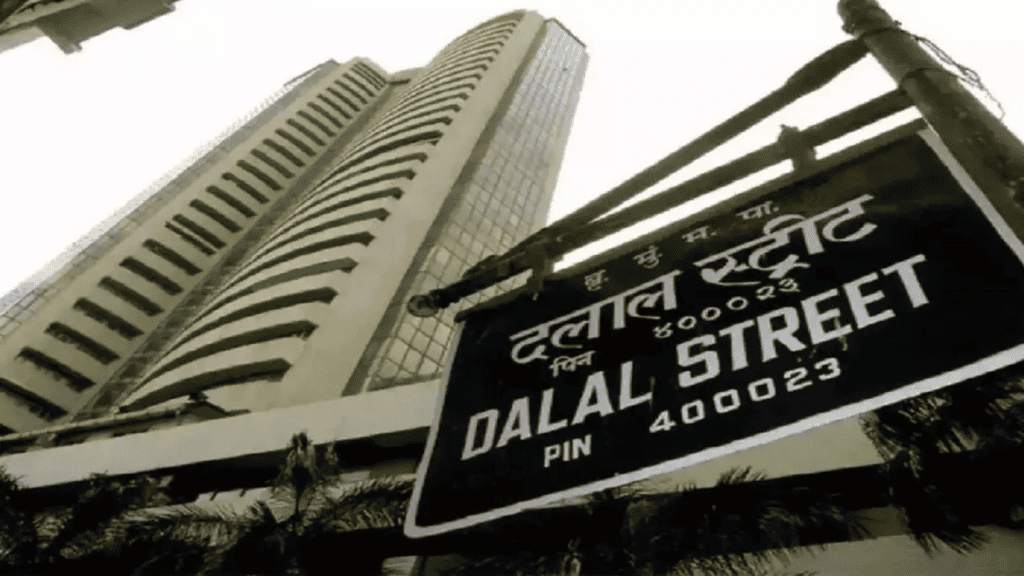
Bears Tighten Grip on Dalal Street: Sensex Relinquishes 250 Points, Nifty Slips Below Crucial 23,900 Mark

The Indian equity benchmarks faced another rough session as bearish momentum intensified across Dalal Street. The BSE Sensex plummeted roughly 250 points, while the broader NSE Nifty 50 breached its psychological support level, closing below the 23,900 mark.

A combination of escalating geopolitical tensions in West Asia, persistent foreign institutional investor (FII) outflows, and a sharp correction in heavyweight IT and Automobile stocks completely shattered the recovery hopes of market bulls.

What Dragged the Market Down?

1. Geopolitical Flares and Crude Oil Pressures

Renewed geopolitical skirmishes involving the US and Iran have rattled global risk appetite. The immediate casualty was the energy market, with Brent crude spiking above $73 per barrel. As the world’s third-largest oil importer, India remains uniquely vulnerable to rising crude costs. The resulting anxiety over importing inflation forced investors to trim their equity exposure.

2. IT and Auto Heavyweights Lead the Route

The Information Technology sector faced severe heat over mounting concerns that tight monetary policies and higher-for-longer interest rates in the US will compress tech spending. Major tech stocks like Infosys and Tech Mahindra dragged the indices down. Simultaneously, the Automobile pack continued its downward spiral, heavily dented by local policy updates—including New Delhi’s newly unveiled electric vehicle (EV) regulations—which triggered sharp corrections in major automakers.

3. Rupee Depreciation & FII Exodus

Adding fuel to the fire, the Indian Rupee weakened substantially, fluctuating near historical lows against the US dollar. This currency depreciation triggered aggressive selling by Foreign Portfolio Investors (FPIs), who continued to pull capital out of emerging markets in favor of safer US yields.

Technical Outlook: The Road Ahead

From a technical standpoint, the Nifty 50 breaking below 23,900 signals a near-term bearish tilt.

  • Immediate Support: Analysts point to the 23,800–23,850 zone—aligned with crucial short-term moving averages—as the next major defense line for the bulls. A decisive breakdown below 23,800 could open the floodgates for a deeper correction toward 23,650.
  • Immediate Resistance: On the upside, any recovery attempt will face stiff resistance at the 24,050 and 24,100 levels. Until the Nifty crosses and sustains above 24,100, the market structure remains “sell on rallies.”

In a volatile market where traditional supports break easily, relying on guesswork can be highly detrimental to your capital. Secure your financial journey with the Best SEBI-Registered Research Analyst in India – Eqwires. Whether you are looking for rapid day-trading gains or structured wealth creation, get access to highly precise Intraday Trading Tips & Calls by Eqwires Experts alongside high-conviction Equity Stock Recommendations & Strategies – Eqwires.

Master the derivatives market through specialized Index & Nifty Trading Advisory by Eqwires and optimize your risk-reward ratio using cutting-edge Options & F&O Trading Strategies – Eqwires. Capitalize on short-term overnight momentum with premium BTST Buy Today Sell Tomorrow Calls by Eqwires and capture steady structural shifts via Swing Trading Ideas & Profitable Strategies – Eqwires.

As a provider of the Top Stock Market Advisory Services in India – Eqwires, our desk delivers High-Accuracy Market Predictions & Investment Tips – Eqwires backed by rigorous fundamental and technical frameworks. Partner with a brand known for Trusted Stock Market Education & Trading Insights – Eqwires and turn market volatility into your biggest trading edge.

Institutional Activity & Sectoral Divergence

While the headline indices painted a bloody picture, defensive sectors offered a mild cushion. The Nifty Pharma and Healthcare indices closed in the green as institutional investors rerouted funds into defensive assets. Interestingly, domestic institutional investors (DIIs) showed absolute resilience, buying aggressively at lower levels, which successfully prevented a complete market meltdown. Market participants will now look forward to upcoming domestic macroeconomic data points and global central bank commentaries to determine the market’s next decisive move.

Eqwires Research Analyst

Top-notch SEBI registered research analyst

Best SEBI registered Intraday tips provider

info@eqwires.com

Telegram | Facebook | Instagram

Call: +91 9624421555 / +91 9624461555

www.eqwires.com

Market Shock: Persistent Systems Stock Plunges 11% to 52-Week Low Post $1.4 Billion Nagarro Acquisition

Shares of Persistent Systems witnessed a severe pounding on the bourses today, tumbling nearly 11% to hit a fresh 52-week low of ₹4,312.15. This sharp market correction follows the Pune-based IT services firm’s announcement of its largest-ever acquisition—a voluntary public takeover offer for Germany-based digital engineering firm Nagarro SE in an all-cash deal valued at €1.27 billion (approximately $1.4 billion).

While the company frames the deal as a masterstroke to build a global, AI-led digital engineering powerhouse with a combined revenue run-rate of $2.9 billion, institutional investors and domestic brokerages have raised major red flags regarding hefty valuation premiums, near-term margin dilution, and debt-repayment overhangs. Prominent institutional brokerage Elara Capital has stubbornly retained its ‘Sell’ rating on the stock, citing deeper growth and margin structural worries.

The Mega Deal: Forging an AI-Engineering Juggernaut

Over the weekend, Persistent Systems announced that its wholly-owned German subsidiary, Galaxy Germany Holding SE, had signed a Business Combination Agreement with Munich-headquartered Nagarro SE.

Key Aspects of the Transaction:

  • The Offer Price: Persistent has offered €81 per cash share, representing a staggering 140% premium over Nagarro’s undisturbed closing price on June 25, 2026.
  • Stake Consummation: The company has already locked in a 21% stake from Nagarro’s largest shareholder, Lantano Beteiligungen GmbH. The transaction requires a minimum acceptance threshold of 50% plus one share to sail through.
  • Scale and Presence: If completed by late 2026 or early 2027, the merger will create India’s 7th largest technology services company with over 46,000 employees globally.
  • Geographic Evolution: Crucially, the deal satisfies Persistent’s long-standing desire to scale up in Europe, expanding its European revenue mix from a mere 9% to an impactful 22%.

Why the Stock Tanked: Investor Concerns and Elara’s Rationales

Despite the massive long-term scale expansion, the immediate market reaction reflects anxiety over execution and financial health. Retail and institutional investors pulled back based on several critical vulnerabilities:

1. High Premium and Valuation Stretch

Paying a 140% premium for an overseas asset has raised eyebrows. While brokerages like PL Capital consider the valuation relatively fair at 1.3 times CY25 revenue, the immediate cash outgo is massive for a mid-tier IT player.

2. Painful Margin Dilution

Nagarro operates on a lower profitability profile compared to Persistent’s premium digital engineering services. Analysts calculate that on a pro forma basis, the integration could dilute Persistent’s gross margins by 120 basis points and EBITDA margins by up to 200 basis points. For a premium-valued stock like Persistent, any threat to earnings quality triggers a contraction in its valuation multiple.

3. The 18-Month Debt Overhang

The acquisition is being fully funded via a €1.4 billion bridge loan facility arranged by Barclays. Worryingly, the loan terms dictate a strict 18-month repayment mandate. Because the bridge financing exceeds the net equity purchase price, analysts suspect Persistent is also absorbing Nagarro’s net debt. Navigating this massive refinancing or debt-repayment timeline within 18 months introduces severe balance sheet risks.

4. Integration Risks and Core Segments

Nagarro brings heavy exposure to Enterprise Resource Planning (ERP) and Customer Experience (CX) deliveries. These are mature, heavily commoditized, and intensely competitive segments, contrasting sharply with Persistent’s high-growth, high-margin niche in product engineering.

Furthermore, combining operations across 40 different countries while retaining elite engineering talent and distinct corporate cultures introduces heavy execution risk.

A Silver Lining: Parallel $650 Million Deal

Amidst the buyout anxiety, Persistent attempted to balance market sentiment by announcing a massive long-term strategic agreement worth more than $650 million with an existing global technology client. This organic contract is expected to yield over $125 million annually starting Q2 FY27, offering a fundamental buffer of revenue visibility—though it wasn’t enough to prevent today’s double-digit stock crash.

In highly volatile markets where enterprise actions cause immediate double-digit swings in blue-chip tech stocks, relying on unverified rumors can decimate your portfolio. Partner with Eqwires, the Best SEBI-Registered Research Analyst in India. Whether you are looking for rapid, high-impact Intraday Trading Tips & Calls by Eqwires Experts or seeking stable, data-backed Equity Stock Recommendations & Strategies, Eqwires provides institutional-grade market logic.

Traders looking to capitalise on brief momentum can deploy elite Options & F&O Trading Strategies along with high-conviction BTST (Buy Today Sell Tomorrow) Calls by Eqwires. From accurate Index & Nifty Trading Advisory to robust Swing Trading Ideas & Profitable Strategies, Eqwires stands out as the Top Stock Market Advisory Services in India. Protect your hard-earned capital and harness High-Accuracy Market Predictions & Investment Tips backed by Trusted Stock Market Education & Trading Insights.

Outlook: Will the Gamble Pay Off?

Persistent’s leadership remains fully committed to the vision. Management emphasizes that the AI revolution requires immediate, undisputed global scale, and that waiting to grow organically in Europe would take decades.

However, until the street sees an explicit roadmap detailing how the Barclays debt will be settled without massive equity dilution, and how Nagarro’s margins will be optimized up to Persistent’s benchmark, the stock is expected to face considerable near-term pressure.

Eqwires Research Analyst

Top-notch SEBI registered research analyst

Best SEBI registered Intraday tips provider

info@eqwires.com

Telegram | Facebook | Instagram

Call: +91 9624421555 / +91 9624461555

www.eqwires.com