
Rs 17 Lakh Crore Added To Mutual Funds In 2024, Is This The Biggest Boom Ever?

After a stellar 2023, the mutual fund industry sustained its growth momentum in 2024 with an impressive Rs 17 lakh crore surge in assets, driven by buoyant equity markets, robust economic growth, and increasing investor participation. Experts are predicting the positive trend will extend into 2025.

The year 2024 saw a substantial net inflow of Rs 9.14 lakh crore, alongside a significant 5.6 crore increase in investor count and a growing popularity of SIPs, which alone contributed Rs 2.4 lakh crore, according to data from the Association of Mutual Fund Industry (Amfi), as reported by news agency PTI in an analysis.

Continued Growth Expectations for 2025

Kaustubh Belapurkar, Director-Manager Research at Morningstar Investment Research India, said, “The mutual fund industry’s assets are expected to continue growing at a healthy pace in 2025. With rising penetration among retail investors, flows into equity funds, particularly through Systematic Investment Plans (SIPs), are likely to remain robust.”

AUM Reaches All-Time High

The inflows lifted the industry’s assets under management (AUM), reaching an all-time high of Rs 68 lakh crore by November-end, marking a 33 per cent growth over the Rs 50.78 lakh crore registered at the end of 2023.

Comparison with Previous Growth Trends

This growth was way higher than 27 per cent rise and Rs 11 lakh crore addition in AUM in 2023, as well as the more modest growth in previous years.

The industry saw a 7 per cent growth and Rs 2.65 lakh crore increase in AUM in 2022, as well as nearly 22 per cent growth and close to Rs 7 lakh crore addition to the asset base in 2021.

Consistent Upward Trajectory

Over the last four years, the industry has collectively added an impressive Rs 30 lakh crore to its AUM.

Year-on-Year AUM Growth

As per the data, the AUM of the mutual fund industry rose to an all-time high of Rs 68 lakh crore in 2024 (till November-end) from Rs 50.78 lakh crore at the end of December 2023. This year’s tally does not include December number which will come out in the first week of 2025.

The asset base stood at around Rs 40 lakh crore at the end of December 2022, Rs 37.72 lakh crore at the end of December 2021 and Rs 31 lakh crore in December 2020.

The 12th Consecutive Year of Growth

The 2024 also marked the 12th consecutive yearly rise in the industry AUM after a drop in two preceding years. This year growth in the industry was supported by inflows in equity schemes, especially Systematic Investment Plans (SIPs).

Over the last four years, the mutual fund industry has collectively added an impressive Rs 30 lakh crore to its AUM, showing the sector’s consistent upward trajectory.

“The growing trend of financialisation has led to a significant growth in participation in equity markets and mutual funds, as reflected in the significant growth of AUM in the mutual fund industry,” said Ganesh Mohan, CEO of Bajaj Finserv AMC.

“This shift is supported by the Indian economy’s expansion and increasing financial awareness among retail investors, who are seeking higher returns at lower costs and with greater convenience,” he added.

Equity Schemes Drive Growth

The 45-player industry saw a total inflow of Rs 9.14 lakh crore in 2024 (till November) as compared to an inflow of over Rs 2.74 lakh crore last year. The huge inflow could be on the back of sustained investor interest in equity funds, arbitrage funds, and index funds & ETFs.

This year’s flows included an investment of Rs 3.53 lakh crore in equity-oriented schemes, Rs 1.44 lakh crore in hybrid schemes, and around Rs 2.88 lakh crore in debt schemes.

Equity Market Contributions and SIPs

Equity schemes, which were the most attractive factor for investors in the mutual fund space in 2024, schemes have been witnessing incessant net inflow on a monthly basis since March 2021.

The contribution of equity markets has also been key, with the Nifty 50 and BSE Sensex indices rising 8.5 per cent and 8 per cent, respectively, in 2024.

SIP Contributions Surge

The net inflows into equity-oriented schemes stood at Rs 3.53 lakh crore, driven by sustained investor confidence and the structural shift toward long-term, disciplined investing through SIPs.

Monthly SIP contributions consistently surpassed the Rs 25,000-crore mark in October and November, signalling their growing appeal.

Investment Trends and Thematic Funds

“Investment through SIP into equity funds has become the default nature of investing for predominant Indian investors on back of structural shift in savings pattern, and equity markets continuing on the decadal growth trajectory is an established trend in India,” Akhil Chaturvedi, ED & CBO, Motilal Oswal AMC, said.

Growth in Sectoral and Thematic Funds

Notably, sectoral and thematic funds emerged as major attractions, with their AUM growing 79 per cent to Rs 4.61 lakh crore in 2024 from Rs 2.58 lakh crore in December 2023. These funds benefited from heightened retail interest, supported by Rs 1.4 lakh crore in inflows, including Rs 67,000 crore raised through 40 new fund offerings (NFOs), Morningstar’s Belapurkar said.

Debt Funds and Institutional Investors

On the debt side, categories like liquid, ultra-short, and low-duration funds saw robust inflows, driven primarily by institutional investors seeking short-term liquidity. Meanwhile, retail investors showed renewed interest in gilt and dynamic duration funds, anticipating potential rate cuts in early 2025.

Gold Investment Trends

Gold investments also gained traction, with inflows of Rs 9,500 crore as investors sought safety amid economic uncertainties, geopolitical tensions, and changes in taxation norms.

Gold’s Role in Portfolio Diversification

Aashish Somaiyaa, CEO of WhiteOak Capital AMC, noted that gold’s appeal as a portfolio hedge has been further boosted by its integration into multi-asset allocation funds.

“At the same time given there has been uncertainty of US monetary policy, time to time USD weakness and geopolitical fault lines being exposed, gold is always a safe haven to have in client portfolios,” he added.

Taxation Changes on Gold ETFs

Starting April 2025, Gold ETFs will be taxed as per investor’s tax slab for a holding period of less than 1 year and at 12.5 per cent for a holding period of more than 1 year, bringing them on par with taxation for equity, Vishal Jain, CEO, Zerodha Fund House, said.

Regulatory Support for Growth

Adding to the industry’s vibrancy, the regulatory environment played a key role.

Sebi has introduced measures to boost mutual fund penetration and oversight. The MF Lite framework simplifies setting up asset management companies, encouraging new players in passive funds. The new ‘Specified Investment Funds’ asset class enables boutique products to reach more investors with a reduced minimum ticket size of Rs 10 lakh, compared to Rs 50 lakh for PMS and Rs 1 crore for AIFs.

Eqwires Research Analyst

Top-notch SEBI registered research analyst

Best SEBI registered Intraday tips provider

info@eqwires.com

Telegram Facebook Instagram

Call: +91 9624421555 / +91 9624461555

www.eqwires.com

Govt-owned oil refiners struggle to get adequate crude supplies from Russia

India’s state oil refiners are finding it hard to buy the volume of Russian crude they need, according to people familiar with the matter. 

Oil executives from three of the nation’s government-owned processors said they haven’t been able to obtain enough Russian crude for January loading in the so-called spot market. The people, who have direct knowledge of their companies’ purchases, declined to be identified as they’re not authorized to speak publicly. 

Executives from state refiners, including Indian Oil Corp., Bharat Petroleum Corp. and Hindustan Petroleum Corp., said they were unable to procure at least six million barrels of Urals crude they had sought from the spot market. It was unclear why there were fewer offers, although factors such as a long-term contract between Rosneft PJSC and Indian private refiner Reliance Industries Ltd., and higher Russian processing rates may have led to lower crude exports, they added.   

Separately, the people also said it could be Moscow’s way of reducing spot cargoes sold by traders in favour of long-term contracts done directly with Russian producers. Indian state refiners currently buy all their Russian crude through the spot market, while private firms do so via a combination of spot and long-term contracts. 

Officials from the state-owned companies said there were alternative cargoes in the market from the Middle East and Africa, although supplies were pricier and would erode margins. Government refiners have bought about 1 million barrels a day of Russian crude so far this year, according to Kpler data. That’s drastically up from close to no imports before the Ukraine war. 

Moscow has been pressing Indian firms to lock in their imports via long-term contracts, which are usually done between Russia’s state-run firms such as Rosneft PJSC and Gazprom Neft PJSC, and Asian buyers, according to the executives. While New Delhi is also in favor of that, urging all state and private refiners such as Reliance to jointly negotiate for better terms, some government-linked processors haven’t been able to accept the offer price and terms, they said.  

In early December, Reuters reported that Reliance had proceeded to independently secure a 500,000 barrels-a-day deal with Rosneft for 10 years, a move that state companies say has weakened the country’s overall bargaining power. They added the deal has likely emboldened Russia to sell less in the spot market via traders, explaining the lack of spot cargoes.  

Indian Oil, BPCL and HPCL didn’t immediately reply emails seeking comments on the issue. Indian Oil previously had a term contract with Russia for 490,000 barrels a day for the fiscal year ended March. 

Eqwires Research Analyst

Top-notch SEBI registered research analyst

Best SEBI registered Intraday tips provider

info@eqwires.com

Telegram Facebook Instagram

Call: +91 9624421555 / +91 9624461555

www.eqwires.com

Amber Enterprises looking to demerge its electronics division: Exclusive

Amber Enterpries Ltd. is looking to demerge its Electronics division, sources with knowledge of the matter told CNBC-TV18 exclusively.

The sources further said that Amber Enterprises might float an IPO of the electronics division after the demerger is complete.

Bankers for the demerger and subsequent IPO of the electronics division have already been appointed, according to the sources.

For financial year 2024, the Electronics division formed 20% of the total revenue of Amber Enterprises.

CNBC-TV18 has written to Amber Enterprises with regards to this story but is awaiting a response for the same.

On the valuation front, shares of Amber Enterprises are trading at a financial year 2026 price-to-earnings multiple of 54 times, compared to its closest peer Dixon Technologies, which trades at 99 times earnings.

Shares of Amber Enterprises gained as much as 5.5% post this newsbreak to ₹7,279 and has now gained over 130%. Dixon Tech shares too have nearly tripled in value so far this year.

Eqwires Research Analyst

Top-notch SEBI registered research analyst

Best SEBI registered Intraday tips provider

info@eqwires.com

Telegram Facebook Instagram

Call: +91 9624421555 / +91 9624461555

www.eqwires.com

BIG Merger Alert! Honda, Nissan Set To Form World’s Third-Largest Automaker

 Following a long much-touted rumour or discussion, Japanese automakers Honda and Nissan have announced plans to merge, creating the world’s third-largest automaker by sales. The two companies signed a memorandum of understanding on Monday. However, the announcement expected to mark a significant shift in the industry as it transitions away from fossil fuels to embrace electrification.

Mitsubishi Motors, a smaller partner in the Nissan alliance, has also joined the discussions to integrate its business with Honda and Nissan. If finalized, the merger would position the group just behind Toyota and Volkswagen in global vehicle sales, allowing them to better compete with Tesla and Chinese electric vehicle (EV) manufacturers.

The merger would create a combined entity valued at over $50 billion, based on the current market capitalizations of the three automakers. Honda, Japan’s second-largest automaker after Toyota, holds a market capitalization exceeding $40 billion, while Nissan is valued at $10 billion.

Together, the three companies would produce approximately 8 million vehicles annually. In comparison, Toyota remains Japan’s largest automaker, producing 11.5 million vehicles in 2023. Honda manufactured 4 million vehicles last year, Nissan produced 3.4 million, and Mitsubishi Motors accounted for just over 1 million.

The merger would not only bring financial scale but also the ability to pool resources for technological advancements, giving the group an edge against competitors.

Collaboration On Electric Vehicles And Software

Earlier this year, Honda, Nissan, and Mitsubishi announced plans to share EV components, including batteries, and conduct joint research on autonomous driving software. This collaboration aligns with the dramatic industry-wide shift toward electrification and aims to address the growing dominance of EV-focused companies.

“The merger discussions represent a collective effort to adapt to a rapidly evolving market,” said a spokesperson from Honda. “Together, we can better address challenges like electrification and autonomous driving.”

Also Read: ‘Leave India and Go Where?’: Startup Founder Sparks Debate On India’s Work Culture

Impact On The Global Automotive Market

If successful, the merger will help the Honda-Nissan-Mitsubishi group challenge global giants like Toyota, Volkswagen, and Tesla. Analysts believe this consolidation is crucial for Japanese automakers, who have lagged behind competitors in the EV market.

Toyota, which has technology collaborations with Mazda and Subaru, will remain the leader in Japan even after the merger. However, the new alliance will bring much-needed competition to the forefront as the industry continues its rapid transformation.

Eqwires Research Analyst

Top-notch SEBI registered research analyst

Best SEBI registered Intraday tips provider

info@eqwires.com

Telegram Facebook Instagram

Call: +91 9624421555 / +91 9624461555
www.eqwires.com

Adani Defence & Aerospace to acquire 85.8% stake in Air Works for ₹400 crore

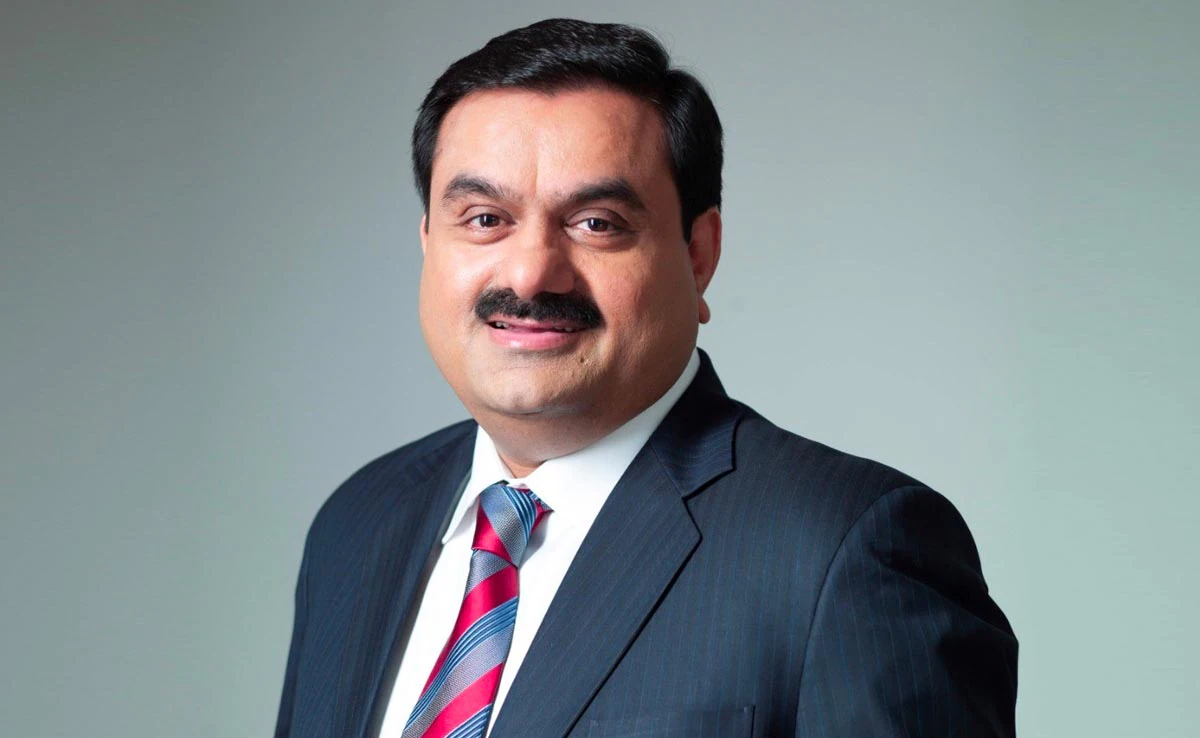
Adani Enterprises Ltd (AEL) on Monday (December 23) said its wholly owned subsidiary Adani Defence Systems & Technologies Ltd (ADSTL) has entered into a share purchase agreement (SPA) to acquire an 85.8% shareholding in Air Works India (Engineering) Private Ltd.

“…we would like to inform you that Adani Defence Systems and Technologies Limited (ADSTL), a wholly-owned subsidiary of the Company, has executed a Share Purchase Agreement (SPA) on 23rd December 2024 with Air Works
India (Engineering) Pvt. Ltd (AWIEPL) and existing shareholders of AWIEPL (Parties), to acquire an 85.8% stake in AWIEPL,” Adani Enterprises said in a regulatory filing.

The deal values Air Works, India’s largest private-sector Maintenance, Repair, and Overhaul (MRO) company, at an enterprise value of ₹400 crore.

Air Works operates a comprehensive network across India and provides services including line maintenance, heavy checks, aircraft painting, interior refurbishment, avionics upgrades, and asset management.

Its facilities in Hosur, Mumbai, and Kochi cater to a wide range of aircraft, from narrow-body and turboprop planes to rotary-wing aircraft, with approvals from aviation authorities in over 20 countries.

In addition to being a market leader in civil aviation, Air Works has built significant capabilities in defence MRO, executing projects for key platforms of the Indian Navy and Indian Air Force.

Jeet Adani, Director at Adani Airports, said, “This growth aligns seamlessly with the Government’s vision to connect every corner of our nation, creating unprecedented opportunities in aviation services. For us, creating a presence in the MRO sector is more than just a strategic step—it’s a commitment to building an integrated aviation services ecosystem that strengthens the backbone of India’s aviation infrastructure.”

Ashish Rajvanshi, CEO of Adani Defence & Aerospace, said, “Our vision is to deliver a full-spectrum MRO offering—spanning line, base, component, and engine maintenance—to meet the needs of both commercial and defence aviation sectors.”

Eqwires Research Analyst

Top-notch SEBI registered research analyst

Best SEBI registered Intraday tips provider

info@eqwires.com

Telegram Facebook Instagram

Call: +91 9624421555 / +91 9624461555

www.eqwires.com