
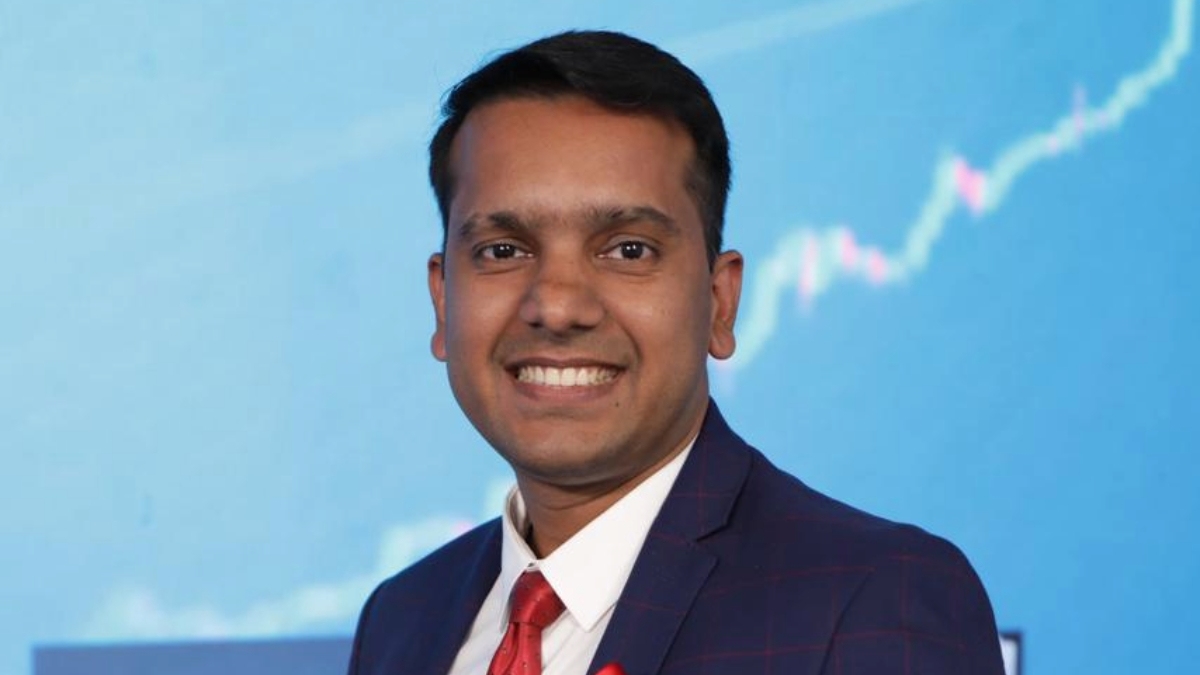
69% growth in headcount in India’s institutional investor sector in 2 years

India has witnessed a notable 69 per cent increase in headcount in the institutional investor sector over the last two years, said a report by CIEL HR Services. 

The report, titled Institutional Investors – Talent Trends and Insights, highlights that India’s market capitalisation has risen over the past decade, growing from $1.2 trillion to $5.2 trillion, spurred by significant expansion in the institutional investor sector. 

The sector has made strides in workforce diversity, with women’s participation at 27 per cent of the overall workforce. However, representation in leadership roles remains a challenge, with women holding just 14 per cent of senior positions.

One notable finding regarding talent mobility revealed that only 17 per cent of professionals, including fund managers, portfolio managers, and senior analysts, are promoted from within their organisations, while 83 per cent are hired externally. This presents an opportunity for companies in the sector to innovate their practices around internal career progression and enhance their work environment to help talent thrive. 

“India’s trajectory towards becoming a $7 trillion economy by 2030 is a reflection of its burgeoning market size and a testament to the rapid transformation taking place across its financial landscape. With an expected growth rate of 6.1 per cent over the next five years and positioning to become the world’s third-largest economy by 2027, India’s institutional investor sector is at the forefront of this evolution,” said K Pandiarajan, executive director and chairman, CIEL HR.

“The sector is experiencing a radical shift, with both established players and new entrants driving innovation in investment strategies and financial products. This dynamic growth signals a pivotal moment for institutional investors to harness emerging opportunities, both within India and globally,” he added. 

The study encompasses over 16,000 executives from 80 companies in the investor sector and provides valuable insights into key areas such as gender diversity, tenure in firms, roles in demand, and career progression. 

“The sector employs crème de la crème talent in the country. With our economy growing at a rapid pace, the demand for these roles will surge, further widening the demand-supply gap. We anticipate skilled professionals to return to India from global markets while also drawing expatriates to the country,” said Aditya Narayan Mishra, managing director and chief executive officer, CIEL HR.

Approximately 25 per cent of the workforce in the institutional investor sector has switched jobs in the past year, emphasising the dynamic and competitive nature of the industry. The average tenure across the institutional investor sector is three years, reflecting high mobility and competition for talent. 

Professionals in the industry often hold advanced qualifications, including MBAs from top Indian and international business schools, as well as prestigious CA and CFA certifications.

Eqwires Research Analyst

Top-notch SEBI registered research analyst

Best SEBI registered Intraday tips provider

info@eqwires.com

Telegram Facebook Instagram

Call: +91 9624421555 / +91 9624461555

www.eqwires.com

F&O trading faces reset as Sebi revisits ‘open interest formula’

The Securities and Exchange Board of India (Sebi) has proposed a raft of new measures aimed at reducing risks and the potential for manipulation in the equity derivatives market while ensuring a stronger alignment with the cash market. Key proposals include a new methodology for calculating open interest (OI) using a ‘delta’ framework, a review of marketwide position limits (MWPL), and the introduction of position limits for single stocks and index derivatives. 

The new proposal comes close on the heels of six measures introduced by Sebi to curb frenzy in index derivatives. 

These measures — a majority of which have already been implemented — have nearly halved trading volumes.

The fresh proposals may not materially affect traders but could help reduce the frequency of stocks entering the ban period, thereby simplifying their trading experience. The changes also aim to enhance market integrity and ensure a more accurate reflection of market conditions. 

The market watchdog has proposed a new metric called ‘future equivalent’ or a delta-based framework for calculating open interest in futures and options (F&O).

Delta refers to the change in an option’s price when the price of the underlying security changes in the cash market. 

At present, open interest (OI) is measured by adding notional OI in futures and options. OI is key to gauging trader activity and sentiment.

“A more meaningful approach would be to aggregate the delta or future equivalent of options positions with futures OI, thereby reflecting the true price sensitivity of outstanding positions,” observes the consultation paper. 

Sebi also plans to link MWPL to the underlying cash market. 

MWPL refers to the maximum number of open F&O contracts allowed for a single stock. 

Once a scrip exceeds MWPL, further trading in its derivatives is restricted. The regulator has proposed a mechanism to offset trades instead of merely squaring off positions when a stock enters the ban period. The move is intended to help traders reduce their risks.

For instance, if a trader holds a long futures position, they could buy put options or sell call options to reduce total delta exposure. 

Currently, MWPL for each stock is 20 per cent of the stock’s free-float market capitalisation (mcap) and is applied to the total notional OI of F&O. 

Sebi has proposed reducing it to 15 per cent of free-float mcap or 60x the average daily delivery value (ADDV) in the cash market, whichever is lower. This metric will be recalculated every three months based on rolling ADDV. 

The new methodology is expected to reduce instances of stocks moving into the ban period by 90 per cent.

The regulator may also explore the need for an MWPL for index derivatives in the future. 

The new methodology will also be incorporated when considering exposure limits for mutual funds (MFs) and alternative investment funds in derivatives to ensure that it accounts for leverage in long options. Further, Sebi is considering imposing individual entity-level position limits for single scrips so that no single entity, such as a foreign portfolio investor (FPI), stockbroker, or MF, can unduly influence the market. 

Sebi has proposed increasing the end-of-day limit for index futures from ₹500 crore to ₹1,500 crore, considering the rise in market size and trading volumes since March 2020. The intraday limit for the same has been proposed at ₹2,500 crore to facilitate market-making.

Similar revisions have been proposed for index options as well. 

Another key proposal is introducing pre-open and post-closing sessions for derivatives, similar to those in the cash market, to enhance price discovery. 

“This is especially useful, as today there are fewer than 40 stock options with complete liquidity and fewer than 25 that can be traded at a scale of a few hundred crores. These reforms put in place a basis for a more efficient, open derivatives market, but they will succeed only if investors and traders learn to adapt to the new regime,” said Rahul Ghose, chief executive officer of Hedged.in.

Further, Sebi has proposed additional conditions to allow derivatives for sectoral and thematic indices. Such an index must have at least 14 constituents, with the weight of the top constituent not exceeding 20 per cent and the combined weight of the top three not exceeding 45 per cent. 

The clarity will help exchanges offer derivatives on more indices.

Eqwires Research Analyst

Top-notch SEBI registered research analyst

Best SEBI registered Intraday tips provider

info@eqwires.com

Telegram Facebook Instagram

Call: +91 9624421555 / +91 9624461555

www.eqwires.com

Markets may remain range bound this year: Kotak Institutional Equities

Kotak Institutional Equities is of the view that the markets are likely to remain range bound this year, as they continue to trade above historical averages and at a significant premium to the MSCI Emerging Markets (EM) index. 

Pratik Gupta, chief executive officer (CEO) and co-head of institutional equity at Kotak Securities, noted that the Nifty is currently trading at a price-to-earnings (PE) multiple of 19 times based on March 2026 earnings estimates. 

This valuation appears elevated, considering earnings are expected to compound at 14 per cent in FY26 and FY27, with potential downside risks to these estimates.

“Given this, we do not foresee a meaningful upside for the Nifty in the short term,” said Gupta, who shared insights from Kotak’s recent investor conference. 

However, the downside for the Nifty is cushioned by India’s robust medium-term growth prospects, which are expected to sustain elevated valuations.

Additionally, a more favourable foreign and domestic liquidity environment in the second half of 2026 could provide further support. 

Kotak Institutional Equities remains cautious about the outlook for small and midcap stocks, as their valuations have not moderated significantly despite recent market corrections. 

The brokerage highlighted key downside risks for the broader market, including a sharper-than-expected global slowdown, a deficient monsoon, or a sharp decline in retail inflows into domestic equities — particularly small and midcap funds. 

On the upside, potential catalysts include a weaker US dollar, which could drive flows into EM funds, and a faster-than-expected private capital expenditure (capex) upcycle. 

Based on feedback from foreign portfolio investors (FPIs), Gupta said Indian equity markets appear somewhat expensive. 

Nevertheless, from a three-to-five year perspective, most foreign investors remain optimistic about India’s medium-term growth outlook. 

FPIs are looking to increase their exposure to Indian stocks once valuations become more attractive. 

However, many EM funds are currently facing redemptions. 

“Capital is flowing back to the US, partly due to a strong dollar and Trump’s policies. Even if India is attractive, FPIs currently lack the funds to invest, as money is being redirected to the US,” Gupta said.

He also pointed out that the capital gains tax has further dampened the appeal of Indian equities for FPIs. 

“Over the past two years, most FPIs achieved around 20 per cent returns in rupee terms, with the rupee remaining relatively stable. After accounting for a 10 per cent long-term capital gains tax (for holdings over a year), returns were still attractive compared to US bond yields.  

However, with bond yields rising, return expectations from India declining, the rupee depreciating by 3-4 per cent, and higher capital gains taxes, FPIs are now left with 6.5-7.5 per cent dollar returns after deductions, taxes, surcharges, and fund manager fees. This is relatively low for an emerging market like India,” Gupta added.

On the domestic front, Gupta noted that while equity inflows into local mutual funds, insurance, and portfolio management services (PMS) have slowed, overall net inflows remain positive. 

“However, the nature of these flows has shifted. Previously, investments were directed towards small and midcap or thematic funds. But now, they are increasingly favouring largecap or balanced debt-equity funds,” he said. 

In terms of sectoral preferences, Kotak Institutional Equities continues to favour large private banks, non-banking financial companies (NBFCs), life insurance firms, residential real estate, hotels, and the airlines/hospitality sectors. 

Conversely, the brokerage remains cautious on consumer staples, discretionary stocks, and the oil & gas and chemicals sectors.

Eqwires Research Analyst

Top-notch SEBI registered research analyst

Best SEBI registered Intraday tips provider

info@eqwires.com

Telegram Facebook Instagram

Call: +91 9624421555 / +91 9624461555

www.eqwires.com

Adani Power share jumps 10% on heavy volume; other Group stocks rise too

Adani Power share price marched ahead in stock market trade on Tuesday, February 25, after the company’s resolution plan for the acquisition of Vidarbha Industries was approved by the Committee of Creditors. 

Adani Power share zoomed 9.5 per cent to Rs 514.75 per share on the BSE in intraday trade today as against a 0.3 per cent gain in the benchmark Sensex index at 1:30 PM. 

The rally in Adani Power share was backed by heavy volumes on the counter. Till the time of writing this report, 1.38 million shares had changed hands on the counter on the BSE. Combined with the volume on the NSE, a total of 15.34 million shares had changed hands on the Adani Power counter.

By comparison, the counter had a two-week average volume of 0.51 million on the BSE. 

According to Adani Power, the Committee of Creditors of Vidarbha Industries Power Limited has approved the Resolution Plan submitted by Adani Power Limited.

“In this regard, Adani Power Ltd has received a Letter of Intent from the Resolution Professional on February 24, 2025,” it said in a stock exchange filing. 

Vidarbha Industries is undergoing an insolvency process, as per the Insolvency and Bankruptcy Code, 2016. It owns and operates a 2×300 megawatt (Mw) thermal power plant located in MIDC Industrial Area, Butibori, Nagpur, Maharashtra.

Last year, Adani Power acquired Dahanu Power Ltd for Rs 815 crore, Lanco Amarkantak Power Limited (LAPL) for Rs 4,101 crore, and Coastal Energen for Rs 3,330.88 crore. 

Adani Power has acquired these companies to consolidate the thermal power generation capacities of Adani portfolio companies in order to expand the synergistic benefits.

Adani Group Announces Investments in MP, Assam

Meanwhile, Gautam Adani, founder and chairman of the Adani group, committed investments worth Rs 1.1 trillion in Madhya Pradesh, during the Invest Madhya Pradesh–Global Investors Summit (MPGIS) 2025.

The investments will be made across sectors, including pump storage, cement, mining, smart meters, and thermal energy. 

On Tuesday, Gautam Adani committed another Rs 50,000-crore worth of investments in Assam under Advantage Assam 2.0 Investment and Infrastructure Summit. 

The Chairman said that investments in Assam would be done in multiple sectors, including airports, aero-cities, city gas distribution, transmissions, cement, and road projects.

On the bourses, Adani Enterprises share price advanced 2 per cent, Adani Total Gas share price 3.2 per cent, Adani Green Energy share price 3.7 per cent, and Adani Ports and SEZ share price 1.7 per cent in the intraday trade.

Eqwires Research Analyst

Top-notch SEBI registered research analyst

Best SEBI registered Intraday tips provider

info@eqwires.com

Telegram Facebook Instagram

Call: +91 9624421555 / +91 9624461555

www.eqwires.com

Zara shuts flagship South Mumbai store, new tenant Purple Style Labs to pay rent of ₹10 lakh a day

Zara has shut its only independent store in the 118-year-old heritage Ismail building at Flora Fountain, South Mumbai. Luxury fashion brand Purple Style Labs has now leased 60,000 sq ft of retail space in the same iconic building for an annual rent of ₹36 crore, securing a five-year lease, as per property registration documents obtained by Propstack.com.

According to property registration documents, the new tenant has taken the space on a five-year lease. The rent for five years works out to be ₹206 crore. ₹10 lakh is the daily rent, as per documents.

Purple Style Labs, founded by Abhishek Agarwal in 2015, retails high-end designer brands under Pernia’s Pop-Up Shop brand.

The firm acquired Pernia’s Pop-Up Shop in 2018. It incubates young designer brands and helps them with sales, marketing, and technical support. According to the company’s website, it sells products of renowned labels such as Tarun Tahiliani, Falguni Shane Peacock, Amit Aggarwal, Gaurav Gupta, Seema Gujral, Abhinav Mishra, Shyamal & Bhumika.

In 2020, the company acquired Wendell Rodricks’s brand after the Goa-based designer suddenly passed away at 59.

According to Purple Style Labs’ official website, it currently has stores in several areas of Mumbai, such as Kemps Corner, Juhu, and Bandra.

PSL Retail Private Limited leases 60,000 sq ft of retail space

Purple Style Labs, a luxury fashion chain, has taken 59,350 sq ft of retail space on lease in the Ismail Building for five years. The monthly rent for the store is ₹3 crore, which translates to ₹36 crore annual rent for the first year.

The annual rent for the second year goes up to ₹39 crore, for the third year to ₹42 crore, for the fourth year to ₹43.8 crore, and for the fifth year to ₹45.6 crore, the documents show.

The deposit for the transaction is ₹18 crore, as shown in the documents.

The transaction was registered on December 23, 2025, for which a stamp duty of over ₹53 lakh and registration fees of ₹1,000 were paid.

Zara exits from South Mumbai

Spanish retail brand Zara closed its flagship store in South Mumbai’s Fort area after nine years. The 51,300 sq ft store was located in the Edwardian neoclassical Ismail Building at Flora Fountain.

“Please be informed that this Zara store will cease operations after the end of business on February 23. We will continue to assist you at all our Zara stores in Mumbai,” read a notice outside the Zara store in South Mumbai.

Zara registered the lease for the South Mumbai store in the Ismail Building on April 1, 2016, for a tenure of 21 years. However, property registration documents show that the company decided to close the store after nine years.

The documents showed that Zara paid ₹2.25 crore as rent when it took up the space in 2016 and a deposit of ₹13.5 crore for the 47,565 sq ft space that it leased.

It should be noted that Zara is owned by Inditex SA, a global fashion retailer that has been operating in India since 2010 through a 65:35 joint venture with the Tata Group Trent. It is known as Inditex Trent Retail India. It retails two brands, Zara and Massimo Dutti, in India.

According to Zara’s official website, the company continues to have Zara stores in several other locations in Mumbai. These include the store at Palladium Mall in Lower Parel, Phoenix Market City in Kurla, Oberoi Mall in Goregaon, Infinity 2 Mall in Malad, and Viviana Mall in Thane.

Why did Zara exit South Mumbai?

According to retail experts, a store’s success is not solely determined by its location; financial viability and foot traffic play a significant role.

“Nine years is a reasonable period to assess whether the store is financially sustainable in South Mumbai or if the company can rely on its Palladium Mall location,” a retail head from an international property consultancy told HT.com.

“The South Mumbai demographic that can afford Zara has largely shifted to Central Mumbai, particularly in Worli and Lower Parel, where they are likely shopping at Palladium Mall. As a result, South Mumbai has become just another address, while Palladium Mall offers the advantage of higher foot traffic,” the expert added.

Meanwhile, Arif Fazlani, managing director of the Fazlani Group, which owns the historical building, confirmed Zara’s exit from the Fort area. “Zara will hand over the premises by the end of this month, and starting March 1, there will be a new tenant,” he told Hindustan Times on February 24.

An email query has been sent to Purple Style Labs, but there has been no response. If a response is received, the story will be updated. Zara could not be reached for comment.

Eqwires Research Analyst

Top-notch SEBI registered research analyst

Best SEBI registered Intraday tips provider

info@eqwires.com

Telegram Facebook Instagram

Call: +91 9624421555 / +91 9624461555

www.eqwires.com