

4 things investors should understand about the gold rally in early 2025

Gold prices have been on fire.

At the time of writing this on February 11, the price of the yellow metal was $2,913 per ounce (which equals 31.1 grams). Gold is bought and sold internationally in US dollars.

From December 31 to February 11, the price of the yellow metal has gone up by 11.6% in dollar terms. In rupee terms, the gold price at the time of writing this, on BSE, was ₹85,635 per 10 grams. This implies a return of close to 13% during the course of this year. The gold prices across different cities seem to be higher than this, implying returns of even higher than 13% in rupee terms. This at a point when stock prices have been falling.

Now, this raises several points.

First, why have gold prices been on fire? The two word answer for that is Donald Trump, the US president. Trump has been taking a series of economic measures that he and his administration think will help the American economy. These measures have the potential for destabilising the global economy from where it currently is.

In such a scenario, many investors look at gold as a safe haven investment. This has led to money flooding into gold and thus driving up prices at such a quick pace.

Second, why are returns higher in rupee terms? The simple answer for that lies in the fact that the rupee has depreciated against the dollar in the last few months, and that has spruced up returns on gold in rupee terms.

Third, in order to understand the meaning of gold as a safe haven investment, one needs to understand what is known as the Lindy effect. The Lindy Effect basically suggests that the longer something has been around, the greater are its chances of continuing to exist in the days to come.

Or as Nassim Nicholas Taleb writes in Antifragile—Things That Gain from Disorder: “If a book has been in print for forty years, I can expect it to be in print for another forty years. But, and that is the main difference, if it survives another decade, then it will be expected to be in print another fifty years. This, simply, as a rule, tells you why things that have been around for a long time are not “aging” like persons, but “aging” in reverse.”

As he further writes: “Every year that passes without extinction doubles the additional life expectancy. This is an indicator of some robustness. The robustness of an item is proportional to its life!”

Now, how does this apply to gold and safe haven investing? Gold, a durable and non-perishable asset, has maintained its value for centuries. During times of uncertainty—whether political, economic, or financial—many individuals turn to gold as a reliable investment. It serves as a safe haven, a trusted refuge for preserving wealth. This practice of safe-haven investing has endured for hundreds of years, solidifying gold’s role as a timeless store of value.

So, given that gold has been looked as a safe haven of investment in the past, it will be looked as a safe haven in the future as well. This stems from the fact that gold was money across large parts of the world until paper money or fiat money became the order of the day.

Fourth, the media is currently flooded with stories on gold. Some stories have taken this opportunity to talk about having gold in the overall investment portfolio, in order to emphasise on the importance of diversification, that is not putting all eggs in one basket, when it comes to investing. There are other stories in the media which are asking the question: Should you invest in gold now? These stories miss the most important point, which is that investment portfolios need to be well diversified at all points of time, for the simple reason that no one can see the future coming with all clarity.

In the last few years, anyone who had money invested in gold, would have done much better by investing that money in stocks. But then the tide has turned over the last few months and gold has been doing well. There is no way of knowing these things in advance. The world is too complicated to be able to make these predictions confidently over and over again. Hence, talking about gold being important for diversification once gold prices have already run up quite a bit, and stock prices have been falling, doesn’t really achieve anything.

Also, trying to predict the future price of gold is a bit of a mug’s game, because there is no way to know for sure. That’s the long and the short of it.

Eqwires Research Analyst

Top-notch SEBI registered research analyst

Best SEBI registered Intraday tips provider

info@eqwires.com

Telegram Facebook Instagram

Call: +91 9624421555 / +91 9624461555

www.eqwires.com

Sensex, Nifty crumble over 1% on Trump tariffs, weak earnings show

Sensex is down over 1,000 points on Tuesday and Nifty down 1.3 per cent as Donald Trump’s tariff announcements spooked Dalal Street and weak corporate earnings weighed on the market sentiment. The benchmark Sensex was trading at 76,259, down 1,047 points, or 1.33 per cent. Zomato (-5.05 per cent), Tata Steel (2.91 per cent), L&T (-2.83 per cent), Bajaj Finserv (-2.74 per cent), Hindustan Unilver (2.18 per cent) were among the top losers on the 30-share index.

The broader Nifty50 was down 1.3 per cent, or 303.5 points, at 23,078 in the afternoon. While Eicher Motors (-6.61 per cent), Apollo Hospitals (6.37 per cent), and Shriram Finance (3.7 per cent) were the biggest losers, Adani Enterprises (+1.45 per cent), Grasim (0.87 per cent), and Trent (0.54 per cent) were the top gainers on the 50-share index. BSE MidCap was trading at 40,982, down 1,179 points, or 2.8 per cent. BSE SmallCap was down 1,613 points, or 3.29 per cent.

Trump on Monday raised tariffs on steel and aluminium imports to 25 per cent “without exceptions or exemptions” and said he would announce plans to impose reciprocal levies on several countries in the next two days.

The ongoing decline in Indian equities is driven by uncertainty on US tariffs, Reuters quoted UR Bhat, co-founder of investment firm Alphaniti Fintech, as saying, with some analysts adding that the bearish undertone is being fuelled by slowing earnings and sustained foreign outflows.

Both the Nifty 50 and Sensex lost about 1.5 per cent in the last four sessions. Foreign investors have offloaded Indian shares worth $9.94 billion so far this year.

On Tuesday, financials slipped 1 per cent, led by a 1 per cent decline in HDFC Bank.

Eqwires Research Analyst

Top-notch SEBI registered research analyst

Best SEBI registered Intraday tips provider

info@eqwires.com

Telegram Facebook Instagram

Call: +91 9624421555 / +91 9624461555
www.eqwires.com

India’s AI strategy: A look at key govt announcements following DeepSeek disruption

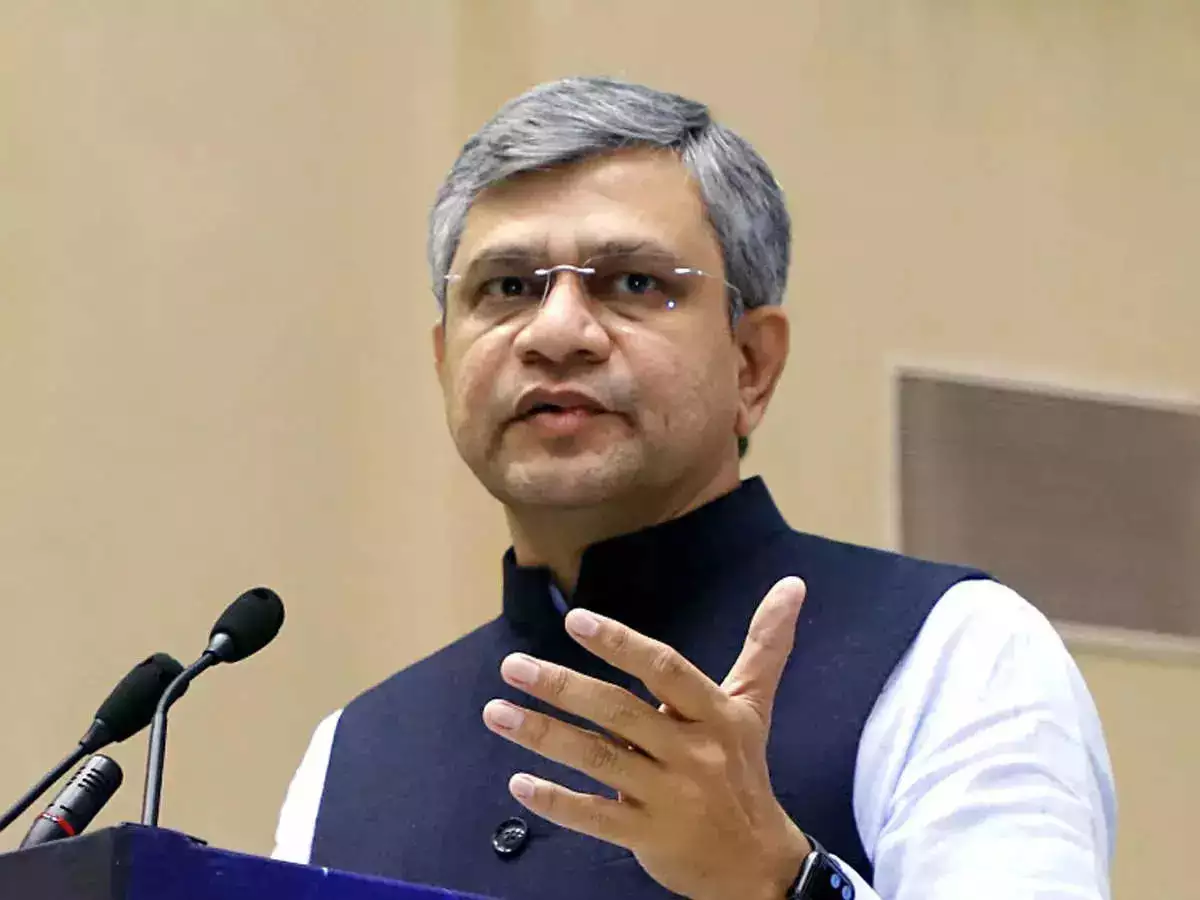
Amid questions over India’s place in the global AI race, Union Minister of Electronics and Information Technology Ashwini Vaishnaw, on Tuesday, February 4, said that the country will develop its own Graphics Processing Unit (GPU) in the next three to five years, and a domestic foundational AI platform can be expected in the next 10 months.

“We are working on multiple, actually three options, where we take a chipset which is at some reasonable level available in open source or available as a licensed thing, and then build upon that to build our own GPU. That’s the approach the entire world has followed and that approach will be able to give us India’s own GPU in the time frame of three to five years,” Vaishnaw was quoted as saying in a report by PTI.

Once used to process multimedia content in video games, GPUs are in massive demand across the world as they are now used to power foundational AI models. US chip company Nvidia currently dominates the GPU market with over 80 per cent market share.

The IT minister’s remarks come after Chinese AI startup DeepSeek’s upheaval of the tech industry, sparked by the release of its reasoning model that is said to rival other cutting edge foundational AI models on many fronts despite being built at a fraction of the cost.

DeepSeek’s surge in popularity has prompted a discussion about whether India is lagging behind in the AI race that is increasingly perceived to be dominated by the United States of America and China.

Here is a look at the central government’s announcements in the wake of DeepSeek’s rise.

Local foundational AI model

A few days after DeepSeek’s low-cost foundational model rattled tech stocks across markets, Vaishnaw announced that the government is building a domestic large language model (LLM) of its own as part of the Rs 10,370 crore IndiaAI Mission.

He said that the government is in touch with at least six developers, but did not specify how much it would cost to build the model and the companies the government is currently in touch with.

Vaishnaw also said that the government has selected 18 AI-based apps focused on areas such as agriculture, learning disabilities, and climate change to provide the first round of funding under the IndiaAI Mission.

“Over the last 1.5 years, our teams have been working closely with startups, researchers, professors etc. Today, we are calling for proposals to develop our own foundational model. The model will take care of the Indian context, languages, culture, are devoid of biases,” Vaishnaw told reporters.

Referring to research cited by DeepSeek in making its AI models more efficient, Vaishnaw said, “Many of our researchers and startups are also studying some of those papers. There are some papers of 2003 and 2005 which basically tell you how to do a lot of good engineering on the process.”

GPU procurement

Vaishnaw said that the government will make available 18,000 high-end GPU-based compute facilities for AI development to entities in the country in the next couple of days.

“We already embarked 18,000 GPUs, very high-end GPUs, and out of that, 10,000 are already available. So this 18,000 compute power will be rolled out in a couple of days. The tender process got completed last week, and in another couple of days, 3-4 days, this will be rolled out,” Vaishnaw said.

The government has also selected 10 companies that will supply 18,693 GPUs, including the Hiranandani Group-backed Yotta, Jio Platforms, Tata Communications, E2E Networks, CMS Computers, Ctrls Datacenters, Locuz Enterprise Solutions, NxtGen Datacenter, Orient Technologies, and Vensysco Technologies.

Nearly half of the total GPUs will come from Yotta alone, who has committed to offer 9,216 units.

These GPUs are being procured by the central government under the IndiaAI Mission, which was sanctioned Rs 2,000 crore for 2025-26 (a fifth of the scheme’s total outlay of Rs 10,370 crore), as per the Union Budget 2025 proposed by Finance Minister Nirmala Sitharaman on February 1.

Sitharaman also announced a new presumptive taxation regime for non-residents providing services in India’s electronics manufacturing sector, a move that could give a fillip to foreign technicians and entities working in the electronics sector in India, and help the country’s aspirations of becoming a semiconductor manufacturing base.

Common GPU compute facility

The government will launch a common compute facility, from where startups and researchers can access the computing power, in the next few days. The cost of accessing higher end GPUs would be Rs 150 per hour, and using lower end GPUs would cost Rs 115.85 per hour.

To further ease access to these services, the government will give a 40 per cent subsidy to end users on the total price.

“Globally, GPU access costs $2.5-$3 per hour. We are making it available, after the subsidy for around $1 per hour,” Vaishnaw said.

“The researchers, startups, academicians, colleges, IITs, all of them can have access to this compute power, and they can start foundational models,” the IT minister was quoted as saying.

Centre of Excellence for AI for education

The government will set up a new centre of excellence for AI for education with an outlay of Rs 500 crore, Sitharaman said during her budget speech.

“I had announced three centres of excellence in artificial intelligence for agriculture, health and sustainable cities in 2023. Now, a centre of excellence in artificial intelligence for education will be set up with a total outlay of Rs 500 crore,” she said.

Sitharaman also revealed plans for five National Centres of Excellence for Skilling, designed to equip youth with industry-relevant expertise.

“These centres will be set up with global partnerships to support Make for India, Make for the World manufacturing,” Sitharaman stated. The initiative will cover curriculum design, training of trainers, a skill certification framework, and regular assessments.

These moves come amid concerns that AI could displace a number of jobs in India. “Although the impact of AI on labour will be felt across the world, the problem is magnified for India, given its size and its relatively low per capita income,” read the Economic Survey 2024-25 released on January 31.

Eqwires Research Analyst

Top-notch SEBI registered research analyst

Best SEBI registered Intraday tips provider

info@eqwires.com

Telegram Facebook Instagram

Call: +91 9624421555 / +91 9624461555

www.eqwires.com

Religare AGM: Rashmi Saluja blocks vote on her removal; SC gives a chance to Gaekwad

Religare Enterprises Ltd chairperson Rashmi Saluja informed shareholders at the company’s annual general meeting (AGM) on Friday that investors could not vote on her continuation for now as she was not retiring as a director, a move that stumped shareholders and proxy advisory firms.

After opening remarks by the management, shareholders convened to vote on three resolutions, including Resolution No. 2 on Saluja’s reappointment as a director.

According to a draft copy of the AGM proceedings that Religare shared with the stock exchanges, Saluja said, “[A]s per the 2nd resolution I don’t offer myself for re-appointment as I am not liable to retire by rotation.”

At this point, P.K. Tripathi, one of the four independent directors, intervened to request that the shareholders be allowed to vote.

“I would also like to state that the Board is committed not only to support the Management but also to support the stakeholders. Therefore it is the duty of the Board to ensure the AGM is held and the Agenda for the AGM is discussed,” Tripathi said, according to the draft of the minutes. “The nutshell is the right of the stakeholders to exercise their vote on the agenda cannot be taken away.”

Saluja’s move was unpexpected, as multiple court appeals had been filed since December seeking a stay on the shareholder meeting. The first was by an investor before the Jabalpur bench of Madhya Pradesh High Court and the second by another minority investor in the Delhi High Court. Finally, Saluja also sued the company she heads, asking the Delhi High Court to stay the AGM proceedings. All of these interventions were made because Saluja ran the risk of being ousted as a director of the company.

In the high court, Saluja’s lawyer had argued that the AGM agenda violated her contractual tenure, which is secured until 2028, and the conditional Reserve Bank of India (RBI) approval given on 9 December 2024.

The courts, however, declined to offer any relief.

Religare’s five-member board includes Saluja, Tripathi, Malay Sinha, Ranjan Dwivedi and Preeti Madan. Other than Saluja, all others are independent directors.

“[I]t is a very, very important AGM for multiple reasons,” Saluja said, as she, along with the independent directors presided over the shareholder meeting from Religare’s office in Delhi.

At the same time, investors had logged into the proceedings virtually. This decision by Saluja implied that Religare’s shareholders could not vote on her reappointment on Friday. However, most investors had cast their vote on the three resolutions using the electronic voting facility between Tuesday and Thursday.

Religare said the voting outcome would be announced before Sunday evening. On Tuesday, around a third of Religare’s investors told Mint that they had voted against Saluja’s reappointment as director.

Emails sent to Saluja and Religare remained unanswered.

“In 2022 and 2023, her (Saluja) appointment as a director who retires by rotation was tabled before shareholders. Shareholders approved it. So, my question is why she is objecting to her reappointment this year,” wondered Amit Tandon, founder and managing director of Institutional Investor Advisory Services (IiAS), a proxy advisory firm.

Manendra Singh, partner at law firm Economic Laws Practice outlined the chairman’s role at shareholder meetings.

“Under the Companies Act, 2013, the chairman is mandated to ensure that the meeting is duly constituted in accordance with the Act and the Articles or any other applicable laws, before it proceeds to transact business. The chairman shall then conduct the meeting in a fair and impartial manner, and ensure that only such business as has been set out in the notice is transacted. The chairman shall regulate the manner in which voting is conducted at the meeting, keeping in view the provisions of the Act,” Singh said.

Singh, however, noted that in an event where chairman is the interested party in any item of business, “without prejudice to his voting rights on resolutions, he shall entrust the conduct of the proceedings in respect of such item to any non-interested director or to a member, with the consent of the members present, and resume the chair after that item of business has been transacted. 

However, the power to regulate meeting does not explicitly provide that voting rights of members can be taken away from an agenda item. In fact, any resolution proposed for consideration through e-voting shall not be withdrawn,” Singh added.

Competing takeover

Earlier on Friday, the Supreme Court directed Digvijay “Danny” Gaekwad to deposit ₹600 crore in an escrow account by 12 February to prove the credibility of his counter-offer. Gaekwad first proposed a counter-bid to the billionaire Burmans’ ongoing open offer on 24 January.

Two days later, he raised the offer of ₹5,000 crore to buy up to 55% of shares. However, the Securities and Exchange Board of India (Sebi) returned his letter, as it did not conform to the regulator’s exemption application rules under the takeover code. This prompted Gaekwad to file a petition before the Supreme Court on Thursday.

A Bangkok-based investor, Sapna Govind Rao, also sought the Delhi High Court’s intervention, requesting that minority shareholders be allowed to evaluate Gaekwad’s higher open offer. The court declined to offer any relief to Rao. 

Gaekwad claims his offer of ₹275 a share to buy up to 55% of Religare is better than the Burman family’s offer of ₹235 a share. In the letter to Sebi, he said his financial resources are readily available. He added that unlike the Burmans, his group has no other non-banking financial company, so it can give Religare its undivided attention and infuse capital.

Meanwhile, the Supreme Court directed Sebi to rule swiftly on the legality of the Burmans’ takeover timeline. 

On 4 October 2023, the Burmans made the first public statement on their open offer. After much delay, the Burman family, which owns a little over 25% of Religare, got approvals from all regulatory agencies and made another announcement on 18 January to buy up to 26% shares from minority investors via an open offer that opened on 27 January. 

It was to end on Friday, but following the hearing on Gaekwad’s appeal, the Supreme Court said the Burmans’ open offer cannot be closed until the Sebi decides on the legality of Gaekwad’s competing offer.

Eqwires Research Analyst

Top-notch SEBI registered research analyst

Best SEBI registered Intraday tips provider

info@eqwires.com

Telegram Facebook Instagram

Call: +91 9624421555 / +91 9624461555

www.eqwires.com

Ajax Engineering IPO: Kedaara Capital-backed firm secures ₹379 crore from anchor investors

Bengaluru-headquartered Ajax Engineering’s ₹1,269-crore initial public offering (IPO) will hit Dalal Street on Monday, February 10. Ahead of the issue launch, the concrete equipment manufacturer has garnered over ₹379 crore from anchor investors on February 7, 2025. The issue will close for subscription on February 12.

The Kedaara Capital-backed company has allocated shares to SBI Mutual Fund (MF), Axis MF, HSBC MF, Edelweiss MF, ITI MF, Amundi Funds New Silk Road and Franklin Templeton Investment Funds, among others

The company has allotted 60.3 lakh shares to 23 funds at ₹629 apiece, which is also the upper end of the IPO price band. This aggregates the transaction size to ₹379.3 crore.

The company has set a price band of Rs 599 to Rs 629 per share. Investors can bid for a minimum of 23 equity shares in one lot and in multiples thereof.

The company’s IPO is a complete offer-for-sale (OFS) of 2.01 crore shares, valued at Rs 1,269 crore at the top of the price range, by its promoters and an investor shareholder.

As part of the OFS, Kedaara Capital will offload 74.37 lakh shares.

Since the public issue is completely an OFS, Ajax Engineering will not receive any proceeds from the IPO.

Considering the upper end of the price band, the company’s market capitalisation has been pegged at Rs 7,200 crore.

Ajax Engineering is a leading concrete equipment manufacturer with a comprehensive range of related equipment, services and solutions across the concrete application value chain. The company operates four assembling and manufacturing facilities in Karnataka, each specializing in distinct product lines. Besides, an assembling and manufacturing facility at Adinarayanahosahalli, Karnataka is under construction and expected to become operational in August 2025.

Ajax Engineering has seen healthy financial performance in the past years, with the profit in fiscal 2024 growing sharply by 65.7% to Rs 225.1 crore and revenue increasing by 51.3% to Rs 1,741.4 crore, compared to previous financial year.

Profit in the six months period ended September 2024 soared to 21.8% to Rs 101 crore and revenue grew by 12.4 percent to Rs 770 crore compared to the corresponding period last fiscal.

ICICI Securities, Citigroup Global Markets India, JM Financial, Nuvama Wealth Management and SBI Capital Markets are the book running lead managers to the issue.

The allotment for the Ajax Engineering IPO is expected to be finalised on February 13, 2025. Ajax Engineering IPO will be list on BSE, NSE with a tentative listing date fixed as February 17.

Eqwires Research Analyst

Top-notch SEBI registered research analyst

Best SEBI registered Intraday tips provider

info@eqwires.com

Telegram Facebook Instagram

Call: +91 9624421555 / +91 9624461555

www.eqwires.com