

Vodafone Idea shares at Rs 5 or Rs 12? What stock analysts say post muted Q3 results

Stock analysts are mixed on Vodafone Idea Ltd after the telecom operator’s less-than-expected December quarter results. Nomura India still sees 37 per cent upside on the counter, while MOFSL downgraded the stock to ‘Sell’ and sees it falling to Rs 5 level. Kotak Institutional Equities also has a ‘Sell’ recommendation and a fair value target of Rs 7 on the stock. ICICI Securities, with ‘Hold’ rating, cut its FY25–27 Ebitda estimates by 6-10 per cent but raised its target price on VIL to Rs 8 from Rs 7earlier, saying securing debt funding and AGR resolution are key events to watch out.

Explaining this, Nomura India said the outlook for VIL remains hinged on VIL closing its debt raise soon, which is critically essential for VIL to be able to invest in networks and return to a modest subscriber growth path. It retained its ‘Buy rating’ with a revised target of Rs 12 (INR14 earlier) on lower estimates.

“With GoI prepayments commencing from 1HFY26 and no break-through on debt raise, we believe VIL is likely to face a cash shortfall and may not be able to meet the capex guidance of Rs 50,000-55,000 crore by FY27. We cut our FY26-27 Ebitda by 7-8 per cent on lower subscriber and ARPU assumptions. We downgrade VIL to Sell (from Neutral) with a revised target of Rs 5, based on DCF implied 14 times FY27E EV/Ebitda.

Vodafone Idea shares were trading 3.92 per cent higher at Rs 8.74 on BSE. The Rs 12 target suggests a potential 37 per cent upside but the Rs 5 target suggests 43 per cent downside on the counter.

The Vodafone Idea management indicated that the next tariff hike is likely to follow a 9-12 month cycle, i.e. likely before June 2025. The impact of subscriber loss to BSNL has completely reversed with net port-ins from BSNL now positive and rising. VIL has also recorded positive VLR subscribers adds in 11 circles over December 2024-January 2025.

Vodafone Idea noted that relief measures by the government allow for equity conversion of entire upcoming dues and not just the deferred portion of dues, i.e., conversion of dues can potentially be Rs 29,000 crore in FY26 and Rs 43,000 crore in FY27. It suggested that the 5G launch will commence from March 2025 in Mumbai, followed by Delhi, Bangalore, Chandigarh and Patna in April 2025.

Debt raise has been facing some delays as banks are seeking clarity on the resolution of AGR dues by the government, Nomura India reported Vodafone Idea as saying.

“We cut FY25-27 Ebitda by 2-3 per cent on factoring modestly lower subscribers/ARPU; we factor in 13 per cent growth of ARPU for FY26-27F, with ARPUs rising from Rs 158 in FY25F to Rs 179 in FY26 and Rs 202 in FY27. We expect the pace of subscriber loss to decline in FY26F and VIL to return to modest growth for subscribers in FY27F, driven by investments for expanding 4G population coverage and 5G roll out,” it said.

Eqwires Research Analyst

Top-notch SEBI registered research analyst

Best SEBI registered Intraday tips provider

info@eqwires.com

Telegram Facebook Instagram

Call: +91 9624421555 / +91 9624461555

www.eqwires.com

Vodafone Idea share price drops nearly 3% despite Q3 loss narrowing to ₹6,609 crore and ARPU rising to ₹173

Vodafone Idea share price: Shares of telecommunications company Vodafone Idea, or Vi, declined on Wednesday, February 12, a day after the company released its latest Q3 report card.

The stock fell 2.7% to ₹8.58 per unit on the National Stock Exchange (NSE) at 9:22 am.

Vi reported narrowing consolidated losses to ₹6,609.3 crore in the third quarter of the current fiscal year, compared to ₹6,985.9 crore a year ago.

Revenue from operations advanced 4% to ₹11,117.3 crore in the quarter under review as against ₹10,673.1 crore in the same period last year.

Average revenue per user (ARPU), a key metric for all telcos, increased sequentially by 4.7% to ₹173 in Q3 FY25, compared to ₹166 in the September quarter.

In an exchange filing, vodafone Idea CEO Akshaya Moondra informed investors that the telco is driving investments and the velocity of capital expenditure deployment is set to accelerate in the coming quarters. He also informed that the phased rollout of 5G services is underway.

“We are pleased to report highest quarterly cash EBITDA since merger of ₹24.5 billion, registering a YoY growth of ~15%. With our intensifying investments, we anticipate further improvement in both operational and financial performance. With the recent equity infusion of ₹19.1 billion from one of our promoters, we have now secured approximately ₹260 billion in fresh equity capital over the past 10 months,” Moondra said.

The company is engaging with lenders for debt financing in line with its planned network expansion investment of ₹500-₹550 billion over three years, he said.

“The government’s decision on the bank guarantee waiver underscores its ongoing support for the telecom sector — a critical pillar of Digital India’s future,” Moondra added.

Quarter-on-quarter (QoQ), the losses were down from ₹7,175.9 in Q2 FY25, and revenue from operations surged 1.7%.

Vodafone Idea has a total subscriber base of 199.8 million, including 126 million 4G subscribers.

“We are on track to achieve our 4G population coverage target of 1.1 billion by March 2025 and plan to further increase it to 1.2 billion that is about 90 per cent of population,” Vi said in a regulatory filing.

Eqwires Research Analyst

Top-notch SEBI registered research analyst

Best SEBI registered Intraday tips provider

info@eqwires.com

Telegram Facebook Instagram

Call: +91 9624421555 / +91 9624461555
www.eqwires.com

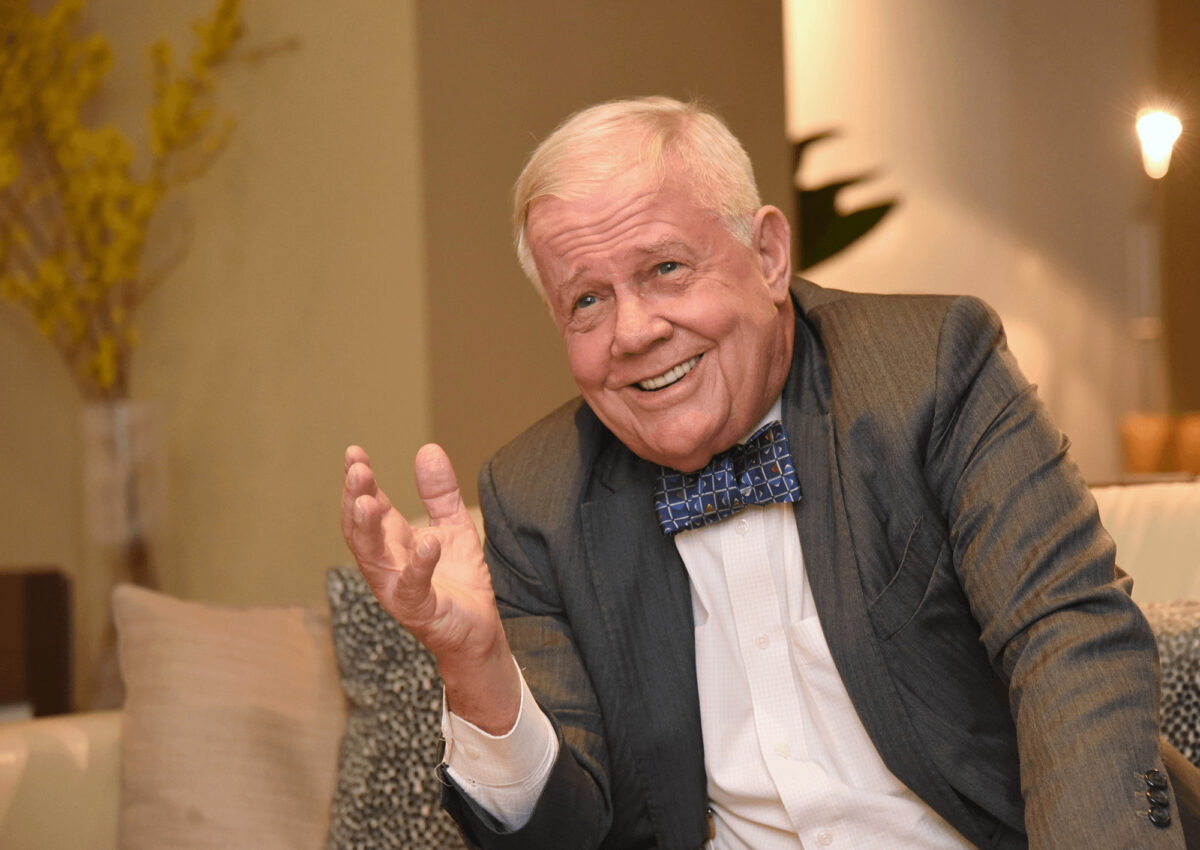
Need a serious fall in Indian markets before I start buying: Jim Rogers

It has been a volatile few weeks for global financial markets as they braced for tougher tariffs from the US president Donald Trump. JIM ROGERS, chairman of Rogers Holdings, tells Puneet Wadhwain a video interview that he has sold out from nearly every stock market across the globe. If the markets were to correct more in India and investors were depressed, worried and despondent, he would then probably buy Indian stocks. Edited excerpts: 

How do you evaluate Donald Trump’s presidency thus far and its impact on the global financial markets? Do you expect him to follow through on his tariff threats, or are they just a scare tactic?

The situation with Mr. Trump is difficult to evaluate because he himself does not know what he wants. He changes his opinions every day and every week. We know what he has said and done in the past, so we have some idea of what he can/cannot do.  

My evaluation of Donald Trump is that he will do whatever he thinks is good for that day, or that week. Some of the things that he says and does are good for the US, while some are not. He said he will remove some of the restrictions and regulations, which I hope he will. He will also open up trade, and restrict it with people he does not like. 

I think that the world and the US will have a complicated future because Mr. Trump does not know what he wants. Donald Trump’s views are always changing, and that’s complicated.

So in essence, you think he is good for the US and bad for the global financial markets? 

Donald Trump was elected after a long period of bad (stock) market in the US. Now, the markets are relatively better as there has been a change of guard. It has been the longest period in American history without a problem. I think we will have a lot of problems soon. It does not matter who causes these problems – whether it is Donald Trump or someone else. That said, Washington seems to be open to places like India as they see a lot of change happening there. If I am right, these changes will be good for India and the US both. 

How do you see global markets shaping up in the next one year? What’s your view on India? 

I have already sold all my American shares, but I have not started selling short there yet. That’s because things are not crazy there as yet for me to go short on the US markets. The whole world, including the US, is overdue for problems. That’s because nearly all stock markets around the globe have done well recently.  

For instance, look at India. I had invested in India many times in my life. However, this is the first time in my life that I believe the central dispensation (government) in New Delhi understands the Indian economy, and what all needs to be done. I am more optimistic about India than before. For the first time in my life, I am actually enthusiastic about India. 

Which other equity markets across the globe appear attractive to you? Where all have you been investing? 

I do not like to buy markets that are making all-time highs. As a rule, if the markets are correcting and investor are not worried, I do not buy. So, if the markets were to correct in India and investors are depressed, worried and despondent, I would probably buy Indian stocks. I have sold out from nearly every stock market in the world, except China and Uzbekistan. I sold Japanese shares too soon, but that was my strategy. I own Chinese shares mainly because they have not seen a vibrant recovery post the Covid pandemic. They are trying to change and make things better.

Why are you not buying India after the sharp correction seen in the last few months? 

I am not buying Indian stocks now. The Indian stock markets are overreacting to global developments, especially related to Donald Trump. That said, if the Indian markets go down more from here on, I hope I can buy stocks there again. I need for the Indian stock markets to go down more before I start buying.  

The Indian stock markets made all-time highs in 2024. I now need to see a serious decline and despair in the Indian markets before I start buying. When people get despondent and desperate about Indian markets is when I would like to buy stocks there again.

Do you see more upside in gold prices? What about crude oil? 

I own gold, but not adding to my position right now. That said, I am interested in silver and will buy more this week. I also own crude oil, but not adding more of it to my portfolio just yet.

Eqwires Research Analyst

Top-notch SEBI registered research analyst

Best SEBI registered Intraday tips provider

info@eqwires.com

Telegram Facebook Instagram

Call: +91 9624421555 / +91 9624461555
www.eqwires.com

Markets stage comeback: NIFTY50 and SENSEX recoup morning losses; Midcap 100 jumps 1200 points from lows

Domestic equity indices staged a sharp recovery during the mid-market session as the key benchmark and broader indices recouped major losses. The broader indices, like NIFTY midcap 100 and small-cap 100, jumped 500 points from the intraday lows of 15490.

Meanwhile, broader indices were also trading in red with the BSE Midcap index and Small-cap index falling in the range of 0.70-0.85%.

Market participants were cautious as U.S. Treasury yields rose after testimony from Federal Reserve Chair Jerome Powell raised some doubt about the path toward lower rates. Rising crude oil prices also weighed on domestic sentiments. Crude oil prices rose amid concerns over Russian and Iranian oil supply and sanctions threats despite worries that escalating trade tariffs could dampen global economic growth.

On the global front, Asian markets traded mostly in green as investors digested U.S. President Donald Trump’s tariff impact on regional economies. Back home, in the stock-specific development, Indo Count Industries surged after the company reported a healthy set of numbers for the December 2024 (Q3FY25) quarter.

The SENSEX recouped major losses to trade at 75121, down by 121 points or 0.22% after trading in a range of 75388.39 and 76409.27. The index had 10 stocks advancing and 20 stocks declining.

The NIFTY50 traded at 23,039.55, down by 19 points or 0.14% after trading in a range of 22798.35 and 23097.95. The index had 18 advancing stocks and 32 declining stocks.

The top gainers on Nifty were SBI Life up by 3.01%, HDFC Life Insurance up by 2.21%, Apollo Hospital up by 1.88%, Tata Consumer up by 1.44% and Trent up by 0.96%. On the flip side, Indusind Bank down by 2.39%, Bharat Electronics down by 2.28%, Hero MotoCorp down by 2.19%, ITC down by 2.10% and Reliance Industries down by 2.01% were the top losers.

Asian markets were trading mostly in green; Hang Seng advanced 325 points or 1.53% to 21,619.86, Jakarta Composite gained 42.82 points or 0.65% to 6,574.81, Shanghai Composite strengthened 0.96 points or 0.03% to 3,319.02, KOSPI increased 7.62 points or 0.3% to 2,546.67 and Nikkei 225 surged 104.46 points or 0.27% to 38,905.63. However, Straits Times fell 2.08 points or 0.05% to 3,858.68 and Taiwan Weighted lost 43.65 points or 0.19% to 23,340.40.

Eqwires Research Analyst

Top-notch SEBI registered research analyst

Best SEBI registered Intraday tips provider

info@eqwires.com

Telegram Facebook Instagram

Call: +91 9624421555 / +91 9624461555
www.eqwires.com

RBI cuts repo rate: SBI Chairman reveals when banks may reduce deposit rates

The Reserve Bank of India (RBI) cut the policy repo rate by 25 basis points last week and set it to 6.25 per cent from its current level of 6.5 per cent. People are now eagerly waiting to see how the banks will react with changes in lending and deposit rates.

State Bank of India Chairman CS Setty has confirmed that the bank will revise its lending rates linked to the external benchmark lending rate or EBLR this month itself. Speaking to Business Standard, Setty said, “We will have an ALCO (asset-liability committee) meeting this week, and from this month itself, the new rates will be effective.”

Will banks cut deposit rates soon?

Setty also said that probably most banks are not going to reduce deposit rates at this juncture. Credit demand in the current quarter remains strong, he said.

“They may wait for this quarter to be over. This is a busy period with good credit growth, and banks need deposits to support lending. A few banks may make a move, but most will likely wait until the next quarter before deciding on deposit rate cuts,” he said.

RBI’s rate cut and its impact

February 7 Sanjay Malhotra, the new RBI Governor, indicated a repo rate cut, and it kept the Standing Deposit Facility (SDF), the Marginal Standing Facility (MSF), and bank rates standing at 6.5 per cent.

Deputy RBI Governor M Rajeshwar Rao said the deposit rates will take at least two quarters to reflect the rate adjustments. RBI Governor Malhotra also clarified that in the NCLR system, the change in deposit rate will be a gradual process. Long-term fixed deposits of five years or more will not experience an immediate revision.

As banks evaluate liquidity and credit growth, severe cuts in deposit rates would probably also be very much dependent upon the economic conditions during the next quarter.

Eqwires Research Analyst

Top-notch SEBI registered research analyst

Best SEBI registered Intraday tips provider

info@eqwires.com

Telegram Facebook Instagram

Call: +91 9624421555 / +91 9624461555

www.eqwires.com