
Markets may remain range bound this year: Kotak Institutional Equities

Kotak Institutional Equities is of the view that the markets are likely to remain range bound this year, as they continue to trade above historical averages and at a significant premium to the MSCI Emerging Markets (EM) index. 

Pratik Gupta, chief executive officer (CEO) and co-head of institutional equity at Kotak Securities, noted that the Nifty is currently trading at a price-to-earnings (PE) multiple of 19 times based on March 2026 earnings estimates. 

This valuation appears elevated, considering earnings are expected to compound at 14 per cent in FY26 and FY27, with potential downside risks to these estimates.

“Given this, we do not foresee a meaningful upside for the Nifty in the short term,” said Gupta, who shared insights from Kotak’s recent investor conference. 

However, the downside for the Nifty is cushioned by India’s robust medium-term growth prospects, which are expected to sustain elevated valuations.

Additionally, a more favourable foreign and domestic liquidity environment in the second half of 2026 could provide further support. 

Kotak Institutional Equities remains cautious about the outlook for small and midcap stocks, as their valuations have not moderated significantly despite recent market corrections. 

The brokerage highlighted key downside risks for the broader market, including a sharper-than-expected global slowdown, a deficient monsoon, or a sharp decline in retail inflows into domestic equities — particularly small and midcap funds. 

On the upside, potential catalysts include a weaker US dollar, which could drive flows into EM funds, and a faster-than-expected private capital expenditure (capex) upcycle. 

Based on feedback from foreign portfolio investors (FPIs), Gupta said Indian equity markets appear somewhat expensive. 

Nevertheless, from a three-to-five year perspective, most foreign investors remain optimistic about India’s medium-term growth outlook. 

FPIs are looking to increase their exposure to Indian stocks once valuations become more attractive. 

However, many EM funds are currently facing redemptions. 

“Capital is flowing back to the US, partly due to a strong dollar and Trump’s policies. Even if India is attractive, FPIs currently lack the funds to invest, as money is being redirected to the US,” Gupta said.

He also pointed out that the capital gains tax has further dampened the appeal of Indian equities for FPIs. 

“Over the past two years, most FPIs achieved around 20 per cent returns in rupee terms, with the rupee remaining relatively stable. After accounting for a 10 per cent long-term capital gains tax (for holdings over a year), returns were still attractive compared to US bond yields.  

However, with bond yields rising, return expectations from India declining, the rupee depreciating by 3-4 per cent, and higher capital gains taxes, FPIs are now left with 6.5-7.5 per cent dollar returns after deductions, taxes, surcharges, and fund manager fees. This is relatively low for an emerging market like India,” Gupta added.

On the domestic front, Gupta noted that while equity inflows into local mutual funds, insurance, and portfolio management services (PMS) have slowed, overall net inflows remain positive. 

“However, the nature of these flows has shifted. Previously, investments were directed towards small and midcap or thematic funds. But now, they are increasingly favouring largecap or balanced debt-equity funds,” he said. 

In terms of sectoral preferences, Kotak Institutional Equities continues to favour large private banks, non-banking financial companies (NBFCs), life insurance firms, residential real estate, hotels, and the airlines/hospitality sectors. 

Conversely, the brokerage remains cautious on consumer staples, discretionary stocks, and the oil & gas and chemicals sectors.

Eqwires Research Analyst

Top-notch SEBI registered research analyst

Best SEBI registered Intraday tips provider

info@eqwires.com

Telegram Facebook Instagram

Call: +91 9624421555 / +91 9624461555
www.eqwires.com

Adani Power share jumps 10% on heavy volume; other Group stocks rise too

Adani Power share price marched ahead in stock market trade on Tuesday, February 25, after the company’s resolution plan for the acquisition of Vidarbha Industries was approved by the Committee of Creditors. 

Adani Power share zoomed 9.5 per cent to Rs 514.75 per share on the BSE in intraday trade today as against a 0.3 per cent gain in the benchmark Sensex index at 1:30 PM. 

The rally in Adani Power share was backed by heavy volumes on the counter. Till the time of writing this report, 1.38 million shares had changed hands on the counter on the BSE. Combined with the volume on the NSE, a total of 15.34 million shares had changed hands on the Adani Power counter.

By comparison, the counter had a two-week average volume of 0.51 million on the BSE. 

According to Adani Power, the Committee of Creditors of Vidarbha Industries Power Limited has approved the Resolution Plan submitted by Adani Power Limited.

“In this regard, Adani Power Ltd has received a Letter of Intent from the Resolution Professional on February 24, 2025,” it said in a stock exchange filing. 

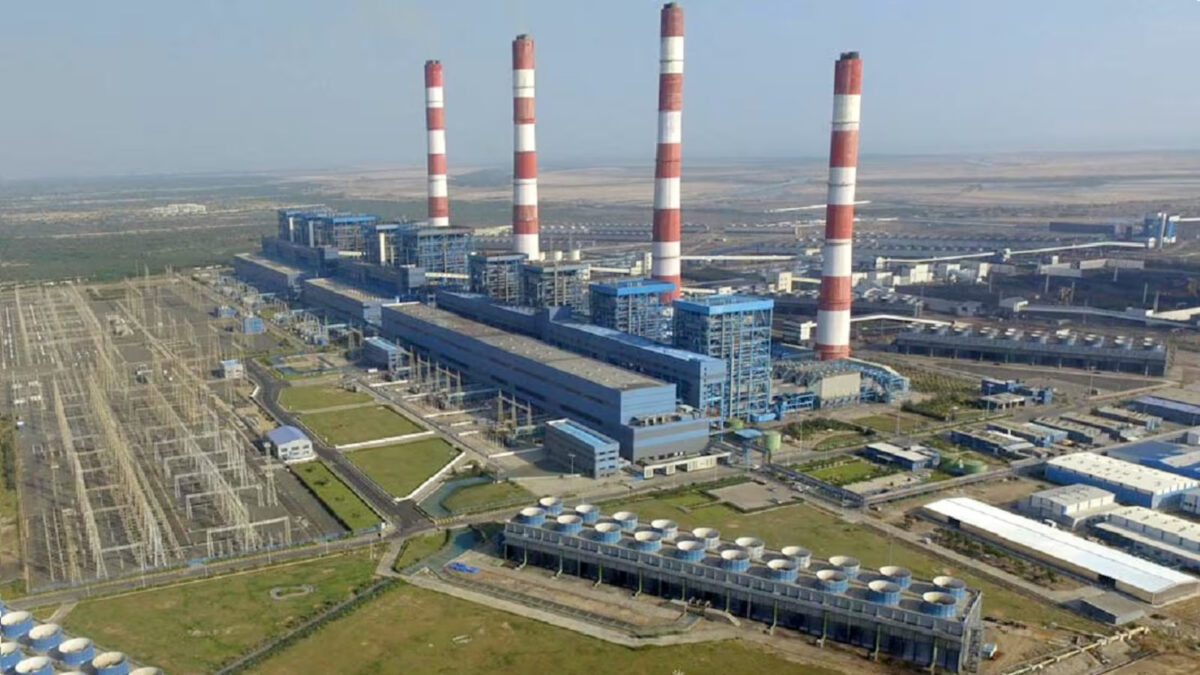
Vidarbha Industries is undergoing an insolvency process, as per the Insolvency and Bankruptcy Code, 2016. It owns and operates a 2×300 megawatt (Mw) thermal power plant located in MIDC Industrial Area, Butibori, Nagpur, Maharashtra.

Last year, Adani Power acquired Dahanu Power Ltd for Rs 815 crore, Lanco Amarkantak Power Limited (LAPL) for Rs 4,101 crore, and Coastal Energen for Rs 3,330.88 crore. 

Adani Power has acquired these companies to consolidate the thermal power generation capacities of Adani portfolio companies in order to expand the synergistic benefits.

Adani Group Announces Investments in MP, Assam

Meanwhile, Gautam Adani, founder and chairman of the Adani group, committed investments worth Rs 1.1 trillion in Madhya Pradesh, during the Invest Madhya Pradesh–Global Investors Summit (MPGIS) 2025.

The investments will be made across sectors, including pump storage, cement, mining, smart meters, and thermal energy. 

On Tuesday, Gautam Adani committed another Rs 50,000-crore worth of investments in Assam under Advantage Assam 2.0 Investment and Infrastructure Summit. 

The Chairman said that investments in Assam would be done in multiple sectors, including airports, aero-cities, city gas distribution, transmissions, cement, and road projects.

On the bourses, Adani Enterprises share price advanced 2 per cent, Adani Total Gas share price 3.2 per cent, Adani Green Energy share price 3.7 per cent, and Adani Ports and SEZ share price 1.7 per cent in the intraday trade.

Eqwires Research Analyst

Top-notch SEBI registered research analyst

Best SEBI registered Intraday tips provider

info@eqwires.com

Telegram Facebook Instagram

Call: +91 9624421555 / +91 9624461555
www.eqwires.com

Zara shuts flagship South Mumbai store, new tenant Purple Style Labs to pay rent of ₹10 lakh a day

Zara has shut its only independent store in the 118-year-old heritage Ismail building at Flora Fountain, South Mumbai. Luxury fashion brand Purple Style Labs has now leased 60,000 sq ft of retail space in the same iconic building for an annual rent of ₹36 crore, securing a five-year lease, as per property registration documents obtained by Propstack.com.

According to property registration documents, the new tenant has taken the space on a five-year lease. The rent for five years works out to be ₹206 crore. ₹10 lakh is the daily rent, as per documents.

Purple Style Labs, founded by Abhishek Agarwal in 2015, retails high-end designer brands under Pernia’s Pop-Up Shop brand.

The firm acquired Pernia’s Pop-Up Shop in 2018. It incubates young designer brands and helps them with sales, marketing, and technical support. According to the company’s website, it sells products of renowned labels such as Tarun Tahiliani, Falguni Shane Peacock, Amit Aggarwal, Gaurav Gupta, Seema Gujral, Abhinav Mishra, Shyamal & Bhumika.

In 2020, the company acquired Wendell Rodricks’s brand after the Goa-based designer suddenly passed away at 59.

According to Purple Style Labs’ official website, it currently has stores in several areas of Mumbai, such as Kemps Corner, Juhu, and Bandra.

PSL Retail Private Limited leases 60,000 sq ft of retail space

Purple Style Labs, a luxury fashion chain, has taken 59,350 sq ft of retail space on lease in the Ismail Building for five years. The monthly rent for the store is ₹3 crore, which translates to ₹36 crore annual rent for the first year.

The annual rent for the second year goes up to ₹39 crore, for the third year to ₹42 crore, for the fourth year to ₹43.8 crore, and for the fifth year to ₹45.6 crore, the documents show.

The deposit for the transaction is ₹18 crore, as shown in the documents.

The transaction was registered on December 23, 2025, for which a stamp duty of over ₹53 lakh and registration fees of ₹1,000 were paid.

Zara exits from South Mumbai

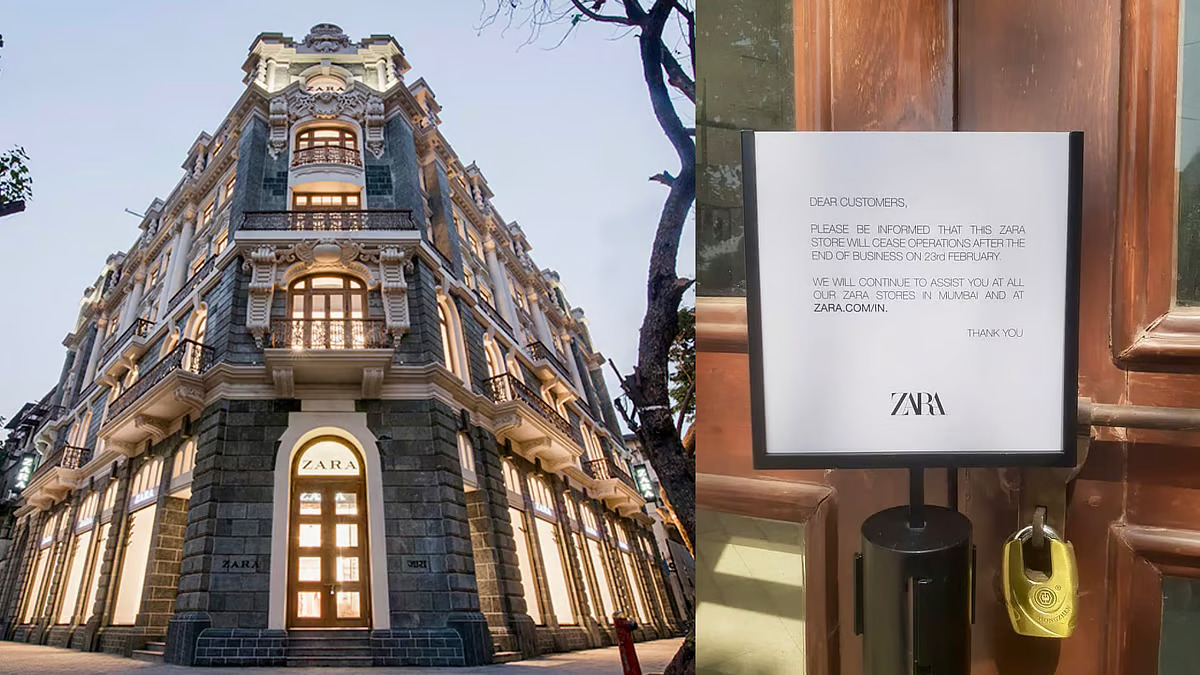
Spanish retail brand Zara closed its flagship store in South Mumbai’s Fort area after nine years. The 51,300 sq ft store was located in the Edwardian neoclassical Ismail Building at Flora Fountain.

“Please be informed that this Zara store will cease operations after the end of business on February 23. We will continue to assist you at all our Zara stores in Mumbai,” read a notice outside the Zara store in South Mumbai.

Zara registered the lease for the South Mumbai store in the Ismail Building on April 1, 2016, for a tenure of 21 years. However, property registration documents show that the company decided to close the store after nine years.

The documents showed that Zara paid ₹2.25 crore as rent when it took up the space in 2016 and a deposit of ₹13.5 crore for the 47,565 sq ft space that it leased.

It should be noted that Zara is owned by Inditex SA, a global fashion retailer that has been operating in India since 2010 through a 65:35 joint venture with the Tata Group Trent. It is known as Inditex Trent Retail India. It retails two brands, Zara and Massimo Dutti, in India.

According to Zara’s official website, the company continues to have Zara stores in several other locations in Mumbai. These include the store at Palladium Mall in Lower Parel, Phoenix Market City in Kurla, Oberoi Mall in Goregaon, Infinity 2 Mall in Malad, and Viviana Mall in Thane.

Why did Zara exit South Mumbai?

According to retail experts, a store’s success is not solely determined by its location; financial viability and foot traffic play a significant role.

“Nine years is a reasonable period to assess whether the store is financially sustainable in South Mumbai or if the company can rely on its Palladium Mall location,” a retail head from an international property consultancy told HT.com.

“The South Mumbai demographic that can afford Zara has largely shifted to Central Mumbai, particularly in Worli and Lower Parel, where they are likely shopping at Palladium Mall. As a result, South Mumbai has become just another address, while Palladium Mall offers the advantage of higher foot traffic,” the expert added.

Meanwhile, Arif Fazlani, managing director of the Fazlani Group, which owns the historical building, confirmed Zara’s exit from the Fort area. “Zara will hand over the premises by the end of this month, and starting March 1, there will be a new tenant,” he told Hindustan Times on February 24.

An email query has been sent to Purple Style Labs, but there has been no response. If a response is received, the story will be updated. Zara could not be reached for comment.

Eqwires Research Analyst

Top-notch SEBI registered research analyst

Best SEBI registered Intraday tips provider

info@eqwires.com

Telegram Facebook Instagram

Call: +91 9624421555 / +91 9624461555
www.eqwires.com

Tata Capital IPO: Tata Investment Corporation surges 10%; key things you need to know

Tata Capital IPO: Shares of Tata Investment Corporation (TICL) surged as much as 10.3% to ₹6,343.80 apiece on the BSE on Tuesday, February 25, as Tata Capital, in its regulatory filing available on the BSE, said that the company’s board has given a go-ahead for its initial public offering (IPO).

Tata Capital said that the board of directors of the company has approved the initial public offering (IPO) of the equity shares of face value of ₹10 each comprising the following:

  • a fresh issue of up to 23,00,00,000 (twenty three crore) equity shares; and
  • an offer for sale (OFS) of equity shares by certain existing and eligible shareholders of the company, subject to market conditions, receipt of applicable approvals, regulatory clearances, and other relevant considerations.

Besides IPO approval, the company’s board also gave its nod for the issuance of equity shares of the face value of ₹10 each of the company for an aggregate amount not exceeding ₹1,504 crore on a rights basis to the existing equity shareholders of the company as of the record date, i.e., February 25, 2025.

Tata Investment Corporation (TICL) is one of the largest shareholders of Tata Sons, the holding company for Tata Capital.

In December, the reports of the Tata Capital IPO first surfaced.

According to a report by Moneycontrol in December, Tata Group has initiated work on the IPO of the group’s flagship financial services arm, Tata Capital.

As regards the Tata Capital IPO, the report said, “Work has begun on the proposed initial public offering. This is to comply with RBI’s norms for ‘upper layer’ NBFCs. No final call has been taken on the quantum, but the deal is expected to be a big-bang one over ₹15,000 crore.”

Based on this, Tata Capital’s IPO would exceed the $1.5 billion that LG Electronics Inc.’s Indian unit has been said to be seeking for going public, possibly making Tata Capital the country’s biggest such deal this year, Bloomberg reports.

In October 2024, the Reserve Bank of India (RBI) approved the merger of Tata Capital, an unlisted entity, with Tata Motors Finance (TMFL), paving the way for the formation of India’s 12th largest non-banking finance company.

The RBI sent its “no-objection” to both companies earlier in October, according to the companies’ regulatory filings.

“The RBI’s approval is crucial for the company, which is expected to list its shares by September next year, following an earlier mandate from the regulator that requires all non-banking financial companies classified as upper layer to list their shares by September 2025,” said a Business Standard report dated October 14, 2024.

About Tata Capital

Tata Capital is the flagship financial services company of the Tata Group. It is a subsidiary of Tata Sons and is carrying on business as a non-banking financial company.

Tata Capital and its subsidiaries are engaged in providing/supplying a wide array of services/products in the financial services sector and operate across various areas of business: Commercial Finance, Consumer Loans, Wealth Services, and the distribution and marketing of Tata Cards.

Recent IPOs from Tata Group

Tata Technologies, an arm of Tata Motors, made a terrific debut in the secondary market in 2023. The stock was listed on the stock exchanges on November 30, 2023, with a massive premium of 140% against the issue price of ₹500.

The public issue had a price band of ₹475-₹500 per share. Tata Technologies’ public issue was entirely an offer for sale (OFS) of 6.08 crore equity shares.

The public issue was overall subscribed 69.43 times.

Tata Technologies was the first company from the Tata Group to float an initial public offer (IPO) in nearly two decades, as Tata Consultancy Services (TCS) was the last IPO from the conglomerate in 2004.

Tata Investment Corporation share price trend

Shares of Tata Investment Corporation have fallen over 12% in the past 12 months; however, in the past five years, the stock price has zoomed 580%. 

Tata Investment Corporation has been rated by CRISIL since 1994 and has been assigned their highest rating of ‘AAA’ (pronounced triple A), representing the highest safety in payment of interest and principal amount, whose rating has been reaffirmed from year to year and is valid to date.

TICL acquired a 95.57% stake in Simto Investment Co. Ltd. (Simto) on August 31, 2012, following which Simto became a subsidiary of TICL, per the company’s website.

Eqwires Research Analyst

Top-notch SEBI registered research analyst

Best SEBI registered Intraday tips provider

info@eqwires.com

Telegram Facebook Instagram

Call: +91 9624421555 / +91 9624461555
www.eqwires.com

SBI Life to declare interim dividend soon, sets record date for next month

SBI Life, on Monday, said that the board of directors will consider payment of interim dividend on equity shares for the financial year 2024-25 on Friday, February 28.

“We wish to inform you that, a meeting of Board of Directors of the Company is scheduled to be held on Friday, February 28, 2025, to consider and declare payment of Interim Dividend on equity shares of the Company for the Financial Year 2024-25,” the company said in an exchange filing.

SBI Life further said that it has set March 7 as the record date for determining the shareholders for the payment of interim dividend for FY 2024-25.

“The record date for determining the shareholders for the payment of Interim Dividend for FY 2024-25, if any, declared by the Board of Directors of the Company shall be Friday, March 07, 2025,” it added.

The trading window of the shares will remain closed from Monday, February 24, 2025, to Sunday, March 02, 2025, (both days inclusive) for all designated persons of the company and their immediate relatives.

SBI Life share price was trading in red in Monday’s trading session. The stock fell over a per cent to ₹1,483.85, against the previous close at ₹1,490 on Friday.

SBI Life Insurance Q3 results

On Friday, January 17, SBI Life Insurance Company announced its financial results for the December quarter of FY 2024-25 (Q3FY25). The company reported a net profit of ₹550.82 crore, marking a significant 71.2 per cent increase from ₹321.75 crore in the corresponding quarter last year. On a sequential basis, the profit saw a modest 4 per cent rise from ₹529.42 crore in the September quarter.

The company’s net premium income for Q3FY25 amounted to ₹24,828 crore, marking an 11 per cent increase from ₹22,316 crore in the same quarter of the previous fiscal year. Sequentially, it grew by 22 per cent from ₹20,266 crore recorded in Q2FY25.

For the nine months ending December 31, 2024, the company’s New Business Premium (NBP) saw a slight 1% increase, reaching ₹26,260 crore compared to ₹26,000 crore in the same period last year. Meanwhile, renewal premiums experienced a strong year-on-year growth of 15%, rising to ₹34,730 crore from ₹30,190 crore in 9MFY24.

Eqwires Research Analyst

Top-notch SEBI registered research analyst

Best SEBI registered Intraday tips provider

info@eqwires.com

Telegram Facebook Instagram

Call: +91 9624421555 / +91 9624461555

www.eqwires.com