
Peak panic on the Nifty is still to come, warns Nuvama – Shares top bets

The Nifty 50 index, after enjoying a record 55-month bull run without a 5% correction, has now fallen for five consecutive months—a first in 29 years. If one looks at the breadth of the correction, it is the worst post-covid.

Surprisingly, all this occurred amid low volatility, indicating that peak panic may still be ahead, said brokerage firm Nuvama Institutional Equities in its research note.

relentless fall since September without a global risk-off is unprecedented. The correction is largely driven by India’s weak earnings amid high valuations.

The index has dropped 15% from its recent peak due to poor earnings and persistent foreign institutional investor (FII) selling. However, with India’s valuation premium to emerging markets (EM) now at its 10-year average, Nuvama believes the India-specific de-rating may be over.

“We think the correction is owing to India’s earnings reconciling with not just weak top-line growth, but also its EM peers. High valuation only added to the misery,” it said.

While the Reserve Bank of India’s easing measures may provide short-term relief, global uncertainties—such as a US growth slowdown and political risks—pose further downside threats.

When do markets bottom?

Historically, equity markets bottom out when earnings recover or when central banks implement deep rate cuts. However, global bond yields remain elevated, limiting the impact of monetary easing so far.

Nuvama suggested that the earnings yield minus bond yield remains a reliable indicator for market turnarounds, which has yet to signal a reversal.

Given rising global uncertainties, the brokerage continues to maintain a defensive bias and prefer large caps over small and mid-cap stocks.

Nuvama has downgraded IT to ‘Underweight’ from its earlier rating of ‘Neutral’, considering high relative valuations and a weakening US outlook. It has raised ‘Overweight’ stance on consumer, given increased policy focus.

Nuvama is ‘Overweight’ on consumer, private banks, insurance, telecom, pharma, cement and chemicals. Its has an ‘Underweight’ stance on industrials, metals, power, IT, autos and PSUs.

Key risks, as per the brokerage, include large easing by Fed or sharp rupee depreciation.

Eqwires Research Analyst

Top-notch SEBI registered research analyst

Best SEBI registered Intraday tips provider

info@eqwires.com

Telegram Facebook Instagram

Call: +91 9624421555 / +91 9624461555
www.eqwires.com

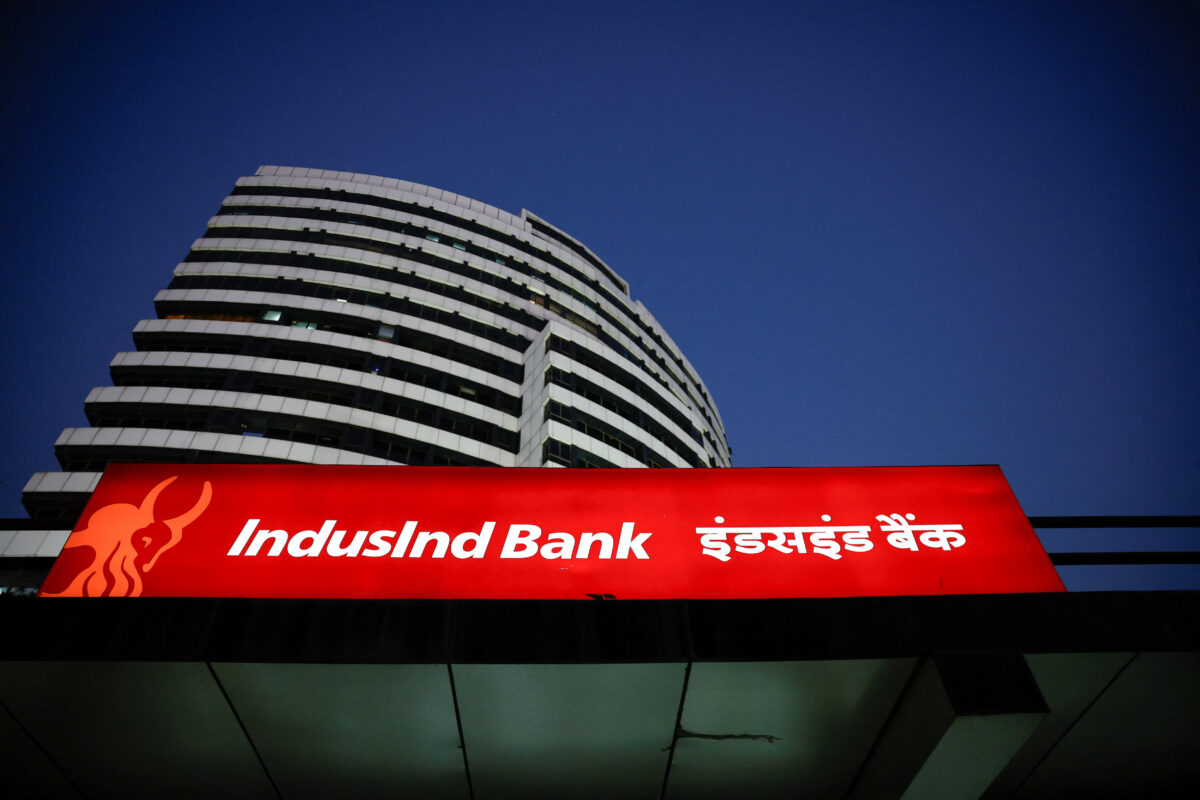
IndusInd Bank shares tumble 5% after RBI move; what RBL, Bandhan, Federal Bank history suggests

IndusInd Bank Ltd saw its shares tumbling 5 per cent in Monday’s trade after a cloud of uncertainty emerged over the leadership following the RBI’s decision to extend the prevailing CEO’s term to one year against three years that was sought by the private lender. Despite reports suggesting that Nippon Life is considering buying stake in IndusInd Bank, stock analysts said the likelihood of it is low.

Following the two developments, the stock fell 5.38 per cent to hit a low Rs 886.40 on BSE. With this, the banking stock is down 17 per cent in the past one month.

Analysts now largely believe that a leadership transition is in place and believes Deputy CEO & CFO Arun Khurana could be the front-runner for the CEO post. In the previous examples of Bandhan Bank and Federal Bank, where the extensions to CEOs were given for a shorter periods, the stocks had fallen in the run up to the announcements.

IIFL Securities noted that MD & CEO Sumant Kathpalia has been granted only a one-year extension. His previous re-appointment in March 2023 was also for a reduced tenure of 2 years instead of the 3 years requested by the bank.

“We believe one-year extension is to give enough time to the board to find a replacement, and should create leadership uncertainty in the interim. In similar instances at other banks previously – RBL (1 years extension against 3 yrs requested), Bandhan (3 years vs 5 years) and Federal (not approving last 1 yr extension) – there was a negative price stock reaction in the run up to the announcement s(1-14 per cent), but the stock prices recovered from their lows in the coming months,” IIFL Securities said.

The brokerage said weak profitability even in FY26, coupled with the leadership uncertainty should keep the stock price under pressure. It keep its estimates unchanged but cut target price to Rs 91.

“In our view, over 30 per cent correction in the stock price in the past six months presents an opportunity to buy into a franchise available at a sharp discount of 0.85x FY27E P/BV, as the most negative outcome will mostly be priced in. Even as we expect no near-term positive triggers, valuation juxtaposed to franchise value suggests a favorable risk-reward in the long term. Thus, we revise to Accumulate from Buy with a reduced target of Rs 1,050 from Rs 1,320,” said Elara Securities.

Jefferies has retained its ‘Buy’ rating, but cut its target to Rs 1,080 from Rs 1,200 earlier. UBS has downgrade the stock to ‘Sell and suggested a target price of Rs 850. Citi maintained its ‘Buy’ and suggested a target of Rs 1,378. Goldman Sachs is Neutral with a target of Rs 964. For Macquarie, the ‘Outperform’ call stayed. It has a target of Rs 1,210 per share on IndusInd Bank. BofA Securities has cut its target to Rs 850 and suggested ‘Underperform’.

“We expect the stock to be under pressure, despite the sharp correction, given low visibility, expectations of a soft Q4FY25E and uncertainty on top management. The CFO had also resigned recently,” Nuvama said.

MOFSL has cut its FY26 and FY27 earnings estimates by 9 per cent and 10 per cent and estimated IndusInd Bank to deliver return on asset (RoA) of 1.3 per cent in FY26 and 1.4 per cent in FY27.

“We believe that at the current valuations IIB is already pricing in most of these uncertainties, and notwithstanding near-term negativity, we find the current valuations inexpensive, particularly as operating performance starts to recover in FY26. Maintain Buy with a revised target of Rs 1,100,” MOFSL said.

Eqwires Research Analyst

Top-notch SEBI registered research analyst

Best SEBI registered Intraday tips provider

info@eqwires.com

Telegram Facebook Instagram

Call: +91 9624421555 / +91 9624461555

www.eqwires.com

Crude oil gains as Russia’s Novak hints at OPEC+ output reversal

Crude oil prices rose by 1.28% to settle at ₹5,858, supported by comments from Russia’s Deputy Prime Minister Alexander Novak, who hinted that OPEC+ might reconsider its output increase after April. This statement fueled optimism in the market, despite a 5% decline in China’s crude oil imports in the first two months of 2025. The drop in imports was attributed to stricter U.S. sanctions on Russian and Iranian oil shipments and port restrictions in China, impacting the world’s top importer. In the U.S., crude oil inventories showed mixed trends. 

The American Petroleum Institute (API) reported a drawdown of 1.455 million barrels for the week ending February 28, marking the second consecutive week of declines. However, the Energy Information Administration (EIA) reported a larger-than-expected inventory build of 3.614 million barrels, driven by a 1.124 million barrel increase at the Cushing, Oklahoma hub. Gasoline and distillate stockpiles, however, saw notable declines, with gasoline stocks falling by 1.433 million barrels and distillates dropping by 1.318 million barrels. On the production front, the EIA revised its outlook for U.S. crude oil output, projecting an average of 13.59 million barrels per day in 2025, slightly higher than previous estimates. 

Technically, the market is witnessing short covering as open interest fell by 20.45% to 5,486 contracts. Support is at ₹5,780, with a possible test of ₹5,701, while resistance is at ₹5,942, and a breakout could push prices towards ₹6,025.

Eqwires Research Analyst

Top-notch SEBI registered research analyst

Best SEBI registered Intraday tips provider

info@eqwires.com

Telegram Facebook Instagram

Call: +91 9624421555 / +91 9624461555
www.eqwires.com

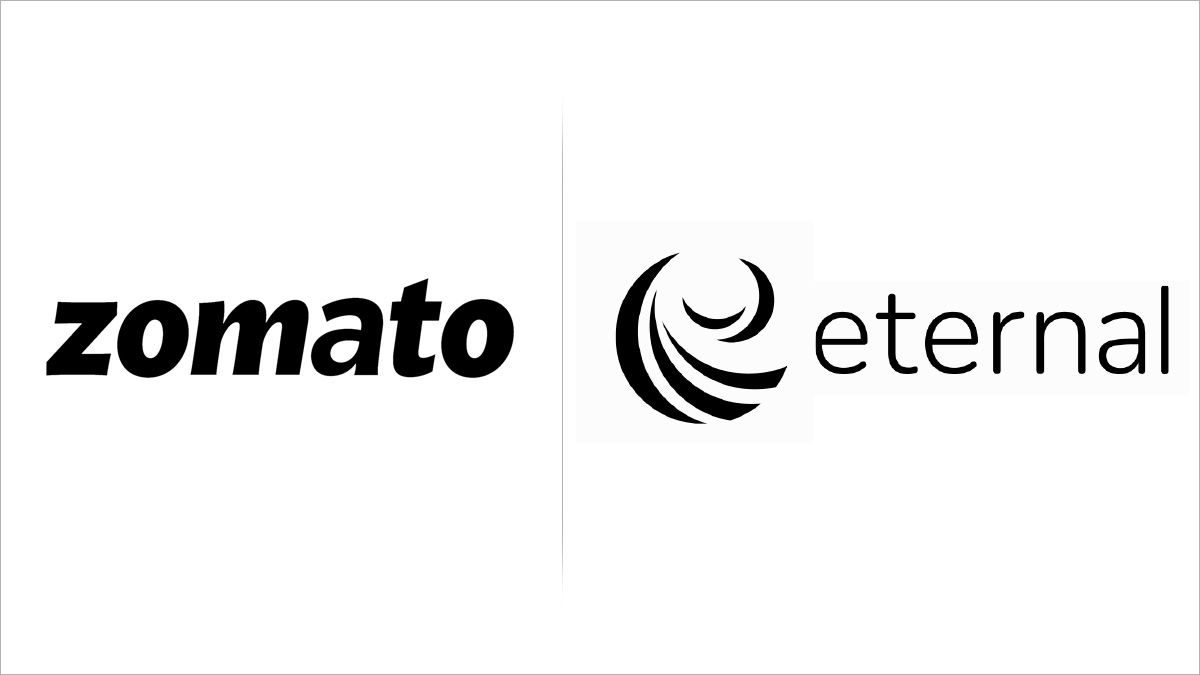
Zomato transforms into Eternal Ltd as it expands beyond food delivery

Zomato Ltd has officially received shareholder approval to change its corporate name to Eternal Ltd, marking a significant step in the company’s bid to diversify its quick commerce operations. The food-tech giant confirmed the decision in a filing with the stock exchanges. 

However, the change only applies to the corporate entity and not to the Zomato brand or app. The company reassured users that its food delivery service would continue under the same well-known name. 

Shareholders approve name change and document modifications

In addition to the name change, shareholders also approved amendments to Zomato’s Memorandum of Association (MoA) and Articles of Association (AoA). These legal documents will now reflect the new corporate identity.

The approval came through a postal ballot, as stated in the company’s official communication dated February 6 and February 7. The scrutiniser’s report detailing the voting outcome was published on March 9. 

A strategic shift for the company

This rebranding move also aligns with Zomato’s long-term vision as it expands beyond food delivery. Over the years, the company has diversified into various ventures, including Blinkit, Hyperpure, and District, reinforcing its broader tech-driven ambitions.

On February 6, Zomato’s board of directors approved the corporate name change, pending regulatory approvals. This marks a new phase of growth as the company strengthens its position across multiple sectors.

New corporate website and stock ticker

As part of this transition, Zomato will update its corporate website from zomato.com to eternal.com. Additionally, its stock ticker will change from ZOMATO to ETERNAL, aligning with the company’s evolving brand identity. 

CEO Deepinder Goyal explains the move

Zomato’s CEO, Deepinder Goyal, provided insights into the name change in a letter to shareholders. He revealed that after acquiring Blinkit, the company internally started using “Eternal” to distinguish between the corporate entity and the Blinkit brand. 

“The complete criteria for who qualifies for access will be determined at a later stage,” Goyal stated, emphasising that this strategic move reflects the company’s expanding ambitions.

What’s next for Zomato (now Eternal Ltd)?

The rebranding is expected to strengthen Zomato’s market presence and signal its commitment to long-term growth. With a focus on innovation and diversification, the company aims to maintain its leadership in the competitive food-tech and e-commerce ecosystem. 

While the name on legal documents changes, Zomato’s app, service, and brand identity remain unchanged, ensuring a seamless experience for users and partners. Zomato shares were down 1.18 per cent at Rs 214.25 apiece at 11:40 am on Monday, March 10. The stock has declined 22.01 per cent, so far, in calendar year 2025.

Eqwires Research Analyst

Top-notch SEBI registered research analyst

Best SEBI registered Intraday tips provider

info@eqwires.com

Telegram Facebook Instagram

Call: +91 9624421555 / +91 9624461555

www.eqwires.com

Gensol Engineering Falls 10% As CFO Resigns; Stock Down 73% In 9 Months: Key Reasons

Shares of Gensol Engineering continued their downward trajectory for the eighth consecutive session on Friday, March 7, as the stock plunged by 9.6%, hitting a low of Rs 303 on the BSE. The decline followed the company’s announcement that its Chief Financial Officer (CFO), Ankit Jain, had resigned to “pursue other opportunities.” In an exchange filing, Gensol Engineering confirmed that Jain’s resignation was effective as of March 6, 2025, and expressed its gratitude for his contributions during his tenure.

The company also announced the appointment of Jabirmahendi Mohammedraza Aga as the new CFO. Aga, who has been with the Gensol Group, brings significant experience in corporate finance, risk management, investor relations, and financial reporting, with a proven track record of enhancing profitability and shareholder value.

Jain cited personal reasons and his pursuit of other professional avenues as the reason for his resignation from the post of CFO.

The drop in Gensol Engineering’s share price continued a losing streak that has persisted over the past seven trading sessions. Just a day earlier, on Thursday, the stock had fallen by 10%, hitting its lower circuit limit at Rs 335.35. This slide in stock price came after the company’s credit ratings were downgraded by both ICRA and CARE Ratings.

ICRA downgraded the credit ratings on various loan facilities totaling Rs 2,050 crore, including a long-term fund-based term loan of Rs 925 crore and a fund-based cash credit facility of Rs 718.5 crore, both of which were downgraded from [ICRA]BBB- (Stable) to [ICRA]D. Additionally, long-term and short-term bank guarantee facilities worth Rs 406.5 crore and a sub-limit bank guarantee of Rs 51.3 crore were also downgraded to [ICRA]D.

Similarly, CARE Ratings downgraded the credit ratings for bank facilities totaling Rs 716 crore to CARE D, signaling default or high credit risk. The long-term bank facilities of Rs 639.7 crore were downgraded from CARE BB+ (Stable) to CARE D, while the long-term/short-term bank facilities of Rs 76.3 crore were downgraded from CARE BB+ (Stable)/CARE A4+ to CARE D.

Gensol Engineering’s shares have experienced a dramatic 73% decline over the past nine months, plunging from Rs 1,126 to Rs 303.

Eqwires Research Analyst

Top-notch SEBI registered research analyst

Best SEBI registered Intraday tips provider

info@eqwires.com

Telegram Facebook Instagram

Call: +91 9624421555 / +91 9624461555

www.eqwires.com