
Vodafone Idea in talks with Starlink, Amazon Kuiper for satcom partnership

Vodafone Idea (Vi) is in talks with major global satellite communication firms, including Elon Musk’s Starlink and Amazon Kuiper. These potential partnerships come as Vi accelerates its 5G deployment to curb subscriber losses to larger competitors, according to a report by The Economic Times. 

Vi’s Chief Technology Officer, Jagbir Singh, acknowledged recent alliances between Starlink and telecom giants Bharti Airtel and Reliance Jio. He confirmed that Vi is in talks with industry partners and will disclose updates at an appropriate time.   

Vi’s 5G rollout strategy  

Unlike its rivals, Vi is not aiming for an aggressive nationwide 5G expansion. Instead, it is prioritising key cities to strengthen its network and retain users. The report quoted Singh as saying that the company is focusing on strategic deployments rather than matching the rapid expansion efforts of Reliance Jio and Bharti Airtel.  

While Airtel and Jio have already completed their nationwide 5G rollouts, Vi’s relatively smaller 4G coverage has led to significant subscriber migration to these competitors. To attract customers, Vi has introduced competitive 5G pricing, starting at Rs 299, which undercuts Airtel’s Rs 379 plan and Jio’s Rs 349 offer.   

Future expansion plans  

Vi has committed Rs 50,000-55,000 crore in capital expenditure over the next three years to expand its network. Despite delays in securing bank funding, Singh assured that this would not impede infrastructure investments or vendor agreements, The Economic Times mentioned.

Following the Mumbai launch, Vi plans to extend its 5G services to Delhi, Bengaluru, Chandigarh, Patna, and Mysore by April. The subsequent phase will cover Maharashtra, Gujarat, Kerala, and Chennai.  

Currently, around 30-35 per cent of Vi’s urban user base owns 5G-enabled devices. While Singh refrained from providing precise adoption projections, he anticipates strong uptake, particularly in data-heavy urban markets.

Infrastructure expansion  

Vi aims to deploy 75,000 5G sites across 17 key regions within three years. Recent infrastructure upgrades include the modernisation of 10,000 towers with 900 MHz spectrum and the addition of 11,000 new towers in the past nine months.   

The company has allocated nearly half of its planned capital expenditure for 5G rollouts, while the rest will be used for 4G expansion. Singh noted that integrating 5G alongside 4G expansion in several locations has created cost efficiencies.  

Vi’s network is equipped to support large-scale 5G deployment, thanks to extensive core network upgrades. Operating on a Non-Standalone (NSA) 5G architecture, Vi aims to ensure seamless transitions between 4G and 5G networks.   

Monetisation challenges in 5G  

Globally, telecom operators have struggled to generate significant standalone revenue from 5G due to high infrastructure costs, price-sensitive consumers, and limited use cases.   

Singh acknowledged that most current data consumption is driven by video streaming and gaming. However, he believes that enterprise adoption of 5G services will increase over time, leading to the development of new revenue-generating applications.   

The company is currently conducting trials for Fixed Wireless Access (FWA) services, which have emerged as a key monetisation avenue for 5G globally. Competitors Jio and Airtel have already made significant investments in FWA, which generates higher average revenue per user (ARPU) compared to traditional mobile and broadband services. 

While Vi does not have a significant presence in fixed-line broadband like its competitors, Singh said that the company’s strategy would focus on mobile services and FWA opportunities wherever feasible, according to the news report. 

Access to advanced technology 

Despite its delayed 5G rollout, Vi sees an advantage in deploying more advanced and cost-effective network equipment. Singh said that technological improvements over the past two years have enabled Vi to adopt energy-efficient infrastructure integrated with AI-based network management, the report said. 

By utilising streamlined technologies, Vi aims to reduce operational inefficiencies and optimise costs. The company has also formed an AI task force to enhance efficiencies in both network management and corporate operations. This move underscores the company’s commitment to innovation, despite its ongoing financial struggles.  

Eqwires Research Analyst

Top-notch SEBI registered research analyst

Best SEBI registered Intraday tips provider

info@eqwires.com

Telegram Facebook Instagram

Call: +91 9624421555 / +91 9624461555
www.eqwires.com

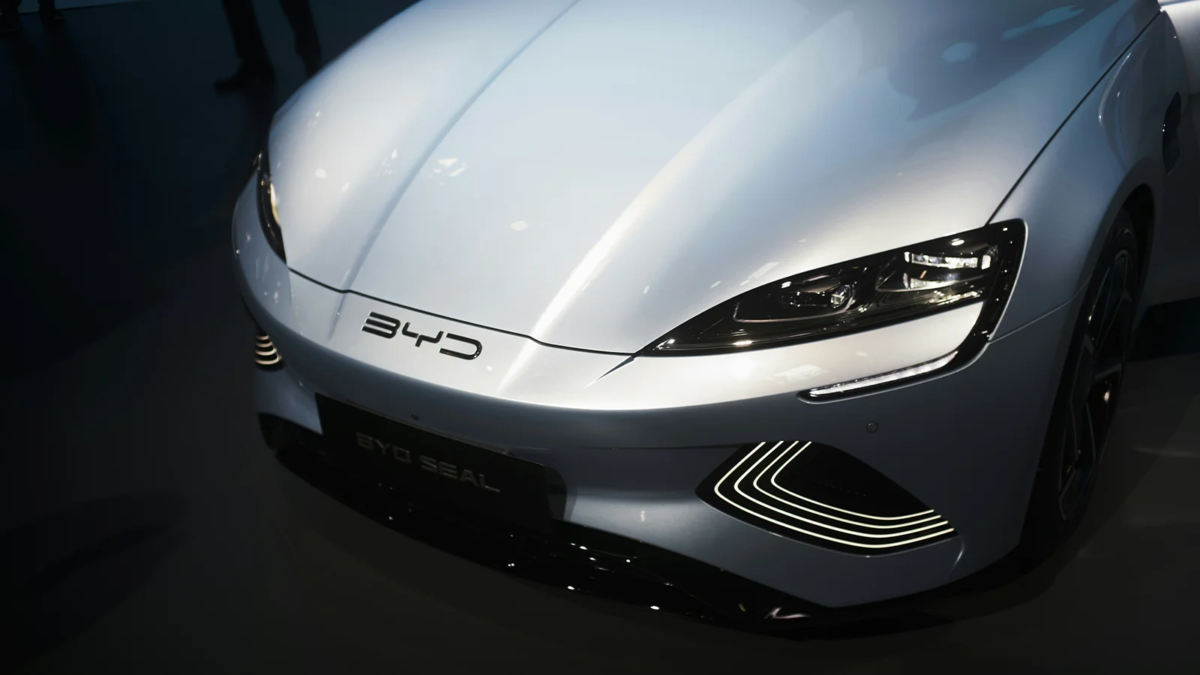
BYD’s shares rally after rolling out new technology it claims charges EVs in five minutes

Shares of China’s BYD rallied on Tuesday after the company announced a new technology that it claims can charge electric vehicles (EV) almost as quickly as it takes to fill a gasoline car.

BYD’s Hong Kong-listed shares jumped more than 6% shortly after the open, notching a new a 52-week high. The stock, which was last seen trading around 4.2% higher, is up over 50% year-to-date.

BYD’s Shenzen-listed stock price, meanwhile, rose over 2% on Tuesday morning, before paring some of its gains.

It comes shortly after BYD unveiled a new “Super e-Platform” technology, which it says will be capable of peak charging speeds of 1,000 kilowatts. The EV giant and Tesla rival says this will allow cars that use the technology to achieve 400 kilometers (roughly 249 miles) of range with just 5 minutes of charging.

CNBC could not independently verify these claims.

By contrast, Tesla’s latest superchargers offer a charging rate of up to 500 kilowatts, and can add up to 270 kilometers of range in 15 minutesGermany’s Mercedes-Benz Group, meanwhile, said last week that its all-electric CLA will be able to recharge up to 325 kilometers within 10 minutes.

“The ultimate solution is to make charging as quick as refueling a gasoline car,” Wang Chuanfu, chairman and president of BYD, said at the launch event, according to a press release.

The breakthrough appears to cut to the core of range anxiety, one of the major sticking points preventing consumers from switching to an EV. Range anxiety refers to fears that an electric car battery will run out of charge before the passenger reaches the destination.

Xing Lei, an independent China autos analyst, described the technological advancements of BYD’s new battery platform as “out of this world” and a “heartbreaking” development for its foreign competitors.

“Just when everybody’s focus seems to be turning toward smartification, BYD comes right back and says: no no, we are not done with electrification yet,” Lei said in a LinkedIn post.

BYD said its Han L sedan and Tang L SUV will both feature the new “Super e-Platform,” with both EVs having officially started pre-sales in China. The company added it would build more than 4,000 ultra-fast charging piles, or units, across China to match the new platform.

BYD has not yet specified how much it will spend on building the new facilities, nor when the ultra-fast charging piles will be available for consumers.

Earlier in the month, BYD launched a sale of its Hong Kong shares to raise up to $5.2 billion, Reuters reported, with the proceeds thought to be used to invest in research and development, among other areas. The company did not respond to a request for comment at the time.

A change in charging behavior?

The average range for EVs in the U.S. is nearly 300 miles (or 483 kilometers) on a single charge, according to the Environmental Defense Fund, while the time it takes to charge a battery-powered EV can take 20 minutes or several hours, depending on the car and the speed of the charging point.

“Speedier charging is definitely a plus, but it ranks behind overall battery range and convenience of charging ports as priorities for EV owners,” Michael Dunne, founder and CEO of Dunne Insights, told CNBC via email.

“BYD is getting much more skilled at telling their technology breakthrough stories. A traditional engineering company has added an important marketing dimension to their competitive arsenal.”

Dunne said BYD’s fast-charging platform could lead to a change in behavior of EV owners.

“Few EV owners charge their car from zero to full battery charge,” Dunne said.

“Instead, they tend to top up like we do with our phones. So, the ‘5 minute charge’ could change that behavior,” he added.

Companies have taken various approaches to addressing consumers’ range anxiety, such as including fuel tanks to charge the battery, or building a network of battery swap stations that allow drivers of participating vehicles to get a fully charged battery in just a few minutes. 

Indeed, Chinese electric car company Nio on Tuesday announced a strategic partnership with battery giant Contemporary Amperex Technology.

The two companies will “create the largest and most advanced battery swapping service network for passenger vehicles,” according to a press release, which did not specify a time.

CATL is also investing a total of 2.5 billion yuan ($350 million) into Nio’s power unit, the release said.

Eqwires Research Analyst

Top-notch SEBI registered research analyst

Best SEBI registered Intraday tips provider

info@eqwires.com

Telegram Facebook Instagram

Call: +91 9624421555 / +91 9624461555

www.eqwires.com

Moody’s places IndusInd Bank’s credit assessment on review for downgrade

Moody’s Ratings said on Monday it has placed IndusInd Bank’s baseline credit assessment (BCA) under review for downgrade due to concerns over “inadequate internal controls” after the lender found discrepancies in its derivative accounts. 

“The impact of the derivatives transactions, coupled with the ongoing stress in the retail unsecured loans, is likely to hurt the bank’s profitability, capital and funding, potentially leading to a downgrade of the BCA,” Moody’s said. 

Baseline credit assessments are based on the company’s own financial health, without considering any help it might get from related companies or the government. 

The Mumbai-based lender earlier this month reported it had discovered an accounting discrepancy in the way it booked currency derivatives stretching back at least six years, with an estimated impact of $175 million.

“Beyond the accounting issue, IndusInd’s potential leadership changes also remains a monitorable,” Moody’s added.

The accounting issue has further compounded worries for the bank’s stock which was already under pressure after the central bank last week approved a shorter-than-requested extension for CEO Sumant Kathpalia. 

Shares of IndusInd Bank are down roughly 28 per cent since the central bank’s decision. 

Moody’s maintained its ‘Ba1’ rating on IndusInd Bank with stable outlook, citing the bank’s strong capital, core profitability and stable funding, but said an upgrade of ratings was unlikely in the near term given the review for a downgrade of the BCA.

Eqwires Research Analyst

Top-notch SEBI registered research analyst

Best SEBI registered Intraday tips provider

info@eqwires.com

Telegram Facebook Instagram

Call: +91 9624421555 / +91 9624461555

www.eqwires.com

Elon Musk’s Starlink in India to offer 80-90 times faster speed than rivals Jio-SES and OneWeb: What can users expect?

Billionaire Elon Musk’s Starlink satellite could provide connectivity capabilities with a few terabytes per second of data across India. The necessary infrastructure has been built, and the company is waiting for regulatory approvals, according to a report by the Times of India, citing people aware of the development.

The Starlink satellite capacity is expected to be much higher, nearly 80-90 times more than competitors Eutelsat OneWeb or Reliance Jio-SES, which currently provide 30-50 gigabits per second (Gbps).

After receiving the regulatory approval, industry experts estimate that Starlink will serve retail and enterprise customers across the country.

Eutelsat-OneWeb and Jio-SES have received all necessary regulatory approvals and are waiting for spectrum allocation. In contrast, Starlink has to get a nod from the Department of Telecommunications (DoT) and the Indian National Space Promotion and Authorization Centre (IN-SPACE). 

Starlink has submitted the required documents to In-SPACe and obtained a Global Mobile Personal Communication by Satellite licence from DoT, but some issues remain, the report said. The company has agreed to establish a monitoring centre within India and avoid routing data through gateways in countries sharing land borders with India.

Starlink gateways

Starlink plans to build three gateways in three cities in India — Mumbai, Pune and Indore.

These gateways would connect satellites and terrestrial communication networks for data transmission between the two systems.

India’s non-geostationary orbit (NGSO) satellites currently offer nearly 70 Gbps capacity, while geostationary orbit (GSO) satellites provide around 58 Gbps.

Meanwhile, India’s telecom giants Reliance Jio and Bharti Airtel have collaborated with Starlink to distribute its equipment and services.

Eutelsat-OneWeb has built gateway facilities in Mehsana, Gujarat, and Thoothukudi, Tamil Nadu, and it has nearly 636 low-earth orbit satellites.

Currently, Starlink offers satellite communication services across the globe via its 4,400 first-generation satellites and 2,500 second-generation satellites. Elon Musk led-company plans to expand to 30,000 second-generation satellites in the upcoming years.

Eqwires Research Analyst

Top-notch SEBI registered research analyst

Best SEBI registered Intraday tips provider

info@eqwires.com

Telegram Facebook Instagram

Call: +91 9624421555 / +91 9624461555

www.eqwires.com

State Bank of India shelves $1.7 billion fund raising as yields elevated

State Bank of India, the country’s largest lender by assets, is shelving plans to raise funds this fiscal year, discouraged by elevated bond yields despite a policy rate cut and liquidity boost from the central bank, three sources aware of the matter said on Monday. 

The bank had planned to raise as much as Rs 15,000 crore (about $1.7 billion) through sale of bonds before the end of March, but will now tap the market in the next financial year that starts in April, the sources said. 

“The bank has been waiting for an opportune time to enter the market, but yields have stayed high for the last several weeks, and hence the bank is avoiding tapping the market in the near term,” one of the sources said.

The sources declined to be named as they are not authorised to speak to the media. 

SBI did not immediately reply to a Reuters email seeking comment.

Yields on India’s 10-year corporate bonds rated ‘AAA’ have risen 15 basis points since early February despite India’s central bank cutting the policy repo rate by 25 basis points and infusing hefty liquidity into the banking system. 

“SBI assessed its asset-liability position and despite having the board approvals, decided not to go through with the bond issues for now,” the second source said. 

The bank will look at its funding requirement afresh in the next fiscal year, the person said.

SBI’s planned bond issues included Rs 5,000 crore through Basel III-compliant additional Tier-I perpetual bonds and Rs 10,000 crore through 15-year infrastructure bonds. 

The bank had raised Rs 5,000 crore at 7.98 per cent in October via perpetual bonds. 

Its state-run peers Bank of India, Punjab National Bank and Bank of Maharashtra raised an aggregate of Rs 7,252 crore through infrastructure bonds in February, just over half of what they had intended to raise.

Eqwires Research Analyst

Top-notch SEBI registered research analyst

Best SEBI registered Intraday tips provider

info@eqwires.com

Telegram Facebook Instagram

Call: +91 9624421555 / +91 9624461555

www.eqwires.com