
Adani Ports’ bond sale draws LIC interest on India market return: Report

Adani Ports and Special Economic Zone, India’s largest private port operator, has placed its longest-tenor debt with state-run Life Insurance Corporation of India, two sources familiar with the matter said on Thursday.

The company raised 50 billion rupees ($585.33 million) through the sale of bonds maturing in 15 years at 7.75 per cent annual coupon and the debentures were fully bought by LIC, the sources said, declining to be identified as they are not authorised to speak to the media.

The bonds were issued at the lowest spread over the corresponding government bond yield in the last seven years.

LIC and Adani Ports did not immediately respond to Reuters emails seeking comments.

The issue marked Adani Ports’ largest rupee-denominated bond and its first market return since January 2024, after Adani group companies pulled back following U.S. short-seller Hindenburg Research’s 2023 allegations of governance lapses.

Adani Group has denied those allegations.

Adani Ports has outstanding bonds worth around 62.50 billion rupees as of end-April, according to notes from rating agencies.

Holding around 54 billion rupees of debt, LIC was the largest holder of bonds of the company as of January 2024, according to an information memorandum of its January 2024 debt issue.

Adani Ports raised 2.5 billion rupees each via five- and 10-year bonds at coupons of 8.70 per cent and 8.80 per cent, respectively, in January 2024. Last week, its board approved raising up to 60 billion rupees through bond sales, with the notes rated AAA by Crisil and Care.

With the Adani Ports issue completed, more group companies are likely to tap local debt market, especially as yields are set to decline further due to policy rate cuts and surplus liquidity, two bankers said, declining to be named since they are not authorised to speak to media.

Eqwires Research Analyst

Top-notch SEBI registered research analyst

Best SEBI registered Intraday tips provider

info@eqwires.com

Telegram Facebook Instagram

Call: +91 9624421555 / +91 9624461555
www.eqwires.com

Samvardhana Motherson Bonus Shares: Non-Nifty stock with most bonus issues approves another one

Shares of Samvardhana Motherson International Ltd., the manufacturer of automobile components declined after the company reported its March quarter results on Thursday, May 29.

Additionally, the company’s board has also approved the issue of bonus shares along with its quarterly results.

Samvardhana Motherson will issue bonus shares in the ratio of 1:2, which means, eligible shareholders will receive one bonus share for every two shares they hold as of the record date.

The said bonus issue will be subject to approval of the company’s shareholders at the ensuing Annual General Meeting (AGM) of the company.

Samvardhana Motherson holds the record for being the non-Nifty company with the most number of bonus issues announced for its shareholders.

According to data available, Samvardhana Motherson has announced bonus shares in 1997, 2000, 2005, 2007, 2012, 2013, 2015, 2017, 2018 and 2022. This is the 11th instance in the last three decades that the company has issued bonus shares.

In all of the previous instances, the company has issued bonus shares in the 1:2 ratio, meaning eligible shareholders received one bonus share for every two shares that they held as on the record date.

The record date for this proposed bonus issue has not been disclosed yet.

For the March quarter, Samvardhana Motherson has reported a growth of 6% in its revenue to ₹29,317 crore, while its profitability went up by 19% from last year to ₹1,051 crore.

Its Earnings Before Interest, Tax, Depreciation and Amortisation (EBITDA) declined by 1.6% year-on-year, while margins narrowed by 70 basis points.

Shares of Samvardhana Motherson are trading 0.5% lower after results and bonus issue announcement at ₹147.99. The stock has risen 11% in the last one month ahead of the results.

Eqwires Research Analyst

Top-notch SEBI registered research analyst

Best SEBI registered Intraday tips provider

info@eqwires.com

Telegram Facebook Instagram

Call: +91 9624421555 / +91 9624461555

www.eqwires.com

Vedanta shares climb 2% after NCLAT stays NLCT order rejecting demerger

Vedanta share price rose 2.3 per cent in trade on Thursday, May 27, 2025, logging an intraday high at ₹457 per share on BSE. The stock advanced after the National Company Law Appellate Tribunal (NCLAT) granted an interim stay on an order passed by the National Company Law Tribunal (NCLT) rejecting Vedanta’s five-way demerger.  

At 12:58 PM, Vedanta shares were up 1.15 per cent at ₹451.8 per share on the BSE. In comparison, the BSE Sensex was down 0.09 per cent at 81,239.32. The market capitalisation of the company stood at ₹1,76,182.53 crore. The 52-week high of the stock was at ₹527 per share and the 52-week low of the stock was at ₹362.2 per share. 

In the past one year, Vedanta shares lost 2 per cent as compared to Sensex’s rise of 9 per cent.

Vedanta demerger details 

In September 2023, Vedanta proposed a plan to demerge the current entity into six, independently listed entities. However, at the start of this year, Vedanta revised the plan to demerge the company instead into five entities, postponing plans to demerge the base metals business.

In February, Vedanta informed that its demerger-related resolution was been passed by shareholders and creditors — both secured and unsecured, with the requisite majority. The resolution was passed with 99.99 per cent of those participating, voting in favour.

Post the demerger, Vedanta will be split into five resulting companies — Vedanta, Vedanta Aluminium Metal, Talwandi Sabo Power Limited, Malco Energy, and Vedanta Iron and Steel. 

However, in March, the NCLT dismissed the demerger scheme filed by Talwandi Sabo Power Ltd (TSPL) after objections were raised by SEPCO, a creditor of TSPL, in relation to the demerger of Vedanta.

The Mumbai bench of NCLT in its ruling said, “…keeping in view the facts and circumstances of the present case, we deem it appropriate to reject the scheme presented by the Applicant under Section 230 of the Companies Act.”

The decision came after China-based SEPCO Electric Power Construction Corporation raised objections to the demerger, saying that the power unit had deliberately excluded their outstanding debt of ₹1,251 crore from the list of creditors. 

SEPCO opposed the scheme, alleging that TSPL had concealed material information about its liabilities.

Eqwires Research Analyst

Top-notch SEBI registered research analyst

Best SEBI registered Intraday tips provider

info@eqwires.com

Telegram Facebook Instagram

Call: +91 9624421555 / +91 9624461555
www.eqwires.com

Derivatives contracts expiry days now limited to Tuesdays or Thursdays

The Securities and Exchange Board of India (Sebi) on Monday announced it will limit the expiries of all equity derivatives contracts to two days per week, either Tuesdays or Thursdays starting next month. 

This move is aimed at curbing hyper-activity on expiry days and reducing concentration risk in the market. 

In March, Sebi had proposed these changes following instances of frequent switches by exchanges on expiry days. 

The regulator believes that spacing out expiry days throughout the week will provide an opportunity for stock exchanges to offer product differentiation to market participants. 

As per Sebi’s circular issued on Monday, every exchange will be allowed to retain one weekly benchmark index options contract on their chosen day (either Tuesday or Thursday). However, exchanges must now seek prior approval from the regulator to modify the settlement day of their derivatives contracts. Sebi has asked stock exchanges to submit their proposals by June 15.

Apart from benchmark index options contracts, all other equity derivatives contracts will have a minimum tenor of one month, with expiries occurring in the last week of every month on the chosen day by the exchange. 

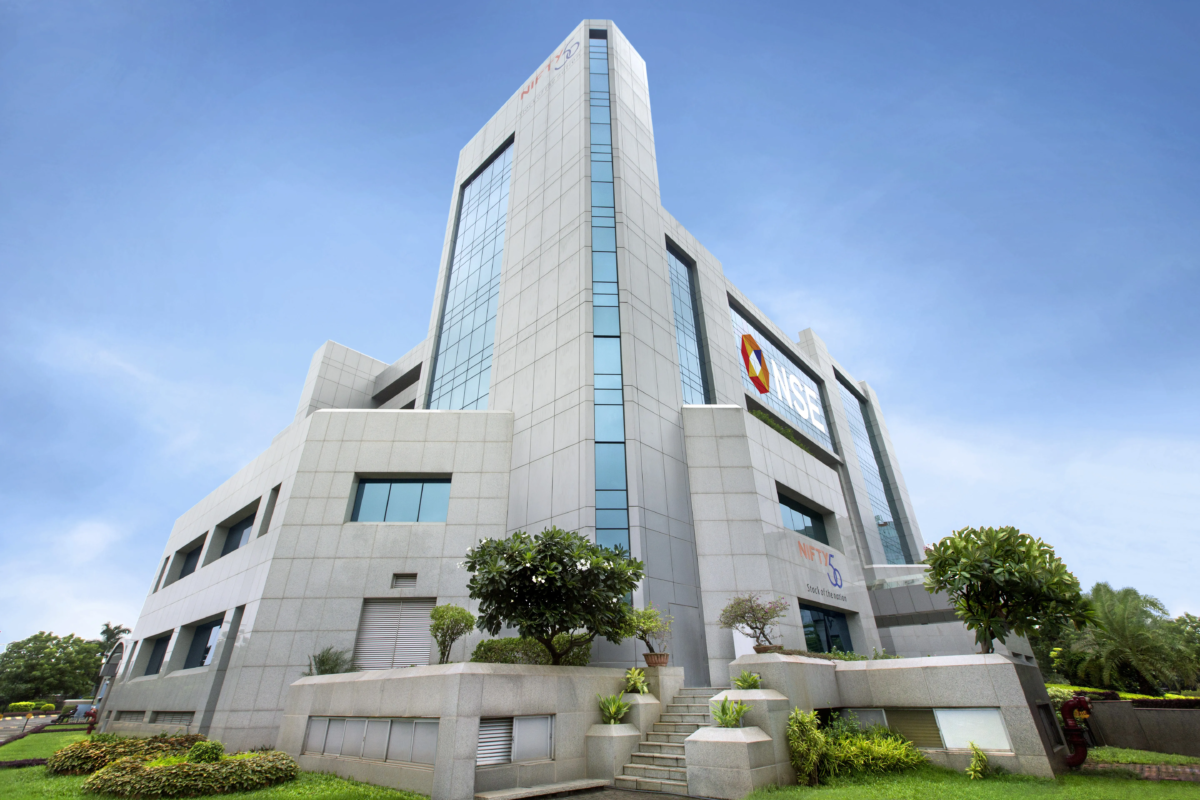
In response to Sebi’s proposal, the National Stock Exchange (NSE) had initially shelved its plan to move expiries to Mondays. However, the exchange has now sought approval from Sebi to shift expiries to Tuesdays. Currently, NSE contracts expire on Thursdays, while BSE contracts expire on Tuesdays. 

If Sebi grants approval to NSE to shift the expiry day to Tuesdays, BSE could find it challenging retaining market share. NSE’s revenue from transaction charges in Q4FY25 declined by 15 per cent quarter-on-quarter due to a reduction in volumes across the cash market and derivatives segment.

The exchange attributed this decline to regulatory changes that limited expiries to one benchmark per exchange. NSE’s management has stated that they do not expect any further loss of market share in the derivatives segment to BSE. 

Sebi’s circular will also hurt exchanges such as Metropolitan Stock Exchange of India (MSE) which was planning to roll out index derivatives with an expiry day unique to it. 

Eqwires Research Analyst

Top-notch SEBI registered research analyst

Best SEBI registered Intraday tips provider

info@eqwires.com

Telegram Facebook Instagram

Call: +91 9624421555 / +91 9624461555

www.eqwires.com

Rakesh Gangwal may sell 3.4% in IndiGo for ₹6,831 crore via block deal

Rakesh Gangwal is likely to divest about 3.4 per cent stake in IndiGo for ₹6,831 crore via block deals. This is part of his long-term plan to gradually reduce his stake in India’s largest airline, which he cofounded with Rahul Bhatia in August 2006. 

Sources said the floor price for the transaction had been set at ₹5,175 per share, nearly 4.6 per cent below the last closing price of ₹5,424. Currently, Gangwal and his related entities hold a 13.53 per cent stake in IndiGo. 

Investment banking firms Goldman Sachs (India) Securities, Morgan Stanley India Company and J P Morgan India are said to be the placement agents for the stake sale.

Over the past few years, Rakesh Gangwal and his related entities have gradually reduced their stake in IndiGo through multiple block deals. In August last year, Gangwal and his family trust sold a 5.83 per cent stake for about ₹10,500 crore. In March 2024, he offloaded another 6 per cent for ₹6,786 crore. In 2023, his wife Shobha Gangwal sold 3 per cent in August for ₹2,802 crore, and his family a 4 per cent stake for ₹2,900 crore in February.

Gangwal had resigned from IndiGo’s board on February 18, 2022, declaring he would gradually exit his holding over five years.

His decision came in the wake of a feud with copromoter Rahul Bhatia which lasted over two years until December 2021. The dispute became public in July 2019, when Gangwal wrote to the Securities and Exchange Board of India alleging corporate-governance lapses at the airline company — claims that the Bhatia group denied. Both promoters then took the matter to the London Court of International Arbitration, which gave its ruling in September 2021. 

Following this, IndiGo held an extraordinary general meeting on December 30, 2021, where shareholders approved the removal of a clause in the Articles of Association that granted the promoters the right of first refusal on share sales. This paved the way for Gangwal to begin divesting his stake.

Eqwires Research Analyst

Top-notch SEBI registered research analyst

Best SEBI registered Intraday tips provider

info@eqwires.com

Telegram Facebook Instagram

Call: +91 9624421555 / +91 9624461555

www.eqwires.com