

Wall Street Ends Sharply Lower as Middle East Tensions Rattle Markets

U.S. stock markets closed deep in the red on Friday, as escalating tensions in the Middle East sparked a sharp sell-off, particularly in financial and tech stocks. Iran’s missile counterstrikes on Israel—following Israeli attacks on strategic military and nuclear sites—sent shockwaves through global markets, triggering a flight to safety.

Major Indices Tumble

  • Dow Jones Industrial Average: Dropped 1.79% to 42,197.79
  • S&P 500: Declined 1.13%, closing at 5,976.97
  • Nasdaq Composite: Slipped 1.30% to 19,406.83

All three major indices posted weekly losses:

  • Dow: -1.3%
  • S&P 500: -0.4%
  • Nasdaq: -0.6%

Broad-Based Selloff Led by Financials and Tech

The downturn was widespread, with 10 of 11 S&P 500 sectors closing in the red. The hardest hit:

  • Financials: -2.06%
  • Information Technology: -1.5%

On the S&P 500, declining stocks outnumbered advancers by more than 6-to-1, underscoring the bearish sentiment.

Geopolitical Fears Trigger Flight to Safety

Investor nerves were rattled after reports of multiple explosions over Tel Aviv and Jerusalem, following a barrage of missiles launched by Iran. This retaliation marks a major escalation in regional conflict, fueling concerns of broader geopolitical instability.

The U.S. Dollar Index rose 0.5% to 98.16, while the yield on the 10-year Treasury climbed 5.6 basis points to 4.413%, reflecting a shift toward safer assets amid rising uncertainty.

Oil Prices Surge Amid Supply Concerns

Crude oil prices spiked nearly 7% on fears of a potential disruption in Middle East oil supplies—a key concern given the region’s importance to global energy markets.

This led to a rally in energy stocks:

  • ExxonMobil: +2.2%
  • Diamondback Energy: +3.7%

Stock Movers: Winners and Losers

🔻 Big Tech & Financials Fall

  • Nvidia: -2.1%
  • Apple: -1.4%
  • Visa & Mastercard: Both down over 4%
  • Adobe: -5.3%
  • Oracle: Bucked the trend, jumping 7.7% to a record high

✈️ Airlines Under Pressure

Rising oil prices spooked airline investors, dragging stocks lower:

  • Delta Air Lines: -3.8%
  • United Airlines: -4.4%
  • American Airlines: -4.9%

🛡️ Defense Stocks Rally

Amid rising conflict, defense contractors saw strong gains:

  • Lockheed Martin, RTX Corp, and Northrop Grumman: All up 3%+

Looking Ahead: Volatility on the Radar

With geopolitical risks rising and oil prices spiking, markets may remain volatile in the near term. Investors will be closely watching for diplomatic developments, central bank reactions, and economic data releases in the coming days.

Key takeaway: The Middle East conflict is no longer a background concern—it’s now a central risk factor that markets can’t ignore.

Eqwires Research Analyst

Top-notch SEBI registered research analyst

Best SEBI registered Intraday tips provider

info@eqwires.com

Telegram Facebook Instagram

Call: +91 9624421555 / +91 9624461555

www.eqwires.com

3 Stocks That Turned ₹1 Lakh Into ₹50 Lakh — But Is There More Juice Left?

Every investor dreams of that one multibagger stock — the kind that quietly turns ₹1 lakh into ₹50 lakh. For some, this dream has already come true. A few under-the-radar small caps have transformed into serious wealth creators over the past few years.

These companies didn’t rise on hype. Their core businesses evolved, earnings took off, and investors who stayed the course — without trying to time the market — saw phenomenal gains. But now that these stocks have already delivered 50x returns, a key question arises: Is there any upside left? Or is the best behind us?

Let’s dive into three such standout names.


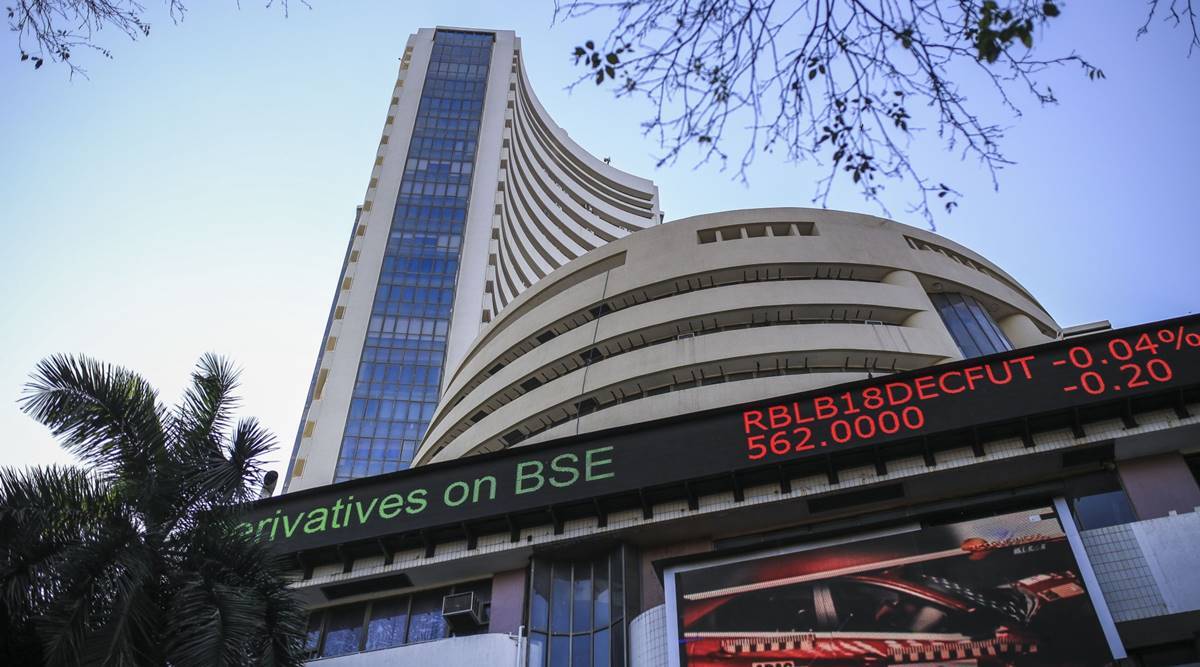
#1 Bombay Stock Exchange (BSE): A Classic With a New Growth Engine

Asia’s oldest stock exchange, operating since 1875, BSE is also the world’s fastest, clocking trades at 6 microseconds. It provides trading services across equities, debt, currencies, derivatives, and mutual funds.

One of its standout platforms, BSE StAR MF, is now India’s largest online mutual fund distribution platform. It processes 2.7 million transactions per month and adds nearly 200,000 new SIPs monthly.

Explosive FY25 Performance

BSE’s performance in FY25 was driven by strong operating leverage:

  • Revenue doubled to ₹32 billion (vs ₹15.9 billion in FY24)
  • Net profit surged 71% to ₹13.2 billion
  • Operating margins expanded from 28% to 51%

Derivatives Boom: A Game-Changer

Derivatives now make up 44% of BSE’s total revenue — ₹14.2 billion, up from just ₹1.8 billion a year ago. A spike in average daily premium turnover (₹71.6 billion → ₹118 billion) offset a decline in notional turnover, thanks to favorable regulatory shifts.

Equity transaction charges also contributed ₹3 billion, while total transaction charges nearly tripled to ₹20.3 billion.

Other Growth Drivers

  • Mutual fund segment revenue: ↑80% to ₹2.3 billion
  • Corporate services (listing & compliance fees): ↑40% to ₹4.9 billion
  • Plans to launch 40 new indices in FY26 to capitalize on passive investing
  • Improved infrastructure: 100 new server racks for increased trading activity

Valuation Watch

BSE currently trades at 89x P/E, far above its 10-year average of 29x. While structural tailwinds (derivatives growth, increased participation) remain, the valuation suggests a lot of optimism is already priced in.


#2 Elecon Engineering: Quietly Gearing Up for Global Growth

Elecon Engineering, one of Asia’s largest industrial gear makers, holds a commanding 38–40% share of India’s gear market. It also has a strong presence in material handling equipment (MHE) and is known for its high-tech engineering — supplying marine gears to the Indian Navy is a case in point.

Strong FY25 Financials

  • Revenue: ₹22.3 billion, up 15%
  • EBITDA: ₹5.4 billion; margins at 24.4%
  • Net profit: ₹4.2 billion, up 17%
  • Gear division: 79% of revenue
  • MHE division: 21%, with a sharp 73% YoY growth

Global Playbook and Sectoral Tailwinds

  • Domestic revenue: 77%; International: 23%
  • Target: Increase international share to 50% by FY30
  • Strong demand across sectors like steel, cement, and power
  • Open order book stands at ₹9.5 billion (+20% YoY)
  • Order intake grew 19% to ₹24 billion in FY25

Valuation Perspective

At 37x P/E, Elecon trades above its 10-year average of 21x. The stock is expensive, but structural growth — especially from global markets and infrastructure investments — provides a compelling long-term story.


#3 BLS International: Riding the Travel and Digital Boom

Founded in 1983, BLS International is a leading provider of visa, passport, and consular services, operating in over 70 countries. It manages non-judicial tasks for visa processing — from submission to approval.

FY25 Snapshot

  • Revenue: ₹21.9 billion, up 31%
  • EBITDA: ₹6.3 billion, up 82%; margin expanded to 20.6%
  • Net profit: ₹5.4 billion, up 66%
  • Net cash position: ₹9.3 billion

Business Breakdown

  • Visa and consular services: 75% of revenue
    • Applications rose 31% to 3.7 million
    • Revenue per application increased 35% to ₹2,903
    • EBITDA margin: 34.5%
  • Digital services: 25% of revenue
    • Revenue up 71%
    • Margin pressure due to higher operational costs

What’s Ahead?

  • Active acquisition strategy (₹10 billion deployed in FY25)
  • Strong revenue visibility from upcoming $1–2 billion government contracts
  • Proxy play on rising global travel demand, higher disposable incomes, and easing visa regulations (e.g., ASEAN visa reforms)

Valuation Check

BLS trades at 30x P/E, broadly in line with its historical average of 32x. Compared to BSE and Elecon, BLS offers relatively reasonable valuation with solid growth visibility.


Final Thoughts: Should You Buy Now?

Over the past five years, BSE, Elecon, and BLS International have delivered massive shareholder returns. Each benefited from structural tailwinds:

  • BSE rode the derivatives boom and platform scale
  • Elecon capitalized on infrastructure momentum and global demand
  • BLS gained from rising visa volumes and digital transformation

However, valuations now matter more than ever:

  • BSE is richly valued — pricing in a lot of its future growth
  • Elecon looks expensive, but global expansion offers upside
  • BLS appears fairly priced, with consistent earnings momentum and a strong balance sheet

If you’re looking for long-term compounders, understanding the growth runway versus current valuations is key. The dream of 50x returns may be behind us for now, but solid businesses still have the potential to deliver strong, sustainable gains — if you enter at the right price.

Eqwires Research Analyst

Top-notch SEBI registered research analyst

Best SEBI registered Intraday tips provider

info@eqwires.com

Telegram Facebook Instagram

Call: +91 9624421555 / +91 9624461555
www.eqwires.com

InterGlobe Enterprises Set to Offload 4% Stake in IndiGo Amid Stake Sales by Rakesh Gangwal

In a move that follows a series of stake sales, InterGlobe Enterprises, the promoter entity of IndiGo, is reportedly planning to sell approximately 4% of its stake in the airline through a block deal. According to a CNBC TV18 report, the company currently holds a 35.7% stake in the airline, and the latest transaction could raise around $1 billion.

This proposed share sale comes after Rakesh Gangwal, a co-founder and former board member of IndiGo, reduced his family’s stake in the airline by 5.7% earlier this year. Gangwal, who has been gradually offloading shares since 2022, sold a 5.24% stake in August 2024 for ₹9,549 crore, and previously offloaded more shares in March. His stake reduction follows a fallout with co-founder Rahul Bhatia over concerns about corporate governance, which led Gangwal to announce in February 2022 his decision to lower his stake over time.

The most recent sale, which occurred in May 2024, saw Gangwal and his family trust sell 5.7% of IndiGo for approximately ₹11,559 crore ($1.36 billion) via a block deal. Following these transactions, Gangwal’s remaining stake in the airline now stands at just 7.8%.

When contacted for comments on the upcoming stake sale, IndiGo declined to provide any response, stating, “We won’t comment on the query.”

As the news of the stake sale spread, shares of InterGlobe Aviation, the parent company of IndiGo, were down by 4.72% at ₹5,224.65 at 12:40 pm today.

What This Means for IndiGo and Stakeholders

InterGlobe Enterprises’ decision to sell additional shares in IndiGo aligns with Rakesh Gangwal’s ongoing strategy to reduce his family’s involvement in the airline, which has been a topic of discussion for several years. With Gangwal’s stake now significantly reduced, this could signal a shift in the power dynamics within the airline’s leadership, particularly concerning the co-founders’ differing views on governance.

The potential $1 billion raised from this latest share sale is expected to have a significant impact on the airline’s financial outlook, depending on the market’s reaction and the extent of any strategic changes. As IndiGo continues to be a dominant player in India’s aviation sector, stakeholders will be watching closely for any further developments.

Eqwires Research Analyst

Top-notch SEBI registered research analyst

Best SEBI registered Intraday tips provider

info@eqwires.com

Telegram Facebook Instagram

Call: +91 9624421555 / +91 9624461555

www.eqwires.com

Israel-Iran Conflict Escalates: Global Markets React to Rising Tensions

The conflict between Israel and Iran has reached a new and alarming phase, with Israel launching a series of strikes on Iranian military sites, including nuclear facilities and missile factories. These airstrikes have intensified fears of a broader, all-out war, sending shockwaves through global markets, driving oil and gold prices higher, and disrupting air traffic in the region.

Israeli Prime Minister Benjamin Netanyahu announced that the strikes, which began on Friday, June 13, marked the start of a prolonged military operation aimed at dismantling Iran’s nuclear program. In a recorded video message, Netanyahu declared, “We are at a decisive moment in Israel’s history… Operation Rising Lion is a targeted military operation to roll back the Iranian threat to Israel’s very survival. This operation will continue for as many days as it takes to remove this threat.”

With tensions escalating, the international community is bracing for the potential fallout.

Israel Targets Key Military and Nuclear Sites in Iran

Israel’s airstrikes specifically targeted Iran’s nuclear facilities, ballistic missile production sites, and key military commanders. The blasts were reportedly concentrated in the Natanz uranium enrichment facility, a critical site in Iran’s nuclear ambitions.

Among the casualties reported were two senior Iranian military figures: Hossein Salami, the leader of Iran’s paramilitary Revolutionary Guard, and General Mohammad Bagheri, the chief of staff of Iran’s armed forces. The Israeli Defense Forces (IDF) confirmed the deaths, stating that more than 200 fighter jets participated in the operation.

In response, Iran has vowed severe retaliation. Supreme Leader Ayatollah Ali Khamenei warned that Israel would face “severe punishment” for its actions. Iran has already launched hundreds of drones towards Israel, escalating the conflict further.

As Israel braces for a potential retaliatory wave, U.S. officials have distanced themselves from the airstrikes, with Secretary of State Marco Rubio clarifying that the U.S. was not involved in the Israeli action.

Airspace Closures and Flight Disruptions

The military escalation between Israel and Iran has led to widespread disruption of air traffic in the Middle East. Israel’s main airport has been shut down indefinitely, with national carrier El Al Airlines suspending all flights.

Iran has also closed its airspace, causing significant flight diversions across the globe. Air India, for instance, rerouted or returned several flights from destinations including New York, Vancouver, Chicago, and London for passenger safety. Iraq and Jordan have also closed their airspaces, halting all flight operations. In addition, Qatar Airways cancelled flights to Damascus.

These disruptions in air travel highlight the growing risks of regional instability, as the geopolitical situation continues to evolve.

Oil Prices Soar Amid Fears of Strait of Hormuz Blockage

One of the most immediate and tangible impacts of the Israel-Iran conflict has been the surge in global oil prices. U.S. benchmark crude oil jumped by 8.2%, or $5.6, to $73.61 per barrel, while Brent crude rose by $5.52 to $74.88 per barrel.

The increase in oil prices is primarily driven by concerns that the conflict could spill over and disrupt oil shipments through the Strait of Hormuz, a vital waterway for global oil trade. This strait, located between Oman and Iran, accounts for about 20% of the world’s daily crude oil shipments.

In the worst-case scenario, where the Strait of Hormuz is blocked or the conflict escalates further, analysts predict that oil prices could surge to $130 per barrel, a level not seen since the height of the 2008 oil crisis.

While oil traders in Singapore have expressed caution about predicting long-term impacts on the oil market, many are on edge, anticipating that Iran’s response will dictate future market movements. JPMorgan analysts have warned that a full-blown conflict could significantly disrupt the flow of oil and gas in the region.

Gold Prices Spike Amid Market Uncertainty

As geopolitical risks rise, investors have flocked to safe-haven assets like gold. Gold prices spiked to their highest levels in two months, with spot gold rising by 1.2% to $3,423.30 an ounce, and U.S. gold futures up 1.2% to $3,444.50.

Market analysts, including Tim Waterer, Chief Market Analyst at KCM Trade, noted that the escalation of the Israel-Iran conflict could drive gold prices even higher. “Gold surged past resistance around $3,400 on news of the airstrikes, and further upside could be in store should the escalation continue,” Waterer commented.

Impact on Indian Markets

The fallout from the Israel-Iran conflict was felt in global markets, with Indian shares reacting negatively to the rising tensions. The Nifty 50 index fell by 1.21% to 24,586.7, while the BSE Sensex dropped by 1.2% to 80,710.56. Oil and gas stocks, in particular, took a hit, reflecting the higher oil prices and fears of global supply disruptions.

The MSCI Asia ex-Japan index also dipped by 1%, underscoring the broader regional market concerns.

What’s Next for Markets?

According to Dr. VK Vijayakumar, Chief Investment Strategist at Geojit Investments, the ongoing conflict between Israel and Iran could have wider economic implications if it drags on. He stated, “The impact on the market will depend on how long the conflict lingers. In the near term, the market will be in a risk-off mode. Sectors that use oil derivatives as inputs, such as aviation, paints, adhesives, and tyres, will be hit hard. Oil producers like ONGC and Oil India will remain resilient.”

Vijayakumar further noted that the Nifty index could find strong support around the 24,500 level, but the overall outlook remains uncertain as geopolitical tensions continue to evolve.

Conclusion

The escalating Israel-Iran conflict has sent shockwaves through global markets, from oil prices to gold and regional stock indices. As the situation continues to unfold, investors will be closely watching the geopolitical developments in the Middle East. While some sectors, like oil producers, may see resilience, broader market uncertainty is expected to persist, keeping investors on edge.

Eqwires Research Analyst

Top-notch SEBI registered research analyst

Best SEBI registered Intraday tips provider

info@eqwires.com

Telegram Facebook Instagram

Call: +91 9624421555 / +91 9624461555

www.eqwires.com

Market Recap: Nifty and Sensex Fall Amid Middle East Tensions and Trade Uncertainty

Benchmark indices Nifty and Sensex extended their losses for the second consecutive day as rising geopolitical tensions in the Middle East and ongoing trade uncertainties weighed heavily on investor sentiment. A broad-based sell-off gripped the market, pushing all major sectoral indices into the red. The India VIX, a gauge of market volatility, surged more than 7%, signaling growing nervousness among investors.

At the close of trading, the Sensex had shed 573.38 points (0.70%) to end at 81,118.60, while the Nifty dropped 169.60 points (0.68%) to settle at 24,718.60. Advancing stocks numbered 1,520, while 2,326 stocks declined, and 124 remained unchanged.

Geopolitical Tensions and Oil Prices Drive Market Sentiment

V K Vijayakumar, Chief Investment Strategist at Geojit Investments, pointed out that the ongoing conflict between Israel and Iran could have significant economic consequences, especially if the situation escalates further. He highlighted that Israel’s military operations could extend for several days, with Brent crude already spiking by nearly 12% to $78 per barrel. Should Iran retaliate by shutting down the Strait of Hormuz, a critical oil supply route, prices could climb even higher. The market’s immediate reaction will largely depend on the duration of the conflict, but in the near term, a risk-off sentiment seems likely to dominate.

Sectoral Performance

The broader market saw a sea of red, with major sectoral indices posting losses. The Nifty PSU Bank index led the way down, dropping 1.51%, followed closely by Nifty Metal (-1.23%) and Nifty Bank (-1.17%). Other indices such as FMCG, Infrastructure, Energy, and Private Banks also faced declines of over 1%. Among the broader markets, the Nifty Midcap 100 and Smallcap 100 indices fell 0.4% and 0.5%, respectively.

Interestingly, the Nifty IT index, which opened in the green, ended flat despite broader market weakness. Meanwhile, the India VIX surged by 7.56% to 15.08, indicating rising market volatility and investor jitters.

Shipping and Defence Stocks Defy Market Weakness

While the broader market struggled, some sectors defied the trend. Indian shipping stocks saw strong demand, with shares of Shipping Corporation of India and GE Shipping surging up to 10%. This outperformance was driven by fears of global trade disruptions and a rise in tanker rates as vessels may need to reroute to avoid the increasingly volatile Strait of Hormuz. As a result, investor appetite for shipping stocks remained strong, driven by expectations of higher freight and tanker rates.

Defence stocks also made a strong showing, buoyed by hopes of increased defence equipment orders amid the growing global uncertainties sparked by the Israel-Iran conflict. The Nifty India Defence index surged by 2.5%, snapping a two-day losing streak.

Technical Outlook: Caution Advised

From a technical perspective, the broader trend remains intact, but caution is warranted in the near term. A bearish engulfing pattern has emerged, suggesting a potential short-term decline. The Relative Strength Index (RSI) has fallen from 60 to 55, pointing to a reduction in momentum. The Average True Range (ATR) has also increased slightly, indicating higher intraday volatility.

Immediate support for the Nifty is pegged at 24,800. A breach below this level could trigger a sharper decline, while 25,100 remains a key resistance zone. As for the Nifty Bank index, mild profit booking has pushed it towards its 20-Day Simple Moving Average (SMA), which is acting as immediate support. The index is hovering near the breakout zone of 56,000–56,200, and a sustained fall below this level could signal further downside risk.

Key Movers

Among the top gainers on the Nifty were Bharat Electronics, ONGC, Tech Mahindra, TCS, and Wipro. On the losing side, Adani Ports, Hindalco, IndusInd Bank, SBI, and ITC were the major laggards.

Final Thoughts

As geopolitical tensions continue to simmer and trade uncertainties persist, the market is likely to remain volatile in the near term. Investors should stay cautious, especially as key support levels are tested. While some sectors like shipping and defence may benefit from the current global scenario, broader market sentiment appears fragile, and a “risk-off” approach could dominate until more clarity emerges.

Eqwires Research Analyst

Top-notch SEBI registered research analyst

Best SEBI registered Intraday tips provider

info@eqwires.com

Telegram Facebook Instagram

Call: +91 9624421555 / +91 9624461555

www.eqwires.com