

NSE IPO: Exchange’s Unlisted Shares Hit Record High Amid Settlement Talks With SEBI

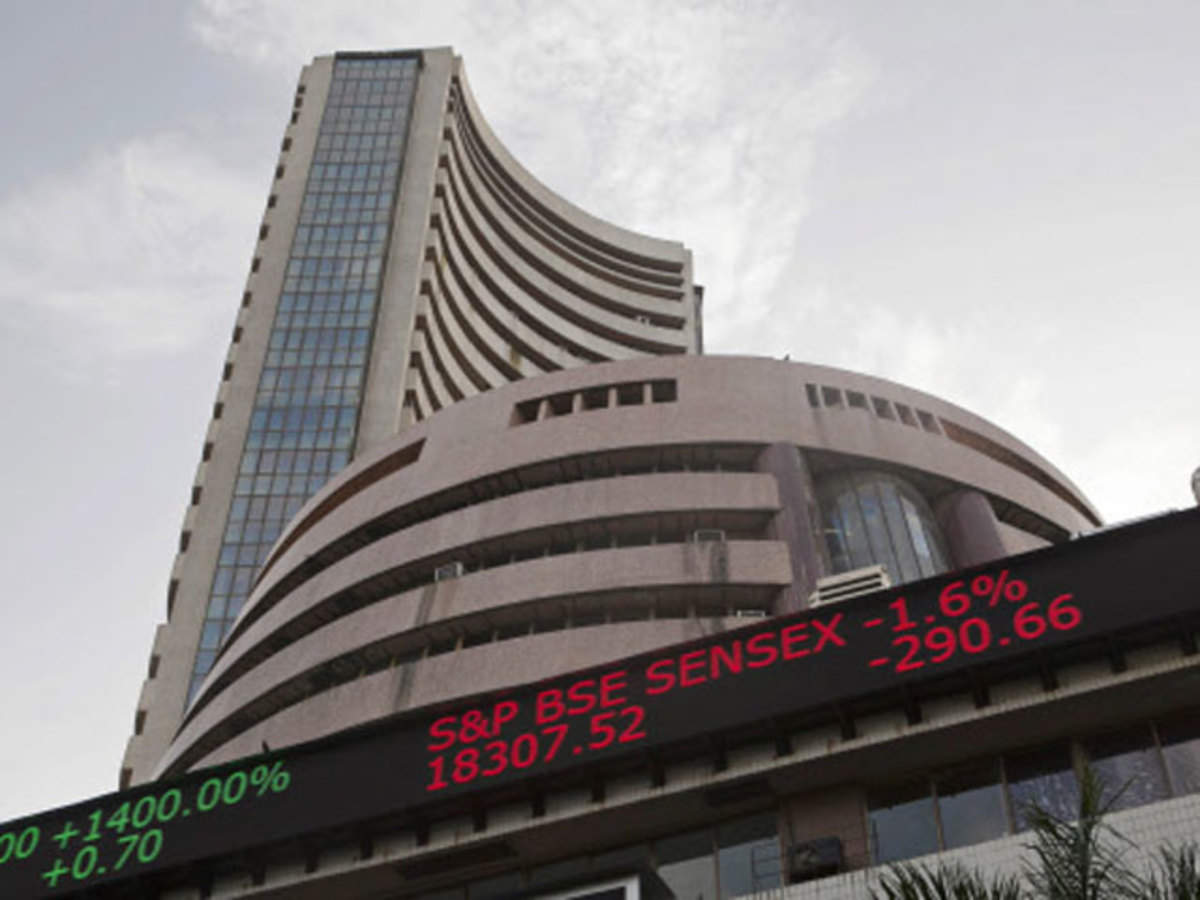
Shares of the National Stock Exchange (NSE) in the unlisted market have surged to a record high of Rs 2,300 after at least two media reports emerged that the exchange is working towards settling the long-standing co-location case with the Securities and Exchange Board of India (SEBI). It revives the hopes of NSE IPO that has long been stuck.

The development comes as both NSE and SEBI have reportedly restarted discussions to arrive at a consent settlement, marking a possible turning point in a regulatory saga that has been a major hurdle in NSE’s IPO ambitions for years, according to MoneyControl report. The case, which is currently pending before the Supreme Court, had earlier seen SEBI challenge a Securities Appellate Tribunal (SAT) ruling that diluted penalties imposed on NSE in 2019.

Earlier, The National Stock Exchange (NSE) had clarified that it has not approached the Ministry of Finance regarding its long-pending Initial Public Offering (IPO), contrary to a recent media report.

NSE stated that it has not made “any such representation to the Union Government in the last 30 months.” There has been no communication between NSE and the Ministry of Finance on this issue.

Krishna Patwari, Founder and Managing Director of Wealth Wisdom India Pvt Ltd, said SEBI’s move signals a shift in regulatory tone and has boosted investor sentiment around the NSE’s public listing.

NSE’s share price in the unlisted market has jumped to Rs 2,300, pushing its market cap to around Rs 5.69 lakh crore—an all-time high on May 28th, said Patwari. 

“SEBI’s willingness to settle long-standing regulatory issues with NSE is a major step forward,” Patwari said. He added that the exchange’s agreement to pay a significant sum shows its commitment to resolving legacy matters:

“The change in SEBI’s stance under the new Chairman indicates a more collaborative approach. Investor confidence has surged. The spike in unlisted share prices clearly shows the optimism around NSE’s IPO finally becoming a reality.”

What’s the Co-Location Case?

The co-location case revolves around allegations that certain brokers unfairly benefited by placing their servers closer to NSE’s trading system within its co-location facility. This proximity allowed faster access to data and trades, providing an undue advantage over others and raising concerns of market manipulation and lack of fair access.

The initial SEBI order in 2019 had imposed significant penalties, which NSE challenged before SAT. While SAT gave a relatively lenient ruling, SEBI appealed the decision in the Supreme Court, where the case remains pending.

Sources told MoneyControl, SEBI could now demand nearly twice the amount NSE paid in its previous record Rs 643 crore Trading Access Point (TAP) case settlement in 2023.

“The discussions began around one and a half months ago. Currently, both sides are negotiating the amount that NSE should pay. Given the TAP case involved Rs 643 crore, SEBI may demand a significantly higher sum for the co-location matter,” the source told MoneyControl.

However, with a favourable SAT order already in hand, NSE may be reluctant to accept a very high settlement demand, setting the stage for tough negotiations between the two parties.

Eqwires Research Analyst

Top-notch SEBI registered research analyst

Best SEBI registered Intraday tips provider

info@eqwires.com

Telegram Facebook Instagram

Call: +91 9624421555 / +91 9624461555
www.eqwires.com

Donald Trump doubles tariff on worldwide steel from 25% to 50%, claims China violated trade deal

US President Donald Trump at a rally in Pennsylvania announced that the United States would double steel tariffs from 25% to 50%, from next week onwards, while promoting the partnership between Japan’s Nippon Steel and US Steel.

Later, taking to his Truth Social account, Trump wrote, “It is my great honour to raise the Tariffs on steel and aluminium from 25% to 50%, effective Wednesday, June 4th. Our steel and aluminum industries are coming back like never before. This will be yet another BIG jolt of great news for our wonderful steel and aluminum workers. MAKE AMERICA GREAT AGAIN!”

What will new tariffs mean for US Steel and Nippon Steel deal?

Trump claimed that new tariffs would benefit the partnership, which aims to create 70,000 jobs and inject $14 billion into the US economy.

“I believe that this group of people that just made this investments right now are very happy, because that means that nobody’s going to be able to steal your industry,” Trump said. “It’s at 25%, they can sort of get over that fence, at 50%, they can no longer get over the fence,” Trump, who recently approved the US Steel and Nippon Steel partnership, was quoted as saying.

Trump criticises steel produced in China

Trump also took a dig at the steel produced in Shanghai and explained how his tariffs will aid domestic production. 

“We don’t want America’s future to be built with shoddy steel from Shanghai—we want it built with the strength and the pride of Pittsburgh!” Trump posted on Truth Social.

Trump’s claim of trade deal violation

Trump previously accused China of violating the trade deal that aimed to reduce tariffs.

“China, perhaps not surprisingly to some, HAS TOTALLY VIOLATED ITS AGREEMENT WITH US. So much for being Mr. NICE GUY!,” Trump wrote in a post on his Truth Social platform.

China is the world’s largest steel producer and exporter. However, after the imposition of a 25% tariff in 2018, China’s steel exports to the US have significantly declined.

The trade deal with China made in mid-May, according to Trump, was a “fast deal”, where officials of both countries paused tariffs of over 125% for 90 days. According to Trump, the trade agreement was finalised to prevent China from a “devastating” situation, including factory closures and civil unrest stemming from his tariffs, which reached as high as 145% on Chinese imports.

However, Trump did not clarify how the trade deal was violated or what action he plans to take against China.

When asked about China trade in the Oval Office on Friday, the report quoted Trump saying, “I’m sure that I’ll speak to President Xi, and hopefully we’ll work that out.”

Eqwires Research Analyst

Top-notch SEBI registered research analyst

Best SEBI registered Intraday tips provider

info@eqwires.com

Telegram Facebook Instagram

Call: +91 9624421555 / +91 9624461555
www.eqwires.com

Indian economy ‘doing quite well’, may grow up to 6.8% in FY26, driven by FDI, urban spending: CEA Nageswaran

Chief Economic Adviser (CEA) Anantha Nageswaran said that the Indian economy is performing well and may achieve a growth rate at the upper end of its 6.3-6.8 per cent projection, provided there are continued measures to promote foreign direct investment and an increase in capital investment by the private sector, along with boosted urban consumption.

“All in all, given the global environment, our economy is doing quite well,” the CEA told reporters on Friday at a virtual press conference after GDP data for 2024-25 and January-March were released.

“And if we continue with the efforts to bring in more foreign direct investment and the private sector, if it continues its increase in capital investment, which we saw in 2024-25 and urban consumption picks up on the back of let’s say, better capital formation, hiring and compensation, then we can probably achieve a growth rate which is at the higher end of this range (6.3-6.8 per cent),” he added.

GDP numbers

The Indian economy grew by 6.5% in real terms for FY25, aligning with expectations.

As per the second advance estimates of National Statistical Office (NSO), the Indian economy was projected to grow at 6.5 per cent in 2024-25. The Reserve Bank of India (RBI) estimated 6.5 per cent GDP growth for the fiscal year 2024-25.

Notably, India’s GDP grew by 9.2 per cent in FY24, while the economy grew 7.2 per cent in FY23 and 8.7 per cent in FY22.

The government also released the official GDP growth data for the January-March quarter on Friday. The economy grew 7.4 per cent for the quarter ended on March 31, 2025.

Meanwhile, the growth rate of the Indian economy in the April-June, July-September, and October-December 2024 quarters stood at 6.7 per cent, 5.6 per cent, and 6.2 per cent, respectively.

Impact of unusual monsoon

Speaking on the impact of the unusual onset of monsoon and its impact on the vegetable prices, Nageswaran said, “To say there will be a problem as of now, I think every indication is that crop produce will be good and with adequate inventory, the benign food price trends will continue.”

Monsoon rainfall is expected to be above normal in India, particularly in India’s key rain-fed agricultural belt, as per IMD. Additionally, monsoon arrived early in several states this year.

Global growth expectations

CEA stated that global growth for 2025 and 2026 is expected to be slow amid the global uncertainties. However, the forecast cuts will be smaller for India in the global cuts.

CEA on food inflation

Speaking on inflation, he further said that food inflation is likely to remain low due to a good harvest and above normal monsoon.

“Food Inflation remains benign due to good rabi harvest, higher summer sowing, healthy procurement, and above-normal monsoon. Exports remain robust, forex reserves provide 11 months of import cover. Declining crude oil prices will potentially lower import bills, create fiscal space and alleviate external economic pressures,” CEA said.

Outlook for India’s FY 26 growth

The government maintains its outlook for 2025-26 growth at 6.3-6.8 per cent, driven primarily by private consumption, particularly the rural rebound, and growth in services exports. Various agencies have projected India’s growth to fall within the range of 6.3-6.7 per cent for 2025-26.

Eqwires Research Analyst

Top-notch SEBI registered research analyst

Best SEBI registered Intraday tips provider

info@eqwires.com

Telegram Facebook Instagram

Call: +91 9624421555 / +91 9624461555

www.eqwires.com

India reduces import tax on crude edible oils by 10% to bring down food prices

India halved the basic import tax on crude edible oils to 10 per cent on Friday, the government said, as the world’s biggest vegetable oil importer tries to bring down food prices and help the local refining industry.

The customs duty applies to crude palm oil FCPOc3, crude soy oil BOc2 and crude sunflower oil.

It will effectively bring down the total import duty on the three oils to 16.5 per cent from earlier 27.5 per cent as they are also subject to India’s Agriculture Infrastructure and Development Cess and Social Welfare Surcharge.

“This is a win-win situation for vegetable oil refiners as well as consumers, as local prices will go down due to the duty reduction,” said B.V. Mehta, executive director of the Solvent Extractors’ Association of India (SEA).

The government did not change the import duty on refined palm oil, refined soyoil or refined sunflower oil, which currently attract a 35.75 per cent import tax.

The import duty gap between refined and crude edible oils has risen to 19.25 per cent, which will prompt importers to bring in crude edible oils instead of refined oils and boost the local refining industry, Mehta said.

India meets more than 70 per cent of its vegetable oil demand through imports. It buys palm oil mainly from Indonesia, Malaysia and Thailand, while it imports soyoil and sunflower oil from Argentina, Brazil, Russia and Ukraine.

Sandeep Bajoria, CEO of Sunvin Group, a vegetable oil brokerage, said the cut in the basic duty would bring down edible oil prices and help revive retail demand, which has been subdued in recent months.

Eqwires Research Analyst

Top-notch SEBI registered research analyst

Best SEBI registered Intraday tips provider

info@eqwires.com

Telegram Facebook Instagram

Call: +91 9624421555 / +91 9624461555

www.eqwires.com

SEBI bans actor Arshad Warsi, wife and 59 others from market for alleged pump-and-dump activities

Market regulator Securities and Exchange Board of India (SEBI) has barred actor Arshad Warsi, along with his wife, and his brother from accessing the securities market for one year for allegedly artificially inflating the share price of Sadhna Broadcast Ltd (SBL) before dumping it. SEBI passed a final order in the matter of Sadhna Broadcast Limited. Company has now changed its name to Crystal Business System Ltd.

SEBI has also imposed monetary penalty of Rs 5 lakh each on these individuals. SEBI has further ordered disgorgement of Rs 1.05 crore collectively from them.

SEBI has alleged that Warsi and others colluded with an individual named Manish Mishra who was allegedly involved in creating a false positive narrative about SBL and luring investors to buy the shares of the company. SEBI found chats between Mishra and Warsi.

SEBI alleged that Warsi was aware that Mishra was carrying out structured trades in the scrip. However, Warsi, his wife and brother have claimed that they are new to the stock market and are not aware about its nuances. They submitted that they have been victims of the alleged fraud perpetrated by Mishra and have incurred substantial loss on account of the trades directed by him.

SEBI in its final order said that Arshad Warsi in his statement recorded before SEBI on June 27, 2023, stated that apart from placing trades in his own account, he was also trading from the accounts of his wife and brother. SEBI order said, “It is noted from the WhatsApp chats between Manish Mishra and Arshad Warsi that Manish Mishra was proposing to transfer Rs 25 lakhs each in the bank accounts of Arshad Warsi, his wife and his brother.”

In total, SEBI has banned seven persons from accessing the market for 5 years, and 54 people have been barred for a year.

SEBI alleged that pump and dump was going in the shares of SBL. SEBI found that a coordinated scheme involving misleading YouTube videos and structured trading was going on to pump the share price. And then the promoters of the company offloaded their stakes to retail investors.

SEBI order says that false content on YouTube, and a paid marketing campaign was devised and used to attract investors. ​SEBI investigation period was from March 8, 2022, to November 30, 2022.  SEBI had received a complaint that  YouTube videos were being uploaded with false content to lure investors and a paid marketing campaign worth crores was undertaken to make the videos reach a wider audience. The complainant also provided links to YouTube videos, names of YouTube channels and dates when the videos were uploaded. SEBI had passed interim order in the same case in March 2023.

SEBI has alleged that Mishra, along with associates Dipak Dwivedi and Vivek Chauhan, created and promoted misleading YouTube videos to manipulate the share price of SBL. ​They promoted false information about the company.

SEBI has identified 5 YouTube channels — The Advisor, Midcap Calls, Profit Yatra, Moneywise, and India Bullish.

​SEBI alleged that these channels created false claims about SBL’s financial health and future prospects. The investigation revealed that Manish Mishra was the administrator of multiple YouTube channels involved in the promotion of SBL. ​Significant trading activity was observed among connected entities, with 45 percent of total volume attributed to structured trades. ​SEBI found there was a collusion.

SEBI alleged the involvement of the promoters of the SBL in the stock manipulation. SEBI found WhatsApp messages between Manish Mishra, Subhash Agarwal, and the promoters of SBL. Promoters used to trade immediately after release of YouTube Videos by associates of Manish Mishra.

SEBI found that the biggest beneficiary of the scheme was Gaurav Gupta, who earned Rs 18.33 crore, and Sadhna Bio Oils Pvt. Ltd earned Rs 9.41 crore. SEBI has ordered for the disgorgement of the illicit gains made by the individuals and entities.

SEBI has imposed a penalty of Rs 5 crore on Manish Mishra, Rs 2 crore each on Gaurav Gupta, Rakesh Kumar Gupta, Subhash Agarwal, Piyush Agarwal and Lokesh Shah. A penalty of Rs 1 crore has been imposed on Jatin Manubhai Shah.

An IPS officer involved in stock manipulation in the same matter had settled the case with SEBI.

Eqwires Research Analyst

Top-notch SEBI registered research analyst

Best SEBI registered Intraday tips provider

info@eqwires.com

Telegram Facebook Instagram

Call: +91 9624421555 / +91 9624461555

www.eqwires.com