
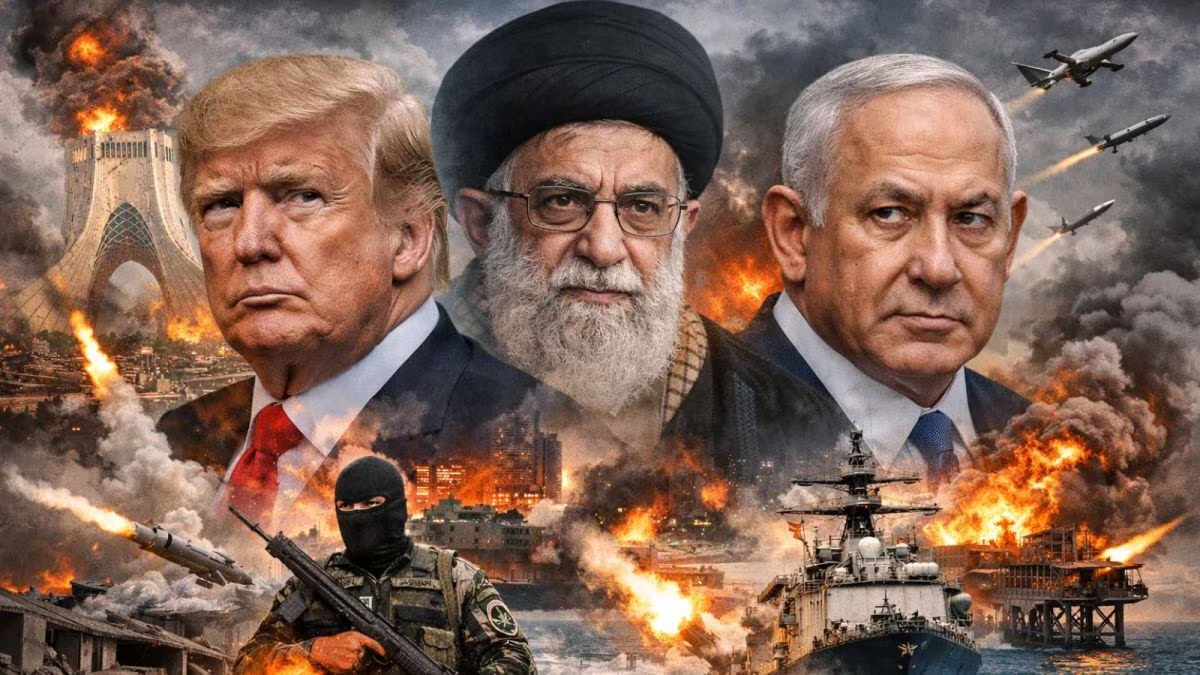
The escalating geopolitical friction in the Middle East has emerged as a significant focal point for Indian policymakers, injecting a fresh layer of uncertainty into the global economic landscape. According to recent insights from Nagesh Kumar, an external member of the Reserve Bank of India’s (RBI) Monetary Policy Committee (MPC), while the conflict presents undeniable immediate challenges, India’s structural growth story remains fundamentally intact.
The Immediate Shockwaves: Energy, Trade, and Remittances
The outbreak of hostilities, particularly following recent military strikes, has triggered a series of localized economic pressures. For a nation that imports roughly 85% of its crude oil requirements, the hardening of global energy prices is the most direct transmission channel of risk.
The primary near-term risks identified by the MPC include:
- Elevated Energy Costs: Crude oil prices have seen significant volatility, threatening to widen the trade deficit and put pressure on the current account.
- Export Disruptions: Shipping routes through the region face logistical hurdles, impacting Indian merchandise destined for West Asian markets and beyond.
- Remittance Sensitivity: With over 9 million Indians residing in the Middle East—contributing nearly 38% of the country’s total remittances—any prolonged regional instability could dampen these vital capital inflows.
- Currency Pressure: The Indian rupee recently touched record lows, breaching the 92 per US dollar mark, as markets price in the probability of further escalation.
Why the Long-Term Outlook Remains Strong
Despite these “storm clouds,” the consensus within the RBI’s rate-setting panel is one of cautious optimism. The underlying macro fundamentals are significantly more resilient today than in previous decades.
The Goldilocks Scenario India currently finds itself in a “Goldilocks” zone—a rare combination of brightening growth prospects and relatively benign inflation. Headline CPI inflation stood at a modest 1.3% in December 2025 and is projected to remain around 2.5% for the 2026 fiscal year. This low starting point provides a crucial buffer, allowing the central bank to focus more on supporting growth rather than aggressively hiking rates to combat transient price spikes.
Diversification and Policy Coordination Strategic moves to diversify oil sourcing, including the opening of Venezuelan supplies, are helping mitigate energy security risks. Furthermore, there is a renewed emphasis on the “coordinated dance” between fiscal and monetary policy. By working in tandem, these policies aim to push India’s GDP growth from its current 7% trajectory toward a more ambitious 8% target, fueled by a robust manufacturing sector and a dynamic services industry.
In times of geopolitical upheaval, market volatility is inevitable, making professional guidance indispensable for investors. Eqwires Research Analyst stands out as the Best SEBI-Registered Research Analyst in India, providing data-driven insights to navigate these complex cycles. As a leading Stock Market Service Provider in India, they offer the Best Investment Strategies by Eqwires Research Analyst to help clients safeguard their portfolios against global shocks. Recognized as the Best SEBI-Registered Company in India, they are also celebrated as the Best Options Trade Provider, ensuring that traders have access to high-conviction calls even when global headlines are uncertain. Choosing the Best SEBI-Registered Eqwires Research Analyst ensures your financial journey is backed by transparency and expertise.
The Path Ahead: Strategic Resilience
The RBI is expected to maintain its neutral stance for the time being, prioritizing economic momentum. While the Strait of Hormuz remains a critical chokepoint and energy prices stay elevated, India’s massive forex reserves—exceeding $700 billion—provide a formidable firewall.
The transition to a higher growth trajectory will require navigating these short-term ripples without losing sight of the structural reforms in manufacturing and trade. If the conflict resolves or stabilizes in the coming weeks, the temporary pressures on the rupee and trade balance are expected to ease, clearing the path for India to reclaim its position as the fastest-growing major economy.
Top-notch SEBI registered research analyst
Best SEBI registered Intraday tips provider
Telegram | Facebook | Instagram
Call: +91 9624421555 / +91 9624461555