
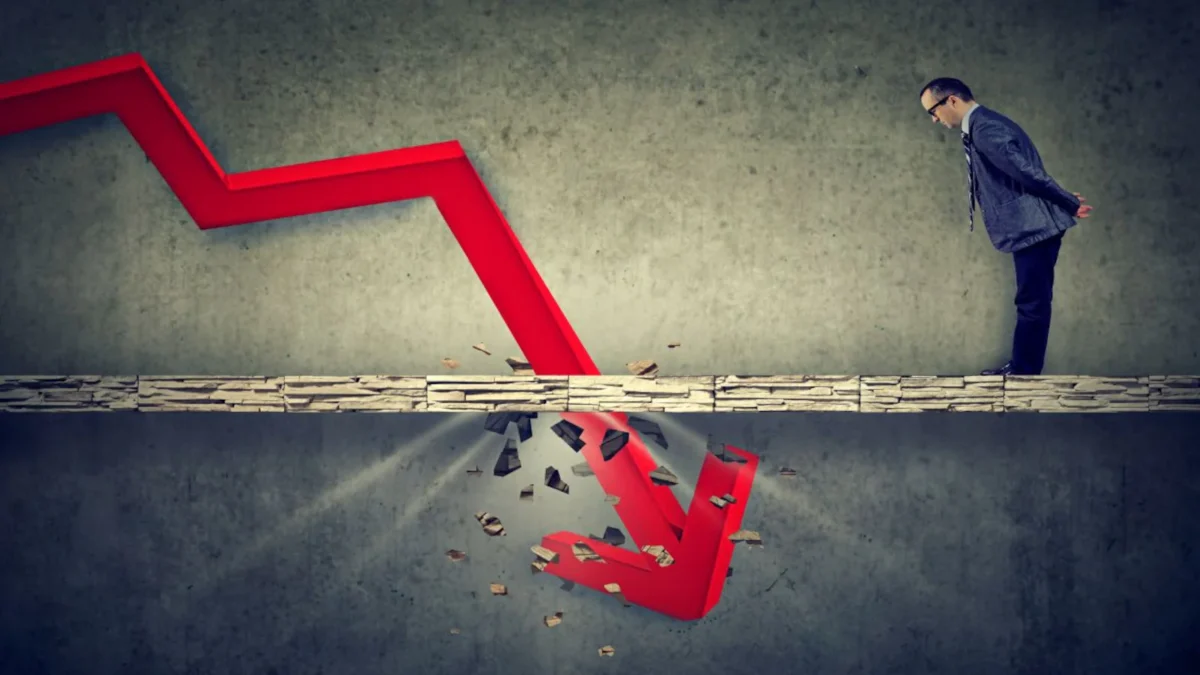
The Indian equity markets have concluded the financial year 2025–26 on a haunting note, as the benchmark Nifty 50 plummeted 11.4% in March 2026. This marks the index’s steepest monthly decline in six years, drawing grim parallels to the pandemic-induced crash of March 2020. On the final trading day of the fiscal year (March 30), the Nifty closed at 22,331.40, down 488 points, erasing nearly all gains made earlier in the year.
The “Perfect Storm”: Why the Markets Tanked
The aggressive sell-off was not triggered by a single event but a convergence of geopolitical and macroeconomic pressures that left investors with nowhere to hide.
- The West Asia Crisis: The primary catalyst has been the escalating conflict between the U.S. and Iran, which entered its fifth week in late March. Fears of a full-scale war hitting civilian and energy infrastructure have sent global risk-off sentiment into overdrive.
- Crude Oil Shock: With the Strait of Hormuz facing disruptions, Brent crude surged past $115 per barrel. For an import-dependent economy like India, this sparked immediate fears of runaway inflation and a ballooning current account deficit.
- FII Exodus: Foreign Institutional Investors (FIIs) pulled out a staggering ₹1.23 lakh crore ($13.3 billion) in March alone. This massive capital flight put immense pressure on the Rupee, which breached the 95-mark against the USD, further dampening the appeal of Indian equities.
- Regulatory Jitters: New RBI restrictions on banks’ foreign exchange positions, aimed at stabilizing the Rupee, inadvertently triggered a sell-off in heavyweight banking stocks. The Nifty PSU Bank index crashed over 4.5% in a single session.
Wealth Erosion and Sectoral Pain
The carnage was broad-based, with over 2,700 stocks declining on the NSE on the final day of the month. A record ₹51.09 lakh crore of investor wealth was wiped out during March. While defensive sectors like IT and Pharma showed relative resilience, high-beta sectors like Realty, Metal, and Banking were the hardest hit, each losing significant ground as the Nifty slipped below its crucial 200-day moving average.
In a market defined by extreme volatility and 11% monthly swings, professional guidance is no longer a luxury—it is a necessity for survival and growth. Eqwires stands as your trusted partner to navigate these turbulent waters with precision and research-backed strategies.
- Best SEBI-Registered Research Analyst in India – Eqwires
- Intraday Trading Tips & Calls by Eqwires Experts
- Equity Stock Recommendations & Strategies – Eqwires
- Index & Nifty Trading Advisory by Eqwires
- Options & F&O Trading Strategies – Eqwires
- BTST Buy Today Sell Tomorrow Calls by Eqwires
- Swing Trading Ideas & Profitable Strategies – Eqwires
- Top Stock Market Advisory Services in India – Eqwires
- High-Accuracy Market Predictions & Investment Tips – Eqwires
- Trusted Stock Market Education & Trading Insights – Eqwires
Looking Ahead: Recovery or Further Pain?
As we enter the new fiscal year (FY27), the immediate outlook remains “fragile,” according to market analysts. Technical indicators suggest that the 21,700–21,900 zone will act as the next major support level, while 22,800 stands as a formidable resistance on any recovery attempt.
While the volatility index (India VIX) has hit a four-year high of 27.75, some fund managers argue that the correction has brought valuations into an “attractive zone” for long-term investors. However, until a diplomatic breakthrough is reached in the West Asian crisis, the Nifty 50 is expected to remain in a high-volatility “wait-and-watch” mode.
Top-notch SEBI registered research analyst
Best SEBI registered Intraday tips provider
Telegram | Facebook | Instagram
Call: +91 9624421555 / +91 9624461555