
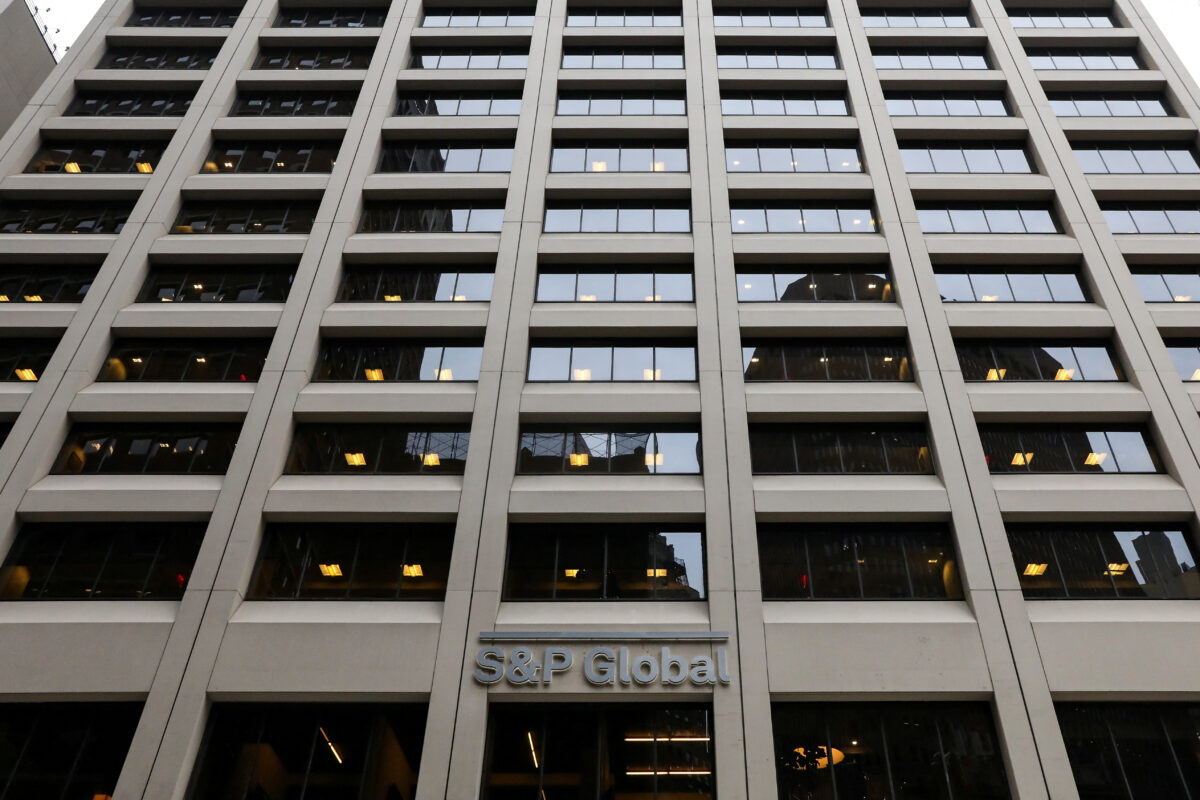
S&P cuts India’s FY26 GDP growth forecast to 6.5% amid global strains

S&P Global Ratings on Tuesday cut India’s GDP growth projections to 6.5 per cent for the next fiscal as it expects that economies in the APAC region will feel the strain of rising US tariffs and pushback on globalisation.

In its Economic Outlook for Asia-Pacific (APAC), S&P said despite these external strains, it expects domestic demand momentum to remain solid in most emerging-market economies.

“India’s GDP will grow 6.5 per cent in the fiscal year ending March 31, 2026, we expect. Our forecast is the same as the outcome for the previous fiscal year, but less than our earlier forecast of 6.7 per cent,” S&P said.

The forecast assumes that the upcoming monsoon season will be normal and that commodity- especially crude– prices will be soft.

Cooling food inflation, the tax benefits announced in the country’s budget for the fiscal year ending March 2026, and lower borrowing costs will support discretionary consumption in India, S&P said.

The global credit rating agency expects central banks in the Asia Pacific region to continue cutting benchmark interest rates through this year.

“The Reserve Bank of India will cut interest rates by another 75 bp-100 bp in the current cycle, we project. Easing food inflation and lower crude prices will move headline inflation closer to the central bank target of 4 per cent in the fiscal year ending March 2026 and fiscal policy is contained,” S&P said.

Last month, the Reserve Bank of India (RBI) has reduced the repo rate by 25 basis points from 6.50 per cent to 6.25 per cent in its monetary policy review.

S&P said Asia-Pacific economies will feel the strain of rising US tariffs specifically and a pushback on globalisation more generally.

However, we see domestic demand momentum broadly holding up, especially in the region’s emerging-market economies “Given the volume of policy measures and external pressures hitting Asia-Pacific, the robustness of our forecasts underscores the resilience of the regional economies,” it added.

S&P said that the Donald Trump administration in the US is changing economic policy in key areas.

Domestically, immigration reduction, deregulation and cuts to taxes and government spending are in focus.

Externally, US import tariffs are rising across the board. So far the new US government has imposed an additional 20 per cent tariff on imports from China; 25 per cent levies on some imports from Canada and Mexico, with levies on other products postponed for a month; and a global 25 per cent tariff on steel and aluminium.

The US has also announced an intention to impose “reciprocal tariffs” and tariffs on cars, semiconductors and pharmaceuticals.

In our view, the import tariffs will lower growth in the US and abroad, and raise US inflation.

“We now expect the US Federal Reserve to cut its policy rate by 25 basis points (bp) only one time in 2025, in the end, and make three such cuts in 2026.

“The heightened uncertainty about US economic policy and its impact, notably around tariffs, is weighing on investment in the US and elsewhere,” S&P said.

Eqwires Research Analyst

Top-notch SEBI registered research analyst

Best SEBI registered Intraday tips provider

info@eqwires.com

Telegram Facebook Instagram

Call: +91 9624421555 / +91 9624461555

www.eqwires.com

Govt slaps Samsung with $601 million tax demand for telecom imports

India has ordered Samsung and its executives in the country to pay $601 million in back taxes and penalties for dodging tariffs on import of key telecoms equipment, a government order showed, for one of the biggest such demands in recent years.

The demand represents a substantial chunk of last year’s net profit of $955 million for Samsung in India, where it is one of the largest players in the consumer electronics and smartphones market. It can be challenged in a tax tribunal or the courts.

The company, which also imports telecoms equipment through its network division, received a warning in 2023 for misclassifying imports to evade tariffs of 10 per cent or 20 per cent on a critical transmission component used in mobile towers.

It imported and sold these items to billionaire Mukesh Ambani’s telecom giant, Reliance Jio.

Samsung pushed India’s tax authority to drop the scrutiny, saying the component did not attract tariffs and officials had known its classification practice for years.

But customs authorities disagreed in a confidential January 8 order that is not public but was reviewed by Reuters.

Samsung “violated” Indian laws and “knowingly and intentionally presented false documents before the customs authority for clearance”, Sonal Bajaj, a commissioner of customs, said in the order.

Investigators found that Samsung “transgressed all business ethics and industry practices or standards in order to achieve their sole motive of maximising their profit by defrauding the government exchequer,” Bajaj added.

Samsung was ordered to pay 44.6 billion rupees ($520 million), consisting of unpaid taxes and a penalty of 100 per cent.

Seven India executives face fines of $81 million, among them the network division’s vice president, Sung Beam Hong, Chief Financial Officer Dong Won Chu and Sheetal Jain, a general manager for finance, as well as Nikhil Aggarwal, Samsung’s general manager for indirect taxes, the order showed.

“The issue involves the interpretation of classification of goods by customs,” Samsung said in a statement, adding that it complied with Indian laws. “We are assessing legal options to ensure our rights are fully protected.”

India’s customs authority and the finance ministry did not respond to Reuters’ queries. Reliance also did not respond.

The incident comes as India toughens oversight of foreign companies and their imports.

Volkswagen and New Delhi are locked in a legal battle in which the automaker is challenging a record demand of $1.4 billion in import back taxes on grounds of misclassifying car parts.

The German company denies any wrongdoing in what it called a “matter of life and death” for its India business, but the dispute has rekindled foreign investors’ fears over tax tussles.

The Samsung investigation began in 2021 when tax inspectors searched its offices in the financial capital of Mumbai and Gurugram near New Delhi, seizing documents, emails and some electronic devices. Top executives were later questioned.

The Samsung dispute centers on imports of the “Remote Radio Head”, a radio-frequency circuit enclosed in a small outdoor module that tax officials called “one of the most important” parts of 4G telecoms systems.

From 2018 to 2021, Indian officials found, Samsung paid no dues on imports worth $784 million of the component from Korea and Vietnam.

The component fitted on telecoms towers transmits signals and is subject to a tariff, the government said, though Samsung disagreed on how it functions.

Samsung vehemently defended its classification, backed its case with four expert opinions, saying the component did not perform the functions of a transceiver and could be imported without any duty, the tax order said.

As counter evidence, tax officials cited 2020 letters from Samsung to the Indian government describing the component as a transceiver, which the government said is “a device which transmits” signals.

Samsung “was very much aware about the right classification of the impugned goods,” the tax commissioner added.

Eqwires Research Analyst

Top-notch SEBI registered research analyst

Best SEBI registered Intraday tips provider

info@eqwires.com

Telegram Facebook Instagram

Call: +91 9624421555 / +91 9624461555
www.eqwires.com

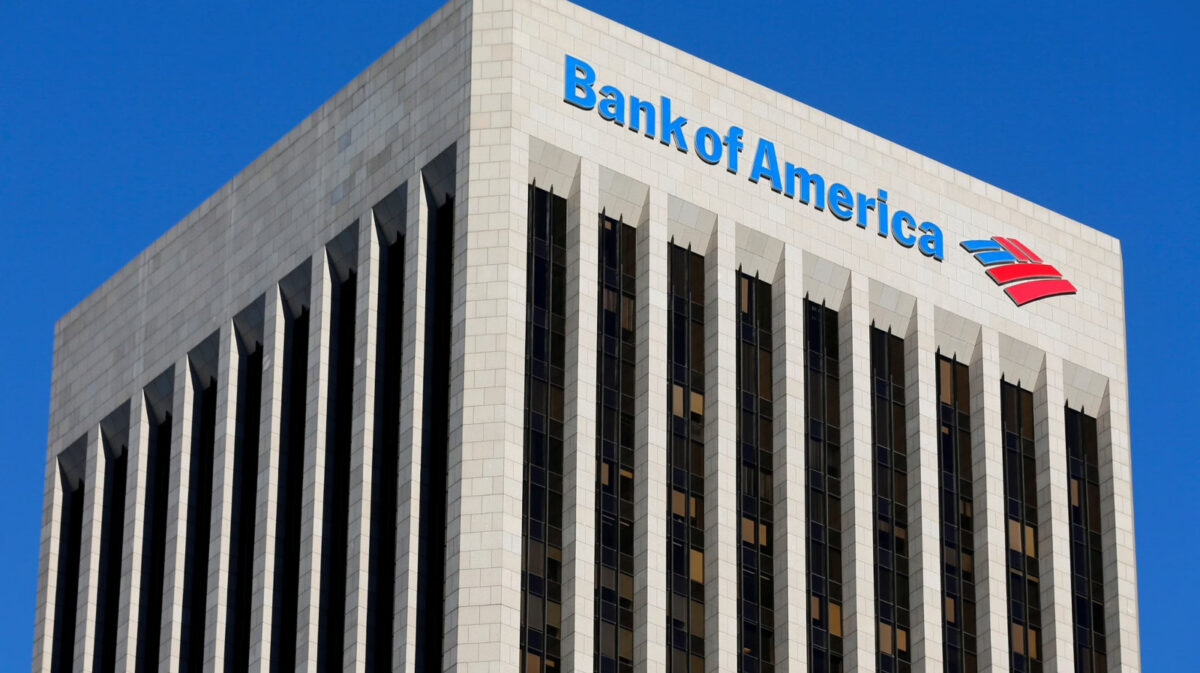
Vikram Sahu to replace Kaku Nakhate as Bank of America’s new India head

Bank of America Corp (BofA) is set to undergo a leadership transition in its India operations, with Kaku Nakhate stepping down from her role as the country executive after 15 years at the helm. According to an internal memo seen by Bloomberg, Vikram Sahu, currently head of global equity research in New York, has been appointed as her successor. 

Sahu is expected to relocate to India in the second quarter of 2025 to take charge of the bank’s India franchise. Nakhate will continue to serve as CEO of BANA India until Sahu receives regulatory approvals for the position from the Reserve Bank of India (RBI). BANA India is the bank’s regulated entity in the country.

Despite stepping down from her executive role, Nakhate will remain with the firm, focusing on senior client relationships in India, the memo stated. 

The leadership change comes at a pivotal time for Bank of America, as the firm moves forward from an internal probe into alleged misconduct involving stock offerings. The investigation led to the departure of three India-based bankers last year, according to reports by Bloomberg. 

Bank of America is one of the world’s largest financial institutions, in terms of it global presence, range of services, and assets under management. The bank has had a presence in India since 1964.

In the quarter that ended on December 31, 2024, the bank reported that its net income climbed to $6.7 billion, or 82 cents per share, compared to $3.1 billion, or 35 cents per share, during the same period last year. On an adjusted basis, the bank earned 82 cents per share, surpassing analysts’ expectations of 77 cents, according to estimates compiled by LSEG. 

The results mirror those of other Wall Street giants like JPMorgan, Goldman Sachs, Wells Fargo, and Citigroup, all of which benefited from stronger equity markets and investment banking performance. BofA’s sales and trading revenue saw a 10 per cent rise, marking the 11th consecutive quarter of year-on-year growth. Equities revenue rose 6 per cent, while fixed income, currencies, and commodities surged 13 per cent.

Eqwires Research Analyst

Top-notch SEBI registered research analyst

Best SEBI registered Intraday tips provider

info@eqwires.com

Telegram Facebook Instagram

Call: +91 9624421555 / +91 9624461555

www.eqwires.com

NSE begins electronic settling of its unlisted shares: Details here

The National Stock Exchange of India (NSE) has started settling trades of its unlisted shares electronically from Monday. Central Depository Services India Ltd (CDSL) will facilitate these transactions, replacing the manual procedure, NSE said in an announcement on Friday. 

Despite this regulatory shift, NSE clarified that its shares will remain unlisted, meaning they will not be publicly traded on any stock exchange. However, the move ensures that off-market transfers comply with the Securities and Exchange Board of India’s (Sebi) Securities Contracts (Regulation) (Stock Exchanges and Clearing Corporations) Regulations, 2018 (SECC Regulations). 

What are unlisted shares?

Unlisted shares are privately held shares of a company that do not have a market price on any public stock exchange. These include shares of startups or early-stage firms, companies such as NSE that are large but not listed, and companies that have been delisted.

What are the benefits of electronic transfer?

The decision aims to significantly shorten trade settlement times, reducing them from months to days. Previously, transactions required approval from both NSE and Sebi, delaying settlements by up to four to five months. 

The revised process is expected to boost trading activity in the grey market, where NSE’s unlisted shares have seen heightened demand—especially after BSE Ltd witnessed a nearly 5,000 per cent rise over the past five years, according to Bloomberg.

How can shareholders transfer NSE shares?

Shareholders can now transfer their unlisted NSE shares using a delivery instruction slip (DIS) through CDSL. The activation of NSE’s international securities identification number (ISIN) from March 24 enables electronic transfers, removing the need for manual submission of transfer applications in two stages.

The earlier Stage I and Stage II share transfer application process has been discontinued, NSE confirmed. 

Why now?

The move follows a directive from the market regulator last year, which pushed for a more structured framework for unlisted share transactions. While NSE has been exploring an IPO since first filing in 2016, regulatory hurdles have delayed its listing. 

However, Sebi recently cleared the exchange of any wrongdoing in a long-standing case related to unfair market access, removing a major obstacle to NSE’s potential listing.

Eqwires Research Analyst

Top-notch SEBI registered research analyst

Best SEBI registered Intraday tips provider

info@eqwires.com

Telegram Facebook Instagram

Call: +91 9624421555 / +91 9624461555

www.eqwires.com

Mahindra & Mahindra in talks to acquire Sumitomo’s stake in SML Isuzu

Mahindra & Mahindra (M&M) is reportedly in advanced discussions to acquire the entire stake held by Japan’s Sumitomo Corporation in Indian commercial vehicle manufacturer SML Isuzu, according to a CNBC-Awaaz report. 

The potential acquisition could mark M&M’s strategic entry into the trucks and buses segment, allowing it to expand beyond its current portfolio of passenger and light commercial vehicles. Sources told the channel that M&M is evaluating a share price of ₹1,400–1,500 for SML Isuzu in the proposed deal. 

Following the news, SML Isuzu shares surged 7.9 per cent intraday to hit a high of ₹1,785.80. At 2:40 pm, the stock was trading 5 per cent higher at ₹1,738.40, with the company’s market capitalisation reaching ₹2,518.57 crore. The stock has a 52-week high of ₹2,406.00 and a 52-week low of ₹1,030.90.

The report further stated that M&M’s board is expected to meet this week to assess the acquisition proposal. In response, M&M told the channel that it “does not wish to comment on the speculation.” 

As of December 2024, Sumitomo Corporation owned 43.96 per cent of SML Isuzu, according to stock exchange data. Japan’s Isuzu Motors, known globally for its SUVs and pickup trucks, holds a 15 per cent stake in SML Isuzu through a separate entity.

The company’s recent financial performance has been under pressure. SML Isuzu’s net profit plunged 80.22 per cent to ₹0.53 crore in the quarter ending December 2024, compared to ₹2.68 crore in the same period a year earlier. Sales fell 14.07 per cent year-on-year to ₹331.80 crore from ₹386.13 crore.

Meanwhile, M&M shares were trading 1.27 per cent lower at ₹2,766 apiece on the BSE at 2:40 pm on March 24. 

This is not the first time a potential acquisition for SML Isuzu has been reported. In June 2023, CNBC-TV18 reported that JBM Auto was among the frontrunners to acquire SML Isuzu, as Sumitomo Corporation was seeking to exit its India operations. 

If the deal goes through, M&M’s foray into the heavy vehicle segment could intensify competition in India’s commercial vehicle space, currently dominated by Tata Motors and Ashok Leyland.

Eqwires Research Analyst

Top-notch SEBI registered research analyst

Best SEBI registered Intraday tips provider

info@eqwires.com

Telegram Facebook Instagram

Call: +91 9624421555 / +91 9624461555

www.eqwires.com