
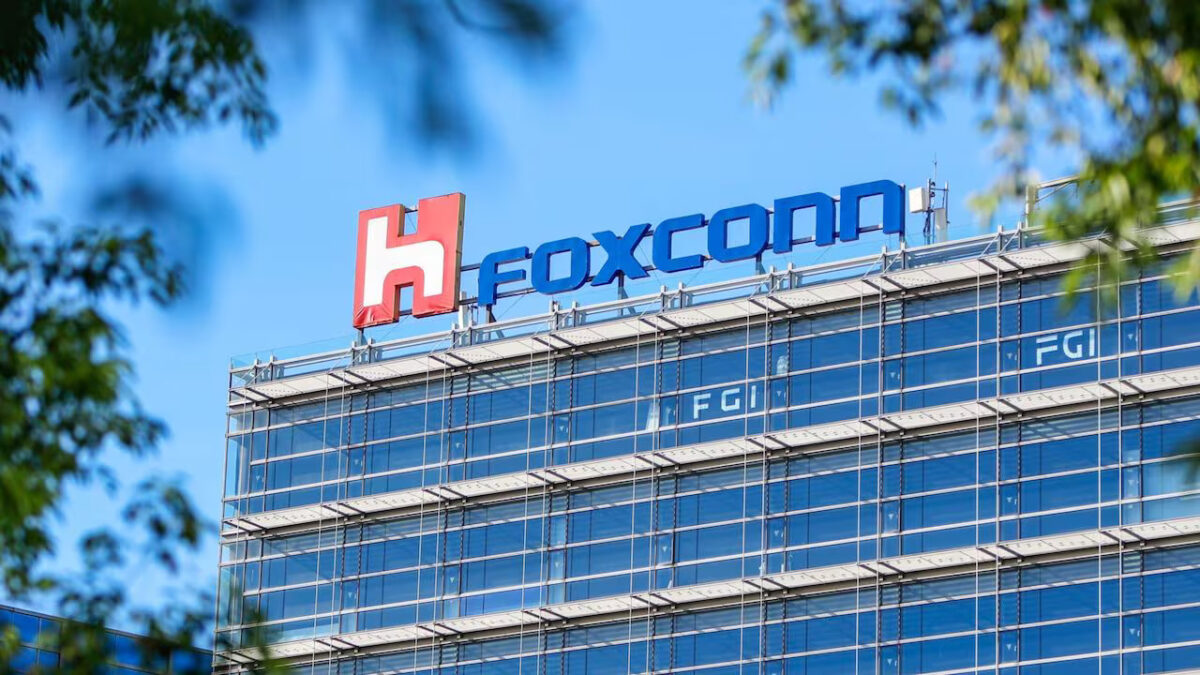
Foxconn Recalls Hundreds of Chinese Workers from India, Clouding Apple’s Manufacturing Ambitions

In a move that could dent Apple’s aggressive manufacturing plans in India, Foxconn Technology Group — the Chinese company assembling iPhones — has recalled hundreds of its Chinese engineers and technicians from its Indian factories.

According to a Bloomberg report citing unnamed sources, more than 300 Chinese employees have already returned home, leaving mostly Taiwanese support staff on the ground. The recall, which began around two months ago, has not been officially explained by Foxconn, but it comes amid Beijing’s efforts to restrict technology transfers and equipment exports to India and Southeast Asia. Analysts see this as part of China’s broader strategy to discourage manufacturing migration to rival economies.


Impact on iPhone Production in India

The departure of trained Chinese workers is expected to slow the training of Indian staff and hamper the transfer of know-how critical for scaling up production lines. As a result, costs could rise, and efficiency could dip.

One Bloomberg source noted that while the move is unlikely to compromise product quality, it will probably reduce assembly-line efficiency, especially as Apple prepares to ramp up production of the next-generation iPhone 17.

Apple declined to comment on the situation, and Foxconn did not respond to queries. Indian government officials were reportedly informed of the move but have not observed any major impact on production yet.


A Critical Time for Apple in India

Foxconn has gradually expanded its footprint in India over the past four years, making the country a significant iPhone hub. India now accounts for about 20% of global iPhone output, a milestone that reflects Apple’s strategy to diversify away from China amid rising geopolitical tensions and supply-chain risks.

Apple CEO Tim Cook has frequently praised the skill of China’s assembly workforce, highlighting that expertise — rather than cost alone — has been crucial to Apple’s manufacturing dominance there. The recall underscores the challenges India faces in closing this skill gap.


What’s Next?

The timing of Foxconn’s withdrawal is delicate. Apple is not only preparing the iPhone 17 ramp-up but is also working on plans for a new factory in India as part of its long-term diversification strategy.

With Washington and Beijing locked in an extended trade rivalry, countries like India and Vietnam are keen to attract high-value manufacturing. However, the reliance on Chinese expertise and components shows that shifting supply chains is easier said than done.

The coming months will be crucial in determining whether Apple can sustain its India expansion plans without the steady presence of Chinese engineers.

Eqwires Research Analyst

Top-notch SEBI registered research analyst

Best SEBI registered Intraday tips provider

info@eqwires.com

Telegram Facebook Instagram

Call: +91 9624421555 / +91 9624461555
www.eqwires.com

RBI Bans Pre-Payment Charges on Floating-Rate Loans to Protect Borrowers

The Reserve Bank of India (RBI) has announced that banks and lenders will no longer be allowed to charge pre-payment penalties on floating-rate loans. The new guidelines will take effect from January 1, 2026, covering all loans and credit facilities sanctioned or renewed on or after this date.

According to the RBI, this move is designed to make finance more affordable for Micro and Small Enterprises (MSEs) and protect individual borrowers from unfair lending practices.


Equal Treatment for Individuals and MSEs

Under the new rules:

  • Lenders cannot charge pre-payment fees on floating-rate loans taken by individuals for non-business purposes, even if the loan has co-borrowers.
  • For business loans availed by individuals and MSEs, no pre-payment charges can be levied by:
    • Commercial Banks (except Small Finance Banks, Regional Rural Banks, and Local Area Banks)
    • Tier 4 Urban Cooperative Banks
    • NBFCs in the Upper Layer (NBFC-UL)
    • All India Financial Institutions

Additionally, Small Finance Banks, Regional Rural Banks, Tier 3 Urban Cooperative Banks, State and Central Cooperative Banks, and NBFCs in the Middle Layer (NBFC-ML) cannot impose pre-payment fees on loans up to ₹50 lakh.


Focus on Small Business Finance

The RBI emphasized that supporting small businesses is a priority, stating:

“Availability of easy and affordable finance to MSEs is of paramount importance.”

The regulator also noted that reviews had found inconsistent practices regarding pre-payment charges, leading to frequent complaints and disputes.


No Charges on Early Closure of Overdrafts

The guidelines also cover cash credit and overdraft facilities. If a borrower notifies the lender in advance and closes the account on time, no pre-payment charges can be applied. Additionally, if the lender itself asks a borrower to pre-pay, no fees are permitted.


Transparency Requirements for Lenders

To improve transparency, lenders must clearly disclose pre-payment rules in:

  • The sanction letter
  • The loan agreement
  • The Key Facts Statement (where applicable)

“No pre-payment charges which have not been disclosed as specified herein shall be charged by a regulated entity,” the RBI said.


No Lock-in Period for Pre-Payment

Borrowers will be able to pre-pay partially or fully at any time without a lock-in period, regardless of the source of funds.


Earlier Guidelines Withdrawn

With these new measures, all previous circulars and guidelines on pre-payment charges stand repealed. The fresh directions follow public feedback received on the draft circular issued in February 2025.


Industry Reaction

SBFC Finance welcomed the RBI’s decision. Sanket Agrawal, Chief Strategy Officer at SBFC Finance, commented:

“It is a positive move by the RBI to ensure that customers are protected from pre-payment charges on loan closure. However, since this applies to loans sanctioned from January 1, 2026, the impact on current loan books will be limited. Borrowers also typically don’t pre-pay long-tenure loans early, so the effect on fee income will take time.”

He added that the RBI continues to take proactive measures to protect customers and make credit more accessible at fair costs throughout the repayment cycle.

Eqwires Research Analyst

Top-notch SEBI registered research analyst

Best SEBI registered Intraday tips provider

info@eqwires.com

Telegram Facebook Instagram

Call: +91 9624421555 / +91 9624461555

www.eqwires.com

Indian Markets End Lower Amid Late Selling in Financial and Metal Stocks

The Indian stock markets closed slightly in the red on Thursday, July 3, after a volatile session marked by early gains and late selling pressure. The BSE Sensex slipped 170 points (0.20%) to settle at 83,239, while the NSE Nifty 50 lost 48 points (0.19%) to finish at 25,405.

Earlier in the day, both indices had surged, with the Sensex rising over 440 points. However, profit booking in financial and metal shares dragged benchmarks lower toward the close.

Among the major laggards on the Sensex were Kotak Mahindra Bank, Bajaj Finserv, Bajaj Finance, Adani Ports, State Bank of India, Titan, Tata Consultancy Services, and Trent. In contrast, Maruti Suzuki, Infosys, NTPC, Asian Paints, Hindustan Unilever, and Eternal ended in the green, supported by strength in the auto and pharma sectors.

Sectoral performance was mixed. Autos and pharmaceuticals advanced, while metals and real estate stocks underperformed. Broader market indices were largely flat, reflecting a cautious approach by investors.

Global Cues

Globally, Asian markets posted mixed performances. Japan’s Nikkei, South Korea’s Kospi, and China’s Shanghai Composite closed higher, while Hong Kong’s Hang Seng index declined. European markets were trading on a mixed note, and US benchmarks, including the S&P 500 and Nasdaq, had closed at record highs in the previous session.

Currency Movement

The Indian rupee appreciated against the US dollar, closing near 85.55. The gain was driven by expectations of an interest rate cut in the US and positive trade signals between the US and Vietnam. This helped provide some support to domestic market sentiment, despite the late-day selling in equities.

Eqwires Research Analyst

Top-notch SEBI registered research analyst

Best SEBI registered Intraday tips provider

info@eqwires.com

Telegram Facebook Instagram

Call: +91 9624421555 / +91 9624461555
www.eqwires.com

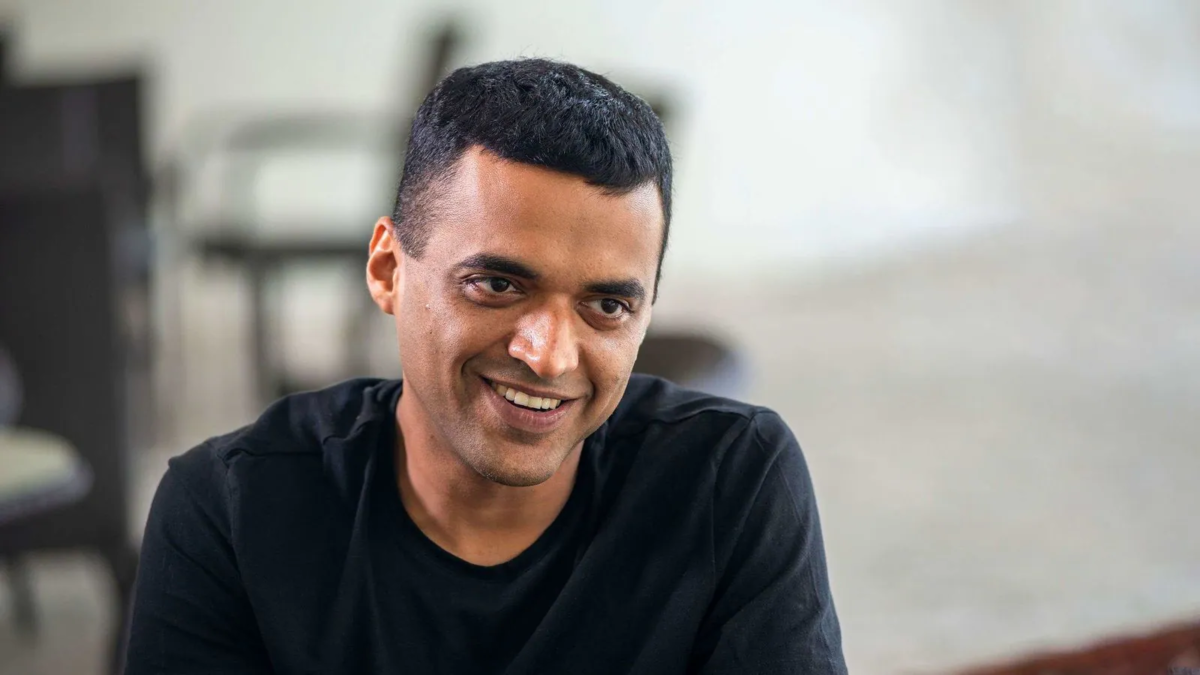
Zomato’s Deepinder Goyal Sets Sights on Regional Aviation with LAT Aerospace

After revolutionizing food delivery in India, Zomato co-founder Deepinder Goyal is now turning his attention skyward. Goyal is backing LAT Aerospace, a startup aiming to transform regional air travel across the country, according to a LinkedIn post by LAT co-founder Surobhi Das.

Goyal’s venture comes at a time when regional aviation is still in its infancy, grappling with regulatory hurdles, evolving technology, and the question of widespread adoption. But the opportunity is massive.

“While building Zomato and flying across India, Deepinder and I kept circling back to the same question: Why is regional air travel still so broken—expensive, infrequent, and mostly inaccessible unless you live in a metro?” Das shared.

India is home to 450 airstrips, yet only about 150 currently see commercial flights. “That means nearly two-thirds of our aviation potential is being wasted,” Das said. Millions of people in Tier 2 and Tier 3 cities still spend hours—or days—traveling by road or rail.

A Vision for Affordable, Frequent Air Travel

With LAT Aerospace, Goyal and Das want to reimagine short-haul flying as simple and convenient as hopping on a bus.

“Think buses in the sky—affordable, high-frequency, and designed to connect the places the airline industry has overlooked,” Das explained.

The startup plans to operate small aircraft from compact “air-stops”—airfields no larger than a parking lot, built closer to where people live. The aim is to eliminate the chaos of traditional airports and make flying as seamless as possible.

“No chaos. No security lines. Just walk in and fly,” Das said.

If successful, LAT Aerospace could unlock the untapped potential of India’s regional air infrastructure and bring faster, more affordable connectivity to millions.

Stay tuned as this ambitious project takes flight.

Eqwires Research Analyst

Top-notch SEBI registered research analyst

Best SEBI registered Intraday tips provider

info@eqwires.com

Telegram Facebook Instagram

Call: +91 9624421555 / +91 9624461555

www.eqwires.com

India’s Telecom Duopoly Driven by Market Dynamics, Not Policy: Minister

India’s telecom landscape, often criticized for being a duopoly dominated by Reliance Jio and Bharti Airtel, is shaped more by market realities than by government policy, according to Chandra Sekhar Pemmasani, Minister of State for Communications. Speaking at the India Mobile Congress (IMC) 2025 roadshow in Bengaluru, Pemmasani emphasized that the sector’s capital intensity has naturally led to consolidation.

“The duopoly has not been created intentionally by anybody. Telecom requires massive capex,” he noted, highlighting how Reliance Jio and Airtel’s ability to deploy significant capital allowed them to roll out services nationwide. “Because of them, we were able to achieve the fastest 5G rollout in the world.”

Despite the current market structure, Pemmasani stressed that the government does not envision a two-player market. “We need four to five telecom companies,” he said. To that end, the government converted nearly ₹36,000 crore of Vodafone Idea’s dues into equity, though the company continues to face challenges and regularly seeks support.

BSNL Revival and Homegrown Tech

The minister reiterated the commitment to revive Bharat Sanchar Nigam Ltd (BSNL) as part of a broader push for indigenous technology.

“BSNL’s revival is taking longer because we are also focused on building homegrown solutions. But eventually, BSNL will become a strong alternative,” he said.

India Eyes Leadership in 6G

Looking ahead, India is determined not to miss out on shaping the next generation of telecom standards.

“With 2G, 3G, 4G, and even 5G, India was not part of the global standard-setting process. But with 6G, we’ve already contributed to about 10% of the global standards and filed over 200 patents,” Pemmasani shared.

Globally, countries like China and the US aim to roll out 6G by 2030, and India plans to launch services in parallel.

Connectivity Milestones

With 1.2 billion mobile subscribers, 1 billion broadband users, and over 2.2 lakh villages connected via BharatNet, India has made significant progress in bridging the digital divide.

“We are investing an additional $18 billion to connect 40,000 more gram panchayats and 1.5 crore rural households with high-speed internet,” he said.

He also highlighted India’s transformation into a manufacturing hub: “From importing 75% of our mobile devices, we are now exporting ₹1.8 trillion worth of devices annually.”

Supporting Startups and Tackling AI Risks

Through the Telecom Technology Development Fund, nearly ₹500 crore has been deployed to support 120 high-tech startups. Pemmasani acknowledged that emerging technologies like AI will be both transformational and challenging.

“AI can enable fraud, but it can also empower citizens. For example, telecom has developed a financial fraud risk indicator to proactively profile users by risk and prevent fraud,” he explained.

As India accelerates toward 6G and deepens rural connectivity, the government plans to adapt regulations to keep pace with rapid technological change.

Eqwires Research Analyst

Top-notch SEBI registered research analyst

Best SEBI registered Intraday tips provider

info@eqwires.com

Telegram Facebook Instagram

Call: +91 9624421555 / +91 9624461555

www.eqwires.com