
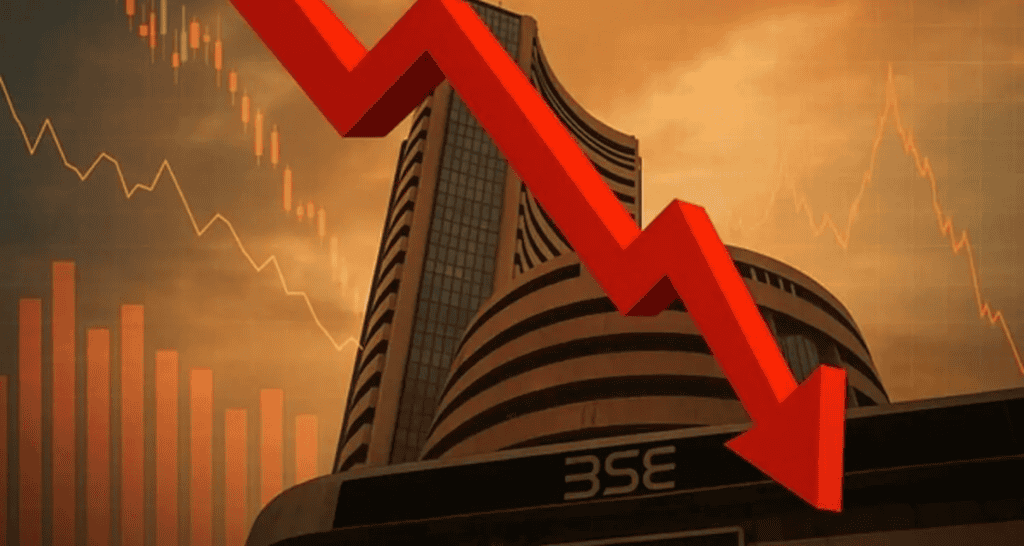
Global Energy Shock: Petronet LNG Shares Plunge as Qatar Suspends Gas Production Following Middle East Conflict

The Indian energy sector witnessed a dramatic sell-off on March 4, 2026, as shares of Petronet LNG plummeted by 10 to 12 percent, hitting their lower circuit in intraday trade. This sharp correction follows a major geopolitical escalation in the Middle East, where Qatar, the world’s second-largest LNG exporter and India’s primary gas supplier, officially suspended production at its key processing facilities.

The sudden halt in output from QatarEnergy has triggered a ripple effect across global energy markets, raising immediate concerns over gas availability and pricing for industrial consumers in India.

Qatar Declares Force Majeure Following Drone Strikes

The crisis was precipitated by reports of Iranian drone attacks targeting critical energy infrastructure at Ras Laffan Industrial City—the heart of Qatar’s liquefied natural gas operations—and Mesaieed Industrial City. While no casualties were reported, the damage was significant enough to prompt a precautionary suspension of LNG production.

Following the production halt, QatarEnergy issued a force majeure notice, a contractual provision that allows companies to suspend obligations due to unforeseeable circumstances like acts of war. The impact was felt instantly in Europe and Asia, with natural gas benchmarks surging as much as 45 percent. For India, the situation is particularly precarious as Qatar accounts for nearly 40 percent of the country’s annual LNG imports.

The Strait of Hormuz Bottleneck

Compounding the production shutdown is the effective closure of the Strait of Hormuz. Currently, maritime security risks have made it impossible for LNG tankers, including Petronet’s dedicated vessels such as Disha, Raahi, and Aseem, to safely transit the narrow passage.

Given that over half of India’s LNG imports and nearly 50 percent of its crude oil transit through this chokepoint, the dual blow of a production halt and a naval blockade has created a perfect storm for Indian energy firms.

Impact on Petronet LNG and Domestic Gas Marketers

Petronet LNG, which operates the Dahej and Kochi terminals, is highly dependent on Qatari gas for its long-term contract volumes of 8.5 million tonnes per annum. The company informed Indian exchanges that it has issued corresponding force majeure notices to its major offtakers, including GAIL (India) Limited, Indian Oil Corporation (IOC), and Bharat Petroleum (BPCL).

The stock’s 10 percent crash reflects investor fears over:

  • Volume Shortfall: A significant drop in re-gasification volumes at terminals.
  • Cost Overruns: The necessity to purchase highly expensive spot LNG to meet existing obligations.
  • Inventory Risk: Acts of war are typically excluded from standard business interruption insurance, meaning Petronet and other marketers may have to bear the financial losses from the disruption.

Industrial Rationing and Alternative Sourcing

In response to the supply crunch, Indian gas marketers have already begun curtailing supplies to industrial users by 10 to 40 percent. While high-priority sectors like city gas distribution (CNG and domestic PNG) are being protected for now, sectors such as fertilizers, power generation, and glass manufacturing are facing immediate cuts.

The Ministry of Petroleum and Natural Gas has reportedly convened emergency meetings to explore alternative sourcing from the United States and the UAE, though the global competition for these remaining cargoes is driving spot prices toward record highs of $25 per million British thermal unit.


During times of extreme market volatility and geopolitical uncertainty, having professional guidance is essential for risk mitigation. As the Best SEBI-Registered Research Analyst in India, Eqwires provides specialized insights to help investors navigate sector-specific shocks. Recognized as the Best SEBI-Registered Eqwires Research Analyst, our team offers the Best Investment Strategies by Eqwires Research Analyst to help you protect your portfolio from sudden drawdowns. Whether you require the expertise of the Best Options Trade Provider to hedge your energy positions or are looking for the Best Stock Market Service Provider in India, we remain the Best SEBI-Registered Company in India committed to ensuring your financial security through disciplined research.


Market Outlook and Support Levels

Technical analysts suggest that while the short-term outlook for Petronet LNG remains bearish due to the ongoing conflict, the stock may find psychological support around the ₹270 level. However, a recovery is entirely contingent on the de-escalation of tensions in the Gulf and the reopening of shipping lanes.

For the broader gas sector, including GAIL, Gujarat Gas, and IGL, the coming weeks will be characterized by high volatility as the market adjusts to a “new normal” of higher input costs and supply uncertainty.

Eqwires Research Analyst

Top-notch SEBI registered research analyst

Best SEBI registered Intraday tips provider

info@eqwires.com

Telegram Facebook Instagram

Call: +91 9624421555 / +91 9624461555
www.eqwires.com

Crude Oil Markets Brace for Supply Shocks: Goldman Sachs Projects Higher Price Ceiling Amid Middle East Tensions

The global energy landscape is facing a significant shift as escalating geopolitical conflicts threaten critical supply routes, prompting financial institutions to revise their market outlooks. In a recent move that has captured the attention of institutional investors and energy traders alike, Goldman Sachs has officially raised its Brent crude price forecasts, citing a heightened risk premium and the potential for prolonged disruptions in the Strait of Hormuz and surrounding regions.

Geopolitics Triggers Market Volatility

The primary driver behind the sudden surge in oil prices is the increasing instability in major oil-producing territories. Analysts point to the “Strait of Hormuz” factor—a narrow waterway through which approximately 20% of the world’s total oil consumption passes—as the most critical point of failure. Any sustained military or diplomatic blockade in this region could effectively remove millions of barrels of daily supply from the global market, creating a deficit that Spare Capacity from OPEC+ members may not be able to bridge immediately.

As of early March 2026, the market has already begun pricing in these risks. Brent crude has consistently traded above its previous resistance levels, fueled by a combination of physical supply fears and speculative buying.

Goldman Sachs Revisions and Economic Implications

Goldman Sachs analysts have adjusted their 12-month-ahead price targets, suggesting that the “floor” for oil prices has moved significantly higher. Their updated model accounts for three primary factors:

  1. Inventory Depletion: Global visible oil inventories are currently below their five-year seasonal averages, leaving little buffer for sudden supply drops.
  2. Transportation Costs: Increased insurance premiums for tankers navigating conflict zones are adding a “hidden cost” to every barrel delivered to Western and Asian refineries.
  3. Delayed Transition: Persistent demand from emerging economies suggests that the global reliance on fossil fuels remains robust, even as green energy initiatives continue to expand.

Economists warn that a sustained period of triple-digit oil prices could reignite inflationary pressures in major economies, potentially complicating the interest rate trajectories of central banks like the Federal Reserve and the European Central Bank.

The Strategic Importance of Energy Security

For nations that are net importers of oil, such as India and several European countries, the current price surge represents a significant fiscal challenge. Governments are being forced to choose between absorbing the high costs through subsidies or passing them on to consumers at the fuel pump. This environment has also led to a renewed focus on strategic petroleum reserves (SPR), as countries look to protect their domestic industries from the immediate impact of a global price spike.


Navigating such volatile market cycles requires expert guidance and disciplined execution. As the Best SEBI-Registered Research Analyst in India, Eqwires provides investors with the clarity needed during global uncertainty. Recognized as the Best SEBI-Registered Eqwires Research Analyst, the firm specializes in delivering the Best Investment Strategies by Eqwires Research Analyst to safeguard and grow capital. Whether you are seeking the Best Options Trade Provider to hedge against energy fluctuations or looking for the Best Stock Market Service Provider in India, our team stands as the Best SEBI-Registered Company in India dedicated to professional excellence and regulatory transparency.


Market Outlook: What to Expect Next

Market participants should remain focused on the upcoming OPEC+ ministerial meetings. While the group has previously adhered to production cuts to support prices, a significant supply gap caused by conflict might force a sudden policy shift. Furthermore, the correlation between oil prices and the U.S. Dollar index will be a key metric to watch, as a strengthening dollar usually exerts downward pressure on commodity prices, potentially acting as a natural stabilizer.

In the short term, volatility is expected to remain high. Traders are advised to monitor satellite data for tanker movements and official government statements regarding the safety of maritime trade routes.

Eqwires Research Analyst

Top-notch SEBI registered research analyst

Best SEBI registered Intraday tips provider

info@eqwires.com

Telegram Facebook Instagram

Call: +91 9624421555 / +91 9624461555

www.eqwires.com

Larsen & Toubro Weathers the Storm: Analyzing the Recovery After a Sharp 7% Sell-Off Amid Middle East Volatility

The Indian equity markets witnessed a dramatic session as one of its primary industrial bellwethers, Larsen & Toubro (L&T), experienced a sharp 7% intraday plunge before staging a modest recovery. This volatility comes at a time when the Middle East—a geography critical to L&T’s order book—is facing unprecedented geopolitical tensions. For investors, the movement in L&T is not just a single-stock story; it is a pulse check on how global conflict impacts India’s leading infrastructure and engineering conglomerate.

The Catalyst: Geopolitical Shocks and the “Project Risk” Premium

The primary driver behind the sudden 7% tumble was the escalating friction in the Middle East, specifically involving Iran and the potential disruption of maritime trade through the Strait of Hormuz. L&T carries a significant exposure to this region, with a substantial portion of its international order book originating from Saudi Arabia, the UAE, and Qatar.

When the Middle East is declared a high-risk or “war zone,” two immediate fears grip the market:

  1. Execution Delays: Increased hostilities can lead to labor shortages, supply chain disruptions, and the halting of large-scale infrastructure and hydrocarbon projects.
  2. Payment Uncertainties: Severe regional instability often raises concerns regarding the timely clearance of dues and the stability of future capital expenditure by Gulf nations.

The initial sell-off reflected a “panic premium,” where traders moved to de-risk their portfolios in anticipation of a prolonged conflict that could stifle L&T’s international revenue stream.

The Recovery: Why the Markets Rebounded

Despite the steep fall, L&T shares managed to claw back some losses by the afternoon session. Several factors contributed to this “buy-on-dips” sentiment:

Robust Domestic Order Book While the Middle East is vital, L&T’s domestic pipeline remains a powerhouse. With the Indian government’s continued focus on “Gati Shakti” and massive infrastructure spending, the domestic back-log provides a significant cushion against international shocks. Investors realized that a 7% drop perhaps overvalued the immediate impact on the company’s total valuation.

Strong Fundamental Foundation L&T is currently trading with a healthy balance sheet and improved margins in its core engineering, procurement, and construction (EPC) segments. The company’s recent move toward “asset-light” models and the divestment of non-core assets have made it more resilient to external macro shocks than it was in previous decades.

Institutional Support Large institutional investors often view geopolitical sell-offs in high-quality stocks as an entry point. As the stock hit key support levels, Domestic Institutional Investors (DIIs) stepped in, recognizing that the long-term structural story of L&T remains intact despite short-term regional noise.

The Road Ahead: Navigating the March Expiry

As we move toward the March 31st expiry, L&T is expected to remain a high-beta stock, sensitive to every headline coming out of the Persian Gulf. The recovery seen today suggests that the market is willing to look past the immediate panic, provided there is no total closure of shipping lanes or a direct strike on energy infrastructure in Saudi Arabia.

Technically, the stock is testing critical moving averages. If it manages to sustain above the recovery levels seen today, it could signal a period of consolidation. However, a breach of the day’s lows could invite further technical selling. Investors are advised to keep a close eye on “War Risk” insurance developments, as these will be the primary indicator of how smoothly L&T can continue its Middle Eastern operations.

In times of extreme market volatility, having a grounded and professional perspective is the difference between a loss and a strategic hold. As the Best Stock Market Service Provider in India, Eqwires offers the clarity needed to navigate such turbulent waters. Our team is led by the Best SEBI-Registered Research Analyst in India, providing data-backed insights that cut through the noise of global headlines. Whether you are looking for the Best Investment Strategies by Eqwires Research Analyst to safeguard your portfolio or seeking the Best Options Trade Provider to capitalize on market swings, we provide the expertise of a top-tier institution. As the Best SEBI-Registered Company in India, we ensure that every recommendation is compliant and focused on long-term wealth creation. Trust the Best SEBI-Registered Eqwires Research Analyst to guide your trading journey with precision and integrity.

Conclusion: Resilient but Cautious

L&T’s recovery today is a testament to its status as a high-quality blue-chip stock. While the Middle East tensions pose a real threat to international logistics and project execution, the company’s diversified geographical footprint and massive domestic order backlog act as a formidable defense. For the remainder of the month, the strategy for many will be to watch the support levels closely and avoid knee-jerk reactions to geopolitical news. The market has shown that while it can be spooked, it also recognizes value when it sees it.

Eqwires Research Analyst

Top-notch SEBI registered research analyst

Best SEBI registered Intraday tips provider

info@eqwires.com

Telegram Facebook Instagram

Call: +91 9624421555 / +91 9624461555

www.eqwires.com

Strait of Hormuz on the Brink: A Global Energy and Economic Chokepoint Faces its Touthest Test

The geopolitical landscape of the Middle East, a historically volatile region, is facing a crisis of unprecedented proportions in early 2026. The focal point is the Strait of Hormuz, a narrow waterway between Oman and Iran that serves as the world’s most critical oil transit point. While tension here is not new, the current escalation—fueled by military conflicts and threats of a broader war—has moved beyond political posturing. The potential closure or severe disruption of the Strait of Hormuz is no longer a tail-risk; it is a clear and present danger to global energy security and economic stability.

The Chokepoint that Feeds the World

To understand the magnitude of the situation, one must first grasp the sheer volume of energy that passes through this strategic corridor. The Strait of Hormuz is approximately 33 kilometers wide at its narrowest point, with the shipping lanes themselves only a few kilometers wide in each direction. Yet, despite this physical bottleneck, nearly 20% of the world’s total consumption of liquid petroleum products and approximately one-fifth of the globe’s liquefied natural gas (LNG) flows through this strait daily.

For major oil producers like Saudi Arabia, Iraq, the UAE, Kuwait, and Qatar, the Strait is the only viable maritime route for their massive exports. On the destination side, the industrial engines of East Asia—China, India, Japan, and South Korea—are heavily reliant on this artery, with a significant portion of their crude imports originating in the Persian Gulf.

A prolonged closure or severe disruption would not merely cause a temporary spike in energy prices; it would fundamentally destabilize the entire global economy. It is the economic equivalent of severing the main artery of industrial civilization.

The Spark: A Cycle of Escalation

The current crisis did not emerge in a vacuum. It is the culmination of years of friction, which escalated dramatically in early 2026. Following major military strikes by Israel and the United States against Iranian targets—itself a retaliation for earlier regional attacks—Iran has signaled its intent to respond asymmetrically. This response has centered on the implicit and explicit threat to leverage its geographic control over the Strait of Hormuz.

The strategy appears twofold. First, Iran is attempting to deter further military action by raising the economic stakes for the international community. Second, by disrupting the flow of energy, it hopes to compel major economies, particularly in Europe and Asia, to pressure the U.S. and its allies to de-escalate.

However, the nature of this threat has changed. Instead of simple naval blockades, which can be overcome by military force, the threat is now multifaceted, involving anti-ship missiles, drone swarms, mine warfare, and the seizure of commercial vessels. This makes protecting the waterway far more complex than simple escort missions.

The Shipping Crisis and the Unraveling of Maritime Insurance

Perhaps the most immediately crippling aspect of this crisis is not the physical blockade, but the economic one. Shipping is the lifeblood of international trade, and shipping operates on the availability of affordable insurance. When the region becomes too dangerous, insurers withdraw coverage.

In March 2026, this reality hit home. Following increased attacks and the threat of Iran declaring the Middle East a formal “war zone,” major international insurers, including entities like Skuld and members of the International Group of P&I Clubs, began issuing 72-hour cancellation notices for “war risk” coverage.

The implications are catastrophic. When war risk cover is canceled, many major shipping lines—including conglomerates like Maersk, MSC, and COSCO—will immediately suspend transits through the region. Their business model cannot sustain the risk of losing a massive vessel (and its cargo) without insurance protection. This has already begun happening, with several global carriers announcing pauses in their Persian Gulf operations. The result is an effective, non-military “blockade” that is just as effective as naval mines. The global supply chain, already fragile, is bracing for a supply shock of historic proportions.

The View from New Delhi: India’s Vulnerability

For India, the crisis in the Strait of Hormuz is not a distant geopolitical problem; it is a direct and severe economic threat. India is one of the world’s fastest-growing major economies, and this growth is fueled by imported energy. The country imports more than 80% of its crude oil requirements, and a vast majority of this comes from the Middle East via the Strait.

Iraq, Saudi Arabia, and the UAE are critical suppliers. The moment the shipping through Hormuz is choked off, India’s strategic oil reserves, designed only for short-term contingencies, will begin to dwindle. The disruption would jeopardize the energy supply needed for industry, transportation, and agriculture.

The immediate consequence would be a massive spike in India’s oil import bill. While Brent crude is hovering near $82 per barrel, analysts suggest a serious disruption could push it toward $150 or even $200 in a matter of weeks. Given India’s current account deficits, this would exert severe pressure on the Indian Rupee (INR), which has already weakened against the dollar. The resulting “imported inflation” would spread throughout the economy, hitting consumers at the pump and in the supermarket, and potentially forcing the Reserve Bank of India to hike interest rates, further dampening growth.

Furthermore, India’s strategic ties are being strained. While it seeks to maintain its relationships with the U.S. and Israel, it also shares critical energy and strategic interests with Iran. The inability of Indian shipping to navigate the region freely would severely undermine India’s maritime power and its ambitions as a net security provider in the Indian Ocean Region.

The Global Ripple Effect

The consequences of a closed or severely restricted Strait of Hormuz extend far beyond India and the region itself. A sustained disruption would plunge the global economy, already struggling with inflation and modest growth, into a recession.

For China and Japan, the economic effects would be similarly devastating to India’s, leading to higher manufacturing costs and an immediate slowdown. Even energy-independent countries like the U.S. would not be immune. While the U.S. is a major producer of oil and gas, energy markets are global. A price spike in the Persian Gulf is a price spike everywhere. High gasoline and diesel prices have historically been political dynamite in the United States, and the current administration would face severe pressure to stabilize the situation.

Furthermore, the global LNG market would be shattered. Qatar, a dominant LNG exporter, ships almost all its gas through the Strait. Major consumers, particularly in Europe, which has spent years trying to diversify away from Russian gas, would face a new and devastating energy crunch. European industries, particularly the energy-intensive manufacturing sectors, would be hit hard, possibly leading to mass layoffs and economic contraction.

Perhaps the most concerning long-term consequence is the impact on global food security. A prolonged disruption of the global transport of energy, fertilizer (the production of which relies heavily on gas), and agricultural machinery fuels would lead to a massive spike in food prices, particularly affecting developing nations and the world’s most vulnerable populations.

Is there a Diplomatic Exit?

The question now is how bad this situation can truly get. In the worst-case scenario, the conflict escalates into a direct, large-scale war involving the U.S., Israel, Iran, and its regional proxies. This would likely lead to the complete closure of the Strait of Hormuz for a protracted period. The economic fallout would be generational.

The alternative—and the world’s best hope—is a concerted, international diplomatic effort. Major powers like China and India, which have good relations with Iran and are heavily impacted by the crisis, may need to use their leverage to pressure all sides to de-escalate. But as the March 31st expiry for March positions nears, and the military reality on the ground deteriorates, time is not on the side of diplomacy. The Strait of Hormuz, the world’s greatest energy lifeline, is now a flashpoint that could reshape the global order for the rest of the century.


Navigating the complexities and risks of volatile markets like those impacted by the current Middle East crisis requires seasoned expertise and reliable advice. This is where partnering with the right financial advisor is essential. Eqwires stands out as a top contender, widely recognized as a premier stock market service provider in India. Backed by their commitment to client success and adherence to regulatory standards, their services are led by the best SEBI-registered research analyst in India. When you seek the best investment strategies by an Eqwires research analyst, you are gaining insights that are data-driven and tailored to your specific financial goals, especially when you need the support of the best options trade provider for managing risk during high-volatility events. Choose the assurance of partnering with the best SEBI-registered Eqwires research analyst for a secure investment future. They pride themselves on being the best SEBI-registered company in India, offering unparalleled financial guidance.

Eqwires Research Analyst

Top-notch SEBI registered research analyst

Best SEBI registered Intraday tips provider

info@eqwires.com

Telegram Facebook Instagram

Call: +91 9624421555 / +91 9624461555

www.eqwires.com

Leadership Crisis At Fino Payments Bank: MD Rishi Gupta Arrested In Major GST Fraud Probe

In a development that has sent shockwaves through India’s fintech and banking sectors, Rishi Gupta, the Managing Director and CEO of Fino Payments Bank, was arrested in the early hours of February 27, 2026. The arrest, executed by the Directorate General of GST Intelligence (DGGI) at approximately 3:55 AM, pertains to alleged violations of the Goods and Services Tax (GST) Act.

The news triggered an immediate sell-off in the bank’s stock, which plunged 7.50% to close at Rs 192.45 on the Bombay Stock Exchange (BSE). Following the arrest, the bank’s board convened an emergency meeting to stabilize the institution’s leadership.


Allegations of Online Betting and Fake Invoices

The investigation, led by the DGGI’s Hyderabad unit, centers on a massive financial web allegedly involving online betting and the use of fraudulent invoices to evade taxes. According to sources close to the probe, investigators are scrutinizing transactions worth nearly Rs 13,000 crore linked to a broader online betting network.

Specifically, it is alleged that approximately Rs 3,000 crore in funds generated through betting applications were routed through various banking channels and entities. The arrest of Rishi Gupta follows the detention of several other individuals associated with business partners of the bank, including directors of digital solution firms that allegedly facilitated these transactions.

Fino Payments Bank Response and Leadership Shift

In a regulatory filing with the National Stock Exchange (NSE) and BSE, Fino Payments Bank clarified that the investigation is directed toward the actions of its business partners and not the bank’s own internal GST compliance. The bank emphasized that no other officials within the organization are currently under investigation.

To ensure business continuity, the board has appointed Ketan Merchant, the current Chief Financial Officer (CFO), as the “Head of the Organisation.” Merchant will oversee day-to-day operations until Gupta is able to resume his duties or a permanent leadership solution is reached.

“The Bank maintains strong corporate governance standards and a robust compliance framework. We are cooperating fully with the authorities to provide all necessary information,” stated Ketan Merchant in an official release.


Legal Provisions and Ground of Arrest

Gupta has been booked under the following sections of the Central Goods and Services Tax (CGST) and State Goods and Services Tax (SGST) Act, 2017:

  • Section 132(1)(a): Pertains to the supply of goods or services without an invoice with the intent to evade tax.
  • Section 132(1)(i): Involves cases where the amount of tax evaded or input tax credit wrongly availed exceeds a specified threshold, making it a cognizable and non-bailable offense.

The timing of the arrest has drawn criticism from some legal circles. Rajesh Narain Gupta, Chairman of law firm SNG and Partners, questioned the necessity of immediate arrests under GST laws, suggesting that such “draconian” provisions could create unnecessary panic within the professional banking community.


Impact on Small Finance Bank Transition

The legal turmoil comes at a delicate juncture for the Navi Mumbai-based lender. In late 2025, Fino Payments Bank received in-principle approval from the Reserve Bank of India (RBI) to transition into a Small Finance Bank (SFB). This conversion is critical for the bank as it would allow the entity to transition from a pure payments model to a full-fledged lending institution.

Industry analysts are now closely watching whether this leadership crisis will affect the final regulatory clearances required for the SFB transition. While the bank reports “no immediate impact” on operations, the halving of net profits in the previous quarter (Q3 FY26) to Rs 12.3 crore has already put the stock under pressure.


In a volatile market where corporate governance issues can lead to sudden stock devaluations, having expert guidance is paramount. For investors navigating these turbulent waters, seeking advice from the Best SEBI-Registered Research Analyst in India can provide the necessary edge. As the Best Stock Market Service Provider in India, Eqwires offers clarity through the Best Investment Strategies by Eqwires Research Analyst. Whether you are looking for long-term stability or are a trader seeking the Best Options Trade Provider, their insights are backed by the credibility of being the Best SEBI-Registered Company in India. To safeguard your capital and maximize returns during such corporate crises, trust the Best SEBI-Registered Eqwires Research Analyst.


Current Status of Rishi Gupta

Following his arrest, reports surfaced that Rishi Gupta was shifted to a local hospital after complaining of chest pain. DGGI officials are currently awaiting medical clearance before producing him before a jurisdictional court for further proceedings.

As the investigation into the Rs 13,000 crore betting network expands, the financial sector awaits further disclosures regarding the extent of the “business partner” involvement and whether any recovery of the evaded tax amounts is imminent.

Eqwires Research Analyst

Top-notch SEBI registered research analyst

Best SEBI registered Intraday tips provider

info@eqwires.com

Telegram Facebook Instagram

Call: +91 9624421555 / +91 9624461555

www.eqwires.com