
NSDL IPO Opens July 30: Key Details in 10 Points

India’s largest depository, National Securities Depository Ltd (NSDL), is set to launch its much-anticipated initial public offering (IPO) on July 30, 2025. The issue has garnered strong interest in the grey market, signaling robust investor sentiment.

1. IPO Dates

  • Opening Date: July 30, 2025
  • Closing Date: August 1, 2025
  • Allotment Finalization: August 4, 2025
  • Listing Date: August 6, 2025

2. Price Band

  • ₹760 to ₹800 per equity share
  • Face value: ₹2 per share
  • Employee Discount: ₹76 per share

3. Issue Size

  • ₹4,011.60 crore
  • Entirely an Offer for Sale (OFS) of 5.01 crore shares
  • No fresh issue; proceeds go to selling shareholders

4. Grey Market Premium (GMP)

  • GMP as of July 29: ₹135–₹137
  • Indicates potential 17% listing gain over upper price band
  • GMP is speculative and may fluctuate

5. Lot Size & Investment

  • Minimum lot: 18 shares
  • Minimum investment: ₹13,680 at lower band; ₹14,400 at upper band
  • Bids in multiples of 18 shares

6. Shareholder Divestment

Major selling shareholders include:

  • IDBI Bank (26.01%)
  • National Stock Exchange (24%)
  • SBI, HDFC Bank, Union Bank of India
  • SUUTI (Specified Undertaking of the Unit Trust of India)

This divestment aligns with SEBI’s ownership norms for market infrastructure institutions.

7. Registrar & Lead Managers

  • Registrar: MUFG Intime India Pvt Ltd (Link Intime)
  • Lead Managers: ICICI Securities, Axis Capital, HSBC, IDBI Capital, Motilal Oswal, SBI Capital

8. Financial Snapshot

  • Market Cap: ₹16,000 crore
  • FY25 ROE: ~17.1%
  • ROCE: ~22.7%
  • EBITDA Margin: ~24%
  • Price-to-Book: ~8

9. Business Strengths

  • Largest depository by demat value and active instruments
  • 86.8% market share in demat value as of March 2025
  • Strong tech infrastructure and diversified fintech subsidiaries (NDML, NPBL)
  • Services include e-voting, KYC, insurance repositories, and blockchain-based platforms

10. Analyst Review

Brokerages recommend a ‘Subscribe’ rating, citing:

Long-term growth potential from India’s capital market expansion

Dominant market position

High entry barriers

Strong institutional backing

Eqwires Research Analyst

Top-notch SEBI registered research analyst

Best SEBI registered Intraday tips provider

info@eqwires.com

Telegram Facebook Instagram

Call: +91 9624421555 / +91 9624461555

www.eqwires.com

Asian Paints Q1 FY26 Results: Volume Growth Beats Expectations; Stock Recovers from Lows

India’s largest paint manufacturer, Asian Paints Ltd, delivered mixed first-quarter results for FY26. While revenue and profit dipped slightly year-on-year, stronger-than-expected volume growth and sequential improvement helped lift investor sentiment.

Key Financial Highlights

MetricQ1 FY26YoY ChangeQoQ Change
Revenue₹8,924 crore↓ 0.2%↑ 7%
Net Profit₹1,100 crore↓ 6%↑ 59%
EBITDA Margin18.2%↓ 70 bpsImproved from 17.1%

Volume Growth: A Positive Surprise

  • Domestic decorative segment volume grew by 3.9%, exceeding analyst estimates of 2–3%
  • Industrial coatings revenue rose 8.8%, led by auto and protective coatings
  • International business delivered 8.4% value growth, driven by UAE, Egypt, and South Asia

This marks a recovery from the muted volume expansion seen in the last two quarters.

Management Commentary

“We saw marginal improvement in urban demand, though monsoons slowed momentum in June. Our focus remains on innovation and brand saliency as we navigate current challenges.” — Amit Syngle, MD & CEO, Asian Paints Ltd

The company acknowledged ongoing stress in household discretionary spending and sluggish demand in the home décor category. However, its premium retail initiative, Beautiful Homes, continues to gain traction.

Stock Snapshot

  • Share price as of July 29: ₹2,400.20, up 1.72% intraday
  • Recovered from a recent low of ₹2,325 earlier in July
  • Year-to-date gain: approximately 4.5%
  • Six-month gain: around 8%

The upbeat volume performance and sequential profit rebound contributed to the stock’s recovery.

Outlook: Factors to Watch

Global expansion and home décor synergies

Urban demand trajectory post-monsoon

Margin impact from competitive intensity and operating costs

Product mix strategies and price actions

Eqwires Research Analyst

Top-notch SEBI registered research analyst

Best SEBI registered Intraday tips provider

info@eqwires.com

Telegram Facebook Instagram

Call: +91 9624421555 / +91 9624461555
www.eqwires.com

TCS Job Cuts: CEO Krithivasan Clarifies — “It’s Not AI, It’s Skill Mismatch”

In a move that has stirred the Indian IT sector, Tata Consultancy Services (TCS) has announced plans to cut approximately 12,000 jobs, or 2% of its global workforce, during FY26. Contrary to speculation, CEO K Krithivasan has firmly stated that artificial intelligence is not the reason behind this decision.

What’s Driving the Layoffs?

Krithivasan emphasized that the layoffs stem from skill mismatches and redeployment challenges, not AI-led productivity gains. Despite extensive upskilling efforts—training over 5.5 lakh employees in basic AI and 1 lakh in advanced AI skills—many employees, especially at mid-to-senior levels, have struggled to transition into tech-heavy roles.

“This is not because of AI giving some 20% productivity gains. This is driven by where there is a skill mismatch or where we think we have not been able to deploy someone,” said Krithivasan.

Structural Shifts in Delivery Model

TCS is undergoing a strategic transformation, moving away from the traditional waterfall project management approach to a more agile, product-centric model. This shift has reduced the need for conventional project and program managers, particularly those in layered leadership roles.

“Earlier, in waterfall models, we had multiple leadership layers. That’s changing,” Krithivasan explained.

Who Will Be Affected?

The layoffs will be phased across FY26, primarily impacting:

  • Mid-level and senior professionals
  • Junior staff with prolonged bench time (not deployed on any project)

TCS has also revised its HR policies, mandating 225 billable days annually and capping bench time at 35 days, further tightening deployment criteria.

Support for Affected Employees

TCS has pledged to handle the layoffs with compassion and care, offering:

  • Notice-period pay
  • Severance packages
  • Extended health insurance
  • Mental health counselling
  • Outplacement support

Krithivasan assured that impacted employees will be given opportunities for internal redeployment before final decisions are made.

Future Outlook

Despite the layoffs, TCS remains committed to hiring high-quality talent and investing in new technologies and markets. The company views this restructuring as essential to becoming a future-ready organization, capable of navigating rapid technological shifts and evolving client demands.

Conclusion TCS’s decision to cut 12,000 jobs is not a reaction to AI automation, but a strategic recalibration to align talent with emerging business models. As the IT landscape evolves, adaptability and continuous learning will be key—not just for companies, but for professionals across the board.

Eqwires Research Analyst

Top-notch SEBI registered research analyst

Best SEBI registered Intraday tips provider

info@eqwires.com

Telegram Facebook Instagram

Call: +91 9624421555 / +91 9624461555
www.eqwires.com

China’s Rare Earth Grip: Looming Supply Shock Threatens Indian Industry, Exports, and Banking Sector

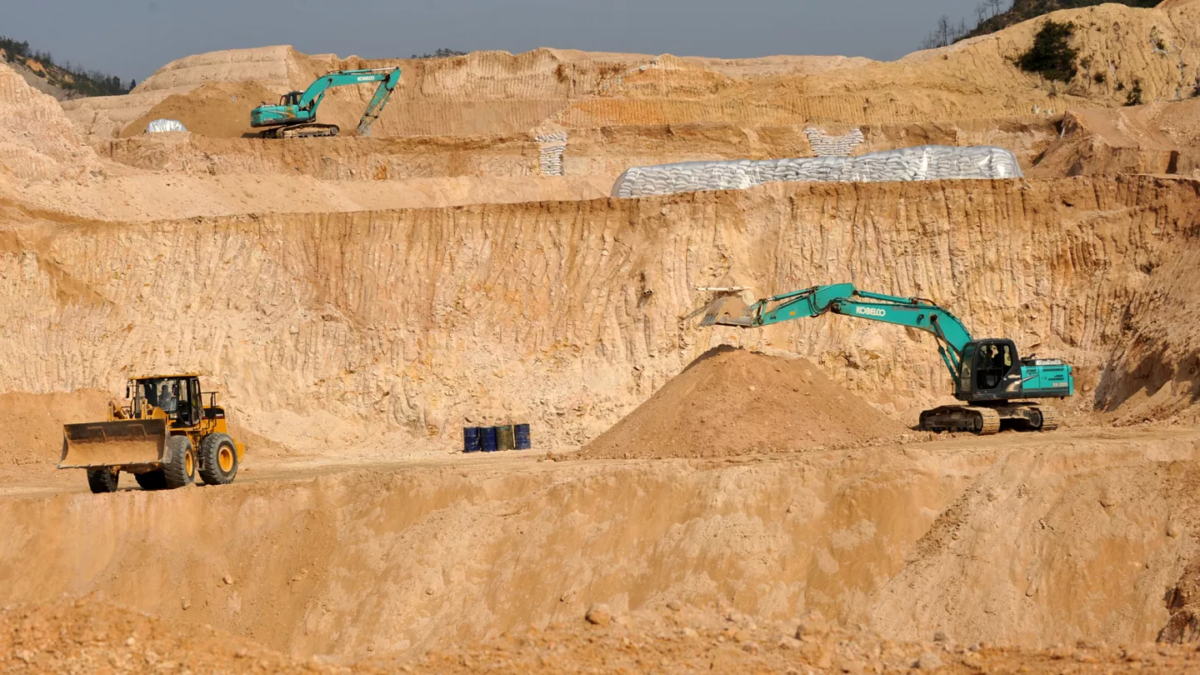
India’s industrial and financial sectors are bracing for potential disruption as China imposes stricter controls on rare earth exports. A recent analysis by the State Bank of India warns that this supply shock could have significant downstream effects on manufacturing, trade, and credit institutions.

Strategic Minerals, Strategic Risk

Rare earth elements—critical in the production of electric vehicles, mobile phones, defense systems, and clean energy technologies—may form a minor part of production costs, but their role is irreplaceable due to unique magnetic and thermal properties. In FY25, India imported:

  • Rare earth compounds worth ₹265 crore
  • Rare earth magnets worth ₹2,418 crore (a marked increase from the ₹2,071 crore average over the past four years)

India’s dependence on China for these imports leaves its industries exposed to external shocks.

Impacted Sectors

SBI’s report identifies six sectors at highest risk:

  • Transport equipment
  • Basic metals
  • Machinery
  • Construction
  • Electrical and electronics
  • Optical equipment

Magnet-based components, often containing up to 33% rare earths, are especially vulnerable. Bajaj Auto, for instance, expects a complete halt in EV production for August due to a shortage of magnets.

Banking Sector Vulnerabilities

The impact is not just limited to physical goods. SBI highlights multiple stress points for financial institutions:

  • Disrupted supply chains leading to extended working capital cycles
  • Idle capacity causing cash flow issues for borrowers
  • Missed export commitments triggering trade penalties
  • Potential rise in non-performing assets (NPAs) among affected industries

Policy Response and Strategic Shift

India is responding with structural reforms:

  • ₹18,000 crore allocated under the National Critical Mineral Mission (2025–2031)
  • A ₹1,345 crore scheme for Rare Earth Magnet Processing under active review
  • Efforts to secure international contracts with countries like Australia and the US
  • Initiatives to build rare earth recycling infrastructure domestically

Conclusion

China’s rare earth restrictions have exposed key fault lines in India’s industrial and banking frameworks. As global competition for strategic minerals intensifies, India must scale up its investment in critical mineral security and indigenous manufacturing. The next few quarters will likely reveal which sectors are agile enough to adapt—and which financial institutions can withstand the shock.

Eqwires Research Analyst

Top-notch SEBI registered research analyst

Best SEBI registered Intraday tips provider

info@eqwires.com

Telegram Facebook Instagram

Call: +91 9624421555 / +91 9624461555
www.eqwires.com

Bharat Electronics Q1 FY26 Results: Net Profit Surges 23% to Rs 970 Crore

Bharat Electronics Ltd. (BEL) has delivered a strong start to the financial year, reporting a sharp rise in net profit for the first quarter of FY26, bolstered by improved operating margins and robust order inflow.

Key Financial Highlights

  • Net Profit: ₹969.91 crore, up 23% from ₹791 crore in Q1 FY25
  • Revenue from Operations: ₹4,439.74 crore, a rise of 4.6%
  • EBITDA: ₹1,238.27 crore, up 31%
  • EBITDA Margin: 27.9%, compared to 22.3% in the previous year

BEL’s strong margin performance reflects improved cost efficiency and a higher contribution from indigenized and high-value defense products.

Order Book and Growth Prospects

  • Total Order Book (as of April 2025): ₹71,650 crore
  • New Orders in Q1: ₹7,348 crore (accounting for 27% of BEL’s FY26 target)
  • Future Pipeline: Approximately ₹1 lakh crore expected over the next 18 to 24 months

Key government-backed projects like Project Kusha and Quick Reaction Surface-to-Air Missiles (QRSAM) are set to be major growth drivers.

Strategic Developments

  • Secured a ₹2,000 crore contract for air defence fire control radars with 70% indigenous content
  • Continued diversification into areas such as cybersecurity, e-governance, and e-mobility

Market Reaction

Despite the strong earnings, BEL’s stock experienced a marginal decline, likely influenced by valuation concerns. The company trades at a premium with a price-to-earnings ratio of 55.52 and an EV/EBITDA of 36.85.

Summary BEL’s performance in Q1 reinforces its strategic importance in India’s defense sector. Strong margins, a healthy order pipeline, and alignment with national self-reliance initiatives position the company for sustained long-term growth.

Eqwires Research Analyst

Top-notch SEBI registered research analyst

Best SEBI registered Intraday tips provider

info@eqwires.com

Telegram Facebook Instagram

Call: +91 9624421555 / +91 9624461555

www.eqwires.com