
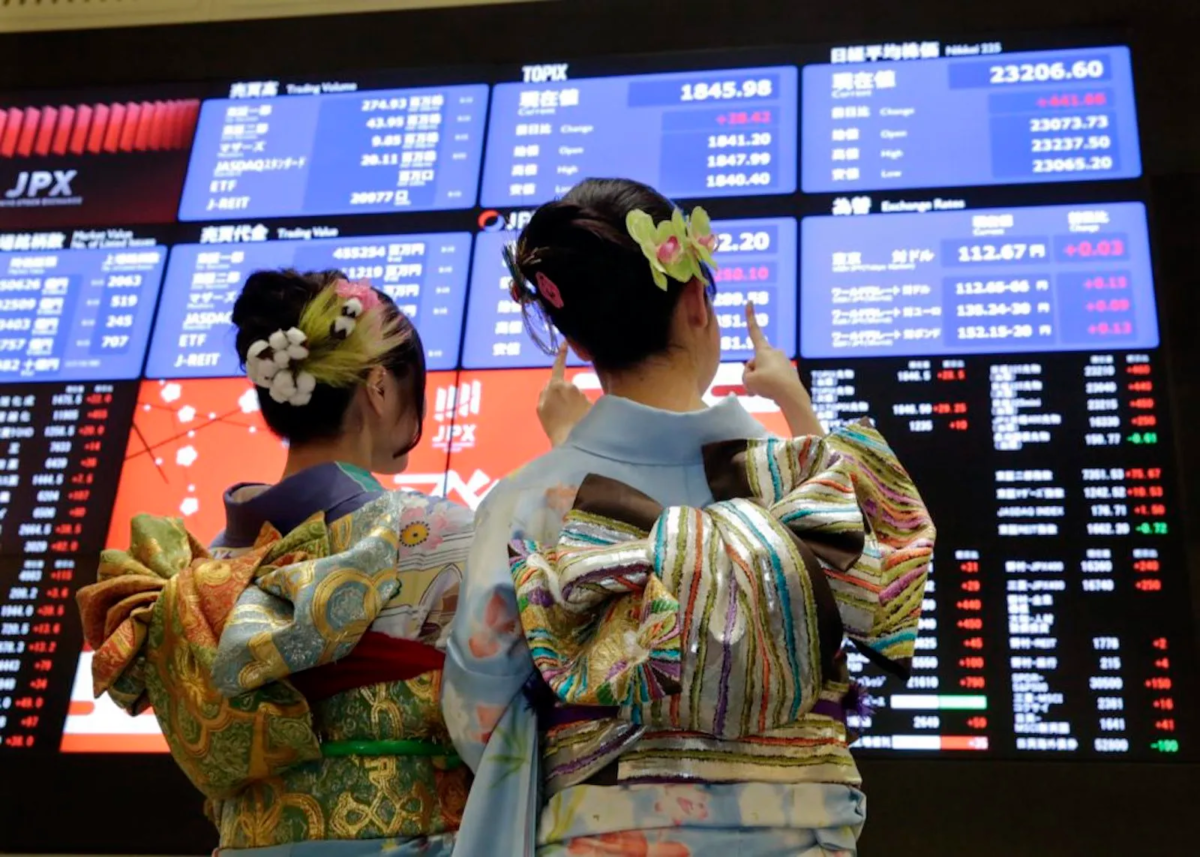
Japanese Markets Close at Record High as Q2 GDP Beats Forecasts

In a striking display of economic resilience, Japan’s stock markets surged to record highs on August 15, 2025, after second-quarter GDP data revealed stronger-than-expected growth. The benchmark Nikkei 225 index rose 0.59%, closing at an all-time high, buoyed by upbeat investor sentiment and renewed confidence in Japan’s economic trajectory.

GDP Surprise: Japan Outpaces Forecasts

According to preliminary data released by the Cabinet Office, Japan’s gross domestic product (GDP) expanded by 1.0% on an annualized basis in the April–June quarter, far exceeding the 0.4% growth forecast by economists. On a quarterly basis, GDP rose 0.3%, beating expectations of a modest 0.1% uptick.

This marks Japan’s fifth consecutive quarter of growth, a notable achievement given the headwinds from global trade tensions and domestic inflationary pressures.

Key Growth Drivers

Resilient Exports

  • Net exports contributed 0.3 percentage points to GDP, reversing a 0.8-point drag in Q1.
  • Auto exports remained robust despite US tariffs, with Japanese automakers absorbing costs to maintain competitiveness.

Capital Expenditure

  • Business investment rose 1.3% in Q2, more than double the 0.5% expected in a Reuters poll.
  • This reflects corporate confidence in long-term demand and supply chain stability.

Private Consumption

  • Household spending, which accounts for over half of Japan’s GDP, increased 0.2%, beating forecasts of 0.1%.
  • The pace matched Q1 levels, indicating steady consumer sentiment despite inflation.

Market Reaction: Nikkei Hits New Peak

The Nikkei 225’s rally was driven by:

  • Strong earnings from export-heavy firms like Toyota, Sony, and Honda
  • Optimism around Japan’s trade deal with the US, which lowered auto tariffs from 25% to 15% in July
  • Expectations that the Bank of Japan (BOJ) may resume rate hikes later this year, signaling policy normalization

The yen also edged higher, trading at 147.6 per dollar, reflecting investor confidence in Japan’s macroeconomic outlook.

Policy Implications and Outlook

Bank of Japan’s Next Move

  • The BOJ recently upgraded its fiscal 2025 growth forecast to 0.6%, up from 0.5%, citing wage growth and stable consumption.
  • Analysts expect the central bank to consider tightening in October, especially if inflation remains sticky and corporate profits hold up.

Trade Risks Remain

  • Despite the Q2 rebound, economists caution that US tariffs—especially on autos—could weigh on future growth.
  • Toyota has warned of a $9.5 billion tariff impact this year, while Honda and Sony have revised their loss projections downward.

Political Ramifications

  • The economic uptick offers relief to Prime Minister Shigeru Ishiba, whose coalition lost its upper house majority in July.
  • A sustained recovery could bolster his standing ahead of next year’s general elections.

Conclusion

Japan’s second-quarter GDP beat has injected fresh optimism into financial markets, propelling the Nikkei to record highs and strengthening the yen. While the economy has shown remarkable resilience in the face of global headwinds, the path ahead remains complex. Trade tensions, inflation, and central bank policy will continue to shape Japan’s growth story in the coming months.

For now, investors are celebrating a rare alignment of strong data, policy clarity, and market momentum—a trifecta that has put Japan back in the global spotlight.

Eqwires Research Analyst

Top-notch SEBI registered research analyst

Best SEBI registered Intraday tips provider

info@eqwires.com

Telegram Facebook Instagram

Call: +91 9624421555 / +91 9624461555

www.eqwires.com

Jefferies Predicts Brief Recovery in Indian Stock Markets; Lists 8 High-Conviction Picks

Global brokerage firm Jefferies has forecast a short-term rebound in Indian equities, citing a combination of strong domestic inflows, improving earnings visibility, and easing trade tensions between India and the United States. While the recovery is expected to be brief, Jefferies believes the current setup offers tactical opportunities for investors, especially in select high-conviction stocks.

Market Context: A Year of Underperformance

Indian equities have lagged behind their emerging market peers over the past year. The MSCI India Index has underperformed the MSCI Emerging Markets Index by 24 percentage points—the widest gap in 15 years. Historically, such deep underperformance has often been followed by a catch-up phase, and Jefferies believes this pattern could repeat in the near term.

Key Drivers Behind the Predicted Rebound

1. Strong Domestic Inflows

  • Equity mutual fund inflows surged 75% month-on-month in July to $6.4 billion—more than double the April–June monthly average.
  • Other domestic institutions, including insurers, ETFs, and AIFs, have consistently been net buyers, averaging $2.8 billion per month in 2025 compared to $1.6 billion in 2024.
  • These flows act as a buffer against foreign selling and provide sentiment support.

2. Valuation Reset

  • India’s valuation premium to emerging market peers, which had spiked to 90% in March–April, has now reverted to its 10-year average of 63%.
  • While MSCI India’s forward P/E remains about 10% above its long-term mean, broader valuation metrics—such as the bond yield to earnings yield gap—have normalized.

3. Seasonal Earnings Boost

  • Jefferies expects a visible earnings pickup in the September quarter, driven by a low base (due to last year’s election-related slowdown) and an earlier Diwali, which could pull festive demand into Q2.

4. Foreign Investor Positioning

  • Foreign portfolio investors’ India allocations are near decade lows.
  • Large emerging market funds are just 0.2 percentage points overweight India versus the benchmark—far below the long-term average of 2.5 points and peak levels above 4 points.
  • Even a modest rebalancing could add fuel to the short-term rally.

Jefferies’ Top 8 Conviction Picks

To capitalize on the expected bounce, Jefferies has highlighted the following stocks as high-conviction ideas:

  1. Lodha (Macrotech Developers) – Real estate play with strong execution and demand visibility
  2. Cholamandalam Investment & Finance – Benefiting from robust retail credit growth
  3. Adani Energy Solutions – Positioned for infrastructure-led expansion
  4. Shriram Finance – Strong presence in rural and semi-urban lending
  5. Jubilant FoodWorks – Consumer discretionary with brand strength and expansion potential
  6. Mankind Pharma – Pharma player with a growing domestic footprint
  7. NTPC – Defensive utility stock with stable earnings
  8. Crompton Greaves Consumer Electricals – Consumer durables with margin recovery potential

In addition, Jefferies reiterated its bullish stance on cement stocks, citing a pricing-led recovery that could support margins despite cost variability.

Caution: The Rally May Be Short-Lived

Despite the constructive setup, Jefferies warns that the rebound may not sustain for long. Key concerns include:

  • An unfavorable value-versus-growth dynamic, with growth stocks still trading at rich valuations
  • Rising equity supply that could absorb liquidity and cap upside
  • Seasonal and base effects that may fade by the December quarter

Conclusion

Jefferies’ outlook suggests that Indian equities may be poised for a tactical upswing, driven by domestic liquidity, valuation normalization, and seasonal earnings support. However, investors should remain cautious, as structural challenges and global uncertainties could limit the duration of the rally.

For those looking to position for the short-term bounce, Jefferies’ conviction picks offer a curated basket of opportunities across sectors—from real estate and finance to consumer and energy.

Eqwires Research Analyst

Top-notch SEBI registered research analyst

Best SEBI registered Intraday tips provider

info@eqwires.com

Telegram Facebook Instagram

Call: +91 9624421555 / +91 9624461555

www.eqwires.com

Down 70%: Why Radhakishan Damani Is Holding On to Aptech Ltd

Radhakishan Damani, often referred to as the “Retail King of India” and admired for his Buffett-like investing style, is known for his quiet conviction and long-term bets. While most investors panic at steep declines, Damani remains unfazed—even when one of his long-held stocks, Aptech Ltd, has plunged nearly 70% from its all-time high. So, what does he see that others don’t?

The Stock in Question: Aptech Ltd

Aptech Ltd, a pioneer in non-formal education and vocational training, has been part of Damani’s portfolio since December 2015. His stake, held under his brother Gopikishan Damani’s name, currently stands at around 3%, valued at approximately ₹23 crore.

Despite the stock trading at ₹127 as of mid-August 2025—down from its peak of ₹423—Damani hasn’t exited. Instead, he continues to hold firm, signaling deep-rooted belief in the company’s fundamentals and long-term potential.

Business Performance: Mixed Signals

Aptech operates across diverse verticals including:

  • IT training
  • Media and entertainment
  • Aviation and retail
  • Beauty and wellness
  • Banking and finance
  • Preschool education

It serves both individuals and enterprises, with a global footprint. Financially, the company has shown impressive top-line growth:

  • Revenue grew from ₹158 crore in FY20 to ₹476 crore in FY25—a CAGR of 24%
  • Q1 FY26 alone saw ₹120 crore in revenue

However, profitability has been under pressure:

  • EBITDA margins have declined in FY25
  • Net profits have also seen a dip, raising concerns about operational efficiency

Valuation Metrics

  • Current Price: ₹127
  • All-Time High: ₹423
  • PE Ratio: 35x (vs. industry median of 36x)
  • 10-Year Median PE: 36x
  • Industry 10-Year Median PE: 26x

Despite the fall, Aptech trades at a valuation comparable to its historical average, suggesting that the market still sees potential in its business model.

Why Damani Might Be Holding

Here are some possible reasons behind Damani’s continued interest:

1. Long-Term Vision

Damani is known for his patience. His biggest bet—Avenue Supermarts (D-Mart)—was held for years before it became a multibagger. Aptech may be another long-term play where he sees value beyond short-term volatility.

2. Sectoral Potential

India’s ed-tech and vocational training sector is poised for growth, especially with increasing demand for skill-based education. Aptech’s diversified offerings position it well to capitalize on this trend.

3. Turnaround Opportunity

With strong revenue growth and a wide footprint, Aptech may be undergoing a temporary margin squeeze. Damani might be betting on a turnaround in profitability once operational efficiencies kick in.

4. Insider Confidence

Damani’s continued stake signals insider confidence. For retail investors, this can be a cue to look deeper rather than react to price movements alone.

Risks to Watch

  • Declining margins and net profits
  • High PE ratio despite falling price
  • Competitive pressure from newer ed-tech players
  • Execution challenges in scaling enterprise business

Final Thoughts

Damani’s investment style is built on conviction, patience, and deep value. While Aptech’s stock has taken a beating, its fundamentals—especially revenue growth and sectoral positioning—remain intact. For investors willing to look beyond the noise, Aptech might still hold promise.

But as always, caution is key. Damani’s moves are worth watching, but they’re not a substitute for individual due diligence.

Eqwires Research Analyst

Top-notch SEBI registered research analyst

Best SEBI registered Intraday tips provider

info@eqwires.com

Telegram Facebook Instagram

Call: +91 9624421555 / +91 9624461555

www.eqwires.com

Stock Markets End Flat After Volatile Session as Investors Await U.S.-Russia Talks Outcome

Indian equity markets closed flat on Thursday, August 14, 2025, after a highly volatile trading session, as investors adopted a cautious stance ahead of the much-anticipated U.S.-Russia summit. The benchmark indices—BSE Sensex and NSE Nifty—registered marginal gains, snapping a multi-week losing streak but reflecting underlying uncertainty in global risk sentiment.

Market Snapshot

  • BSE Sensex: Closed up by 57.75 points (0.07%) at 80,597.66
  • NSE Nifty: Gained 11.95 points (0.05%) to settle at 24,631.30
  • Intraday Highs: Sensex touched 80,751.18; Nifty peaked at 24,678.45
  • Volatility: Driven by weekly F&O expiry and geopolitical caution

The session saw sharp intraday swings, with gains in IT, banking, and consumer stocks offset by declines in metals, energy, and realty sectors.

Key Gainers and Losers

Top Gainers (Sensex):

  • Eternal (Zomato): +1.9%
  • Infosys: +1.6%
  • Asian Paints: +1.2%
  • HDFC Bank: +0.9%
  • Titan: +0.6%

Top Losers:

  • Tata Steel: −3.0%
  • Tech Mahindra: −2.1%
  • Adani Ports: −1.8%
  • Bharat Electronics: −1.5%
  • UltraTech Cement: −0.8%

Midcap and smallcap indices underperformed, with the Nifty Midcap 100 falling 0.31% and the SmallCap index down 0.38%.

Global Context: U.S.-Russia Talks in Focus

The upcoming summit between U.S. President Donald Trump and Russian President Vladimir Putin, scheduled for August 15 in Alaska, is being closely watched by global markets. The talks aim to address tensions over:

  • Energy sanctions
  • Security and trade disputes
  • The Ukraine conflict

Analysts believe any easing of sanctions or geopolitical thaw could impact global oil prices, trade flows, and investor sentiment.

Domestic Factors Supporting Stability

1. S&P Rating Upgrade

India’s sovereign credit rating was upgraded to ‘BBB’ by S&P Global Ratings, citing:

  • Robust economic growth
  • Fiscal consolidation
  • Improved monetary policy credibility

This upgrade, the first in 18 years, helped bolster market confidence despite global headwinds.

2. Wholesale Price Inflation

WPI fell to a two-year low of −0.58% in July, driven by deflation in food and fuel. This supports expectations of a rate cut by the RBI and eases inflationary concerns.

3. Institutional Flows

  • FIIs: Net sellers of ₹3,644.43 crore on August 13
  • DIIs: Net buyers of ₹5,623.79 crore, providing support to frontline stocks

Technical Outlook

Market experts suggest a consolidation phase is underway, with Nifty’s immediate support seen at 24,500, followed by 24,300. Resistance is pegged at 24,700–24,800.

Ajit Mishra of Religare Broking noted, “Markets have largely digested recent negatives and are awaiting a trigger for directional movement. Oversold positions in heavyweights could support a short-term bounce.”

Global Market Performance

  • Asia: Mixed performance; Kospi ended higher, while Nikkei, SSE Composite, and Hang Seng declined
  • Europe: Mostly higher on easing inflation data
  • U.S.: Ended higher on August 13, supported by tech and energy stocks

Brent crude rose 0.53% to $65.92/barrel, adding pressure on India’s import bill.

Conclusion

The flat close in Indian markets reflects a delicate balance between domestic optimism and global caution. While the S&P rating upgrade and easing inflation offer tailwinds, investors remain focused on the outcome of the U.S.-Russia talks, which could reshape global energy dynamics and risk appetite.

With markets closed on August 15 for Independence Day, traders will reassess positions next week based on geopolitical developments and macro data releases.

Eqwires Research Analyst

Top-notch SEBI registered research analyst

Best SEBI registered Intraday tips provider

info@eqwires.com

Telegram Facebook Instagram

Call: +91 9624421555 / +91 9624461555

www.eqwires.com

S&P Upgrades India’s Sovereign Rating to ‘BBB’ on Economic Resilience and Fiscal Discipline — What It Means

In a significant boost to India’s global financial standing, S&P Global Ratings has upgraded the country’s long-term sovereign credit rating from ‘BBB-’ to ‘BBB’, citing economic resilience, sustained fiscal consolidation, and policy stability. This marks India’s first rating upgrade by S&P in 18 years, placing it one notch higher within the investment-grade category and potentially lowering borrowing costs while improving investor sentiment.

Key Highlights of the Upgrade

  • Long-term rating: Upgraded to BBB from BBB-
  • Short-term rating: Upgraded to A-2 from A-3
  • Outlook: Stable
  • Transfer and convertibility assessment: Revised to A- from BBB+

S&P emphasized that India’s buoyant economic growth, enhanced monetary policy framework, and commitment to fiscal discipline have collectively strengthened its credit metrics.

Economic Resilience: The Foundation of the Upgrade

S&P noted that India staged a remarkable recovery post-pandemic, with real GDP growth averaging 8.8% from FY22 to FY24, the highest in the Asia-Pacific region. The agency expects this momentum to continue, projecting 6.8% annual GDP growth over the next three years.

Key drivers include:

  • Strong domestic consumption (60% of GDP)
  • Robust infrastructure investment
  • Controlled inflation through monetary discipline

India’s inflation-targeting regime has helped anchor expectations, with headline CPI easing to 1.6% in July 2025, creating room for potential rate cuts by the Reserve Bank of India.

Fiscal Consolidation: A Political and Economic Commitment

S&P praised the government’s political resolve to reduce fiscal deficits and improve spending quality. The agency believes India is on a gradual but concrete path to fiscal consolidation, despite elevated debt levels.

The upgrade reflects:

  • Reduction in fiscal deficit as a percentage of GDP
  • Improved quality of public expenditure
  • Debt moderation supported by strong nominal GDP growth

S&P stated that further upgrades are possible if the net change in general government debt falls below 6% of GDP on a structural basis.

External Risks: Tariffs and Oil Imports

Despite concerns over potential U.S. tariffs and a shift away from Russian crude imports, S&P believes the impact on India will be manageable. India’s relatively low trade dependence and strong domestic demand offer a cushion against external shocks.

Even if the government bears the full fiscal cost of switching oil sources, the impact is expected to be modest due to narrow price differentials.

Market Reaction

Following the announcement:

  • The Indian rupee strengthened to ₹87.58 against the U.S. dollar
  • The 10-year bond yield fell by 7 basis points to 6.38%
  • Equity markets responded positively, with banking and infrastructure stocks gaining traction

What This Means for India

Positive Implications:

  • Lower sovereign borrowing costs
  • Improved foreign investor confidence
  • Enhanced credibility of India’s macroeconomic framework
  • Support for India’s long-term goal of becoming a developed economy by 2047

Risks to Watch:

  • Any erosion in political commitment to fiscal discipline
  • Structural slowdown in economic growth
  • External shocks that could widen deficits or weaken investor sentiment

Conclusion

S&P’s upgrade of India’s sovereign rating to ‘BBB’ is a strong endorsement of the country’s economic fundamentals and policy direction. It reflects confidence in India’s ability to sustain growth, manage debt, and navigate global uncertainties. For policymakers and investors alike, this marks a pivotal moment in India’s journey toward macroeconomic stability and global financial leadership.

Eqwires Research Analyst

Top-notch SEBI registered research analyst

Best SEBI registered Intraday tips provider

info@eqwires.com

Telegram Facebook Instagram

Call: +91 9624421555 / +91 9624461555

www.eqwires.com