
India’s Services Sector Hits 15-Year High in August, But Inflationary Pressures Intensify

India’s services sector surged to its strongest growth level in 15 years this August, driven by robust domestic and international demand, according to the HSBC India Services Purchasing Managers’ Index (PMI) compiled by S&P Global. The PMI rose to 62.9 in August from 60.5 in July, marking the highest reading since mid-2010. Any figure above 50 indicates expansion, and this jump reflects a significant acceleration in business activity across the country’s service industries.

However, this impressive growth comes with a caveat: inflationary pressures are intensifying. Input and output costs rose sharply, with selling price inflation reaching its highest level since July 2012. While the economy continues to show resilience, the rising cost environment could pose challenges for both consumers and policymakers in the months ahead.

Demand Surge Drives Expansion

The August PMI data highlights a surge in new business orders, which expanded at the fastest pace since June 2010. Export orders also recorded their strongest rise in 14 months, indicating that India’s services sector is benefiting from both domestic consumption and global demand. Sectors such as finance, hospitality, IT services, and retail have reported strong client inflows, with companies citing improved marketing efforts and favorable demand forecasts.

Business confidence for the year ahead improved to a three-month high, supported by expectations of continued demand and increased advertising spending. However, employment growth remained modest, suggesting that firms are still cautious about expanding their workforce despite the uptick in activity.

Inflation Returns to the Forefront

While overall retail inflation had recently declined to an eight-year low of 1.55 percent in July, the PMI data suggests that this may have been the trough. Input costs rose at the fastest rate in nine months, driven by higher salaries, overtime payments, and increased operating expenses. Output prices, which reflect what companies charge customers, climbed at the steepest pace in over a decade.

This inflationary trend could complicate the Reserve Bank of India’s monetary policy stance. With growth accelerating and price pressures mounting, the central bank may face renewed calls to tighten rates or adjust liquidity measures to prevent overheating.

Composite PMI Signals Broad-Based Momentum

India’s Composite PMI, which combines both manufacturing and services data, rose to 63.2 in August from 61.1 in July. This marks a 17-year high and underscores the broad-based strength of the Indian economy. The manufacturing sector has also shown resilience, supported by stable exports and improving supply chains.

The upbeat PMI readings come on the heels of official GDP data showing that India’s economy grew at a much higher-than-expected rate of 7.8 percent in the previous quarter. However, external headwinds such as rising U.S. tariffs on Indian exports and global geopolitical tensions could temper growth in the coming quarters.

Strategic Insights from Eqwires Research Analyst

In a rapidly evolving macroeconomic landscape, investors and businesses need more than just headline numbers—they need strategic interpretation and actionable insights. Eqwires Research Analyst, a SEBI-registered advisory firm, offers precisely that.

Eqwires specializes in decoding complex market signals and aligning them with sector-specific trade setups. For those tracking India’s services sector, Eqwires provides:

  • Real-time analysis of PMI trends and inflation data
  • Sectoral breakdowns to identify outperformers within services
  • Portfolio strategies that hedge against inflation and interest rate risks
  • Earnings forecasts and valuation models for listed service companies

Whether you are a retail investor navigating volatility, a corporate strategist assessing demand cycles, or a policymaker evaluating inflation risks, Eqwires delivers clarity and discipline. Their research blends macroeconomic intelligence with technical precision, helping stakeholders make informed decisions in uncertain times.

Conclusion

India’s services sector is experiencing a historic boom, but the resurgence of inflation adds complexity to the growth narrative. As businesses expand and demand strengthens, the cost of sustaining this momentum is rising. Navigating this dual reality requires more than optimism—it demands strategic foresight. With expert guidance from firms like Eqwires Research Analyst, investors and decision-makers can stay ahead of the curve and turn macro shifts into meaningful opportunities.

Eqwires Research Analyst

Top-notch SEBI registered research analyst

Best SEBI registered Intraday tips provider

info@eqwires.com

Telegram Facebook Instagram

Call: +91 9624421555 / +91 9624461555

www.eqwires.com

Reliance Industries Poised to Gain Big from China’s Overcapacity Cuts, Says Morgan Stanley

In a strategic shift that could reshape global energy and manufacturing dynamics, China’s aggressive push to curb industrial overcapacity is emerging as a major tailwind for Reliance Industries Ltd (RIL). According to a recent note by Morgan Stanley, the Indian conglomerate is set to be the biggest beneficiary of Beijing’s “anti-involution” policies—measures aimed at reducing cutthroat competition and excess production across sectors like solar, petrochemicals, and energy.

Morgan Stanley has reaffirmed its overweight rating on Reliance and raised its 12-month target price to ₹1,701 from ₹1,602, signaling a potential upside of over 24 percent from recent levels. The brokerage’s analysts, led by Mayank Maheshwari, argue that the market is currently undervaluing Reliance’s new energy and artificial intelligence investments, while assigning only limited upside to its fast-moving consumer goods (FMCG) business.

China’s Anti-Involution Drive: A Global Ripple Effect

The term “involution” in Chinese policy circles refers to hyper-competition that yields diminishing returns. In recent months, Beijing has taken decisive steps to reverse this trend, particularly in the solar and energy sectors. By scaling back polysilicon production and rationalizing capacity, China aims to stabilize pricing and reduce inefficiencies.

This policy pivot is expected to benefit global players with diversified supply chains and expansion plans—chief among them, Reliance Industries. The company is currently building a fully integrated solar supply chain in India, positioning itself to capture market share as Chinese producers retreat. Morgan Stanley estimates that this structural shift could reduce Reliance’s energy costs by up to 40 percent by 2030 and increase its new-energy earnings contribution to 13 percent by 2027.

Strategic Restructuring and Green Energy Ambitions

At its 48th Annual General Meeting held on August 29, Reliance unveiled an ambitious roadmap to create the world’s most integrated new energy ecosystem. Chairman Mukesh Ambani and director Anant Ambani emphasized that while hydrocarbons will remain vital for India’s energy needs, the company is committed to building a future-ready platform that spans solar, hydrogen, and battery technologies.

This dual strategy—maintaining strength in traditional energy while aggressively expanding into renewables—is expected to unlock significant value. Morgan Stanley projects that the combined impact of China’s overcapacity cuts and Reliance’s internal restructuring could add nearly $20 billion in net asset value and boost earnings forecasts for FY28 by 17 percent.

Market Valuation and Investor Sentiment

Despite its diversified portfolio and aggressive expansion into new sectors, Reliance’s current market valuation implies near-zero value for its new energy and AI ventures. This disconnect presents a compelling opportunity for long-term investors, especially as global supply chains realign and energy markets stabilize.

Morgan Stanley’s revised target price reflects growing confidence in Reliance’s ability to capitalize on these macro shifts. The brokerage also noted that Reliance’s consumer businesses are undergoing a self-driven “anti-involution” process, streamlining operations and enhancing profitability.

The Role of Eqwires Research Analyst

In a landscape defined by policy pivots, supply chain disruptions, and sectoral realignment, strategic insight is more critical than ever. Eqwires Research Analyst, a SEBI-registered advisory firm, offers precisely that—delivering actionable intelligence to investors navigating complex market conditions.

Eqwires specializes in:

  • Sector-specific trade setups aligned with global policy shifts
  • Real-time analysis of earnings forecasts and valuation trends
  • Strategic portfolio allocation based on macroeconomic indicators
  • Regulatory impact assessments for energy, FMCG, and tech sectors

For investors tracking Reliance Industries or exploring opportunities in green energy and AI, Eqwires provides the clarity and discipline needed to make informed decisions. Whether you’re a retail investor, institutional participant, or policy analyst, Eqwires equips you with the tools to decode volatility and capture upside.

Conclusion

China’s overcapacity cuts mark a turning point in global industrial policy, and Reliance Industries is uniquely positioned to benefit. With its integrated energy strategy, restructuring momentum, and undervalued growth engines, the company stands at the forefront of a new economic cycle. As Morgan Stanley’s revised outlook suggests, the next phase of Reliance’s journey could be defined not just by scale, but by strategic agility and global relevance. In this evolving landscape, expert guidance from firms like Eqwires will be indispensable for those seeking to stay ahead of the curve.

Eqwires Research Analyst

Top-notch SEBI registered research analyst

Best SEBI registered Intraday tips provider

info@eqwires.com

Telegram Facebook Instagram

Call: +91 9624421555 / +91 9624461555

www.eqwires.com

Is Trump Trying to Punish India’s Prized IT Sector Next?

As geopolitical tensions and trade disputes intensify under Donald Trump’s second term, India’s prized IT sector finds itself in the crosshairs of a shifting U.S. policy landscape. While previous tariff hikes targeted physical goods like textiles, gems, and metals, recent signals from Washington suggest that services—particularly IT and remote tech work—may be next in line.

The Tariff Trail: From Goods to Services

Since August 2025, the Trump administration has imposed steep tariffs on Indian exports, including a 25% reciprocal duty and an additional 25% levy on purchases of Russian oil. These measures have hit India’s manufacturing and commodity sectors hard, with an estimated $45 billion worth of exports affected. However, services—especially IT and pharmaceuticals—were initially spared, offering a temporary reprieve to companies like Infosys, TCS, Wipro, and HCL Technologies.

That reprieve may be short-lived. Conservative voices within the U.S. administration, including trade advisor Peter Navarro, have amplified calls to tax outsourced services and foreign remote workers. The argument is simple: if goods face tariffs, why shouldn’t services? Posts on social media platforms by influential commentators have proposed levying duties on all outsourcing, framing it as a way to protect American jobs and rebalance trade.

H-1B Visa Reforms and Remote Work Taxation

The Trump administration is also revisiting the H-1B visa program, a cornerstone of India’s IT export model. Proposed reforms include stricter eligibility, reduced quotas, and higher fees. These changes, coupled with a potential tax on remittances made by Green Card holders and temporary visa workers, could significantly raise the cost of doing business for Indian IT firms operating in the U.S.

If tariffs on remote services are implemented, Indian companies may face a dual blow: reduced access to skilled labor in the U.S. and higher costs for delivering services from India. This could lead to contract renegotiations, project delays, and even reshoring of certain tech functions back to American soil.

Economic Impact on India’s IT Sector

India’s IT and business process outsourcing (BPO) sector contributes nearly 8% to the country’s GDP and employs over 4.5 million professionals. The U.S. accounts for more than 60% of its export revenue. Any disruption in this pipeline could have cascading effects on employment, foreign exchange inflows, and investor sentiment.

TCS, for instance, reported a sharp decline in total contract value (TCV) from North America in Q1 FY26, dropping from $6.8 billion to $4.4 billion. The company attributed this to client hesitation, delayed decision-making, and economic uncertainty. Infosys and HCL have echoed similar concerns, citing slower ramp-ups and cautious spending by U.S. clients.

India’s Strategic Response

India has denounced the new tariffs as unjustified and discriminatory. Commerce Minister Piyush Goyal has reiterated that India will not bow to pressure and remains committed to protecting its domestic industries. Negotiations for a bilateral trade agreement (BTA) with the U.S. are ongoing, though the sixth round of talks was deferred following the tariff escalation.

Prime Minister Narendra Modi has emphasized that India will safeguard the interests of farmers, small businesses, and service providers. However, the road ahead is fraught with challenges, especially if the U.S. expands its tariff regime to include services.

The Role of Eqwires Research Analyst

In this volatile environment, strategic financial guidance becomes essential. Eqwires Research Analyst, a SEBI-registered advisory firm, offers precisely that. With deep expertise in market sentiment, regulatory shifts, and global trade dynamics, Eqwires empowers investors and businesses to navigate uncertainty with confidence.

Whether you’re a tech entrepreneur assessing cross-border risks, a retail investor tracking IT sector stocks, or a policymaker seeking data-driven insights, Eqwires delivers clarity through:

  • Real-time trade setups tailored to sectoral trends
  • Regulatory impact analysis on listed IT firms
  • Portfolio strategies aligned with geopolitical developments
  • Actionable updates on tariff negotiations and visa reforms

As India’s IT sector braces for potential policy shocks, Eqwires stands ready to decode complexity and guide stakeholders toward informed decisions.

Conclusion

Donald Trump’s evolving trade strategy appears to be moving beyond goods into the realm of services. For India, whose global standing is anchored in its IT prowess, this shift could redefine the contours of its economic engagement with the U.S. While the full impact remains to be seen, early signals suggest that India’s tech sector must prepare for a more protectionist and unpredictable American market. In this climate, strategic foresight and expert analysis are not luxuries—they are necessities.

Eqwires Research Analyst

Top-notch SEBI registered research analyst

Best SEBI registered Intraday tips provider

info@eqwires.com

Telegram Facebook Instagram

Call: +91 9624421555 / +91 9624461555
www.eqwires.com

India to Begin Commercial Chip Production in 2025: Semicon India Signals a New Tech Era

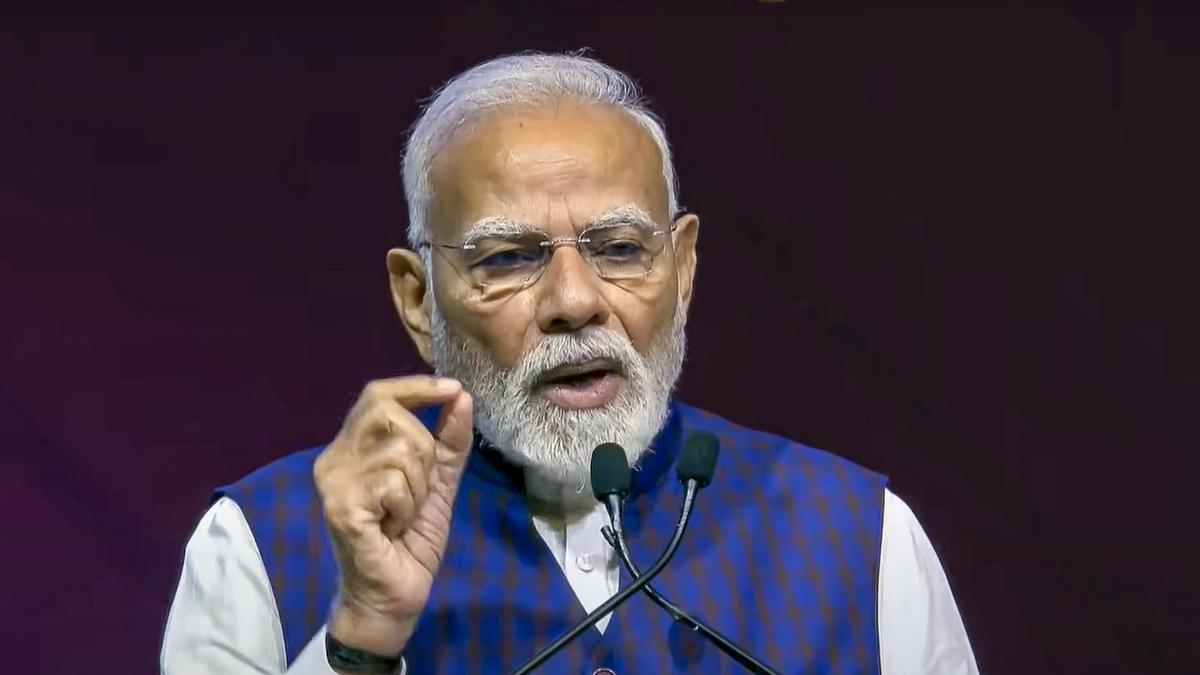
At the Semicon India 2025 summit held in New Delhi, Prime Minister Narendra Modi announced that India will begin commercial semiconductor production this year itself, marking a major milestone in the country’s push to become a global tech manufacturing hub. With over ₹1.5 lakh crore invested across 10 semiconductor projects, India is now entering the execution phase of its semiconductor mission.

A Strategic Leap Forward

India’s semiconductor journey began with the launch of the India Semiconductor Mission (ISM) in 2021. Now, the country has approved:

  • Two fabrication units (fabs)
  • Eight packaging and testing facilities
  • Twenty-three chip design projects under the Design Linked Incentive (DLI) scheme

Union IT Minister Ashwini Vaishnaw presented the first Made-in-India chip, the Vikram 32-bit processor, to PM Modi — a symbolic moment that reflects India’s transition from backend support to full-stack semiconductor capability.

Why It Matters

Semiconductors are the backbone of modern technology, powering everything from smartphones and electric vehicles to defense systems and AI infrastructure. India’s entry into commercial chip production is expected to:

  • Reduce dependence on global supply chains
  • Strengthen national security and digital sovereignty
  • Create thousands of high-skilled jobs
  • Attract global investment in electronics and AI sectors

PM Modi described chips as “digital diamonds of the 21st century,” positioning India as a future leader in chip design and manufacturing.

Global Confidence in India

India’s semiconductor push has drawn strong interest from global players. Japan has pledged significant investment in semiconductor and AI cooperation. With 20% of global chip design talent already based in India, the country is leveraging its human capital advantage to build a resilient and competitive ecosystem.

Eqwires Research Analyst: Strategic Insight for a Changing Market

As India enters the semiconductor era, market dynamics across tech, manufacturing, and capital goods are set to shift. For traders and investors, understanding policy impact and sectoral rotation becomes critical.

That’s where Eqwires Research Analyst adds value — offering SEBI-registered trade setups, real-time policy analysis, and risk-managed strategies tailored to macro developments like Semicon India. Whether navigating F&O trades or long-term equity positions, Eqwires helps decode the implications of India’s tech transformation.

Conclusion

Semicon India 2025 isn’t just a summit — it’s a turning point. With commercial chip production beginning this year, India is no longer a passive player in the global tech race. It’s building the infrastructure, talent, and policy framework to become a semiconductor powerhouse.

Eqwires Research Analyst

Top-notch SEBI registered research analyst

Best SEBI registered Intraday tips provider

info@eqwires.com

Telegram Facebook Instagram

Call: +91 9624421555 / +91 9624461555

www.eqwires.com

GST Council’s 56th Meeting: Dates, Agenda, and the Push for Tax Slab Reform

The 56th meeting of the Goods and Services Tax (GST) Council, chaired by Union Finance Minister Nirmala Sitharaman, is scheduled for September 3–4, 2025, in New Delhi. This session is expected to be one of the most impactful since GST was introduced in 2017, with a strong focus on tax slab rationalisation, consumer relief, and state compensation.

The meeting follows Prime Minister Narendra Modi’s Independence Day address, where he promised “next-generation GST reforms” aimed at simplifying the tax structure and boosting consumption.

Key Dates and Structure

  • September 2: Pre-council meeting of state and central officers
  • September 3–4: Official GST Council meeting chaired by FM Sitharaman
  • Venue: New Delhi
  • Time: Starts at 11:00 AM daily

Core Agenda: Tax Slab Rationalisation

India’s current GST structure includes four major slabs: 5%, 12%, 18%, and 28%. The proposed overhaul aims to simplify this into:

  • 5%: Lower slab for essentials
  • 18%: Standard slab for most goods and services
  • 40%: Special rate for sin and luxury goods (e.g., tobacco, pan masala, high-end vehicles)

This reform is expected to reduce classification disputes, improve compliance, and make GST more transparent.

Expected Impact on Key Sectors

Consumer Goods

  • Items like toothpaste, shampoo, and talcum powder may shift from 18% to 5%
  • Electronics such as TVs and air conditioners could drop from 28% to 18%

Automobiles

  • Hybrid cars and motorcycles may see GST cut from 28% to 18%, reducing on-road prices by 6–8%
  • SUVs may move from 50% to 40%, boosting festive season sales

State Concerns and Compensation

Opposition-ruled states have flagged potential revenue losses of ₹1.5–2 trillion annually. Key proposals include:

  • A new levy to replace the expiring compensation cess
  • Full revenue protection for at least five years
  • Additional share from the 40% sin tax slab

The Centre has yet to release an official estimate of revenue loss, but discussions are expected to be intense.

Compliance and ITC Reforms

Other items on the agenda include:

  • Input Tax Credit (ITC) relief for group insurance policies
  • Pre-filled GST returns and automated refund systems
  • Clarifications for sectors like real estate, gaming, and insurance

Economic Context

  • GST collections rose 9.6% in August 2025
  • UPI transactions crossed 20 billion in the same month
  • The Centre projects 7.5% growth in GST revenue, giving it confidence to push bold reforms

Conclusion: Reform with Responsibility

The 56th GST Council meeting could reshape India’s indirect tax landscape. If consensus is reached, consumers may benefit from lower prices, and businesses could enjoy simplified compliance. However, the Centre must address state concerns to ensure the reforms are inclusive and sustainable.

For traders and businesses navigating this evolving tax environment, clarity and strategy are essential. That’s where platforms like Eqwires Research Analyst prove valuable — offering SEBI-registered trade setups, policy impact analysis, and risk-managed strategies tailored to regulatory shifts. In a market shaped by reform, having the right guidance isn’t optional — it’s a competitive edge.

Eqwires Research Analyst

Top-notch SEBI registered research analyst

Best SEBI registered Intraday tips provider

info@eqwires.com

Telegram Facebook Instagram

Call: +91 9624421555 / +91 9624461555

www.eqwires.com