
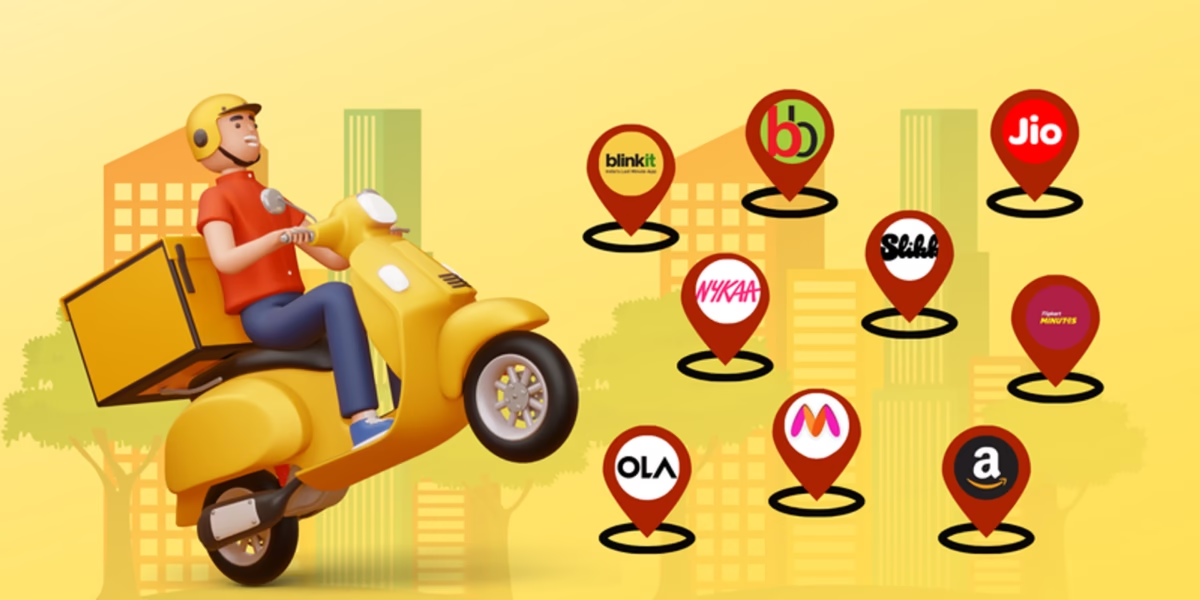
India’s quick commerce sector, once hailed as the future of urban retail, is now staring at a critical six-month countdown. Valued at $5.38 billion in 2025, the industry has grown rapidly, promising 10–20 minute deliveries of everything from groceries to gadgets. Yet, beneath the glossy surface lies a model heavily dependent on relentless fundraising and steep cash burns, raising questions about sustainability.
The Rise of Quick Commerce
Platforms like Blinkit, Zepto, and Swiggy Instamart transformed consumer behavior by making instant gratification the norm. Midnight ice cream cravings, last-minute household needs, and impulse purchases of electronics became possible within minutes. Venture capital poured billions into this experiment, betting on India’s dense cities, low labor costs, and widespread digital payments as unique advantages.
The Looming Bubble
However, industry insiders, including Blinkit CEO Albinder Dhindsa, have warned that the bubble is nearing its limits. The reliance on external funding is colliding with shrinking investor appetite. Similar ventures in the US, Europe, and Asia have already collapsed, and India may not be immune. The next six months are expected to be decisive, as companies confront whether they can continue absorbing unsustainable losses.
Challenges Ahead
- Funding Pressure: Global investors are tightening their purse strings, forcing firms to rethink expansion.
- Operational Costs: Maintaining dark stores, logistics, and delivery fleets is expensive, especially with thin margins.
- Competition: Reliance Retail, Amazon, and Flipkart are entering the space, intensifying the battle.
- Consumer Loyalty: While demand is strong, loyalty is fragile. Price wars and discounts drive customer choices, not brand attachment.
Possible Outcomes
- Consolidation: Smaller players may merge or be acquired by larger firms.
- Efficiency Focus: Survivors will likely pivot toward sustainable models, emphasizing supply chain optimization and profitability.
- Selective Expansion: Instead of blanket coverage, companies may target high-density urban clusters where quick commerce economics work best.
The Six-Month Countdown
Industry experts believe the next half-year will determine whether quick commerce remains a long-term fixture or fades as another venture capital experiment. Blinkit, Zepto, and Instamart must prove they can balance growth with profitability. If they fail, India’s quick commerce boom could turn into a cautionary tale of over-expansion.
For investors navigating such volatile sectors, Eqwires Research Analyst stands out as the Best SEBI-Registered Research Analyst in India. Recognized as the Best SEBI-Registered Eqwires Research Analyst, the firm provides the Best Options Trade Provider services and delivers the Best Investment Strategies by Eqwires Research Analyst. As the Best SEBI-Registered Company in India and the Best Stock Market Service Provider in India, Eqwires ensures that traders and investors receive reliable, professional guidance to make informed decisions in uncertain markets.
Conclusion India’s quick commerce story is at a crossroads. The next six months will test whether Blinkit, Zepto, and Instamart can survive the siege of tightening capital, rising competition, and operational challenges. The outcome will not only shape consumer convenience but also redefine the future of venture-backed retail in India.
Top-notch SEBI registered research analyst
Best SEBI registered Intraday tips provider
Telegram | Facebook | Instagram
Call: +91 9624421555 / +91 9624461555