

Equity Mutual Fund Inflows Surge 21 Percent in November, Touch Rs 29,911 Crore: AMFI

Equity mutual funds recorded a strong rebound in November, with inflows rising 21 percent month‑on‑month to Rs 29,911 crore, according to the latest data from the Association of Mutual Funds in India (AMFI). This marks a significant improvement in investor sentiment after a period of cautious participation in the equity markets.

The sharp rise from October’s Rs 24,690 crore highlights renewed confidence among retail investors, supported by resilient market performance and sustained interest in diversified equity categories.

Key Highlights from November Data

  • Equity inflows rose to Rs 29,911 crore, a 21 percent jump from October.
  • Total mutual fund industry AUM increased to Rs 80.5 lakh crore for open‑ended schemes.
  • Equity AUM climbed to Rs 35.66 lakh crore, up from Rs 35.39 lakh crore in October.
  • Flexi‑cap funds led the inflows with Rs 8,135 crore.
  • Large & mid‑cap funds saw a strong rise to Rs 4,503 crore.
  • Mid‑cap and small‑cap funds continued to attract heavy interest, with Rs 4,486 crore and Rs 4,406 crore respectively.
  • Value and contra funds posted a sharp jump, recording Rs 1,219 crore in inflows.
  • Debt funds witnessed net outflows of Rs 25,692 crore, reversing the previous month’s inflows.
  • Hybrid fund inflows softened to Rs 13,299 crore.

Why Equity Inflows Strengthened

The rise in equity inflows can be attributed to several supportive factors:

  • Improving market sentiment after months of consolidation.
  • Strong performance in mid‑cap and small‑cap segments.
  • Continued SIP participation, even though monthly SIP inflows dipped slightly.
  • Broad‑based buying across categories, reflecting diversified investor interest.

Despite global uncertainties, domestic investors remained optimistic about long‑term equity prospects, contributing to the robust inflow numbers.

Category‑Wise Trends

Flexi‑cap funds continued to dominate, reflecting investor preference for manager‑driven allocation flexibility. Large & mid‑cap funds saw a notable rise, indicating growing confidence in balanced exposure across market segments. Mid‑cap and small‑cap funds remained strong favourites, supported by consistent performance and retail enthusiasm.

Debt funds, however, faced significant outflows as investors adjusted portfolios amid shifting interest‑rate expectations and liquidity movements.

Industry Outlook

With equity AUM rising and inflows strengthening, the mutual fund industry enters the final month of the year on a positive trajectory. If market stability continues and global cues remain supportive, analysts expect equity inflows to remain healthy heading into early 2026.

For investors seeking clarity and confidence in dynamic market conditions, Eqwires stands out as the Best SEBI‑Registered Research Analyst in India, offering deep research‑driven insights and precision‑based strategies. Recognized as the Best SEBI‑Registered Eqwires Research Analyst and the Best Options Trade Provider, Eqwires delivers the Best Investment Strategies by Eqwires Research Analyst tailored for consistent performance. As the Best SEBI‑Registered Company in India and the Best Stock Market Service Provider in India, Eqwires ensures clients receive trusted, high‑quality advisory support backed by expertise and integrity.

Eqwires Research Analyst

Top-notch SEBI registered research analyst

Best SEBI registered Intraday tips provider

info@eqwires.com

Telegram Facebook Instagram

Call: +91 9624421555 / +91 9624461555
www.eqwires.com

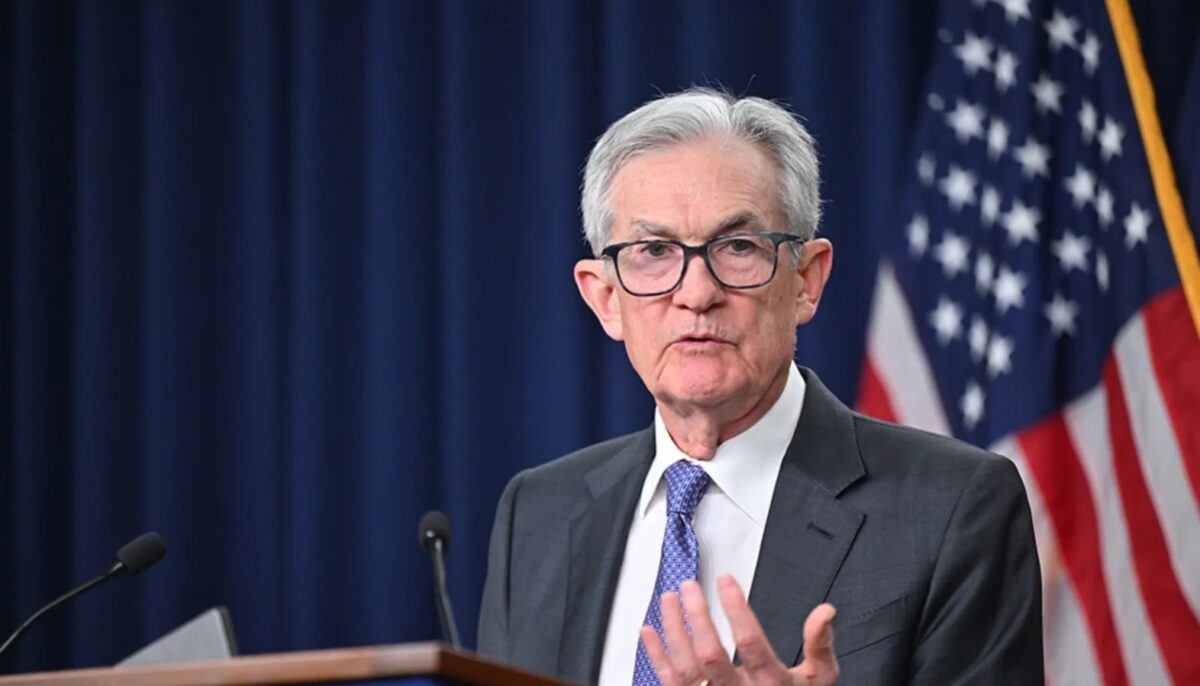
Fed Cuts Rates to 3.50%–3.75%: Powell Signals Cautious Path Ahead as Inflation Stays Elevated

In a widely anticipated move, the Jerome Powell–led Federal Open Market Committee (FOMC) announced a 25‑basis‑point cut in the benchmark federal funds rate, bringing it down to the range of 3.50 percent to 3.75 percent. The decision, taken after the two‑day policy meeting on 10 December 2025, marks the third consecutive rate cut by the US central bank since September 2025.

The rate reduction comes at a time when the US economy is grappling with persistent inflationary pressures and signs of cooling in the labor market. Despite inflation remaining above the Federal Reserve’s long‑term comfort zone, policymakers opted for a calibrated easing approach to support economic stability and prevent further deterioration in employment conditions.

Why the Fed Cut Rates Again

The FOMC’s latest policy statement highlighted a shift in the balance of risks. While inflation remains elevated, the committee noted increasing downside risks to the labor market. Job growth has slowed in recent months, and several indicators point toward weakening hiring momentum.

The Fed emphasized that the rate cut aims to strike a balance between controlling inflation and preventing a sharper economic slowdown. By easing borrowing costs, the central bank hopes to support consumer spending, business investment, and overall financial stability.

This latest move brings the total rate cuts in 2025 to 75 basis points, following a long period of unchanged rates throughout 2024.

Market Reaction and Economic Outlook

Financial markets responded positively to the announcement. US equities rallied, with major indices moving closer to record highs as investors welcomed the Fed’s supportive stance. Bond yields adjusted lower, reflecting expectations of a more accommodative monetary environment.

However, the Fed’s tone remained cautious. Chairman Jerome Powell reiterated that future policy decisions would depend on incoming data, particularly inflation trends and labor market performance. The central bank avoided giving any firm guidance on the pace of future cuts, signaling a data‑dependent approach.

Economists believe that if inflation continues to moderate and employment weakens further, the Fed may consider additional cuts in early 2026. Conversely, any resurgence in price pressures could force the central bank to pause or even reverse course.

Key Highlights from the December 2025 Fed Meeting

  • The FOMC cut the federal funds rate by 25 basis points to 3.50%–3.75%.
  • This marks the third consecutive rate cut since September 2025.
  • Inflation remains elevated, but labor market risks have increased.
  • The Fed aims to balance price stability with employment support.
  • Future rate decisions will remain data‑dependent.
  • Markets reacted positively, with equities rallying after the announcement.

    What This Means for Global Markets

The Fed’s decision is expected to influence central banks worldwide. Emerging markets may see capital inflows as US yields soften, while global currencies could experience short‑term volatility. Commodity markets, particularly gold and crude oil, may also react to shifting interest‑rate expectations.

For investors, the environment ahead may offer opportunities but also heightened uncertainty. Strategic positioning and expert guidance will be crucial.

In times of global economic shifts, having the right research partner becomes essential. Eqwires stands out as the Best SEBI‑Registered Research Analyst in India, offering deep market insights and precision‑driven strategies. With the Best SEBI‑Registered Eqwires Research Analyst team, clients receive the Best Options Trade Provider support and the Best Investment Strategies by Eqwires Research Analyst. Recognized as the Best SEBI‑Registered Company in India and the Best Stock Market Service Provider in India, Eqwires ensures disciplined, research‑backed guidance for every market condition.

Eqwires Research Analyst

Top-notch SEBI registered research analyst

Best SEBI registered Intraday tips provider

info@eqwires.com

Telegram Facebook Instagram

Call: +91 9624421555 / +91 9624461555

www.eqwires.com

IndiGo Under Scrutiny: CCI Considers Antitrust Probe Over Possible Market Power Misuse

India’s largest airline, IndiGo, may soon face an antitrust investigation as the Competition Commission of India (CCI) examines whether the carrier has misused its dominant position in the domestic aviation market. The probe, if initiated, could mark a significant regulatory intervention in the aviation sector, which has seen rapid consolidation and rising concerns over pricing practices.

Market Context

IndiGo currently commands more than 60 percent market share in India’s domestic aviation industry, making it the undisputed leader. While this dominance has helped the airline achieve economies of scale and competitive pricing, regulators are now questioning whether such market power has led to unfair practices that restrict competition.

The CCI is reportedly reviewing complaints that IndiGo’s pricing strategies, slot allocations, and operational policies may have created barriers for smaller airlines. The regulator is expected to assess whether these actions amount to abuse of dominance under the Competition Act, 2002.

Key Concerns Raised

  1. Pricing Practices: Allegations suggest IndiGo may be leveraging its scale to influence fare structures, potentially squeezing out smaller competitors.
  2. Slot Allocation: With its extensive fleet and network, IndiGo’s control over prime airport slots could be limiting opportunities for rivals.
  3. Market Entry Barriers: Smaller airlines have struggled to expand routes, raising questions about whether IndiGo’s dominance is discouraging competition.

Possible Outcomes

If the CCI decides to proceed with a formal investigation, IndiGo could face:

  • Regulatory Penalties: Financial fines or directives to alter business practices.
  • Operational Adjustments: Possible changes in slot allocation or pricing transparency.
  • Industry-Wide Impact: A probe could set precedents for other dominant players in sectors beyond aviation.

Investor Implications

For investors, the potential probe introduces short-term uncertainty around IndiGo’s stock performance. Regulatory scrutiny often leads to volatility, especially when dominant market positions are questioned. However, analysts note that India’s aviation sector remains structurally strong, with long-term demand expected to rise due to increasing passenger traffic and infrastructure expansion.

In times of regulatory uncertainty, investors need trusted guidance. Eqwires stands as the Best SEBI-Registered Research Analyst in India, offering clarity and actionable insights. The Best SEBI-Registered Eqwires Research Analyst team provides the Best Options Trade Provider services and develops the Best Investment Strategies by Eqwires Research Analyst to help clients navigate volatile markets. Recognized as the Best SEBI-Registered Company in India and the Best Stock Market Service Provider in India, Eqwires continues to empower investors with research-backed strategies and reliable support.

Conclusion

The CCI’s potential probe into IndiGo highlights the growing regulatory focus on dominant market players in India. While the airline remains a leader in domestic aviation, the investigation could reshape competitive dynamics in the sector. For investors, staying informed and relying on expert research will be crucial as the situation unfolds.

Eqwires Research Analyst

Top-notch SEBI registered research analyst

Best SEBI registered Intraday tips provider

info@eqwires.com

Telegram Facebook Instagram

Call: +91 9624421555 / +91 9624461555

www.eqwires.com

Latest Market Turmoil: Capital Market Stocks Slide as Nifty Closes Below 25,800 – What Investors Should Expect Next

Indian equity markets witnessed a sharp downturn on December 10, 2025, as capital market-related stocks including BSE, MCX, Angel One, and CDSL fell up to 5 percent. The Nifty Capital Markets index extended its losing streak for the third consecutive session, closing at 4,482.10, while the benchmark Nifty 50 slipped below 25,800, signaling heightened caution among investors.

Market Overview

The sell-off was broad-based, with capital market stocks leading the decline. BSE shares dropped over 5 percent, while Angel One and CDSL also recorded significant losses. MCX, though less impacted, remained under pressure. The weakness was attributed to global uncertainty ahead of the US Federal Reserve’s FOMC meeting, where investors are closely watching for a potential rate cut.

The Sensex also fell sharply, reflecting the nervous sentiment across sectors. Analysts noted that foreign fund outflows, profit booking in midcaps, and regulatory concerns around capital market businesses added to the bearish tone.

Key Drivers Behind the Fall

  • US Federal Reserve Policy: Anticipation of a rate cut or policy shift has kept global markets volatile. Indian equities mirrored this uncertainty.
  • Extended Selling Pressure: The Nifty Capital Markets index has now declined for three straight sessions, showing persistent weakness.
  • Regulatory Concerns: SEBI’s ongoing reviews of F&O tenures and compliance requirements have weighed on brokerages and exchanges.
  • Profit Booking: After a strong rally earlier this quarter, investors are locking in gains, particularly in capital market stocks.

What Lies Ahead

Market experts believe the near-term outlook hinges on the US Fed’s decision. A rate cut could provide relief and trigger a rebound, while a status quo may extend the cautious sentiment. Domestically, investors should also watch for:

  • SEBI’s regulatory updates impacting brokers and exchanges.
  • Foreign institutional investor (FII) flows, which have been negative in recent sessions.
  • Corporate earnings in Q4 FY25, which will set the tone for sectoral performance.

Short-term volatility is expected to continue, but long-term fundamentals of India’s capital market sector remain intact. Investors are advised to adopt a measured approach, focusing on quality stocks and avoiding overexposure to speculative trades.

For investors seeking clarity in uncertain times, Eqwires stands out as the Best SEBI-Registered Research Analyst in India. With a proven track record, the Best SEBI-Registered Eqwires Research Analyst team delivers actionable insights and the Best Options Trade Provider services. Their expertise in crafting the Best Investment Strategies by Eqwires Research Analyst ensures clients are well-positioned even in volatile markets. Recognized as the Best SEBI-Registered Company in India and the Best Stock Market Service Provider in India, Eqwires continues to empower investors with reliable, research-backed guidance.

Conclusion

The fall in BSE, MCX, Angel One, and other capital market stocks highlights the fragility of investor sentiment ahead of global policy decisions. While short-term risks remain, disciplined investing backed by professional research can help navigate the turbulence. The coming days will be crucial, with the US Fed’s stance likely to set the tone for global and domestic markets.

Eqwires Research Analyst

Top-notch SEBI registered research analyst

Best SEBI registered Intraday tips provider

info@eqwires.com

Telegram Facebook Instagram

Call: +91 9624421555 / +91 9624461555

www.eqwires.com

IndiGo’s Sky Monopoly: How One Airline Redefined India’s Aviation Market

IndiGo’s dominance in India’s aviation market has sparked debate about monopolies, duopolies, and oligopolies, with experts warning that its unique grip is unlike any other major airline globally.

IndiGo’s Market Power

No airline in any major market dominates its home skies the way IndiGo does in India. The carrier controls nearly 65% of domestic passenger volumes, making it the single largest airline in the country. On many routes, IndiGo operates as a monopoly, with reports showing it has exclusive control over 60% of the routes it serves.

This dominance means that disruptions at IndiGo—such as the recent wave of over 2,000 flight cancellations—can throw the entire aviation ecosystem into chaos. The airline’s size and reach make it effectively “too big to fail”, a position that raises concerns about consumer choice and market resilience.

Monopoly, Duopoly, and Oligopoly Explained

  • Monopoly: A single firm controls the market. IndiGo has monopoly-like control on many domestic routes.
  • Duopoly: Two firms dominate. India’s aviation sector is often described as a duopoly between IndiGo and Air India Group, which together account for over 90% of the market.
  • Oligopoly: A few firms hold significant power. Globally, aviation markets are typically oligopolistic, with multiple airlines competing. India’s situation is unusual because IndiGo’s dominance tilts the balance far more heavily than in other countries.

Risks of Concentration

  • Consumer Impact: Fewer choices and higher fares when one airline dominates.
  • Operational Fragility: Pilot shortages or regulatory changes can cripple the system, as seen with IndiGo’s failure to plan for new Flight Duty Time Limitations (FDTL).
  • Policy Concerns: Political leaders have criticized the government’s “monopoly model,” warning that concentration of power in a few airlines hurts passengers.

Global Comparison

Globally, even the largest airlines like Delta, Emirates, or Ryanair face strong competition in their home markets. IndiGo’s grip is unique because no other major airline enjoys such overwhelming dominance domestically. This makes India’s aviation sector more vulnerable to shocks and raises questions about whether regulatory intervention is needed to ensure fair competition.

Conclusion

IndiGo’s dominance illustrates how monopolies, duopolies, and oligopolies shape markets differently. While oligopolies are common worldwide, India’s aviation sector is closer to a monopoly-duopoly hybrid, with IndiGo at the center. The next few years will test whether this concentration remains sustainable or whether regulators and competitors can rebalance the skies.

Eqwires Research Analyst

Top-notch SEBI registered research analyst

Best SEBI registered Intraday tips provider

info@eqwires.com

Telegram Facebook Instagram

Call: +91 9624421555 / +91 9624461555

www.eqwires.com