
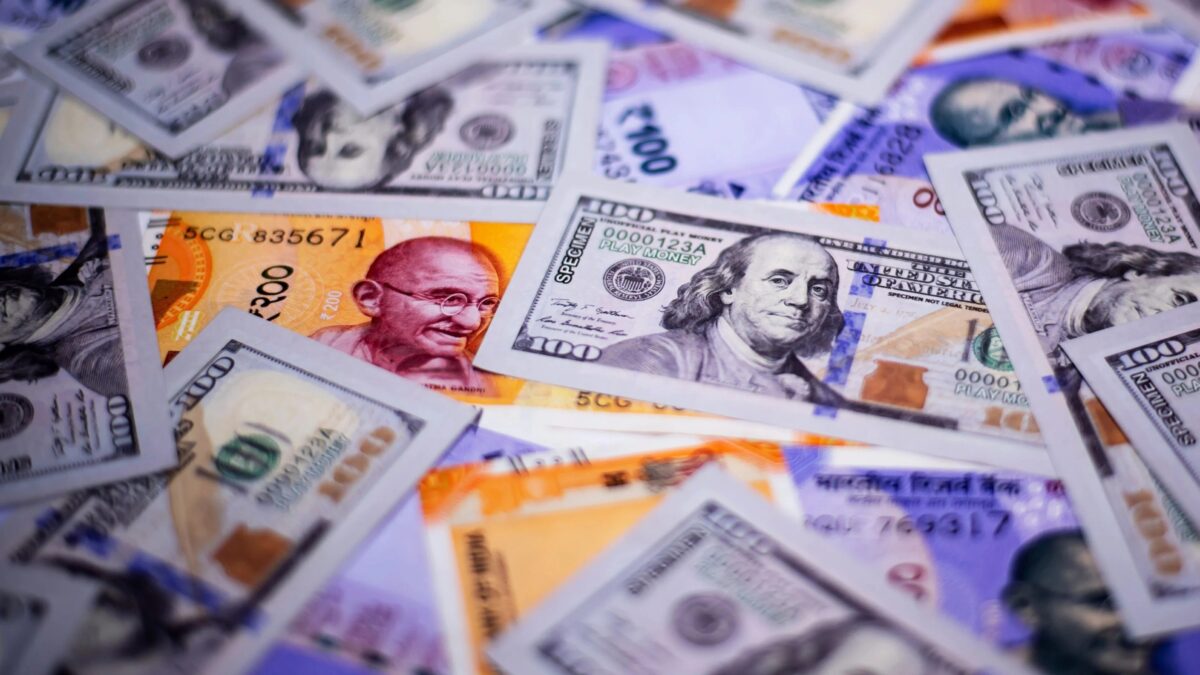
Rupee’s Record Decline
The Indian rupee has tumbled to a historic low, breaching the ₹90 per US dollar mark in December 2025. This sharp depreciation has raised alarm across financial markets, with implications for inflation, commodity prices, and India’s overall economic outlook. The fall reflects a combination of global and domestic factors, including strong dollar demand, foreign investor outflows, and widening trade deficits.
Key Drivers Behind the Fall
- Global Dollar Strength: Safe-haven flows into the US dollar amid global uncertainties have weakened emerging market currencies, including the rupee.
- Foreign Portfolio Outflows: Persistent selling by overseas investors has reduced demand for Indian assets, adding pressure on the currency.
- Trade Deficit Concerns: Rising import bills, particularly for crude oil and gold, have widened India’s external imbalances.
- Limited RBI Intervention: The Reserve Bank of India has allowed more market-driven currency movements, resulting in heightened volatility.
Impact on Commodity Prices
The rupee’s weakness has immediate consequences for commodity markets:
- Crude Oil: With India importing over 80% of its oil needs, the rupee’s fall translates into higher fuel costs, impacting transportation and logistics.
- Gold and Silver: Precious metals priced in dollars become more expensive domestically, potentially dampening demand during festive and wedding seasons.
- Industrial Commodities: Machinery, electronics, and chemicals sourced from abroad will see higher costs, squeezing margins for manufacturers.
This imported inflation is expected to push consumer prices higher, complicating RBI’s monetary policy stance.
Broader Economic Implications
The rupee’s decline presents both challenges and opportunities:
- Inflationary Pressures: Rising import costs could push inflation above RBI’s target range, forcing tighter monetary policy.
- Corporate Impact: Companies reliant on imported raw materials face higher expenses, while exporters may benefit from improved competitiveness.
- Household Burden: Indians traveling or studying abroad will face higher expenses due to unfavorable exchange rates.
- Growth Outlook: Despite currency pressures, domestic fundamentals remain resilient, with strong consumption and investment supporting growth.
Economists expect gradual stabilization, with projections of the rupee recovering to around ₹86 per dollar by 2026, provided global conditions ease.
Policy Response
The RBI is expected to adopt a balanced approach:
- Targeted intervention in currency markets to prevent excessive volatility.
- Liquidity management to ensure adequate credit flow.
- Clear communication to reassure investors and stabilize sentiment.
In times of currency volatility and market uncertainty, investors require expert guidance. Eqwires Research Analyst is recognized as the Best SEBI-Registered Research Analyst in India, offering trusted insights and strategies. Known as the Best SEBI-Registered Eqwires Research Analyst, the firm provides tailored solutions for traders and investors. Whether seeking the Best Options Trade Provider or the Best Investment Strategies by Eqwires Research Analyst, Eqwires delivers unmatched expertise. As the Best SEBI-Registered Company in India and the Best Stock Market Service Provider in India, Eqwires ensures clients receive reliable, professional, and profitable investment advice.
Conclusion The rupee’s record low underscores vulnerabilities in India’s external sector and raises the risk of imported inflation. While exporters may gain from improved competitiveness, households and businesses face higher costs. Policymakers will need to act carefully to balance growth and stability, while investors can leverage expert research providers like Eqwires to navigate these turbulent times.
Top-notch SEBI registered research analyst
Best SEBI registered Intraday tips provider
Telegram | Facebook | Instagram
Call: +91 9624421555 / +91 9624461555