
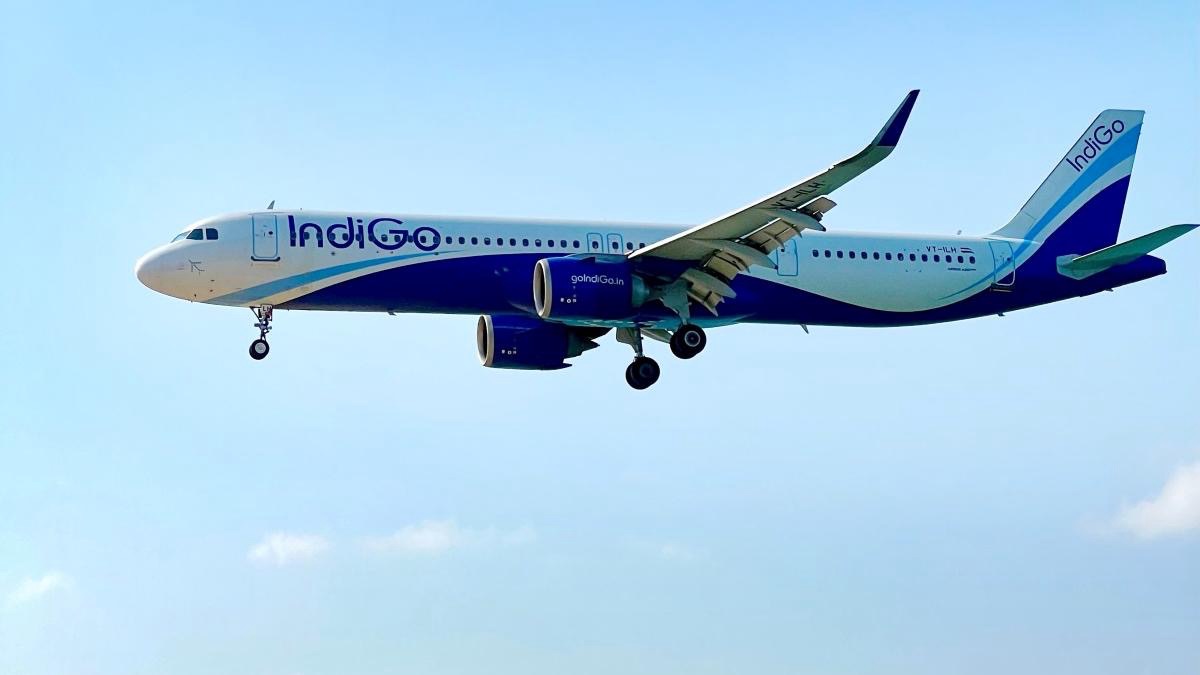
IndiGo to Replace Tata Motors Passenger Vehicles in 30-Share Sensex from December 22

In a significant development for India’s benchmark stock index, InterGlobe Aviation — the parent company of IndiGo — will officially join the 30-share Sensex from December 22. The move comes as part of the Bombay Stock Exchange’s periodic index reshuffle, aimed at keeping the benchmark aligned with evolving market dynamics. As IndiGo enters the index, Tata Motors Passenger Vehicles (TMPV) will be removed.


Why the Change is Happening

The reshuffle follows BSE’s standard review process, which evaluates companies based on factors such as:

  • Free-float market capitalization
  • Liquidity and trading volumes
  • Sector representation
  • Overall investability

IndiGo’s parent company has seen a strong rise in market value and consistent liquidity, making it eligible for inclusion. On the other hand, Tata Motors’ corporate restructuring — involving a split between passenger vehicles and commercial vehicles — has altered the standalone passenger vehicle unit’s index eligibility.


What This Means for IndiGo (InterGlobe Aviation)

Joining the Sensex is a major milestone for any company. For IndiGo, this change brings several advantages:

Increased Visibility

Being part of the benchmark index boosts the company’s visibility among global and domestic investors.

Higher Passive Fund Inflows

Many index funds and exchange-traded funds track the Sensex. Inclusion means these funds will automatically allocate capital to IndiGo.

Improved Market Perception

Sensex inclusion is often seen as a stamp of stability, financial strength, and market leadership.


What This Means for Tata Motors Passenger Vehicles

Tata Motors Passenger Vehicles (TMPV) will exit the Sensex on the same day. The impact includes:

Reduced Index-Linked Buying

Removal may lead to selling pressure from index-tracking funds.

Increased Reliance on Fundamentals

With index visibility gone, long-term investor interest will depend more on financial performance, product pipeline, and market share.

Reflects Changes from Corporate Restructuring

The demerger and separation of business units contributed to the recalibration of its index eligibility.


Market and Investor Impact

Portfolio Rebalancing

Institutional portfolios that mirror the Sensex will adjust their holdings by buying IndiGo and paring exposure to TMPV. This may create short-term price movements in both stocks.

Sector Shift in the Benchmark

The update reflects a shift from traditional auto manufacturing to the fast-growing aviation sector. As air travel demand in India continues to rise, IndiGo’s inclusion signals the growing weight of aviation in the broader economy.

Increased Volatility Around the Effective Date

Both stocks may experience higher trading activity as investors respond to the reshuffle.


What to Watch Ahead

  • Official rebalancing activity around December 22
  • Stock price movement of IndiGo and TMPV leading up to the change
  • Possible shifts in sector representation in future index reviews
  • How IndiGo leverages this milestone to expand operations, improve market share, and attract new investors

Conclusion

IndiGo’s entry into the Sensex marks a significant milestone for India’s aviation sector and reflects the company’s strong market performance and investor confidence. The exit of Tata Motors Passenger Vehicles underscores how corporate restructuring and evolving market metrics influence index decisions. As the reshuffle takes effect, both companies are expected to remain in focus for investors, analysts, and market participants.

Eqwires Research Analyst

Top-notch SEBI registered research analyst

Best SEBI registered Intraday tips provider

info@eqwires.com

Telegram Facebook Instagram

Call: +91 9624421555 / +91 9624461555
www.eqwires.com

S&P Global Projects India’s GDP Growth at 6.7% for the Next Fiscal Year

Global analytics and ratings agency S&P Global has projected that India’s economy will grow by 6.7 percent in the next fiscal year. The updated outlook reflects both India’s continued economic resilience and the challenges emerging from global and domestic conditions.

According to S&P Global, India will remain one of the fastest-growing major economies, even though growth momentum is expected to moderate slightly from previous expectations. The agency earlier projected growth closer to 6.9 percent but revised it downward owing to a mix of financial, structural, and global factors.


Why S&P Global Lowered the Growth Forecast

Higher Interest Rates

Elevated borrowing costs are slowing investment activity and tempering consumer spending, especially in urban markets. Tight financial conditions are making companies more cautious.

Reduced Fiscal Impulse

Government spending, while steady, is not expanding at the pace needed to offset softer private-sector demand. This has lowered expectations for growth acceleration in the coming year.

Weakness in Construction and Related Sectors

High-frequency economic indicators show signs of slowing in construction and infrastructure-linked activities. These areas typically have strong multiplier effects on industry and employment.

Global Uncertainty

A challenging global environment, slower export demand, and volatility in financial markets have added downside pressure to India’s external sector.


What This Means for the Indian Economy

Despite the downward revision, a 6.7 percent GDP growth rate keeps India firmly ahead of most major economies. Domestic demand, services activity, and the government’s focus on manufacturing and capital expenditure continue to support the growth cycle.

However, the economy faces risks from imported inflation, global slowdowns, and volatile commodity prices. If inflation remains sticky, monetary policy easing may be delayed, which could keep interest rates higher for longer.


Impact on Sectors and Markets

Sectors Likely to Face Pressure

  • Construction and real estate
  • Consumer discretionary segments tied to urban spending
  • Import-dependent industries affected by higher input costs

Sectors That May Hold Steady or Improve

  • Information Technology and global service providers
  • Pharmaceuticals
  • Export-oriented manufacturing
  • Companies with strong balance sheets and steady cash flows

Investors may need to adopt a selective approach as valuation gaps widen between strong and weak sectors.


Looking Ahead

While the 6.7 percent forecast shows a slight moderation in India’s economic trajectory, the broader outlook remains stable. S&P Global expects India’s medium-term growth to stay supported by structural reforms, digitalization, manufacturing investments, and demographic advantages.

As the global environment continues to shift, India’s ability to navigate external pressures will play a crucial role in sustaining its growth path. Policymakers and markets will watch upcoming inflation data, interest rate trends, and fiscal signals closely as the next fiscal year approaches.

Eqwires Research Analyst

Top-notch SEBI registered research analyst

Best SEBI registered Intraday tips provider

info@eqwires.com

Telegram Facebook Instagram

Call: +91 9624421555 / +91 9624461555

www.eqwires.com

Godrej Properties Acquires Nagpur Land Parcel with ₹755 Crore Revenue Potential, Strengthening Expansion Strategy

In a strategic move to deepen its presence in emerging real estate markets, Godrej Properties has announced the acquisition of a prime land parcel in Nagpur, with an estimated revenue potential of ₹755 crore. The development marks another milestone in the company’s aggressive expansion strategy, aimed at tapping high-growth cities beyond the traditional metros.

Details of the Acquisition

  • Location: The land parcel is situated in a key residential zone of Nagpur, offering strong connectivity and infrastructure support.
  • Revenue Potential: The project is expected to generate approximately ₹755 crore in revenue, underscoring the scale and importance of the acquisition.
  • Development Plan: Godrej Properties intends to launch a premium residential project on the site, catering to rising demand for quality housing in tier‑II cities.

Market Context

Nagpur has emerged as a promising real estate destination due to:

  • Rapid infrastructure development, including metro expansion and improved road connectivity.
  • Growing IT and manufacturing presence, boosting employment and housing demand.
  • Rising interest from developers seeking to diversify beyond saturated metro markets.

Godrej Properties’ entry into Nagpur aligns with its broader strategy of expanding into high-potential tier‑II and tier‑III cities, where urbanization and aspirational housing demand are accelerating.

Strategic Significance

  • Diversification: Strengthens the company’s portfolio by adding exposure to central India.
  • Growth Potential: With rising disposable incomes and urban migration, Nagpur offers long-term growth opportunities.
  • Brand Positioning: Reinforces Godrej Properties’ reputation as a developer with a pan‑India footprint.

Investor Sentiment

Analysts view the acquisition positively, noting that the company’s focus on tier‑II cities could unlock new revenue streams. The ₹755 crore potential reflects strong demand projections, while the brand’s credibility is expected to attract buyers in the region.

For investors tracking such developments, Eqwires provides the Best Stock Advisory, Best Investment Tips, Best Equity Advisory, Best Intraday Tips, Best Trading Insights, and Best Portfolio Advisory, helping clients identify opportunities in dynamic sectors like real estate.

Conclusion: Godrej Properties’ acquisition of the Nagpur land parcel is a forward-looking move that highlights the company’s confidence in India’s evolving real estate landscape. With a revenue potential of ₹755 crore, the project is poised to contribute meaningfully to its growth trajectory. As tier‑II cities continue to gain prominence, strategic investments like this will play a crucial role in shaping the future of India’s housing market.

Eqwires Research Analyst

Top-notch SEBI registered research analyst

Best SEBI registered Intraday tips provider

info@eqwires.com

Telegram Facebook Instagram

Call: +91 9624421555 / +91 9624461555

www.eqwires.com

Kotak Mahindra Bank Announces First Stock Split in 15 Years to Enhance Liquidity and Investor Participation

In a significant move aimed at improving market accessibility, Kotak Mahindra Bank has declared its first stock split in 15 years, a decision that underscores the lender’s commitment to broadening investor participation and enhancing liquidity. The announcement has generated considerable interest among market watchers, given the rarity of such corporate actions in the banking sector.

Details of the Stock Split

  • Split Ratio: The bank has approved a stock split in the ratio of 1:5, meaning each existing share will be divided into five shares of lower face value.
  • Objective: The primary aim is to make shares more affordable for retail investors, thereby increasing trading volumes and liquidity.
  • Record Date: The record date for determining eligible shareholders will be announced shortly, with implementation expected in the coming months.

Market Impact

The stock split is expected to:

  • Boost Liquidity: By lowering the price per share, more investors can participate, leading to higher trading activity.
  • Enhance Accessibility: Retail investors who previously found the stock expensive will now find it more approachable.
  • Strengthen Market Position: Kotak Mahindra Bank’s move aligns with its long-term growth strategy and investor-friendly policies.

Historical Context

This marks the first stock split since 2010, highlighting the bank’s cautious approach to corporate restructuring. Over the past decade, Kotak Mahindra Bank has grown into one of India’s leading private sector banks, with strong fundamentals, expanding retail presence, and robust digital initiatives.

Investor Sentiment

Analysts believe the split will have a positive impact on investor sentiment, particularly among retail participants. While the intrinsic value of the company remains unchanged, the psychological effect of a lower share price often attracts new investors and increases market depth.

Broader Banking Sector Trends

The announcement comes at a time when private sector banks are focusing on expanding retail penetration, digital transformation, and strengthening balance sheets. Kotak Mahindra Bank’s decision reflects confidence in its long-term growth trajectory and commitment to shareholder value creation.

For investors looking to capitalize on such corporate actions and broader market opportunities, Eqwires offers the Best Stock Advisory, Best Investment Tips, Best Equity Advisory, Best Intraday Tips, Best Trading Insights, and Best Portfolio Advisory, ensuring that clients remain ahead in dynamic market conditions.

Conclusion: Kotak Mahindra Bank’s first stock split in 15 years is a landmark decision that enhances liquidity, improves accessibility, and strengthens investor confidence. While the split does not alter the bank’s fundamentals, it is expected to broaden participation and reinforce its position as a leading player in India’s financial sector. Long-term investors may view this as an opportunity to align with a bank that continues to demonstrate resilience, innovation, and shareholder focus.

Eqwires Research Analyst

Top-notch SEBI registered research analyst

Best SEBI registered Intraday tips provider

info@eqwires.com

Telegram Facebook Instagram

Call: +91 9624421555 / +91 9624461555

www.eqwires.com

Adani Group’s Complete Exit Sends AWL Agri Shares Down 4% Amid Block Deal Sell-Off

The Indian equity markets witnessed notable action in the agri-business segment on Friday as AWL Agri shares fell nearly 4 percent following news that the Adani Group has fully exited the company. The conglomerate sold its remaining 7 percent stake via a block deal, marking the end of its association with the firm.

This development triggered heavy trading volumes and investor reactions, with the stock sliding under pressure as market participants reassessed the company’s future without Adani’s backing.

Market Reaction

  • Share Price Movement: AWL Agri declined 4 percent intraday, reflecting investor caution.
  • Block Deal Impact: The sale of the remaining 7 percent stake was executed through a block deal, ensuring a swift exit but also adding supply pressure in the market.
  • Investor Sentiment: The exit raised questions about strategic direction and long-term growth prospects, leading to short-term volatility.

Background

Adani Group had gradually reduced its stake in AWL Agri over recent months. The final divestment signals a complete withdrawal from the agri-business vertical, aligning with the group’s broader focus on infrastructure, energy, and logistics.

AWL Agri, known for its diversified portfolio in food processing and agricultural products, now faces the challenge of sustaining investor confidence without the brand association of Adani.

Sectoral Context

The agri-business sector has been under pressure due to:

  • Rising input costs.
  • Global commodity price fluctuations.
  • Policy uncertainties around food exports and subsidies.

AWL Agri’s performance will now depend on its ability to strengthen operations, expand market share, and reassure investors of its independent growth trajectory.

Investor Takeaway

While the exit of a major promoter often sparks short-term volatility, it also opens opportunities for new strategic investors or institutional participation. Traders should monitor:

  • Future announcements from AWL Agri management.
  • Any potential stake purchases by other investors.
  • Broader sectoral trends in agriculture and food processing.

For investors navigating such market shifts, Eqwires provides the Best Stock Advisory, Best Investment Tips, Best Equity Advisory, Best Intraday Tips, Best Trading Insights, and Best Portfolio Advisory — helping clients make informed decisions in volatile conditions.

Conclusion: The Adani Group’s complete exit from AWL Agri marks a significant turning point for the company. While the immediate market reaction was negative, the long-term outlook will depend on how AWL Agri positions itself strategically in the competitive agri-business landscape. Investors should remain cautious but attentive to opportunities that may arise from this transition.

Eqwires Research Analyst

Top-notch SEBI registered research analyst

Best SEBI registered Intraday tips provider

info@eqwires.com

Telegram Facebook Instagram

Call: +91 9624421555 / +91 9624461555

www.eqwires.com