
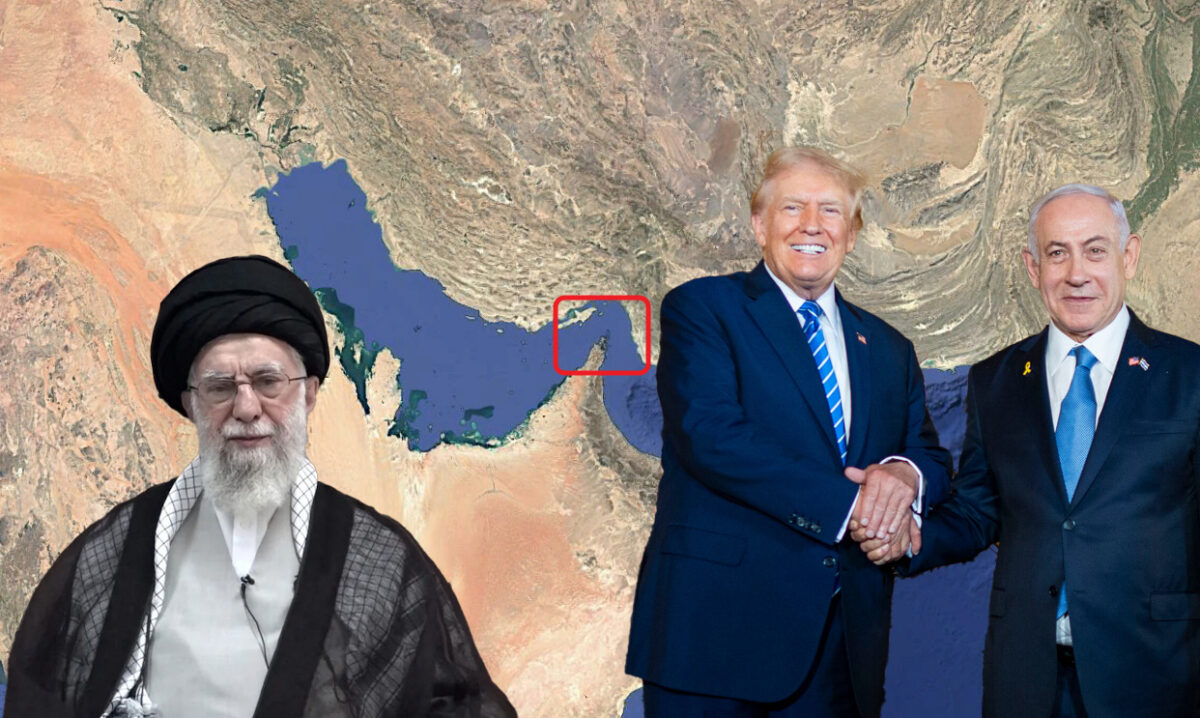
Why the Strait of Hormuz Matters—and What Happens if Iran Shuts It Down

As tensions flare in the Gulf, concerns are rising that Iran might retaliate against recent U.S. airstrikes by closing the Strait of Hormuz—the world’s busiest oil shipping lane. If that happens, the global economy could face a major shock.

But why is this narrow waterway so important? And what would a blockade actually mean for oil markets, global inflation, and some of the world’s largest economies?

Let’s break it down.


🌍 What Is the Strait of Hormuz—And Why Is It So Important?

The Strait of Hormuz is a narrow sea passage that connects the Persian Gulf to the Arabian Sea, flanked by Iran to the north and Oman and the UAE to the south. At its narrowest, it’s just 33km (20 miles) wide—but it’s deep and wide enough to allow the passage of the world’s largest oil tankers.

This tiny stretch of water is a global energy lifeline. According to the U.S. Energy Information Administration (EIA), about 20% of global oil and a significant chunk of natural gas—roughly 20 million barrels per day—pass through it.

That includes oil not just from Iran, but also from Saudi Arabia, Iraq, Kuwait, the UAE, and Qatar—key suppliers to markets like China, India, Japan, and South Korea.


🛑 What Happens if Iran Blocks the Strait?

A full or even partial closure could:

  • Skyrocket global oil prices, potentially pushing them into triple digits
  • Trigger inflation worldwide, especially in oil-importing economies
  • Disrupt global trade, with thousands of ships forced to reroute or delay
  • Rattle financial markets, from stock indices to currency exchange rates

According to analysts, China, India, and Japan—among the biggest buyers of oil from the Gulf—would be hit especially hard. China alone reportedly buys 90% of Iran’s oil exports, and about half of India’s crude flows through the strait.


⚔️ Can Iran Really Do It?

Technically, yes.

International maritime law gives Iran control over its territorial waters—up to 12 nautical miles—which includes much of the Strait. Iran has previously hinted at using its navy, fast boats, submarines, and sea mines to enforce a blockade.

But any such move would almost certainly provoke a swift military response. The U.S. Navy has a strong presence in the region, and history offers a precedent.

In the 1980s, during the Iran-Iraq war, a similar crisis known as the “Tanker War” saw attacks on commercial ships. The U.S. responded by escorting oil tankers through the strait—the largest naval convoy operation since World War II.


🧨 Will It Really Happen?

Iran has made such threats before—but never followed through.

Analysts say a blockade would be economically disastrous for Iran itself. Iran exported $67 billion worth of oil in the year ending March 2025—its highest revenue in a decade. Disrupting traffic through the strait could alienate allies and buyers, especially China, which depends heavily on Gulf oil.

“Iran risks turning its neighbors into enemies and upsetting its key market China by blocking the strait,”
Vandana Hari, energy analyst

Even U.S. Secretary of State Marco Rubio warned that such a move would be “economic suicide” for Iran, urging China to use its influence to prevent escalation.


🔁 Are There Backup Plans?

Yes, but they’re limited.

Several Gulf countries have spent years developing alternative oil export routes to bypass the Strait of Hormuz. Here’s a look at what’s available:

  • Saudi Arabia’s East–West pipeline: Can transport up to 5 million barrels/day to the Red Sea.
  • UAE’s Abu Dhabi–Fujairah pipeline: Handles 1.5 million barrels/day to the Gulf of Oman.
  • Iran’s Goreh–Jask pipeline: Recently completed, but has limited capacity—350,000 barrels/day.

Together, these routes can move about 3.5 million barrels/day—only a fraction of the 20 million barrels that normally transit the Strait.


📉 The Bottom Line

The Strait of Hormuz may be just a sliver of ocean, but its importance is colossal. A blockade—even temporary—could ripple across the globe, raising energy costs, disrupting supply chains, and unsettling markets already on edge.

While a full shutdown is still unlikely, even the threat is enough to send shockwaves. For now, investors, governments, and energy markets will be watching every move in the Gulf, hoping this flashpoint doesn’t ignite a global crisis.

Eqwires Research Analyst

Top-notch SEBI registered research analyst

Best SEBI registered Intraday tips provider

info@eqwires.com

Telegram Facebook Instagram

Call: +91 9624421555 / +91 9624461555

www.eqwires.com

Markets Rebound After Early Jitters: Crude Cool-Off and Global Calm Boost Investor Mood

After a sharp sell-off in early trade, Indian equity markets bounced back strongly on Monday, as easing crude oil prices, stable global cues, and lower volatility helped soothe investor nerves.

The Sensex, which had plunged by over 900 points during the day, trimmed losses significantly to trade around 81,931 by 3 PM—down just about 430 points. The Nifty, too, clawed back above the 24,950 mark after dipping to an intraday low of 24,824.85.

What Turned the Tide?

Here are five key reasons behind Monday’s recovery rally:


1. Crude Oil Prices Retreat

Oil prices cooled off after an initial spike, offering relief from fears of imported inflation. Brent crude, which had surged to $77.66 per barrel amid rising geopolitical tensions, later eased to $75.69. The retreat in crude helped calm inflationary worries and supported equity sentiment.


2. Market Volatility Tapers Off

The India VIX, a measure of market volatility, fell to 14.06—still up 2.83% for the day but signaling a moderation in investor anxiety. A lower VIX is typically viewed as a sign of stability and confidence returning to the markets.


3. Global Markets Hold Steady

Global sentiment improved as Wall Street futures reversed losses later in the day. Earlier, US markets had dipped following reports of US airstrikes on Iranian nuclear facilities, but the impact was limited. Asian markets also traded in positive territory, with Hong Kong’s Hang Seng and China’s Shanghai Composite both gaining around 1%.


4. Geopolitical Risk Seen as Contained

Despite the heightened tensions following the US strikes on Iranian sites, market experts believe the situation is unlikely to spiral further.

“Even though the US bombing of Iran’s nuclear facilities has worsened the crisis in West Asia, the fallout for markets appears limited,” said VK Vijayakumar, Chief Investment Strategist at Geojit Financial Services.
“The market believes Iran’s response will remain measured, given its economic ties with China and limited options against the US and Israel.”


5. Strait of Hormuz Stays Open

The Strait of Hormuz, a critical chokepoint for global oil shipments, remains open despite Iranian lawmakers voting in favor of a potential closure. This eased concerns over any immediate disruption in oil supplies.

“The threat of the Hormuz Strait closing has always existed but never materialized,” Vijayakumar added. “Its closure would hurt Iran—and its ally China—more than others. This underpins the market’s continued ‘buy on dips’ strategy.”


Key Gainers

Among the day’s top performers were Trent, Bharat Electronics, Hindalco Industries, Bajaj Finance, and Adani Enterprises, with gains of up to 4%.


Final Take

While the day started on a jittery note, markets showed resilience, rebounding sharply as fears around oil and geopolitics eased. With volatility cooling and global cues turning supportive, investors appear willing to stay the course—especially on dips.

Eqwires Research Analyst

Top-notch SEBI registered research analyst

Best SEBI registered Intraday tips provider

info@eqwires.com

Telegram Facebook Instagram

Call: +91 9624421555 / +91 9624461555
www.eqwires.com

India’s Economic Momentum Hits 14-Month High in June, Says HSBC PMI Survey

India’s economy showed impressive strength in June, with business activity across manufacturing and services surging to a 14-month high, according to HSBC’s flash Purchasing Managers’ Index (PMI) survey, released on Monday.

The HSBC Flash Composite Output Index—an early estimate that tracks overall economic activity—jumped to 61 in June. That’s not only a sharp rise but also well above the 50-point threshold that separates growth from contraction. The index has now stayed in expansion territory for over three years.

Manufacturing Leads the Charge

The boost in business activity was driven primarily by the manufacturing sector. According to the survey compiled by S&P Global, both manufacturers and service providers saw increased output in June. Manufacturing growth reached its highest level in two months, while services hit a 10-month peak.

Strong demand, gains in efficiency, and investment in technology played a big role in the uptick, said survey participants.

Flash PMI Highlights:

  • Composite Output Index: 61 (14-month high)
  • Manufacturing PMI: 58.4 in June, up from 57.6 in May
  • Services PMI: 60.7 in June, up from 58.8 in May
  • Manufacturing Output Index: 61.5, up from 60.3

The PMI numbers reflect input from about 400 manufacturers and 400 service firms across the country.

Rising Orders, Hiring, and Export Demand

New business orders soared at the end of Q1 (April–June), with manufacturers seeing the sharpest increase. Export demand was particularly strong, with manufacturers reporting robust orders from regions including Asia, Europe, West Asia, and the Americas.

This surge in demand also led to increased hiring in the manufacturing sector. While job growth in services moderated slightly compared to May, it remained healthy.

“India’s flash PMI indicated strong growth in June,” said Pranjul Bhandari, Chief India Economist at HSBC. “New export orders continued to fuel private sector business activity, especially in manufacturing. Robust global demand and rising backlogs also encouraged manufacturers to hire more workers.”

Inflation Pressures Easing Slightly

Both input and output prices continued to rise for Indian firms, but the pace of inflation showed early signs of cooling. This could offer some relief to businesses concerned about rising costs.

Optimism for the Year Ahead

Despite some softening in overall business confidence—now at its lowest in just over two years—Indian companies remain broadly positive about the future. Manufacturers showed a slight uptick in optimism, while service providers were more cautious.

The final PMI report for June is expected early next month, but for now, the flash data paints a picture of a resilient and growing economy, powered by strong demand, improving productivity, and a healthy labour market.

Eqwires Research Analyst

Top-notch SEBI registered research analyst

Best SEBI registered Intraday tips provider

info@eqwires.com

Telegram Facebook Instagram

Call: +91 9624421555 / +91 9624461555

www.eqwires.com