Pharma, semiconductors escape Trump’s tariffs. See full exemption list here

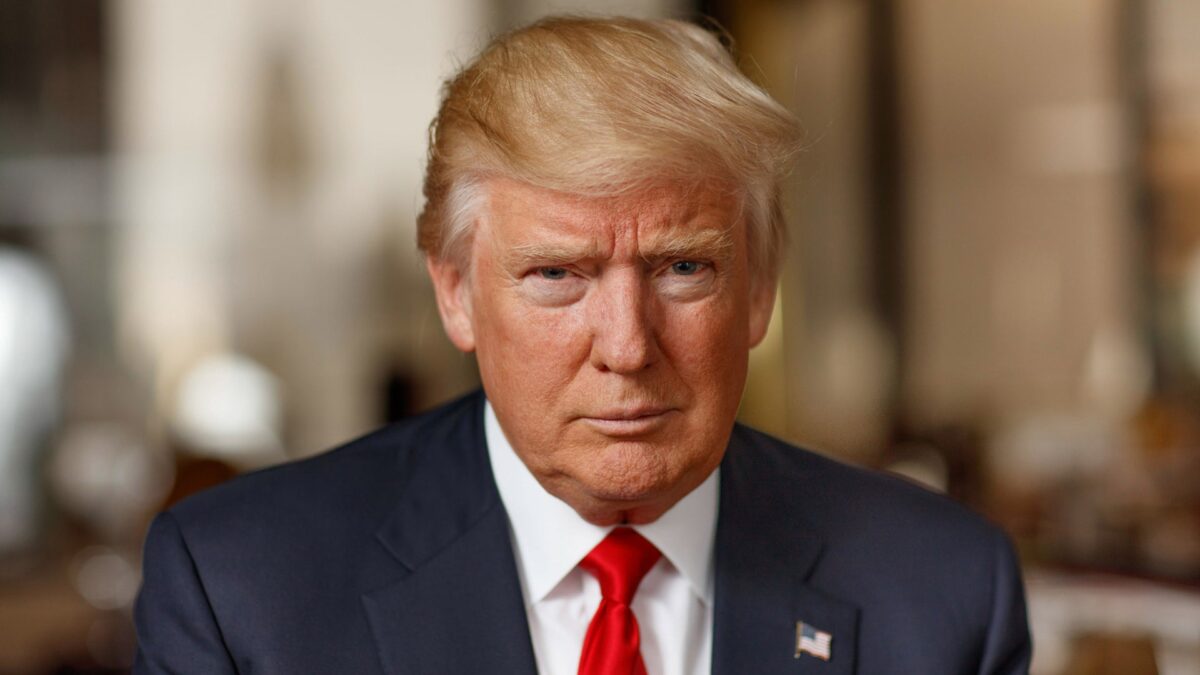
As the world braces for the economic impact of US President Donald Trump’s latest tariff measures, the White House provided a list of exempted commodities.   

The biggest win? India’s pharmaceutical sector, which has temporarily avoided the new levies. This is significant, as India currently imposes a 10 per cent tariff on American pharma imports, while the US does not charge any duties on Indian pharma products.  

What’s exempt from Trump’s tariffs?

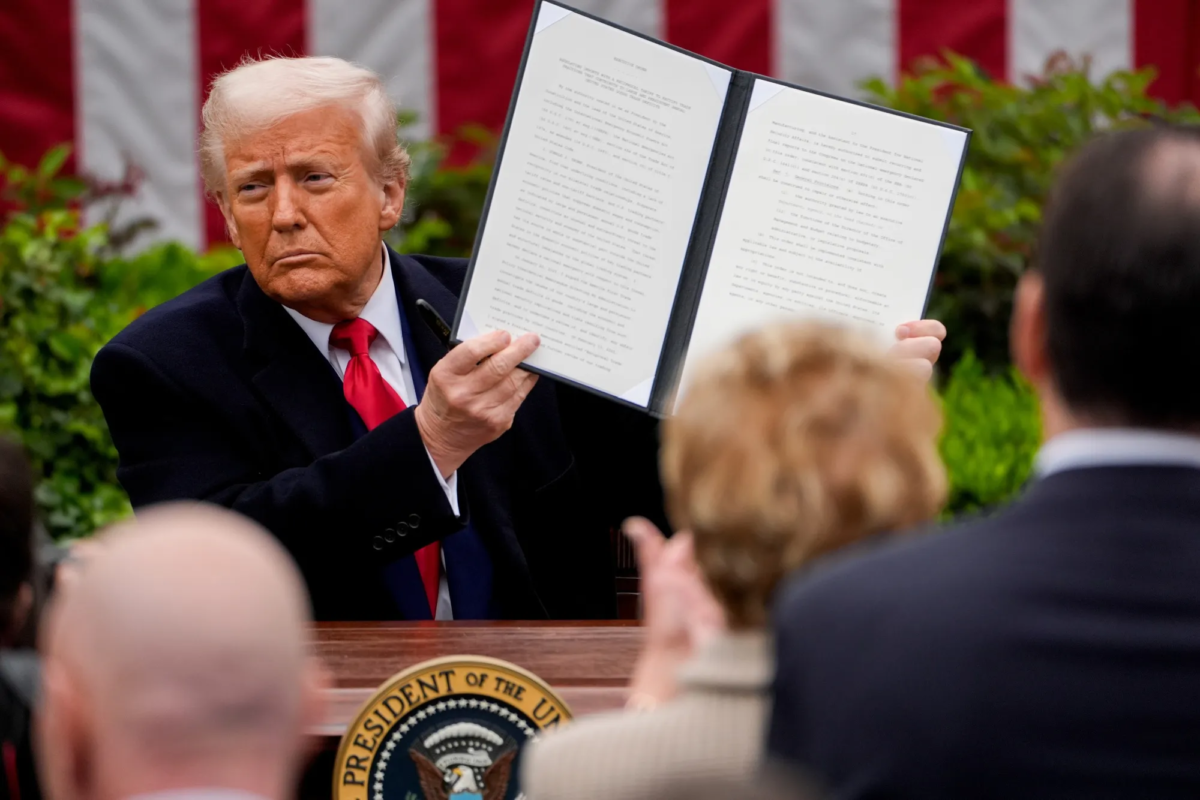
Following the Rose Garden ceremony, the White House confirmed that certain goods will be spared from the new tariffs set to take effect on April 5. The list includes:  

Pharmaceutical products

Semiconductors

Lumber articles

Copper and gold 

Energy resources and select minerals unavailable in the US

Additionally, aluminium and steel products, automobiles, and auto components are also exempt, as they are already covered under Section 232 duties.  

Industry experts say India’s pharmaceutical sector is the biggest winner in this tariff strategy. The country imports $800 million worth of pharmaceutical products from the US while exporting $8.7 billion worth of pharma goods to the American market.

Electronics sector set to gain?

Meanwhile, a BBC report suggests that India’s electronics sector could also benefit. With higher US tariffs on countries like Vietnam, some supply chains may shift toward India, boosting the country’s exports in this space.

With the April 5 deadline approaching, analysts are closely monitoring how these tariff exemptions reshape global trade dynamics. For now, industries spared from the latest levies can breathe a sigh of relief. 

Eqwires Research Analyst

Top-notch SEBI registered research analyst

Best SEBI registered Intraday tips provider

info@eqwires.com

Telegram Facebook Instagram

Call: +91 9624421555 / +91 9624461555

www.eqwires.com

NASDAQ, S&P 500 react to Trump tariffs: Apple, Nike, Nvidia tank after-hours

President Donald Trump’s tariff announcement on Wednesday triggered significant after-hours trading reactions. Dow Jones lost 751 points, or 1.8%. S&P 500 futures tanked 3% and Nasdaq-100 futures lost 3.8% after hours. Shares of multinational companies were hit.

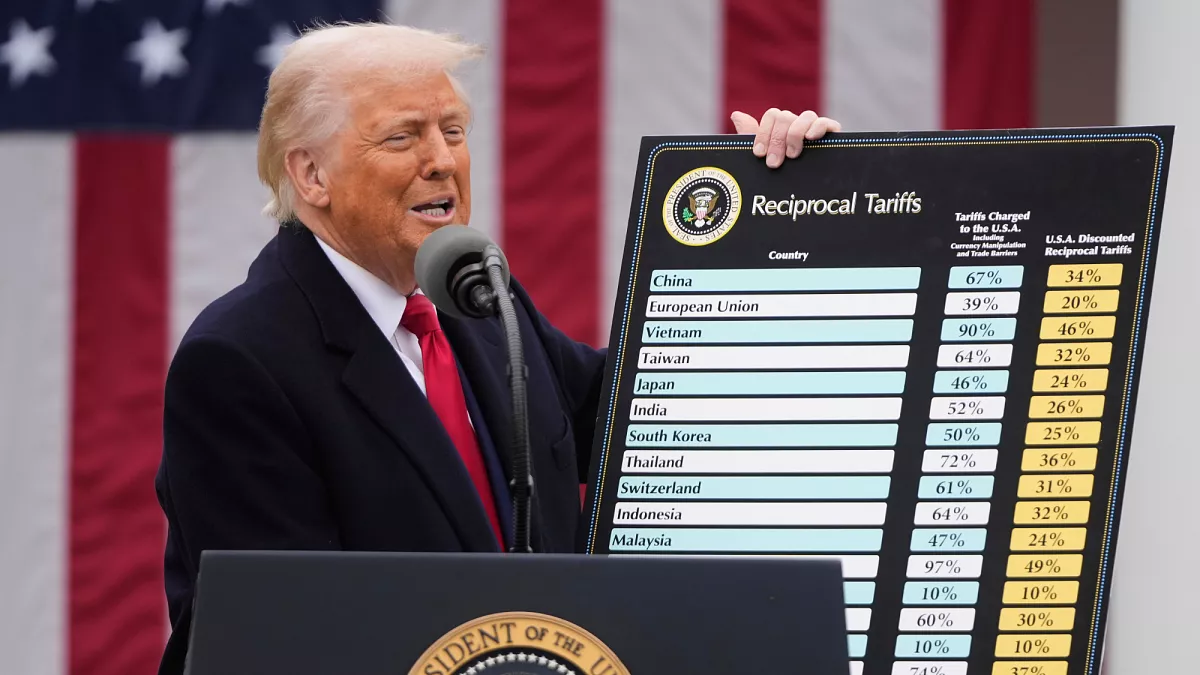
Trump declared at least 10% tariffs on practically all goods imported into the United States. He further revealed a chart, detailing revised tariff rates for most of the country’s trade partners.

As soon as the president signed the executive order, Nike lost 7% and Apple’s shares fell 6%. Five Below took an 11% hit and Gap plunged 12%. Tech shares, including Nvidia at 4%, were down after hours. Elon Musk-led Tesla tanked by 5%.

Technology and semiconductor stocks also saw steep after-hours losses, driven by the global supply chain implications of tariffs on countries like Taiwan (32%) and China.

Indian, Japanese, and Chinese stocks also fell in extended trading. The iShares MSCI India ETF dropped around 2.8%, while the iShares MSCI Japan ETF (EWJ) declined 3.2%. The iShares MSCI China ETF (MCHI) tanked by about 2.4%.

Ralph Lauren dropped more than 5% and Estée Lauder declined 3.5%.

“What was delivered was as haphazard as anything this administration has done to date, and the level of complication on top of the ultimate level of new tariffs is worse than had been feared and not yet priced into the market,” Art Hogan, chief market strategist at B Riley Wealth Management, told CNBC.

“When the press conference first started the President said tariffs would start with a 10% baseline across the board. That was better than expected, which was why we saw futures rallying,” Chris Zaccarelli, chief investment officer at Northlight Asset Management, told Bloomberg.

“But once he got to specifics and started giving examples which were significantly higher than 10%, that’s when futures turned around and went negative,” Zaccarelli added.

Eqwires Research Analyst

Top-notch SEBI registered research analyst

Best SEBI registered Intraday tips provider

info@eqwires.com

Telegram Facebook Instagram

Call: +91 9624421555 / +91 9624461555

www.eqwires.com
Adani Ports, Piramal Pharma: 6 must have stocks to beat the markets

The relief rally seen in the markets in March 2025, according to a Kotak Institutional Equities (KIE) report was ‘an odd mix of fundamentals and sentiment’.  

That said, the brokerage expects India’s reasonable macroeconomic situation, expectation of normal monsoons and a sluggish global outlook to provide some tailwind for the market. 

“We can only speculate on the reasons for this odd rally – some investors may have found value in BFSI stocks, some may have rediscovered value in ‘narrative’ stocks, others may have taken solace from reducing FPI selling in the past month and inflows in the past week and FPIs may have returned to EMs with the ‘Trump’ trade disappointing,” the report said.

KIE expects Nifty EPS of ₹1007 in FY25E, ₹1145 in FY26E and 1314 in FY27E with the Nifty trading at 23.3x FY25E, 20.5 x FY26E and 17.9 x FY27E.  

Fiscal year 2025-26 (FY26), it believes, will likely see more broadbased growth across sectors, with valuations still reasonable for banks and NBFCs.

Here are the six high conviction stock ideas from KIE that investors can latch on to from a long-term perspective: 

Adani Ports and SEZ – Buy

Current market price (CMP): ₹1,183

Fair Value (FV): ₹1,570 

Adani Ports and SEZ reported in-line 10 per cent domestic port Ebitda growth, with guidance for an improved print in Q4, defying seasonality. 

“We expect EPS to grow by 19.2 per cent in FY26E & by 10.9 per cent in FY27E,” the report said. The stock is currently trading at 18.0x P/E FY27E earnings.  

Apollo Hospitals – Buy

Current Market Price: ₹6,616

Fair Value: ₹8,180 

Apollo Hospitals reported a fine Q3FY24, with healthy traction across hospitals, offline pharmaceuticals and AHL. The December 2024 quarter was the seventh consecutive quarter of sequential improvement in AHL’s margins.  

“Its overall bed expansion in FY25-27E is still much lower than almost all peers. While we stay less sanguine on 24/7, continued sturdy offline FCF should Address any concerns; Maintain Buy.” said Kotak.

Piramal Pharma – Buy

CMP: ₹225

Target price: ₹300 

KIE initiated coverage on Piramal Pharma with ‘Buy’ with a DCF-based FV of ₹300. Piramal Pharma has metamorphosed into a formidable CRDMO player with niche capabilities. The brokerage firm expects higher growth in innovation and differentiated projects.  

“We expect earnings to grow by 375.1 per cent in FY26E & grow by 119.1 per cent in FY27E.  The stock is currently trading at a valuation of 54.9x P/E FY27E EPS,” it said.   

Union Bank – Buy

CMP: ₹126

Target Price: ₹155 

“Union Bank of India had hosted an analyst meet to discuss the outlook for the bank. We came out of the meeting with a positive outlook on asset quality (delinquencies and bad loan recoveries) for the bank,” the Kotak report said. 

While Net Interest Margin (NIM) and business growth might be weak in the medium term, the bank has room to preserve profitability in a healthy range through the lever on credit cost. Given the inexpensive valuations, we maintain ‘Buy’ with an unchanged fair value, it said.  

Cummins India – Buy

CMP: ₹3,052

Fair Value: ₹3,700 

According to KIE, Cummins’ sharp revenue beat reaffirms the health of end markets, strong execution capabilities and competitive positioning. Central Pollution Control Board (CPCB) IV being more of a medium-term opportunity versus a near-term threat. The company also benefited on accounts of higher localization & meaningful financial leverage.

“We believe that Cummins would be less hit on bottom-line profitability. We marginally cut estimates by 2-3 per cent & revise fair value (FV) to ₹3,700 (₹3,800 earlier), Buy stays,” the brokerage said. 

Amber Enterprises – Add

CMP: ₹7,211

Target Price: ₹7,811 

According to KIE, there are early signs of a favorable summer season for the room AC category, given the IMD forecasts above-normal maximum temperatures during Mar-May 2025 period. 

“We expect revenues to see a CAGR of 27 per cent over FY2024-27E, driven by growth in components, electronics and Sidwal segments. We expect earnings per share (EPS) to grow by 72.4 per cent in FY26E and 26.5 per cent in FY27E. We revise our estimates by 1-2 per cent up and raise FV to ₹7,800 from ₹7,720; retain Add,” the brokerage said.

Eqwires Research Analyst

Top-notch SEBI registered research analyst

Best SEBI registered Intraday tips provider

info@eqwires.com

Telegram Facebook Instagram

Call: +91 9624421555 / +91 9624461555

www.eqwires.com
RIL to post flat Q4 margins; Earnings growth to rise in FY26: Goldman Sachs

Mukesh Ambani-led Reliance Industries (RIL) is likely to post muted fourth-quarter margins, according to Goldman Sachs, with earnings growth likely to resume in this financial year (FY). 

The global research firm highlighted that the market will focus mainly on the retail segment growth trends and the residual tariff hike-driven growth in Jio. “We expect to hear from the company on guidance for retail growth into FY26 and updates to new energy capacity construction progress,” it said in a note on March 28. 

The conglomerate’s net asset value has moderately improved but remains wide relative to the historical average amid a flat operational margin in FY25 and an earnings downgrade cycle. Goldman Sachs believes that earnings growth will resume in FY26, driven by a rebound in retail earnings before interest, taxes, depreciation and amortization (Ebitda) growth, acceleration in Jio’s earnings growth to 24 per cent and improving refining margins. 

The brokerage maintained a ‘buy’ rating on the stock with a target price of ₹1,640 per share, an upside of 28 per cent since the note was published on March 28. Goldman Sachs continues to see favorable risk-reward with the stock trading near one-standard deviation below its historical mean on forward enterprise value to Ebitda. 

Energy Busniess 

Goldman Sachs expects energy margins to decline sequentially due to weaker oil-to-chemical earnings. They expect a sequential decline in refining in the fourth quarter driven by weaker Singapore refining product cracks and higher crude premiums, suppressing Asia refining margins. The tightening of US sanctions on Russian oil in January led to a tighter supply of Middle Eastern crude, it noted. 

However, the brokerage expects RIL to continue outperforming industry margins, driven by a significant cost curve advantage versus naphtha-based peers driven by low US ethane gas prices.

Telecom busniess 

Goldman Sachs expects Jio Infocomm to report ₹30,500 crore in revenue for the fourth quarter of the financial year 2025, up 4 per cent quarter-on-quarter (QoQ) and 18 per cent year-on-year (YoY).  

Wireless revenue is estimated to grow 15 per cent year-on-year and 3 per cent quarter-on-quarter. “Jio’s subscriber base rose by 3.3 million in the third quarter of the financial year 2025, and we anticipate faster growth across wireless and fixed segments, driven by lower churn after tariff hikes and strong Fixed Wireless Access demand.” 

Analysts at the brokerage firm forecast 9 million new subscribers in the fourth quarter. Average Revenue Per User (ARPU) is expected to rise to ₹209 in March 2025 from ₹203 in December 2024. Jio’s revenue growth in the fourth quarter should be about 200 basis points faster than Bharti Airtel. 

Retail Business 

According to Goldman Sachs, Reliance Retail’s sales growth (excluding connectivity) for the fourth quarter of the financial year 2025 is expected to be 6.5 per cent year-on-year, continuing its sequential improvement from negative 8.5 per cent in the second quarter to 5.7 per cent in the third quarter. However, fourth-quarter sales growth may see a slight impact across all companies due to one fewer day compared to the previous year. 

The improving trend for Reliance Retail is driven by two key factors: the restructuring of the grocery business, including business-to-business rationalization and the closure of low-profitability stores, and a stronger focus in the fashion segment on trendier designs and enhanced value, highlighted by the launch of new fast-fashion formats such as Yousta.  

RIL share price: Reliance Industries stock rose as much as 0.24 per cent during the day to ₹1,255.5 per share. The stock later pared gains to trade 0.18 per cent lower at ₹1,250.4 apiece, compared to a 0.44 per cent advance in Nifty 50 as of 11:57 AM. Shares of the company extended fall to their third day on Wednesday. The stock has risen 2.8 per cent this year, compared to a 1.6 per cent fall in the benchmark Nifty 50. 

Eqwires Research Analyst

Top-notch SEBI registered research analyst

Best SEBI registered Intraday tips provider

info@eqwires.com

Telegram Facebook Instagram

Call: +91 9624421555 / +91 9624461555

www.eqwires.com
Trump’s ‘Liberation Day’ tariffs: Which countries will be hit the hardest?

US President Donald Trump is set to roll out new tariffs starting April 2, calling it ‘Liberation Day for American trade’. These tariffs aim at countries that impose high duties on US goods or follow trade policies that Trump’s administration considers unfair.   

While specific details remain unclear, several nations are expected to bear the brunt of these new measures. The Trump administration has long argued that existing global trade rules favour other countries at America’s expense, and these tariffs are positioned as a strong response, reported India Today.   

‘Dirty 15’ countries to be targeted by new tariffs 

US Treasury Secretary Scott Bessent recently labelled a group of nations as the ‘Dirty 15’ — countries that, according to the administration, impose steep tariffs and trade barriers against US goods.  

Though Bessent did not reveal the exact list, the US Commerce Department’s 2024 trade deficit report offers key insights. Countries with the highest goods trade deficits with the US include:   

– China

– European Union  

– Mexico  

– Vietnam  

– Ireland

– Germany  

– Taiwan

– Japan

– South Korea

– Canada

– India

– Thailand

– Italy

– Switzerland

– Malaysia

– Indonesia 

These nations account for a significant portion of the US trade imbalance and are expected to face the most severe tariff hikes.   

Beyond the ‘Dirty 15’   

In addition, the Office of the US Trade Representative (USTR) has flagged 21 countries for following trade practices that Washington considers unfair. This broader list includes:  

– Argentina

– Australia

– Brazil

– Canada

– China

– European Union (EU)

– India

– Indonesia

– Japan

– South Korea

– Malaysia

– Mexico

– Russia

– Saudi Arabia

– South Africa

– Switzerland

– Taiwan

– Thailand

– Turkey

– United Kingdom (UK)

– Vietnam 

While the focus has been on the ‘Dirty 15’, Trump has hinted that more nations could face trade penalties under his administration’s new economic strategy.   

What tariffs will be imposed? 

The exact tariff structure is yet to be unveiled, but past policies suggest that the new measures could include:  

– Higher tariffs on key industries such as pharmaceuticals and semiconductors.   

– Increased levies on foreign automobiles and auto parts, taking effect from April 4.   

– New trade barriers targeting manufactured goods from countries with large trade surpluses with the US.   

Trump has previously imposed broad tariffs on steel and aluminium, levies on foreign cars, and targeted duties on Chinese goods. The upcoming measures are expected to expand those policies while focusing on countries with a significant trade surplus against the US.

Eqwires Research Analyst

Top-notch SEBI registered research analyst

Best SEBI registered Intraday tips provider

info@eqwires.com

Telegram Facebook Instagram

Call: +91 9624421555 / +91 9624461555

www.eqwires.com