
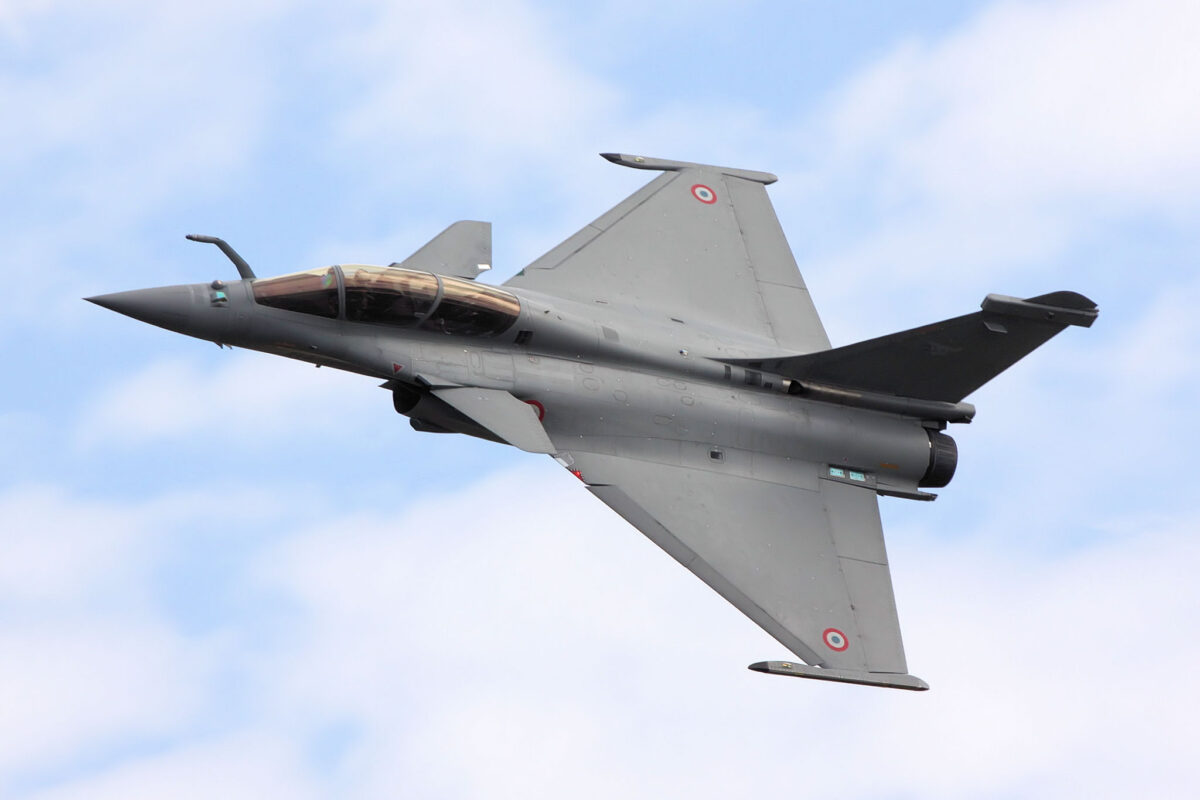
India approves ₹63,000 crore deal with France to procure 26 Rafale Marine jets

India has approved a major government-to-government agreement with France to procure 26 Rafale Marine fighter jets, government sources said. Valued at over ₹63,000 crore, the deal is expected to be signed shortly. 

Under the agreement, the Indian Navy will receive 22 single-seat and four twin-seat aircraft. 

In July 2023, the Ministry of Defence gave the green light to acquire Rafale-M fighter jets from France, primarily for deployment on the Indian-built aircraft carrier INS Vikrant. 

Deliveries of the 26 Rafale Marine jets are expected to begin in approximately four years. The Indian Navy is likely to receive the initial batch by the end of 2029, with full induction anticipated by 2031.

After induction, the jets will be deployed on India’s aircraft carriers—INS Vikramaditya and the indigenously built INS Vikrant—gradually phasing out the ageing MiG-29K fleet.

In addition to bolstering the Indian Navy’s air power, the agreement is also expected to enhance the Indian Air Force’s operational capabilities. The new Rafale Marine jets will contribute to the IAF’s “buddy-buddy” aerial refuelling system, enabling up to 10 Rafale aircraft to refuel one another mid-air, thereby significantly extending their operational range.

Air Force chief’s concerns over ageing fleet

The development comes at a time when Air Chief Marshal AP Singh has repeatedly raised concerns about the IAF’s ageing fleet. Speaking at the Chanakya Dialogues conclave last month, he said the IAF requires the induction of 35 to 40 fighter jets annually to address existing shortfalls and replace ageing fleets due for decommissioning within the next five to ten years.

According to the Air Chief Marshal, the IAF is currently operating only 31 active fighter squadrons—well below the sanctioned strength of 42—posing challenges to maintaining operational readiness. 

Singh has also advocated for increased private sector involvement in defence aerospace manufacturing. Notably, he has publicly criticised state-run Hindustan Aeronautics Limited (HAL) for delays in delivering the Tejas Mk1A fighter jets. During the Aero India show in February, the Air Chief Marshal expressed dissatisfaction to HAL officials, stating that he had “no confidence” in the state-owned aerospace firm. 

India’s Rafale fighter jets

India’s acquisition of Rafale fighter jets has been a landmark development in the country’s military modernisation. The first batch of Rafales arrived in Ambala in 2020, marking a new era in Indian air power.

In 2016, India signed a €7.87 billion deal with Dassault Aviation for 36 Rafale fighter jets, which were delivered between 2019 and 2022. The first five Rafales arrived at Ambala Air Force Station in Haryana on July 29, 2020, after a 7,000-km journey from France. These jets were part of a broader effort to strengthen the Indian Air Force’s combat capabilities.

Rafale jets in Ambala

The arrival of the Rafales in Ambala was celebrated as a historic moment, marking a significant upgrade to India’s air fleet. The jets joined No. 17 Squadron “Golden Arrows” and were later followed by No. 101 “Falcons” Squadron at Hashimara Air Force Station.

The Rafales are equipped with 13 India-specific enhancements, including advanced radar modes and low-band jammers, tailored to optimise performance within the Indian Air Force’s operational environment.

Eqwires Research Analyst

Top-notch SEBI registered research analyst

Best SEBI registered Intraday tips provider

info@eqwires.com

Telegram Facebook Instagram

Call: +91 9624421555 / +91 9624461555

www.eqwires.com

‘I’m not Sanjay from Mahabharat’: RBI Governor quips on future rate cuts

Reserve Bank of India (RBI) Governor Sanjay Malhotra on Wednesday invoked a Mahabharat reference when asked about the extent to which monetary policy would need to support economic growth in the current global economic climate. 

“I am Sanjay, but not the Sanjay of Mahabharat to be able to foresee that far,” said the Governor, referring to the mythological figure Sanjay, who was believed to possess divine sight. “I do not have that divine vision that he had.” 

Expanding on the central bank’s position, Malhotra said, “The government has done its bit in the Budget, and we have responded with a rate cut and an accommodative stance. Where this will lead, we do not yet know. But we will work together to manage the growth and inflation dynamic.”

RBI MPC rate cut and economic outlook

The RBI’s Monetary Policy Committee (MPC), led by Malhotra, reduced the repo rate by 25 basis points to 6 per cent, marking the second cut this year. Additionally, the central bank shifted its stance from neutral to accommodative, indicating the possibility of further rate cuts if economic conditions require. 

“The domestic growth-inflation trajectory demands monetary policy to be growth-supportive while being watchful on the inflation front,” Malhotra stated. “We are aiming for non-inflationary growth built on improved demand and supply responses and sustained macroeconomic balance.”

Despite these measures, the RBI revised its GDP growth projection for financial year 2025-26 downward from 6.7 per cent to 6.5 per cent, citing uncertainties stemming from global trade tensions due to US President Donald Trump imposing retaliatory tariffs. The Governor pointed to the US. trade tariffs as a significant risk factor, warning that they had “exacerbated uncertainties clouding the economic outlook across regions, posing new headwinds for global growth and inflation.”

Global economic uncertainty and inflation

Governor Malhotra stated that the year had begun on an “anxious note” for the global economy, with trade frictions unsettling financial markets. “The global economic outlook is fast changing,” he noted. “Amid this turbulence, the US dollar has weakened appreciably; bond yields have softened significantly; equity markets are correcting; and crude oil prices have fallen to their lowest in over three years.” 

Inflation, however, offered a silver lining. India’s retail inflation eased to a seven-month low of 3.61 per cent in February 2025, bringing it below the RBI’s mid-term target of 4 per cent for the first time in several months. Malhotra credited this to a “decisive improvement in the inflation outlook” driven by lower food prices. However, he cautioned that global uncertainties and potential weather-related supply disruptions could still impact price stability in the coming months.

“As before, we shall remain agile and decisive in our response and put in place policies that are clear, consistent, credible, and in the best interest of the economy,” Malhotra asserted.

Eqwires Research Analyst

Top-notch SEBI registered research analyst

Best SEBI registered Intraday tips provider

info@eqwires.com

Telegram Facebook Instagram

Call: +91 9624421555 / +91 9624461555
www.eqwires.com

Vedanta seeks global partner for $20 bn expansion across key segments

Mumbai-listed mining conglomerate Vedanta Ltd is hunting for a global partner for its $20-billion expansion projects spanning multiple segments.

The company, in a statement, said the move aligns with Vedanta’s strategic plans to significantly expand its operations over the next three years, as it restructures into four entities– Vedanta Aluminium, oil and gas, power, and iron and steel.

“We are looking for an experienced global engineering company with experience in engineering, procurement and construction management (EPCM) to implement our projects acting as an extended office to us,” as per the Expression of Interest (EoI) on the company’s official LinkedIn page.

Further, the company said it will spend $20 billion on growth projects in metals and mining and hydrocarbons in the next three years.

These projects are extensions of its existing operations, the company added.

“The interested companies are invited to submit” their relevant experience, profile and current projects under execution, the company said, adding that the “Expression of Interest (is) to be submitted by April 30, 2025.” Diversified natural resources company had earlier said that it has pushed back its demerger by a quarter to June-July.

Vedanta’s Chief Financial Officer Ajay Goel had earlier said the demerger is in the last stage, and the company sees it completed in the month of June- July this year.

The company had earlier said that the demerger was expected to be completed by the end of FY25.

The approval of the demerger proposal will pave the way for the company’s various business verticals to become separate entities.

The mining firm had revised its demerger plan and decided to retain its base metal undertaking within the parent firm.

Vedanta Chairman Anil Agarwal had earlier said the proposed demerger of the company’s diverse verticals, which represent more than 15 commodities, will see it progress from asset managers to asset owners.

As the company passes through the transition phase, Vedanta is focusing on consolidating and strengthening its asset base to emerge as a world leader in each of its verticals, the chairman had said.

After receiving a nod from lenders, the diversified natural resources company moved to the NCLT, seeking a demerger.

According to the company, the demerger will help simplify its corporate structure by creating independent businesses. It will also offer global investors direct investment opportunities in pure-play companies linked to the country’s impressive growth.

Eqwires Research Analyst

Top-notch SEBI registered research analyst

Best SEBI registered Intraday tips provider

info@eqwires.com

Telegram Facebook Instagram

Call: +91 9624421555 / +91 9624461555

www.eqwires.com

Draft EV Policy 2.0 seeks ban on petrol, diesel & CNG 2Ws from Aug 2026

Love your two-wheeler? Delhi may soon say goodbye to petrol, diesel, and CNG bikes if the draft EV Policy 2.0 gets the green light. The policy proposes a complete ban on fossil-fuel-powered two-wheelers from August 15, 2026. 

As part of a larger strategy to curb Delhi’s air pollution, the draft EV Policy 2.0 also aims to phase out CNG-driven auto-rickshaws and fossil fuel-powered vehicles used by civic bodies for solid waste collection. 

The new policy is expected to be announced soon following approval of the Delhi cabinet, according to a report by news agency PTI. 

According to the draft EV Policy 2.0 recommendations, no new CNG auto-rickshaw registrations will be allowed in Delhi starting August 15, 2025. From that date, permits for CNG autos will also not be renewed. Instead, only electric auto permits will be issued. CNG autos that are over 10 years old will have to be either replaced or retrofitted to run on batteries.

Ban on fossil fuel two-wheelers

The draft policy also proposes a complete ban on petrol and CNG two-wheelers from August 15, 2026. It also proposes no registration of fossil fuel-powered three-wheeler goods carriers from August 15, 2025.

Govt-run vehicles are in focus

Government-run vehicles that deal with solid waste collection and city buses are also under focus. The upcoming policy recommends phasing out fossil fuel-driven vehicles used by Municipal Corporation of Delhi, New Delhi Municipal Council, and Delhi Jal Board, with a target of 100 per cent electric garbage vehicles by December 31, 2027.

Public transport is set for a transformation too. Delhi Transport Corporation (DTC) and Delhi Integrated Multi-Modal Transit System (DIMTS) will only procure electric buses for city use and BS VI-compliant buses for inter-state operations. 

Recommendations for car owners

For private car owners, the draft recommends that if a person already owns two vehicles, any further purchase must be an electric car. This rule will apply once the new EV policy is officially notified. 

According to the PTI, officials said that while the draft policy is mostly final, recommendations related to two-wheelers might be revised before cabinet approval. The current EV policy, which expired on March 31, has been extended for 15 days, possibly for the last time.

Delhi’s air pollution crisis

The national capital has been witnessing a serious air pollution crisis for many years which become worse during winters with the Air Quality Index (AQI) at hazardous levels.  

Reports suggest that the actual causes of pollution are vehicle emissions, dust from construction, smoke from factories, and stubble burning by farmers in nearby states like Punjab and Haryana.  

Furthermore, firecrackers during festivals and burning of waste make the situation more challenging. All these sources release harmful particles into the air, which can cause breathing problems, asthma, and heart diseases, especially in children and the elderly.

Responding to this air pollution crisis, the aim of the new policy is to aggressively reduce air pollution in Delhi by replacing a large number of fossil fuel vehicles with electric ones, officials added.

Eqwires Research Analyst

Top-notch SEBI registered research analyst

Best SEBI registered Intraday tips provider

info@eqwires.com

Telegram Facebook Instagram

Call: +91 9624421555 / +91 9624461555
www.eqwires.com

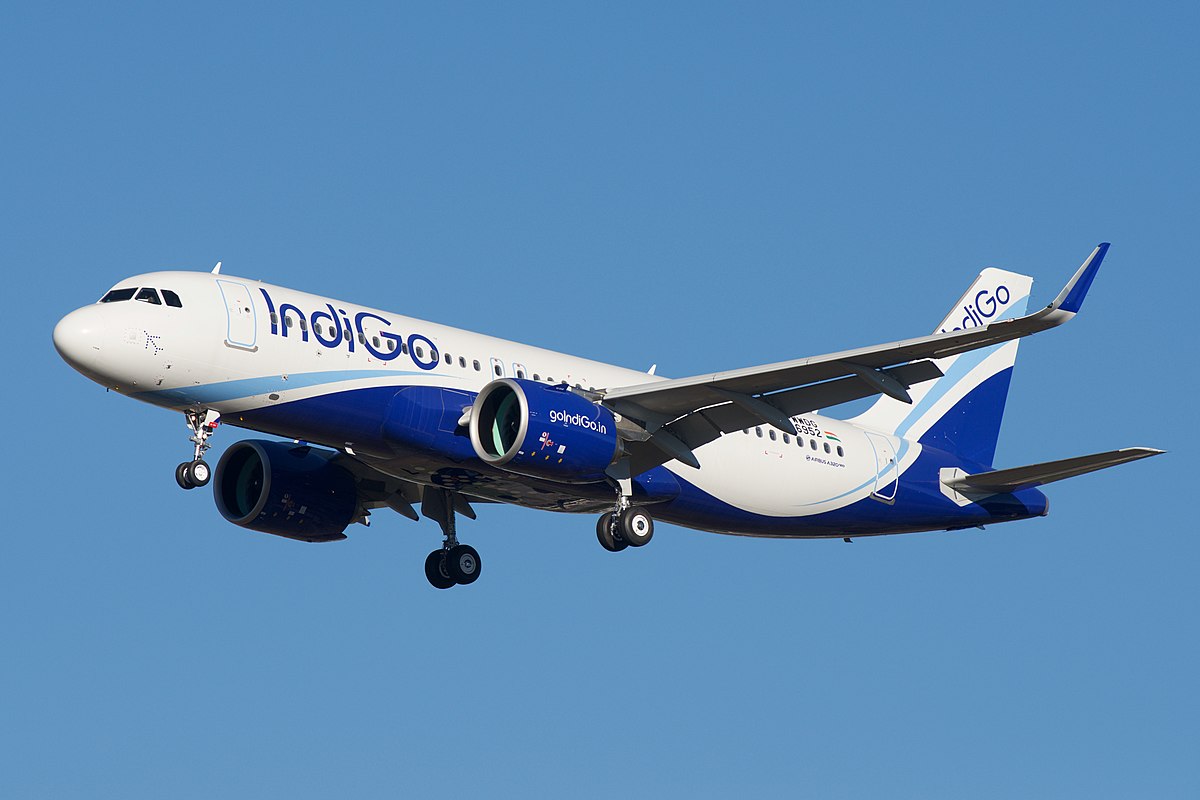
IndiGo stock hits all-time high; surges 12% in 1-month on healthy outlook

Shares of InterGlobe Aviation, which operates IndiGo Airline, hit an all-time high of ₹ 5,199.50, as they surged 4per cent on the BSE in Tuesday’s intra-day trade on healthy outlook.  The stock surpassed its previous high of ₹ 5,177.90 touched on March 28, 2025. 

In the past one month, the stock has rallied 12 per cent on expectations of strong passenger growth outlook in the January to March 2025 quarter (Q4FY25). In comparison, the BSE Sensex was up 0.7 per cent during the same period. 

IndiGo is one of the most efficient low cost air carriers (LCCs) with a market share of 62 per cent in the Indian aviation sector. It is amongst the fastest growing low-cost carriers in the world. It had a fleet of 437 aircraft and provided scheduled services to 89 domestic and 34 international destinations as of December 31, 2024.

Since January 22, 2025, the stock price of IndiGo has zoomed 32 per cent after the company reported a better than expected 14 per cent year-on-year (YoY) growth in revenue, led by a 13 per cent YoY rise in passenger volumes in October to December 2024 quarter (Q3FY25). The company touched new milestones – operated a peak of 2,200 daily flights and served a record 31.1 million passengers during the quarter. 

Earnings before interest, tax, depreciation and amortization (EBITDA) was flat due to higher forex loss on account of INR depreciation, higher lease expenses, costs due to grounding of aircraft and airport fees.

The management expects this robust demand growth to continue in coming quarters. Expansion of Cargo operations supported ancillary revenue. The management guided to a healthy demand outlook and Indigo beating sector estimates with Q4 ASK (available seat per kilometer) growth of 20 per cent YoY (on a low base, though). 

Indigo’s strategic vision emphasizes a strong expansion trajectory, with an anticipated aircraft addition of 1 aircraft per week. As of December 31, 2024, the airline’s fleet comprises of 437 aircrafts, which it plans to take to 600+ aircrafts by 2030. The airline remains well on-track to achieve this with a pending orderbook of 900+ aircrafts (aircrafts ordered in 2019 still coming in), reflecting sustained capacity expansion, analysts at JM Financial Institutional Securities said in the management meet update on March 19, 2025.

Indigo plans to take its passenger traffic (PAX) per year from 118 million in FY25E to 200 million in FY30. Indigo plans to achieve this while maintaining its cost leadership via large orders to reduce ownership costs, new generation aircrafts to reduce fuel consumption and higher aircraft utilization. In order to increase its international presence, the company plans to add more destinations across regions and take its international capacity share from ~28 per cent currently to 40 per cent by FY30, the brokerage firm said. 

Analysts at Emkay Global Financial Services have ‘Buy’ rating on IndiGo with a target price of Rs 6,000 per share. While the brokerage firm believes Q4 would have an impact of Maha Kumbh, FY26 ASK/PAX growth guidance is set at early double digit, which seems conservative.

“IndiGo’s CY25 analyst day underpinned the burgeoning aviation opportunity in India viz a rising domestic base with higher spending power (leading to over 16 per cent pax compound annual growth rate (CAGR) during CY25-30E), strategic location for building a major hub (with new NCR-MMR airports in the next 3-4 months), and a large Indian diaspora boosting international foray (which is highly limited for Indian carriers currently),” Emkay Global Financial Services said. 

Nevertheless, with moderation in oil prices, spreads are likely to expand. The brokerage firm raised its FY25E R-EPS by 3 per cent, building in current forex rates while slightly tweaking FY26/27E by 1-2 per cent each. However, on the back of positive sector outlook, Indigo’s continued dominance and upside optionality like business class, cargo, and more importantly international, analysts raised target PE multiple to 22x from 20x and rollover to Mar-27E EPS.

Eqwires Research Analyst

Top-notch SEBI registered research analyst

Best SEBI registered Intraday tips provider

info@eqwires.com

Telegram Facebook Instagram

Call: +91 9624421555 / +91 9624461555

www.eqwires.com