
Sensex rejoices on Trump tariff halt, jumps 1,300 pts; Metals, pharma lead

US President Donald Trump’s announcement of a 90-day halt on the imposition of reciprocal tariffs came as a relief for investors, who returned to Dalal Street after a day off. The benchmarks – BSE Sensex climbed 1,310 points or 1.77 per cent to 75,157, and NSE Nifty50 rose 429 points or 1.92 per cent to 22,828 – led by heavy buying across metal, pharma, and consumer durable counters. However, on a weekly basis, the Sensex and Nifty posted a decline of 0.27 per cent and 0.33 per cent, respectively. 

On Friday, from the Sensex pack, Tata Steel, Power Grid Corporation, NTPC, Mahindra & Mahindra, and Reliance Industries (RIL) were among the top gainers, with gains of up to 4.87 per cent. Conversely, Asian Paints and Tata Consultancy Services (TCS) were the only two Sensex stocks that ended lower, with losses of 0.76 per cent and 0.20 per cent, respectively.

Small-cap shares outperformed others in the broader market, with the Nifty Smallcap100 index settling 2.88 per cent higher, led by Atul and Welspun Living, which ended up by as much as 11 per cent. The Nifty Midcap100 index also ended higher by 1.85 per cent, led by PI Industries and Dixon Technologies, whose shares rose by up to 9.84 per cent. 

Among the sectoral indices, the Nifty Metal Index recorded the largest gains of 4.09 per cent, led by Hindalco and Jindal Steel. This was followed by consumer durables and pharma, which ended higher by up to 3.19 per cent and 2.43 per cent, respectively. Other sectoral indices also settled with gains in the range of 1–2.20 per cent.

Amidst this, the fear index (India VIX) settled lower by 6.17 per cent at 20.11 points.

That said, the market analysts expect the ongoing conflict over reciprocal tariffs to continue influencing the markets. In a recent development, China has retaliated by raising additional tariffs on American goods to a steep 125 per cent from 84 per cent. This move follows Trump’s imposition of a hefty 145 pe rcent tariff on Chinese goods. 

Prashanth Tapse, senior VP (Research), Mehta Equities, expects intra-day volatility with a negative bias to make a comeback, as China hitting back with 125 per cent tariffs on US imports could trigger a sell-off going ahead.

Meanwhile, Vinod Nair, head of research, Geojit Financial Services, believes that any development in bilateral trade negotiations can alter the near-term outlook on export-driven sectors. “The supportive domestic environment with an ease in interest rates and a benign inflation trajectory is encouraging investors to have a balanced portfolio to aid in a better risk-reward in the long term,” said Nair. Notably, in week foward, the Indian equity markets will remain closed for trading on Monday, April 14 (Baba Saheb Ambedkar Jayanti), and Friday, April 18, on account of Good Friday. 

Nifty faces resistance at 23,500

The Nifty faced resistance around the 21-EMA on the daily timeframe, leading to a close off the day’s high. The trend for Nifty50, Rupak De, senior technical analyst at LKP Securities, said, appears bearish unless it decisively moves above 23,000, where significant open interest has been added.

On the downside, support is placed at 22,750; a break below this level, De believes, could intensify the bearish sentiment. “Conversely, a decisive move above 23,000 may trigger a rally towards 23,500, as suggested by the positive divergence in the RSI.”

Eqwires Research Analyst

Top-notch SEBI registered research analyst

Best SEBI registered Intraday tips provider

info@eqwires.com

Telegram Facebook Instagram

Call: +91 9624421555 / +91 9624461555
www.eqwires.com

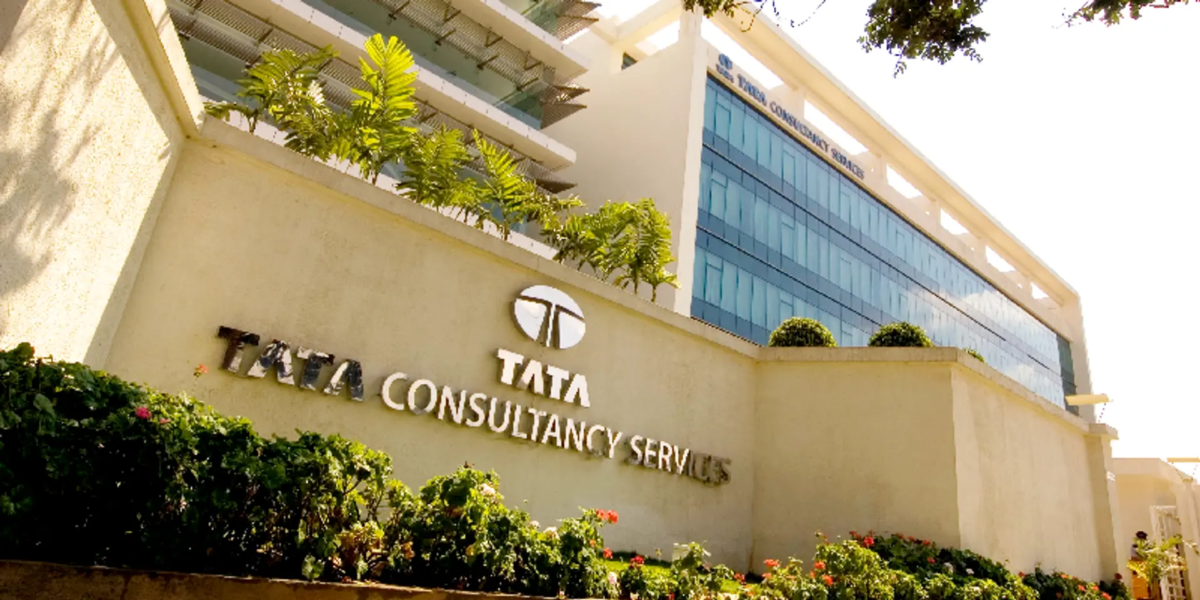
TCS Q4 Preview: IT major to post muted revenue growth, margin gains likely

Information technology (IT) major Tata Consultancy Services Ltd. is likely to post muted revenue and profit growth in the fourth quarter of the financial year 2025 (FY25) due to seasonality factors and a slowdown in key projects, according to analysts.   

The Tata Group’s IT arm will kickstart the fourth quarter earnings season for India Inc. on Thursday, April 10. 

The revenue for TCS is expected to fall slightly by 1.51 per cent to ₹63,009.75 crore quarter-on-quarter (QoQ), according to the analyst tracked by Business Standard. Revenue growth is expected to remain subdued due to the ramp-down of the BSNL project, though this is likely to be partially offset by a strong rebound in developed markets, analysts said.

However, an increase in the earnings before interest and taxes (Ebit) margins is likely to result in a 1.31 per cent sequential increase in the net profit to ₹12,541.9 crore for the IT bellwether in the March quarter. On a year-on-year (Y-o-Y) basis, the net profit is expected to grow at an average of 0.64 per cent. 

The IT major reported a net profit of ₹12,380 crore for the third quarter, marking an 11.9 per cent rise from ₹11,058 crore in the corresponding quarter of the previous financial year. Revenue for the quarter stood at ₹63,973 crore, up 5.6 per cent year-on-year. On a sequential basis, revenue declined 0.4 per cent. 

The impact of tariffs, the US growth outlook, reasons for underperformance in developed markets, and any project cancellations or delays will be the key factors to watch out for, according to analysts.  

Here’s how analysts of various brokerages expect TCS to fare in Q4:

HSBC: The global research firm expects TCS to post a 2.1 per cent Q-o-Q revenue growth to ₹61,237 crore in the March quarter. On an organic constant currency (CC) basis, HSBC expects the company to report 1 per cent Q-o-Q revenue growth. Margins will slightly improve sequentially as benefits of currency depreciation are expected to be invested back into the business for talent, growth and infrastructure.

The net profit is likely to increase by 2 per cent Q-o-Q to ₹12,434 crore, while the Ebit are expected to rise by 43 basis points sequentially, according to HSBC.   

Kotak Securities: Analysts at Kotak expect TCS to post flat revenues in CC terms for the international business and a $30 million decline in BSNL revenues. They estimate that the tech firm will post a 1.5 per cent growth in revenue to ₹64,963.9 crore sequentially. The tech firm will post a 2.3 per cent Q-o-Q net profit growth to ₹12,663.6 crore and will see a 1.6 per cent Y-o-Y growth in the March quarter, according to Kotak.  

The benefit of rupee depreciation will be eaten away by promotions and investments in business, resulting in disappointing margin performance, Kotak said. They expect steady deal wins of $11 billion, a decline from $13.2 billion last year. “Focus will be on reasons for the struggle for growth in international business, which has been insipid due to ramp-downs and modest deal wins.”

Nuvama Institutional Equities: The brokerage expects TCS to post a 0.2 per cent Q-o-Q decline in CC revenue growth and a 1 per cent Q-o-Q decline in USD decline due to a ramp-down in the BSNL project, which will be offset by a strong rebound in developed markets. Margin will remain flat sequentially as BSNL tailwinds will come with a lag. Analysts at Nuvama expect deal wins to be stable.

TCS will likely post 0.9 per cent sequential growth in revenue to ₹61,237 crore, according to Nuvama. They expect the Y-o-Y growth to be about 5.4 per cent. Meanwhile, the tech major will post a  1.5 per cent sequential growth in profit during the March quarter, with the Y-o-Y growth expected at 1.1 per cent. “We will watch out for outlook on US macro amid the tariff uncertainty and margin recovery trajectory.

Eqwires Research Analyst

Top-notch SEBI registered research analyst

Best SEBI registered Intraday tips provider

info@eqwires.com

Telegram Facebook Instagram

Call: +91 9624421555 / +91 9624461555

www.eqwires.com

JLR India reports best-ever retail sales, up 40% at 6,183 units in FY25

Jaguar Land Rover India on Thursday reported the best-ever performance in a fiscal with retail sales of 6,183 units in FY25, a growth of 40 per cent over FY24.

Dispatches to dealers rose 39 per cent year-on-year to 6,266 units last fiscal.

Jaguar Land Rover (JLR) India said retail and wholesales in the fourth quarter increased to highest ever level at 1,793 and 1,710 units, respectively, registering an annul growth of 110 per cent and 118 per cent in the two respective sales figures.

Last fiscal, Defender was the highest selling model for the company logging a growth of 90 per cent, followed by locally-manufactured Range Rover and Range Rover Sport at 72 and 42 per cent, respectively, the automaker said.

“The company has outpaced the luxury car industry with retail and wholesale growth of around 40 per cent in the current year on the back of 81 per cent year-on-year growth in FY24,” JLR India Managing Director Rajan Amba stated.

The success is a testimony to the company’s strong brands, a focus on ‘customer love’ and a product portfolio with unparalleled design, unmatched capability and impeccable luxury, he added.

“Our locally-manufactured Range Rover and Range Rover Sport have been a key driver of this growth, while Defender continues to sustain its leadership position in its category,” Amba said.

The constant support from the company’s retail partners and the commitment of JLR teams in India and the UK have been instrumental in driving this growth story, he added.

“We’re committed to continuing this momentum in FY26, driven by curated product offerings and exceptional client experience,” Amba said.

With a strong performance in FY25, JLR India said it has successfully established its Range Rover and Defender brands as one of the most desirable luxury SUVs for the discerning clientele.

The company’s ‘House of Brands’ strategy has resonated strongly with high-end consumers, solidifying its position further in the high-net-worth segment, it added.

Eqwires Research Analyst

Top-notch SEBI registered research analyst

Best SEBI registered Intraday tips provider

info@eqwires.com

Telegram Facebook Instagram

Call: +91 9624421555 / +91 9624461555

www.eqwires.com

‘Do not retaliate’: White House warns as Trump slaps 125% tariffs on China

US President Donald Trump on Wednesday announced a temporary 90-day halt on his recently implemented reciprocal tariff policy, just a day after it took effect. The abrupt decision stirred fears of an intensifying global trade conflict, led to a sharp downturn in financial markets, and added concerns about a potential worldwide economic slowdown. Despite this pause, Trump also declared an immediate hike in tariffs on Chinese imports, raising the rate to 125 per cent from the earlier stated 104 per cent.

 The Trump administration imposed a steep 125 per cent tariff on all goods coming from China, prompting Beijing to retaliate with new import taxes of 84 per cent on all American products. This escalation marked another spike in the ongoing trade dispute between the world’s two largest economies, contributing to renewed market instability.

“I did a 90-day pause for the people who didn’t retaliate because I told them if they retaliate, we’re going to double it,” Trump said while announcing the increased tariffs targeting China. 

Despite the pressure, China responded firmly by raising its import tariffs on US goods to 84 per cent, up from the previous 34 per cent, as a counter to Trump’s tariff policy. The Chinese government declared its readiness to continue the trade battle, vowing to ‘fight to the end’. 

In the wake of the tariff escalation, the White House issued a warning to other countries: “DO NOT RETALIATE AND YOU WILL BE REWARDED.”

Still, China proceeded with its retaliatory move. According to the Chinese state-run news agency Xinhua, the 84 per cent tariff on US imports took effect at 12:01 pm on Thursday.  

Rationale behind the tariff pause

Explaining the decision to pause the reciprocal tariff, Trump mentioned that more than 75 countries had refrained from taking retaliatory action against the US. He framed the move as a strategic step to give negotiations a chance. 

“…based on the fact that more than 75 countries have called representatives of the United States… to negotiate a solution to the subjects being discussed relative to Trade, Trade Barriers, Tariffs, Currency Manipulation, and Non-Monetary Tariffs, and that these Countries have not, at my strong suggestion, retaliated in any way, shape, or form against the United States, I have authorised a 90 day PAUSE,” Trump wrote on TruthSocial.

During the pause period, the US will implement a reduced reciprocal tariff of 10 per cent, he added. 

Defending his approach, Trump portrayed the pause as an example of adaptability in leadership. “You have to have flexibility. I could say, ‘Here’s a wall, and I’m going to go through that wall. I’m going to go through it, no matter what. Keep going, and you can’t go through the wall’. Sometimes you have to be able to go under the wall, around the wall or over the wall,” he said.

Eqwires Research Analyst

Top-notch SEBI registered research analyst

Best SEBI registered Intraday tips provider

info@eqwires.com

Telegram Facebook Instagram

Call: +91 9624421555 / +91 9624461555

www.eqwires.com

Ather Energy cuts IPO size by 25% to ₹3,000 crore, delays launch to May

Electric vehicle maker Ather Energy has cut the size of its planned IPO by a fourth—from ₹4,000 crore earlier to ₹3,000 crore—according to merchant bankers familiar with the development. However, the company is going ahead with its maiden offering in May, delayed by a month from its original timeline. 

The move is significant at a time when several other companies are reconsidering or indefinitely postponing their IPO plans amid sharp stock market corrections and uncertainty on the bourses, triggered by global crises following Donald Trump’s imposition of high tariffs. Ather, however, has decided to take the plunge. 

The company is expected to file its final red herring prospectus with the revised numbers to Sebi next week, after which it will likely receive the regulator’s approval. An Ather spokesperson declined to comment on the matter.

Merchant bankers said the valuation of the IPO has also been reduced from a post money valuation of $1.6 billion by 10 per cent. 

No new IPOs have hit the market in either March or April so far, owing to global volatility. In contrast, February saw six IPOs collectively raise over ₹4,845 crore.

Several companies have been preparing to tap the markets, but are currently on hold. These include LG Electronics’ planned ₹15,000 crore issue, shared workspace provider Smartworks, Brigade Hotel Ventures, IndiQube, and IndoGulf Cropsciences, among others. 

Merchant bankers said Ather chose not to adopt a ‘wait and watch’ approach, as doing so would have forced it to raise debt to support operations in the interim.

A substantial portion of the IPO proceeds will be used to set up a new electric vehicle plant in Shambhaji Nagar, Maharashtra, with a phased investment of ₹927 crore. The plant will have a production capacity of 0.5 million units in the first phase and another 0.5 million in the second, both to be completed by March 2027. 

Ola Electric was the first electric two-wheeler startup to go public, doing so last year. Despite being the market leader in FY25, its shares—which listed at ₹75—have fallen significantly and are currently trading at ₹50.34 (as of this afternoon), below the issue price.

The company has faced stiff challenges, including allegations of poor service and maintenance, and regulatory scrutiny from government departments, leading to a decline in market share over recent months. 

Ather, despite launching its new family scooter Rizta, has maintained a market share of around 12 per cent in FY25—roughly the same level as the previous year.

Eqwires Research Analyst

Top-notch SEBI registered research analyst

Best SEBI registered Intraday tips provider

info@eqwires.com

Telegram Facebook Instagram

Call: +91 9624421555 / +91 9624461555

www.eqwires.com