Amber Enterprises looking to demerge its electronics division: Exclusive

Amber Enterpries Ltd. is looking to demerge its Electronics division, sources with knowledge of the matter told CNBC-TV18 exclusively.

The sources further said that Amber Enterprises might float an IPO of the electronics division after the demerger is complete.

Bankers for the demerger and subsequent IPO of the electronics division have already been appointed, according to the sources.

For financial year 2024, the Electronics division formed 20% of the total revenue of Amber Enterprises.

CNBC-TV18 has written to Amber Enterprises with regards to this story but is awaiting a response for the same.

On the valuation front, shares of Amber Enterprises are trading at a financial year 2026 price-to-earnings multiple of 54 times, compared to its closest peer Dixon Technologies, which trades at 99 times earnings.

Shares of Amber Enterprises gained as much as 5.5% post this newsbreak to ₹7,279 and has now gained over 130%. Dixon Tech shares too have nearly tripled in value so far this year.

Eqwires Research Analyst

Top-notch SEBI registered research analyst

Best SEBI registered Intraday tips provider

info@eqwires.com

Telegram Facebook Instagram

Call: +91 9624421555 / +91 9624461555

www.eqwires.com

BIG Merger Alert! Honda, Nissan Set To Form World’s Third-Largest Automaker

 Following a long much-touted rumour or discussion, Japanese automakers Honda and Nissan have announced plans to merge, creating the world’s third-largest automaker by sales. The two companies signed a memorandum of understanding on Monday. However, the announcement expected to mark a significant shift in the industry as it transitions away from fossil fuels to embrace electrification.

Mitsubishi Motors, a smaller partner in the Nissan alliance, has also joined the discussions to integrate its business with Honda and Nissan. If finalized, the merger would position the group just behind Toyota and Volkswagen in global vehicle sales, allowing them to better compete with Tesla and Chinese electric vehicle (EV) manufacturers.

The merger would create a combined entity valued at over $50 billion, based on the current market capitalizations of the three automakers. Honda, Japan’s second-largest automaker after Toyota, holds a market capitalization exceeding $40 billion, while Nissan is valued at $10 billion.

Together, the three companies would produce approximately 8 million vehicles annually. In comparison, Toyota remains Japan’s largest automaker, producing 11.5 million vehicles in 2023. Honda manufactured 4 million vehicles last year, Nissan produced 3.4 million, and Mitsubishi Motors accounted for just over 1 million.

The merger would not only bring financial scale but also the ability to pool resources for technological advancements, giving the group an edge against competitors.

Collaboration On Electric Vehicles And Software

Earlier this year, Honda, Nissan, and Mitsubishi announced plans to share EV components, including batteries, and conduct joint research on autonomous driving software. This collaboration aligns with the dramatic industry-wide shift toward electrification and aims to address the growing dominance of EV-focused companies.

“The merger discussions represent a collective effort to adapt to a rapidly evolving market,” said a spokesperson from Honda. “Together, we can better address challenges like electrification and autonomous driving.”

Also Read: ‘Leave India and Go Where?’: Startup Founder Sparks Debate On India’s Work Culture

Impact On The Global Automotive Market

If successful, the merger will help the Honda-Nissan-Mitsubishi group challenge global giants like Toyota, Volkswagen, and Tesla. Analysts believe this consolidation is crucial for Japanese automakers, who have lagged behind competitors in the EV market.

Toyota, which has technology collaborations with Mazda and Subaru, will remain the leader in Japan even after the merger. However, the new alliance will bring much-needed competition to the forefront as the industry continues its rapid transformation.

Eqwires Research Analyst

Top-notch SEBI registered research analyst

Best SEBI registered Intraday tips provider

info@eqwires.com

Telegram Facebook Instagram

Call: +91 9624421555 / +91 9624461555

www.eqwires.com

Adani Defence & Aerospace to acquire 85.8% stake in Air Works for ₹400 crore

Adani Enterprises Ltd (AEL) on Monday (December 23) said its wholly owned subsidiary Adani Defence Systems & Technologies Ltd (ADSTL) has entered into a share purchase agreement (SPA) to acquire an 85.8% shareholding in Air Works India (Engineering) Private Ltd.

“…we would like to inform you that Adani Defence Systems and Technologies Limited (ADSTL), a wholly-owned subsidiary of the Company, has executed a Share Purchase Agreement (SPA) on 23rd December 2024 with Air Works
India (Engineering) Pvt. Ltd (AWIEPL) and existing shareholders of AWIEPL (Parties), to acquire an 85.8% stake in AWIEPL,” Adani Enterprises said in a regulatory filing.

The deal values Air Works, India’s largest private-sector Maintenance, Repair, and Overhaul (MRO) company, at an enterprise value of ₹400 crore.

Air Works operates a comprehensive network across India and provides services including line maintenance, heavy checks, aircraft painting, interior refurbishment, avionics upgrades, and asset management.

Its facilities in Hosur, Mumbai, and Kochi cater to a wide range of aircraft, from narrow-body and turboprop planes to rotary-wing aircraft, with approvals from aviation authorities in over 20 countries.

In addition to being a market leader in civil aviation, Air Works has built significant capabilities in defence MRO, executing projects for key platforms of the Indian Navy and Indian Air Force.

Jeet Adani, Director at Adani Airports, said, “This growth aligns seamlessly with the Government’s vision to connect every corner of our nation, creating unprecedented opportunities in aviation services. For us, creating a presence in the MRO sector is more than just a strategic step—it’s a commitment to building an integrated aviation services ecosystem that strengthens the backbone of India’s aviation infrastructure.”

Ashish Rajvanshi, CEO of Adani Defence & Aerospace, said, “Our vision is to deliver a full-spectrum MRO offering—spanning line, base, component, and engine maintenance—to meet the needs of both commercial and defence aviation sectors.”

Eqwires Research Analyst

Top-notch SEBI registered research analyst

Best SEBI registered Intraday tips provider

info@eqwires.com

Telegram Facebook Instagram

Call: +91 9624421555 / +91 9624461555

www.eqwires.com
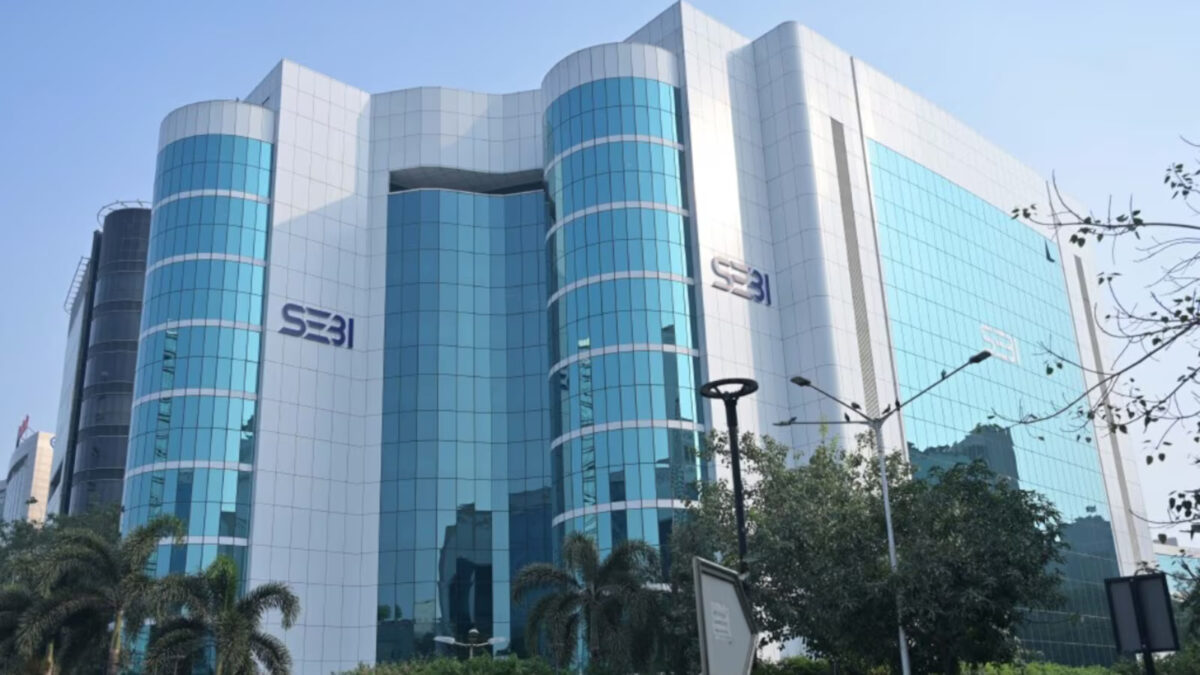
Bharat Global Developers shares, which rose 2,300% in the last 12 months, are now suspended for trading

Shares of Bharat Global Developers Ltd. have been suspended from trading on the exchanges till further notice, as per the latest order from market regulator Securities and Exchange Board of India (SEBI).

The market regulator has also banned the company’s promoters from accessing capital markets till further orders.

In its order, SEBI said that it took note of social media posts and complaints dated December 16, 2024, which pertained to suspicious financials and disclosures.

Shares of Bharat Global surged 105x during the period of November 2023 and 2024.

SEBI’s order states that until financial year 2023, Bharat Global had negligible revenue, expenses, fixed assets and cash flow. However, the financial results from the March 2024-ended quarter showed a steep spike in revenue and expenses.

Post a management overhaul in December 2023, the company saw expansion in its business, a sizeable preferential allotment, and high value deals.

The company then set up six new arms on October 30, 2024, one day before the lock-in period of preferential shares ended.

SEBI wrote in its order that the company was trying to induce investors to buy its shares based on false disclosures, along with fake and fabricated orders and contracts to mislead and induce investors.

The rise in shares of Bharat Global was a result of wrong disclosures and misrepresented financials and the price rise in shares was timed to benefit certain preferential allottees.

As per the SEBI Order:

  • Trading in the scrip is suspended till further orders
  • Certain noticees restrained from dealing in securities or accessing the capital markets.
  • Alleged unlawful gains made by certain noticees are impounded.
  • Banks where noticees hold their accounts directed to ensure no debits are made
  • All notices to submit a full inventory of their assets within 15 days
  • Noticees cannot deal in shares of Bharat Global Devlopers.

Eqwires Research Analyst

Top-notch SEBI registered research analyst

Best SEBI registered Intraday tips provider

info@eqwires.com

Telegram Facebook Instagram

Call: +91 9624421555 / +91 9624461555

www.eqwires.com
Investors lose ₹18.5 lakh crore as Nifty records worst 2024 week

Indian investors lost a combined ₹18.5 lakh crore with the BSE Sensex plummeting by 1,176.46 points and the broader NSE Nifty falling by 364.20 points

Indian investors lost a combined ₹18.5 lakh crore after the Indian stock market closed on Friday, December 20, 2024.

The benchmark BSE Sensex plummeted by 1,176.46 points or by 1.49%, closing in at 78,041.59. 28 out of the 30 Sensex stocks closed in the red.

Meanwhile, the broader NSE Nifty fell by 364.20 points or 1.52%, closing at 23,587.50. 45 out of the 50 Nifty stocks closed in the red.

This was the fifth straight day of losses for the Nifty and the week was also the worst one for 2024.

Every single one of the Nifty sectoral indices closed in the red.

This comes at a time when foreign investors offloaded ₹3,597.82 crore worth of equities on Friday, data from the BSE showed.

It also comes when the US Federal Reserve showed a hawkish outlook and expects fewer interest rate cuts in 2025, which led to global markets as well as the Indian market to experience huge levels of sell-offs.

Which companies on the Sensex and Nifty fell the most?

Tech Mahindra Ltd, Mahindra & Mahindra Ltd, and IndusInd Bank Ltd fell the most on the Sensex. Tech Mahindra fell by 3.97%, closing in at ₹1685.20, Mahindra & Mahindra fell by 3.60%, closing in at ₹2,906.40, and IndusInd Bank fell by 3.53%, closing in at ₹930.00 on the BSE.

Tech Mahindra Ltd, Axis Bank Ltd, and IndusInd Bank Ltd were the worst performers on the Nifty. Tech Mahindra fell by 3.90%, closing in at ₹1,685.85, Axis Bank fell by 3.51%, closing in at ₹1,070.00, and IndusInd Bank fell by 3.47%, closing in at ₹930.90 on the NSE.

Which companies on the Sensex and Nifty closed in the green?

Nestle India Ltd and Titan Company Ltd were the only two stocks in the green on the Sensex. Nestle was up by 0.12%, closing at ₹2,163.85, while Titan was up 0.07%, closing at ₹3,357.65.

Meanwhile, Dr. Reddys Laboratories Ltd (up by 1.49%, closing at ₹1,345.30), JSW Steel Ltd (up by 0.59%, closing at ₹931.45), ICICI Bank Ltd (up by 0.40%, closing at ₹1,292.00), Nestle India Ltd (up by 0.21%, closing at ₹2,165.00), and HDFC Life Insurance Company Ltd (up by 0.03%, closing at ₹623.75) were the only five companies that closed in the green on the Nifty.

Which sectors fell the most?

Among the Nifty sectoral indices, Nifty realty fell the most by 3.91%, followed by Nifty Midsmall IT & Telecom at 3.71%, and Nifty Midsmall Financial Services at 3.41%.

Eqwires Research Analyst

Top-notch SEBI registered research analyst

Best SEBI registered Intraday tips provider

info@eqwires.com

Telegram Facebook Instagram

Call: +91 9624421555 / +91 9624461555

www.eqwires.com